
Orchha 2-Day Itinerary: The Ultimate Guide to MP’s Hidden Heritage (Family Tips Included)
Updated on March 17, 2026
Content
The word Orchha means 'hidden'. This was the stronghold of the Bundela Rajputs, who expanded their territory to what became Bundelkhand. There are a couple of origin stories regarding the clan's name. In one version, the name originates from 'Bund' (pronounced 'boondh') or drop in Hindi.
A ruler fell upon hard times and was exiled to the Vindhya range by his enemies. He became a devotee of the Goddess Kali and prepared to sacrifice himself to the deity. The deity appeared and promised the restoration of the dynasty’s lost glory. The deity bestowed the name Bundela on the dynasty to commemorate the drops of blood he spilt in devotion. In another version, the clan’s name originates from the deity Bindbhasini Devi from the northernmost part of the Vindhya range.
Plan your trip
Getting there
We flew from Bengaluru to Gwalior and took a cab to Orchha from the airport.
Distances from major towns/cities
- Gwalior: 120 km (75 mi)
- Jhansi: 16 km (10 mi)
- Khajuraho: 170 km (106 mi)
- By road: Self-driven and chauffeur-driven cars are available from Gwalior. From Jhansi, the options are mainly chauffeur-driven cars.
- By rail: Jhansi is the closest railhead.
- By air: Gwalior is the nearest airport, followed by Khajuraho.
Stay
We stayed in Madhya Pradesh State Tourism Development Corporation’s Betwa Retreat Hotel. The hotel overlooks its namesake, the River Betwa. The staff at the hotel were among the politest and attentive to guests that we’d seen on our travels. We stayed there while the COVID pandemic was still on and the hotel ensured all of us were given a natural concoction to prevent us from getting sick.
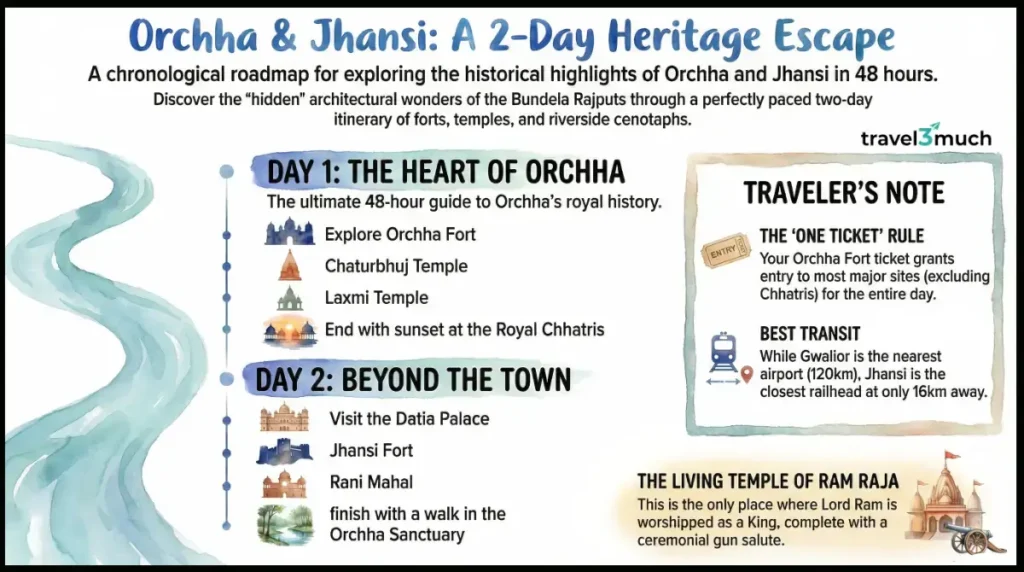
Day 1 – Orchha Itinerary
Orchha Fort
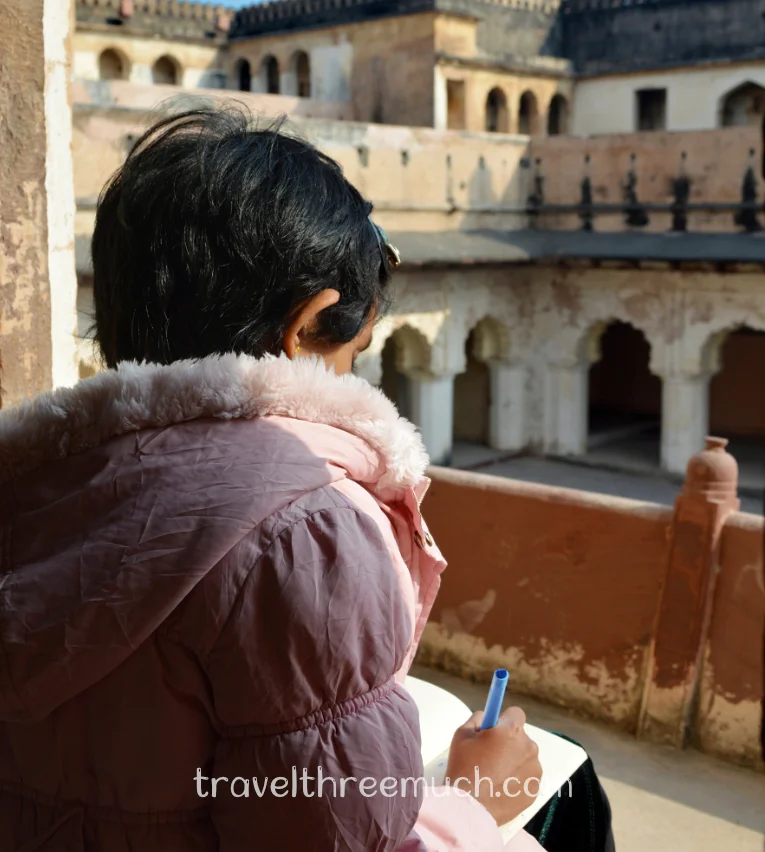
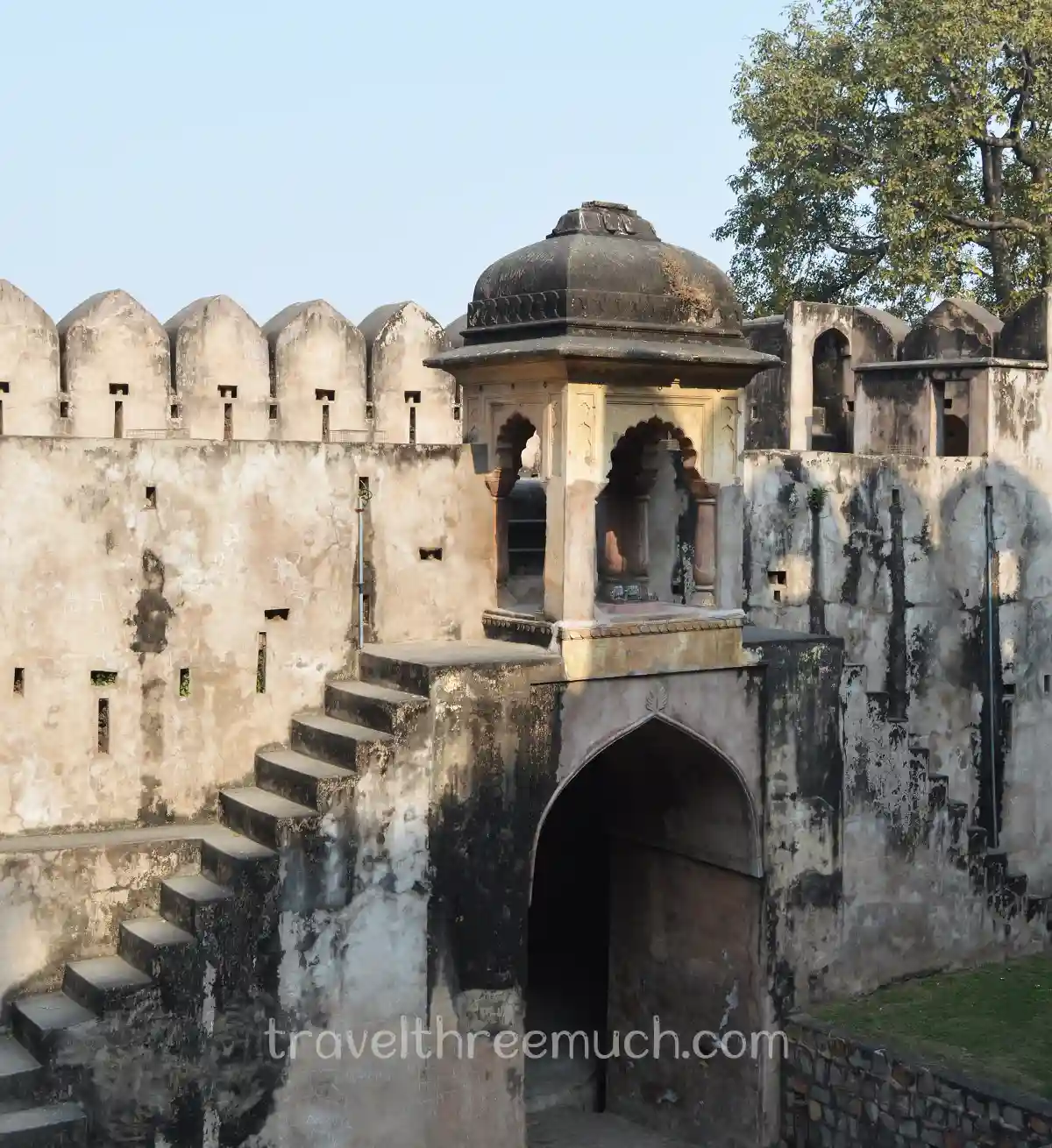
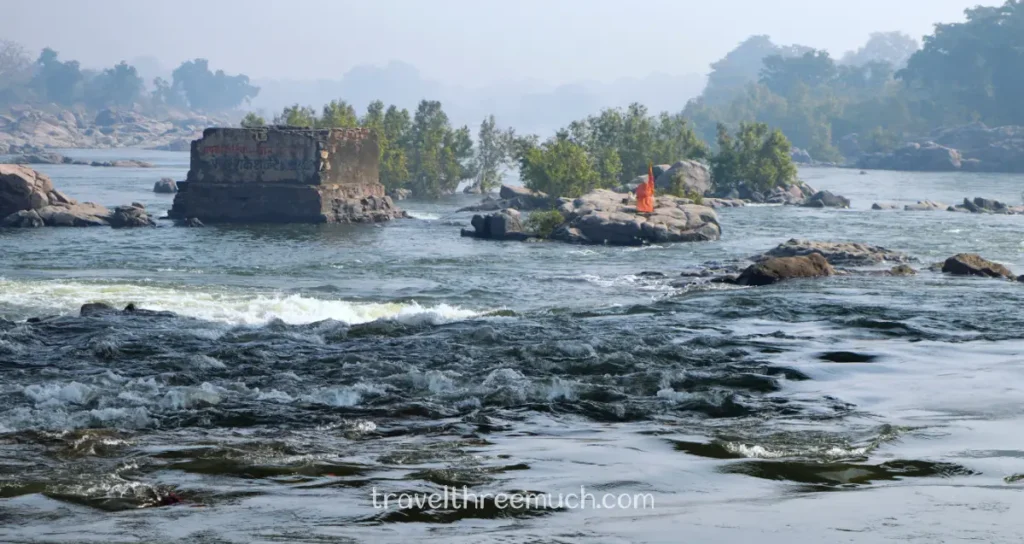
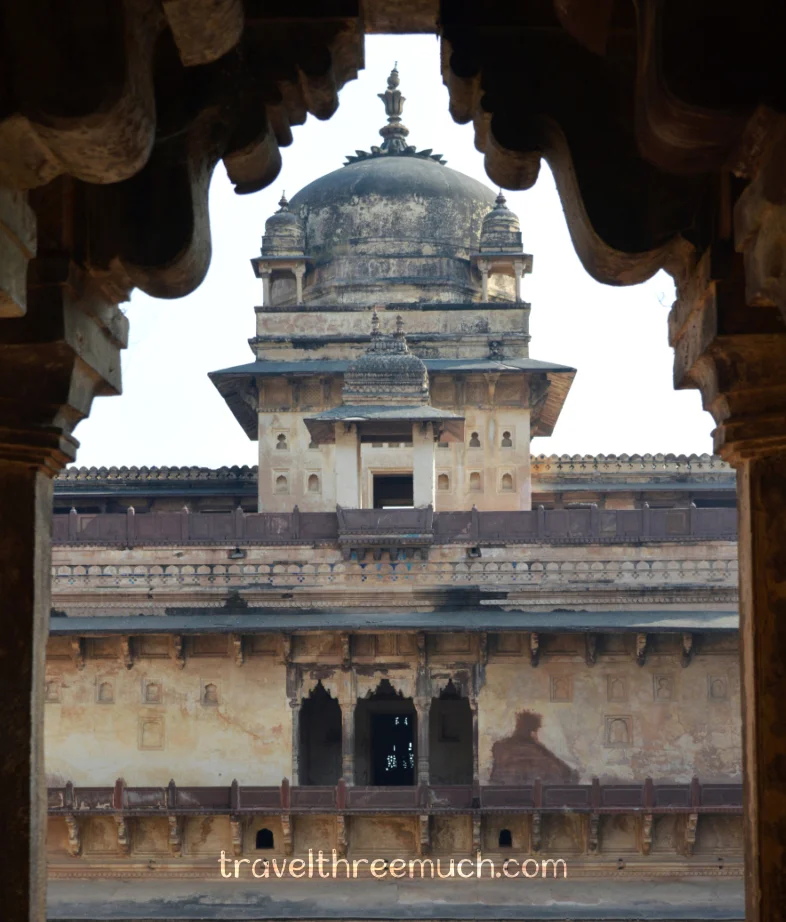
Perched majestically where the rivers Betwa and Jamini converge, this citadel rises from a natural moat, a testament to the grandeur of the 16th-century Orchha State. Within its formidable walls lies a treasure trove of palaces, temples, and intriguing monuments. Among them, Jahangir Palace stands out, a masterpiece where Rajput and Indo-Islamic architecture blend harmoniously.
Pleased with her devotion, Ram appeared to the queen as a child and agreed to accompany her to Orchha under three conditions: they could only travel on specific days each month, Ram would be installed as the king of Orchha instead of her husband, and the idol would journey on her lap. The first place the idol touched the ground would become its final place of worship. The queen agreed and brought the deity back to Orchha. In anticipation of their arrival, King Madhukar Shah commissioned the construction of the Chaturbhuj Temple to enshrine the sacred idol.
The queen installed the deity temporarily in her palace waiting for the temple to be complete. When the queen tried to install the idol in the Chaturbhuj temple, she found that the idol wouldn’t budge from the palace. It was its first and final seating place, according to the conditions laid down by the deity.
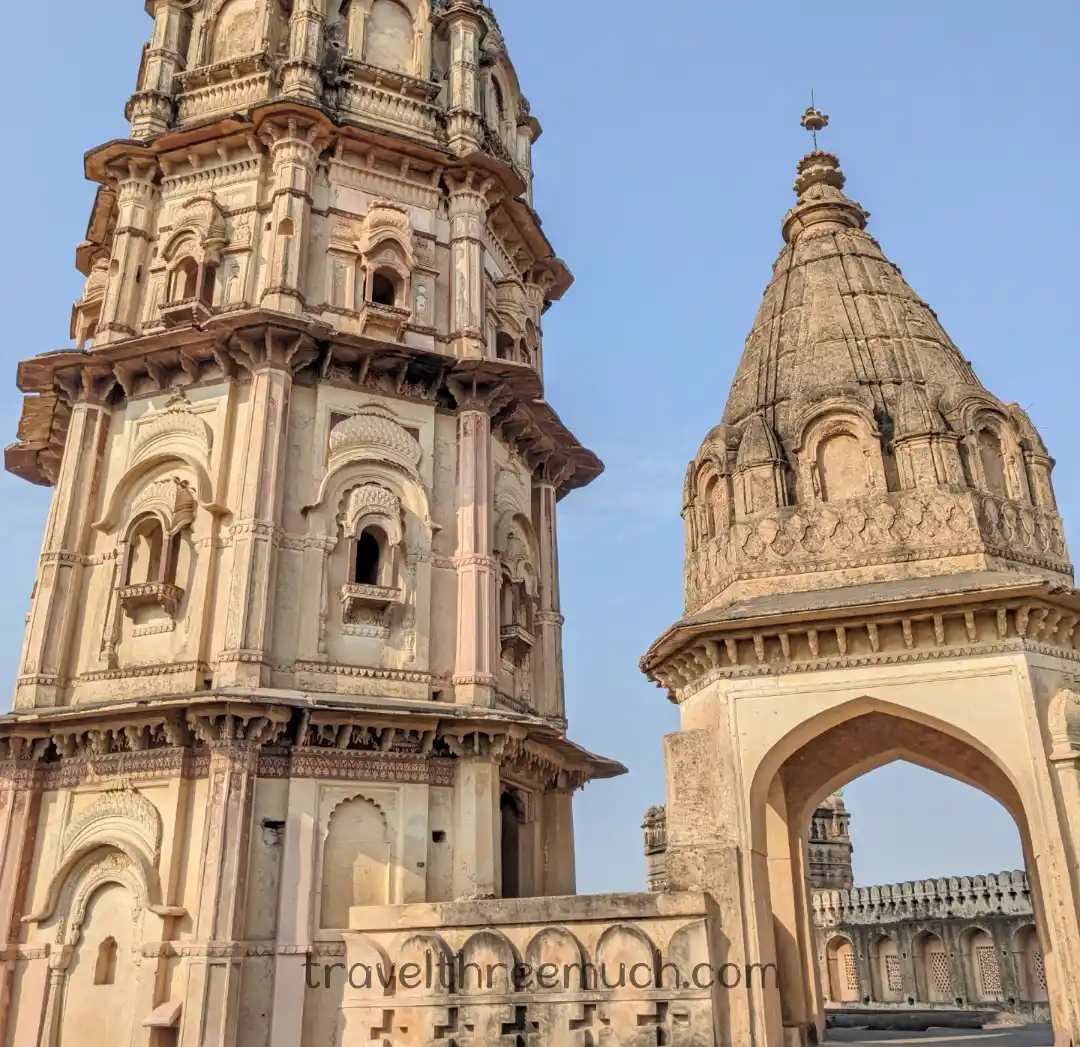
As a result, the Chaturbhuj Temple never received the Ram deity it was meant to house. Instead, an image of Radha Krishna with Vishnu is worshipped there. Visitors can climb to the upper levels for a fee, but we decided against it, as the steps are known to be tall and steep. The ground-level views were more than enough to satisfy us.
The queen's palace now serves as the Ram Raja Temple, where the deity is revered as a king adorned with a sword and shield. Each day, the temple's security personnel pay tribute with a ceremonial gun salute to honour the deity.
Laxmi Temple
After a comforting lunch at the hotel’s restaurant, we set out to yet another gem of Orchha, the Laxmi Temple.
Note: The tickets from Orchha Fort are needed to enter this temple and so, hold on to them.
You can read more about our experience at Laxmi Mandir here.
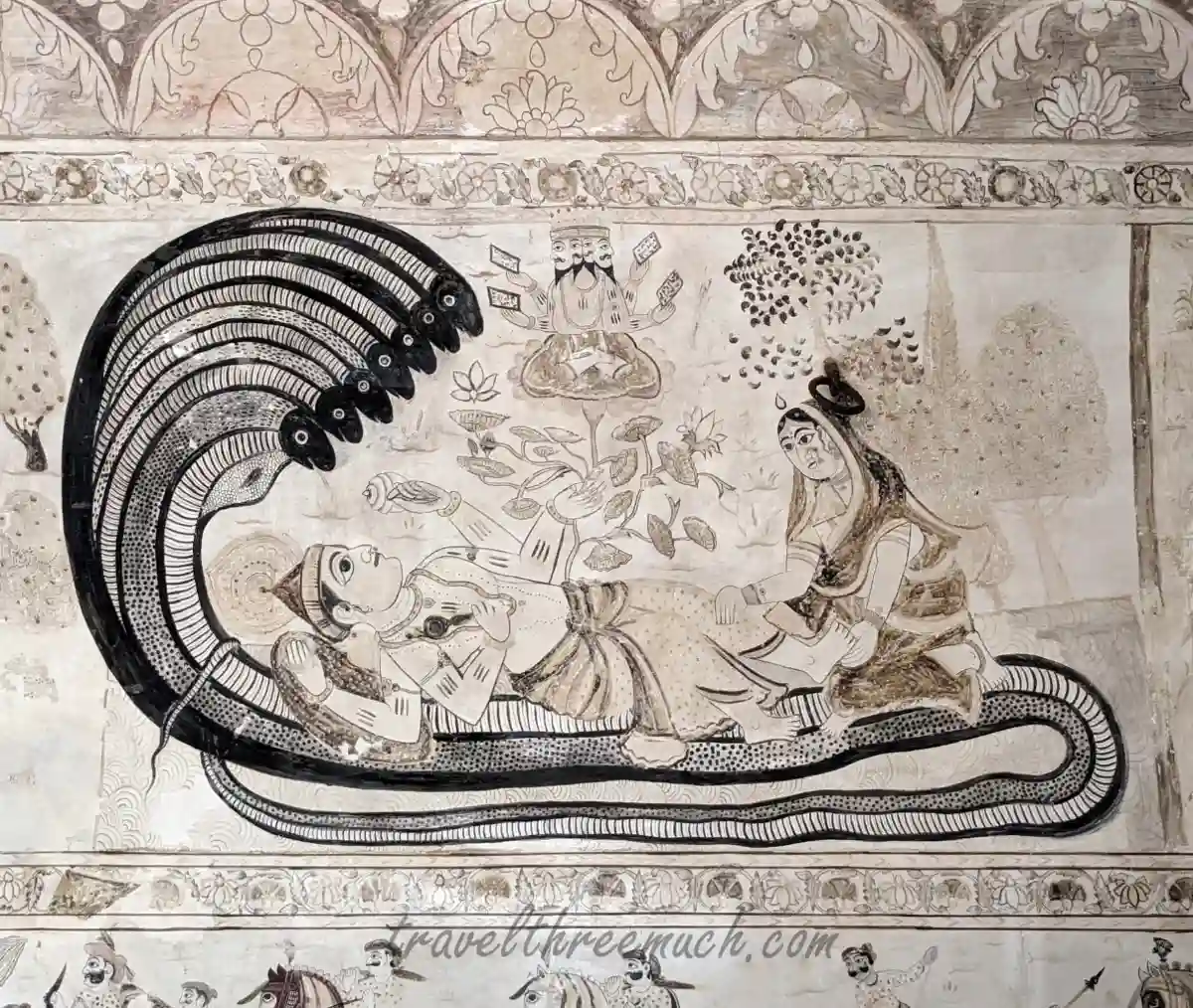
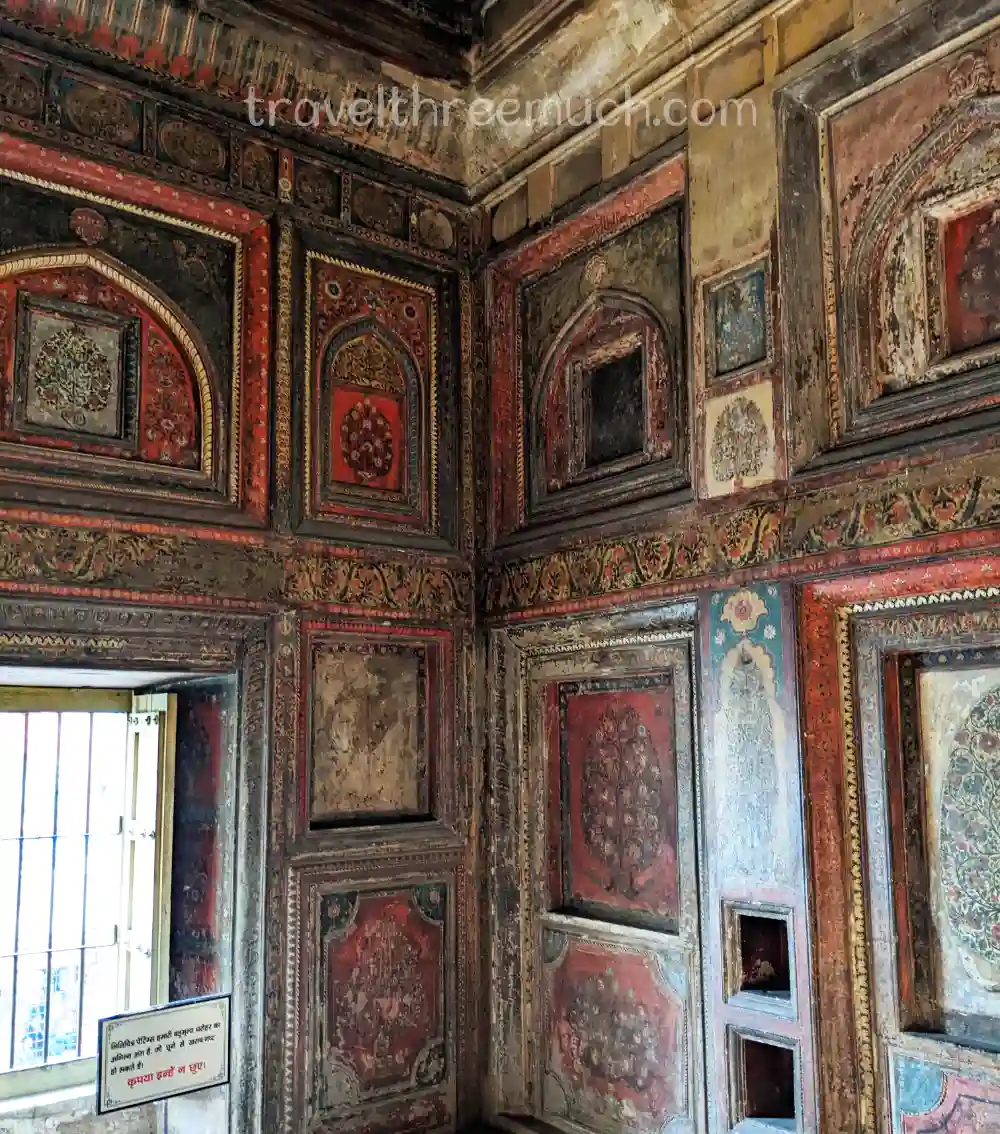
The temple dedicated to Goddess Laxmi stands among Orchha’s top three important temples. Not only is its architecture unique—some suggest its layout resembles an owl, the steed of the goddess—but its true treasures lie within the intricately adorned walls and ceilings.
For art enthusiasts, this temple is a haven. Every corner is adorned with paintings that left us in awe. Some depict gods, goddesses, and tales from India’s ancient epics, while others vividly illustrate historical battles and daily life during various periods of Indian history.
Many of the paintings are still in good condition. But they do merit protection from the elements and the uncouth elements wishing to improve the art with graffiti.
The Royal Chhatris
After visiting the Lakshmi Temple, our next stop was Kanchana Ghat along the Betwa River, named after one of the courtesans in Madhukar Shah’s court.
We saved the Chhatris for last, eager to witness the sunset over the Betwa River.
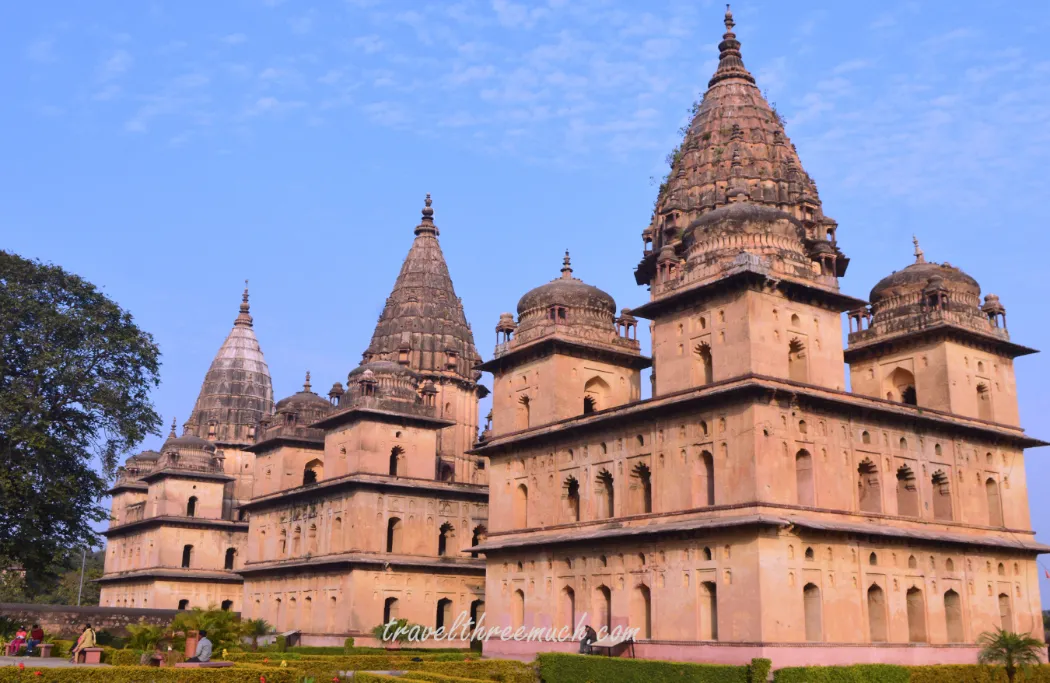
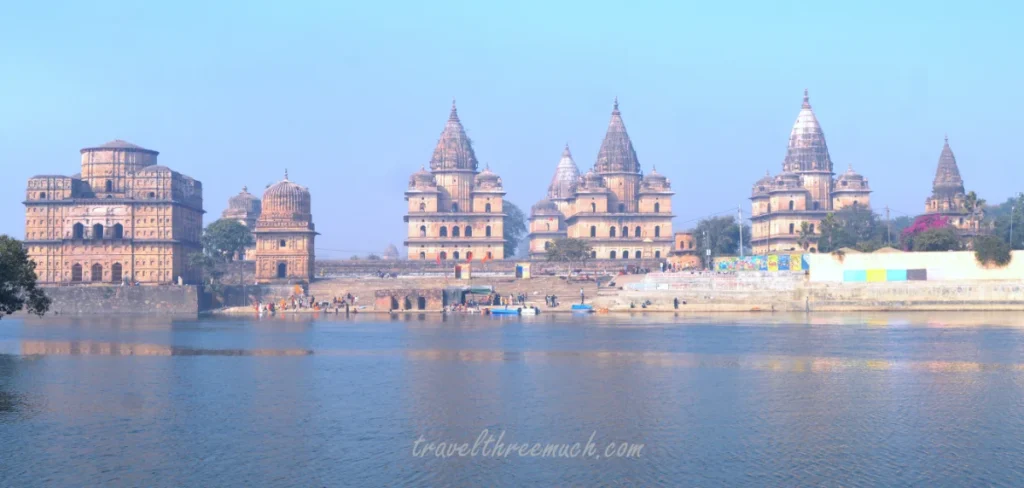
Kanchana Ghat is the site of the royal cenotaphs, or ‘chhatris’, of the Orchha State rulers. In total, there are fifteen cenotaphs. Thirteen are those of the rulers of Orchha, one for Kripa Ram Gaur, the military commander of Bir Singh Deo, and another for Banka Unmed Singh, the Governor of Orchha Fort.
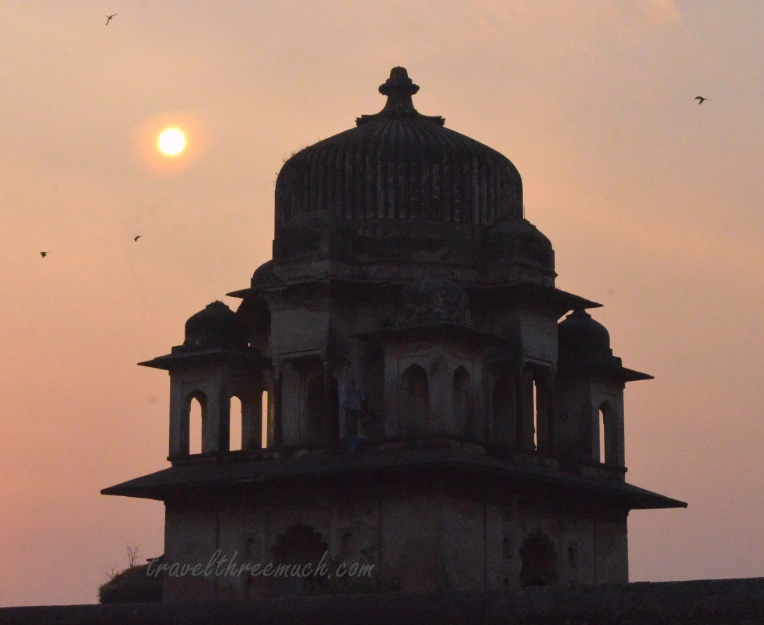
We saw many white-backed vultures that had made the chhatris’ domes and spires their homes. The golden glow of the evening sun and the vultures wheeling above these cenotaphs made for a surreal and serene setting.
Over a steaming cup of tea, we quietly contemplated the futility of human attempts to grasp everlasting fame. We made our way back to the hotel for dinner and rest.
Kanchana Ghat is the site of the royal cenotaphs, or ‘chhatris’, of the Orchha State rulers. In total, there are fifteen cenotaphs. Thirteen are those of the rulers of Orchha,
Day 2 – Orchha Itinerary
Datia Palace
The first stop for the day was the not-so-popular Datia palace.
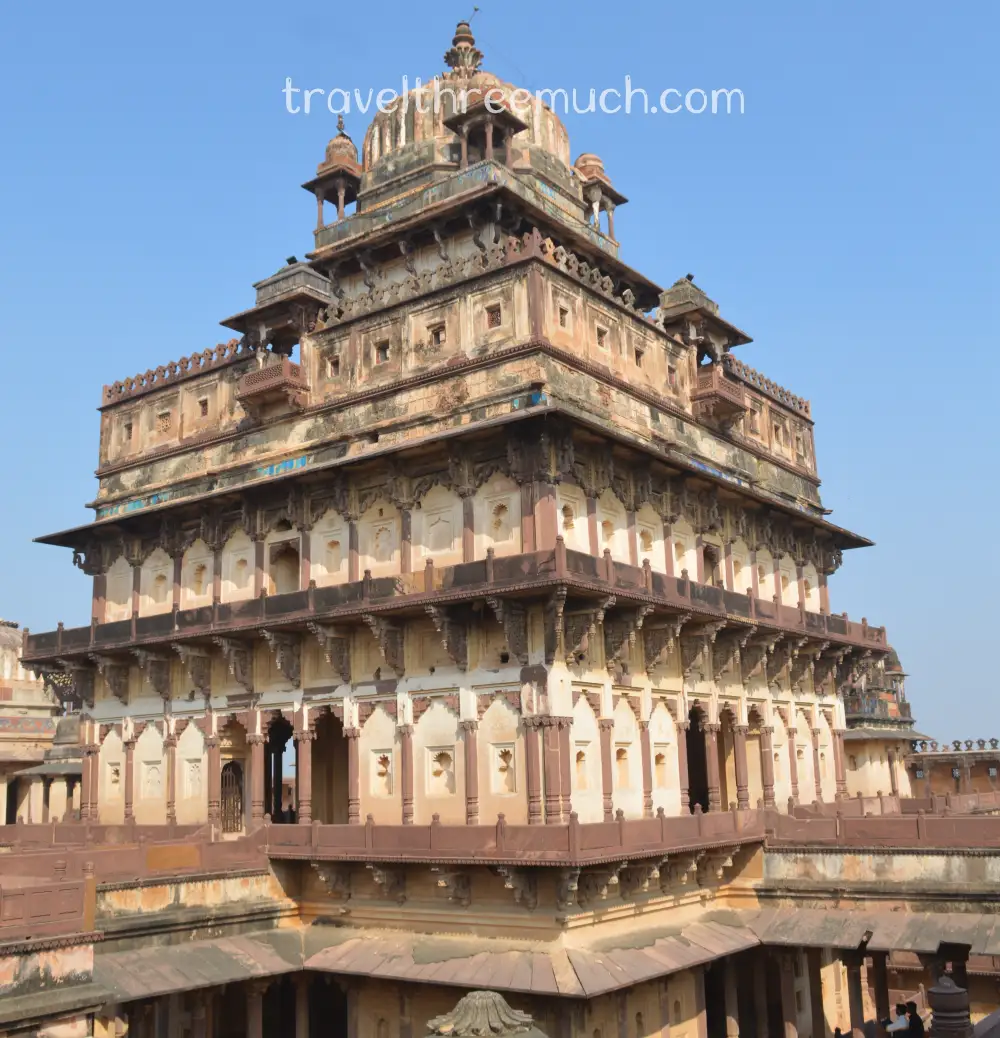
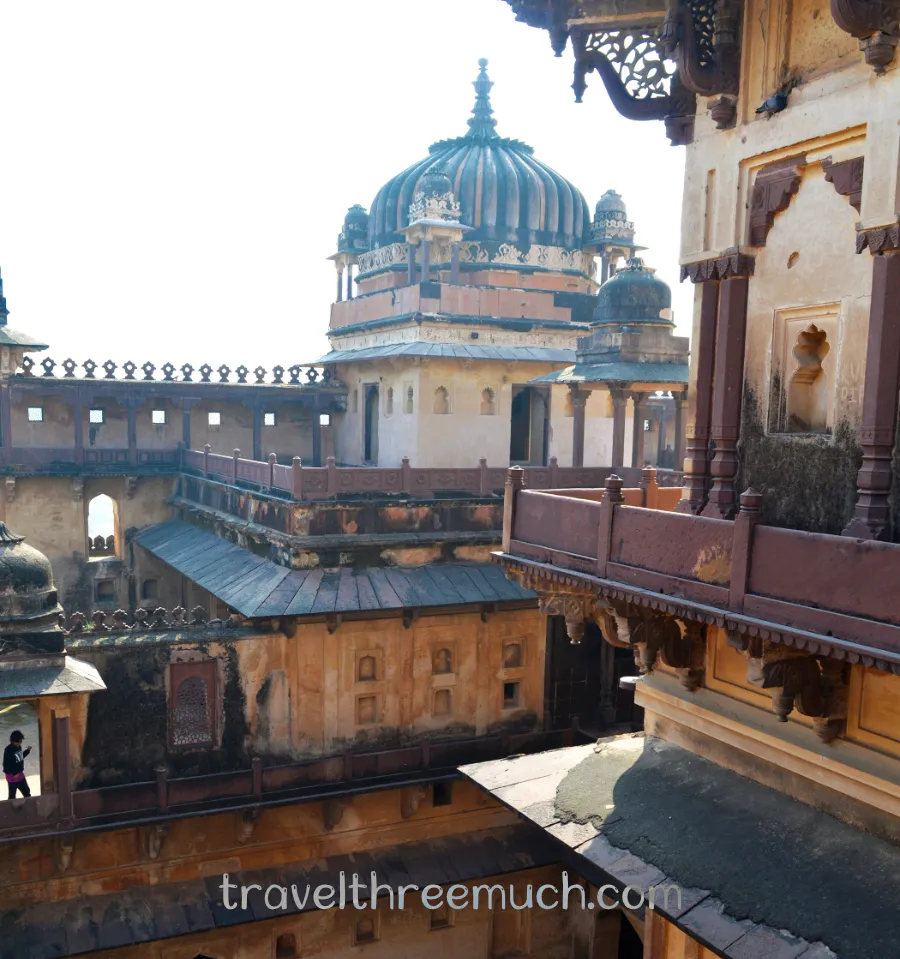
We had read about this palace in a book by George Michell and caught our attention. This Palace of Datia was built by the kind Bir Singh Deo for welcoming his friend, the Mughal Emperor Jehangir, who ascended the throne after Akbar.
Traveler’s Note: Don't Skip Datia
While most people stick to the Orchha-Jhansi circuit, we highly recommend adding a morning to visit Datia Palace (50km away). It’s a seven-story stone marvel built entirely without wood or iron. Walking through its dark stairways into the brightly lit central courtyard was the highlight of our Bundelkhand trip.
Jhansi fort
Jhansi held a special place on our itinerary. We wanted to give our kid a glimpse of living history straight from her schoolbooks. Rani Laxmi Bai’s pivotal role in India’s freedom struggle is a profound inspiration, especially for young girls.
After breakfast in Orchha, we took a cab to Jhansi, eager to explore its expansive fort and the many historical sites it holds.
The fort is impressive, boasting a wealth of intriguing places steeped in history. The spot where Rani Laxmi Bai bravely faced overwhelming odds and later made a daring escape on horseback from the fort ramparts, a moving memorial to those who made a last stand against the colonial forces, and the imposing hanging tower, all captivated our attention.
We took our time wandering through the fort, enjoying a fulfilling two-hour stroll through its storied past.
Your can read about our trip to Jhansi here.
Rani Mahal
Rani Laxmi Bai’s Mahal, though relatively modest compared to the opulent palaces of Madhya Pradesh and Rajasthan, held a special allure for us. We were particularly eager to explore the queen’s room, known for its exquisite paintings, and our visit exceeded expectations. We then started back to Orchha.
Orchha Sanctuary
After relaxing at the resort for a few hours, strolling in its park and garden, and refreshed by a cup of strong tea, we walked to the Orchha Sanctuary nearby. There are many trails within the park for walking and cycling, with the longest trail of about 5 km.
The Orchha Sanctuary is a calm place for a walk, to hear the chirping of birds and insects, and to take some nice photographs. The view of the chhatris from the sanctuary is the best part! A walk along the bridge atop the Betwa River to catch the sunset would be the perfect ending to an evening steeped in Indian art, architecture, and history.
After catching these sights of Orchha it was time for us to head to Gwalior next!!
Pro-Tips for Families Visiting Orchha
A couple of small things we learnt along the way made our visit far smoother – especially when travelling with a child.
- Hold on to your Fort ticket
When you enter the Orchha Fort Complex, keep the ticket safely with you. It is typically required again at places like the Chaturbhuj Temple and the Lakshmi Narayan Temple.
The Royal Chhatris by the Betwa are often freely accessible, but we found it useful to keep the ticket handy anyway. Children under 15 are usually not charged, though it’s worth carrying a basic ID.
- Plan for a gentler break between monuments
While the climb inside the Chaturbhuj Temple can be demanding with its tall, steep steps, the Orchha Wildlife Sanctuary offers a welcome contrast.
It is quiet, flat, and unhurried—a good place for children to stretch their legs after hours spent among stone corridors and stairways. We spotted peacocks and plenty of monkeys along the way, which kept the walk interesting.
- Evenings that bring history alive
If you are staying the night, consider the Orchha Light and Sound Show at the fort.
Set against the backdrop of the old palaces, the narration adds another layer to Orchha’s history. The Hindi version leans more theatrical, while the English one is easier to follow for older children. Shows usually begin after sunset, though timings vary with the season.
- Simple, reliable food options
For a comfortable meal without too much experimentation, we found Amar Mahal and Sheesh Mahal to be dependable choices.
Both offer familiar North Indian dishes in clean settings. Around the temple area, there are also a few small cafés serving simple pizzas and basic continental fare if you need a break from regular flavours.
- Work around the afternoon heat
Orchha’s stone structures tend to hold the day’s heat. We found it best to explore the Fort in the morning and slow down later in the day.
The hours between 2:00 PM and 4:00 PM are better spent resting, or taking a quiet walk by the Betwa River, rather than climbing through sun-warmed corridors.
What Other Travelers Ask
Is 2 days enough for Orchha?
Yes, 48 hours is the perfect duration for Orchha. It allows you one full day for the Fort Complex and Ram Raja Temple, and a second day for the Laxmi Temple, the Royal Chhatris, and a relaxing sunset by the Betwa River.
What is the best way to reach Orchha from Jhansi?
Orchha is only around 16km from Jhansi Railway Station. The most convenient way is a 30-minute auto-rickshaw ride (approx. ₹200-₹300) or a pre-booked taxi. If you’re on a budget, shared autos are also available at a fraction of the cost.
Can we see both Orchha and Jhansi in two days?
Absolutely. As outlined in our itinerary, you can spend Day 1 entirely in Orchha’s heritage zone and use the morning of Day 2 to visit the Jhansi Fort and Rani Mahal.
What should I wear when visiting Orchha?
Orchha is a significant religious site. While there is no strict dress code for the Fort, modest clothing (covering shoulders and knees) is recommended when entering the Ram Raja and Chaturbhuj temples. Comfortable walking shoes are helpful for the Fort’s uneven stone stairs.
Ramya
Ramya is the Itinerary Mastermind and travel planner for the family. She specializes in crafting efficient, culturally-rich trips, with a passion for India’s art, heritage sites, forests, and waterfalls. She brings the human emotion and logistical precision to their journeys.
Leave a Reply