
Bateshwar Temples from Gwalior: A Complete Day Trip Guide
Updated on March 20, 2026
Contents
What is the biggest jigsaw puzzle you’ve done?
I’ve done ones with 500 and 1000 pieces. Once, I finished a 5000 piece puzzle. I’ve also attempted a 40000 piece puzzle once. What if you had to put together a giant puzzle where each piece needs more than one person to lift it? Sometimes a forklift to do the work?
Well, that’s the task at hand for the men and women at work in the Bateshwar cluster of temples at Madhya Pradesh.
How it started
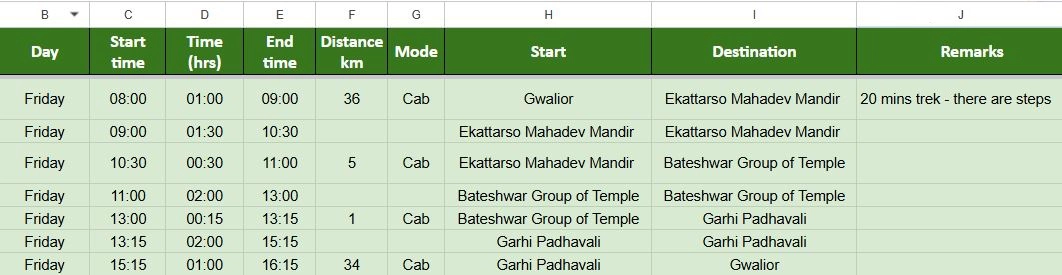
The temple of Bateshwar is one of the main reasons why we chose Gwalior as our holiday destination. The one photo of hundreds of small temples piqued our curiosity and we decided to see it in person. But Mitawali and Padavali were really really happy side effects. We read about these two places in one of our reference books while we were researching about places to see, and simply added them to our itinerary. However, we always play based on expected crowds and that’s how we planned the order of places we’d visit. Just thought I’d share a glimpse of how our Excel sheet for the day looked like.
Getting there
The Bateshwar temple cluster is about 35 km from Gwalior, in Morena.
There are buses that drop you off close to the site, but these are few and far between. So we went by cab. In hindsight, it is also safest to travel this way as we were in unfamiliar parts and this region had a history of being a safe haven for dacoits. We aren’t the kind that choose the ‘road less travelled’ when it comes to travel options, as we travel with a kid.
Ola and Uber may not be reliably available at this distance from the city centre. Book through your hotel or a local cab service and agree on a full-day rate, particularly if you plan to combine Bateshwar with Padavali and Mitawali.
You can take an auto rickshaw if you do not mind the really bad roads or you could take a cab to avoid your spine getting hurt. (Note – the roads were bad when we visited – but we are told it is better now. Please check and decide.)
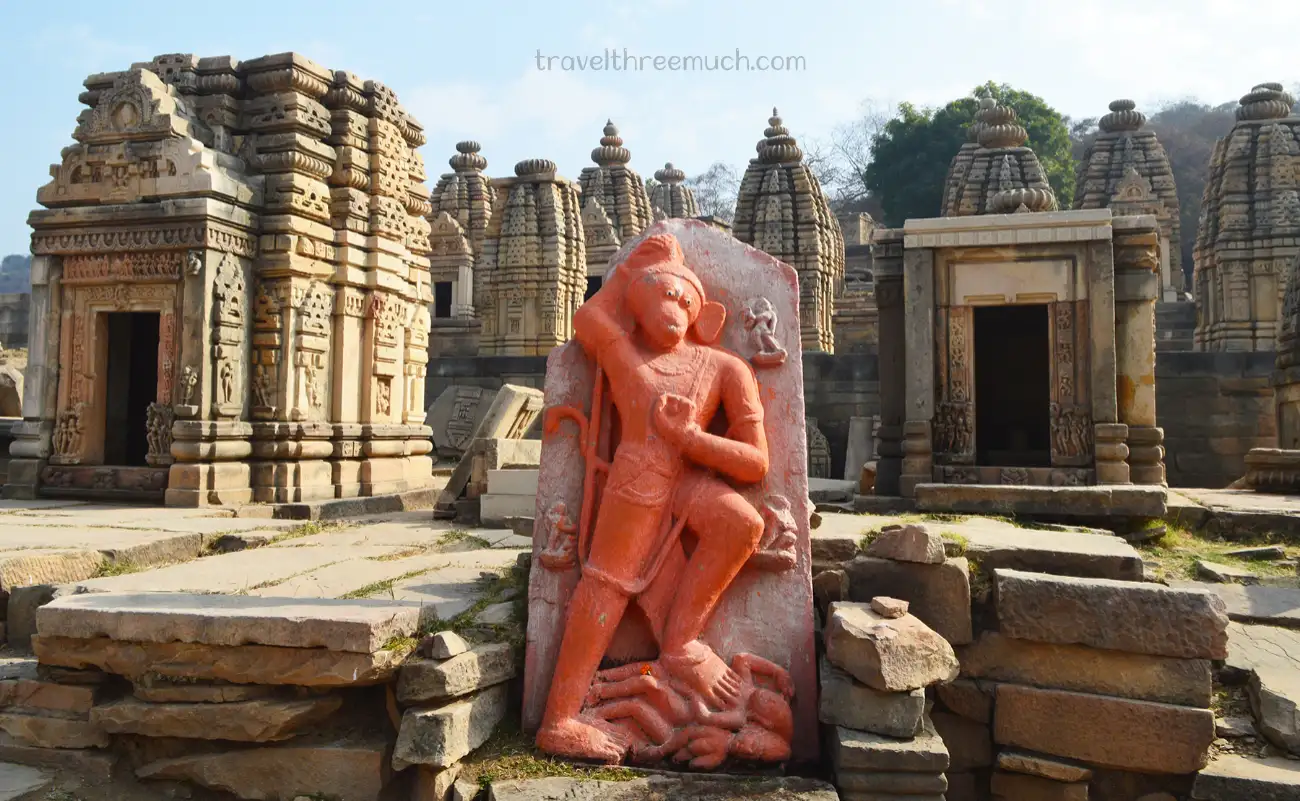
The site takes its name from the Bhuteshvar Temple — the largest Shiva temple at the complex, named after Bhuteshvar (another name for Shiva as lord of all living beings), and the only temple here still in active worship.
What to See at Bateshwar
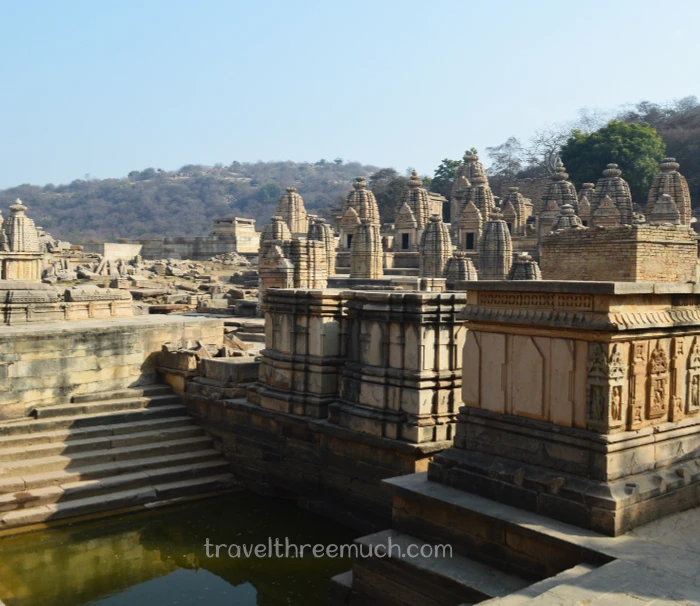
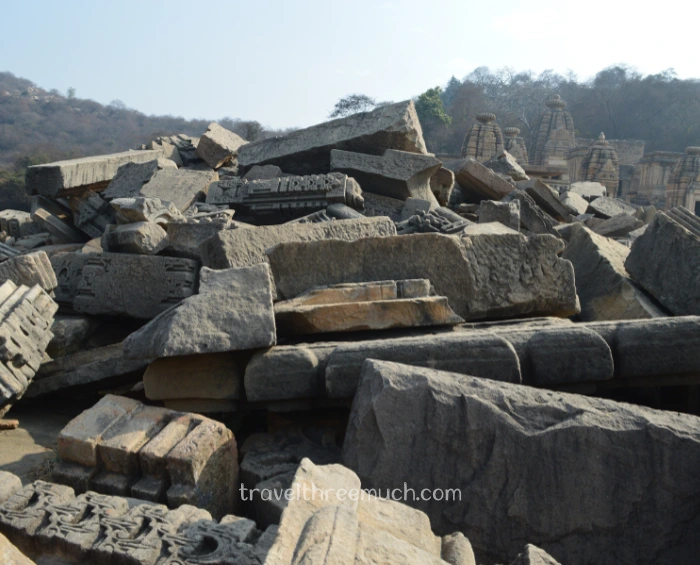
Walking into the Bateshwar complex for the first time is disorienting in the best way. The path from the entrance leads through what appears to be an open-air stone library with hundreds of carved fragments some sorted by type and size, waiting to find their rightful positions and many more still waiting to be picked up and sorted.
Once you reach the place, you can take a stroll around. The complex is walkable and the main areas can be covered in 2 to 3 hours at a comfortable pace.
The Temple Rows (Restored)
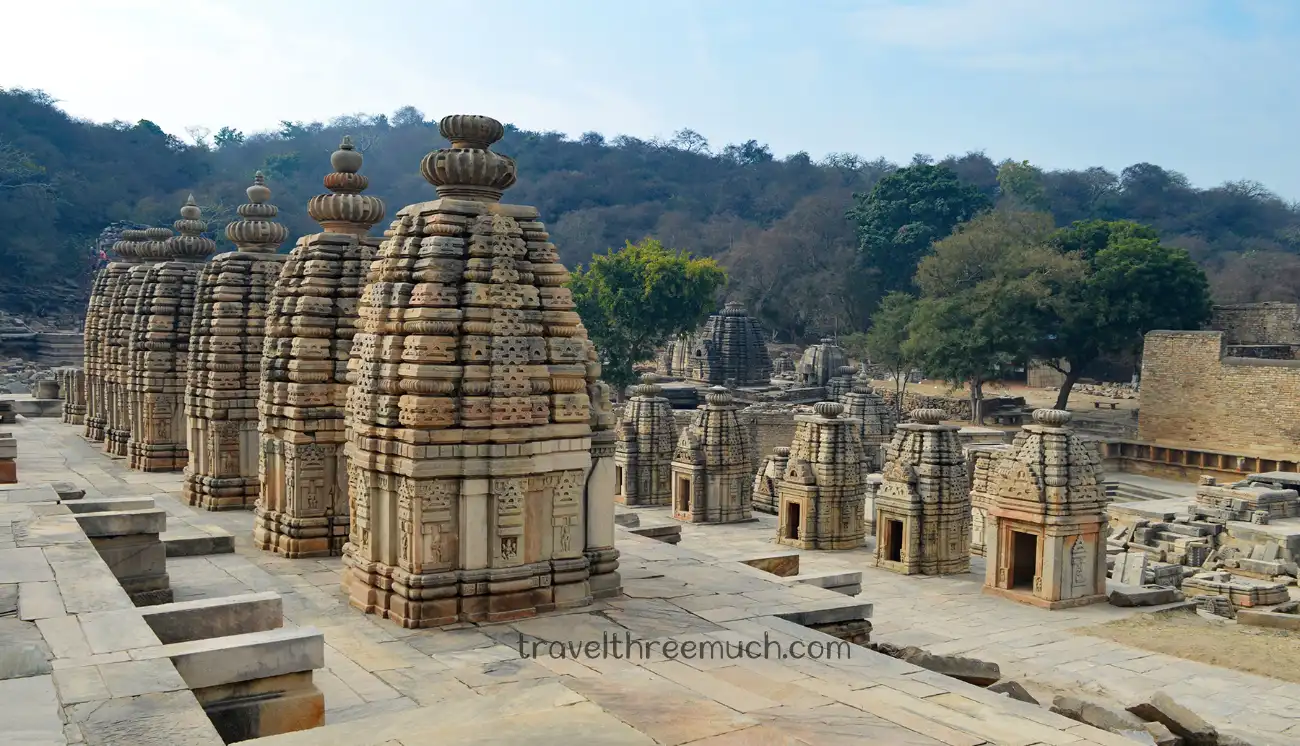
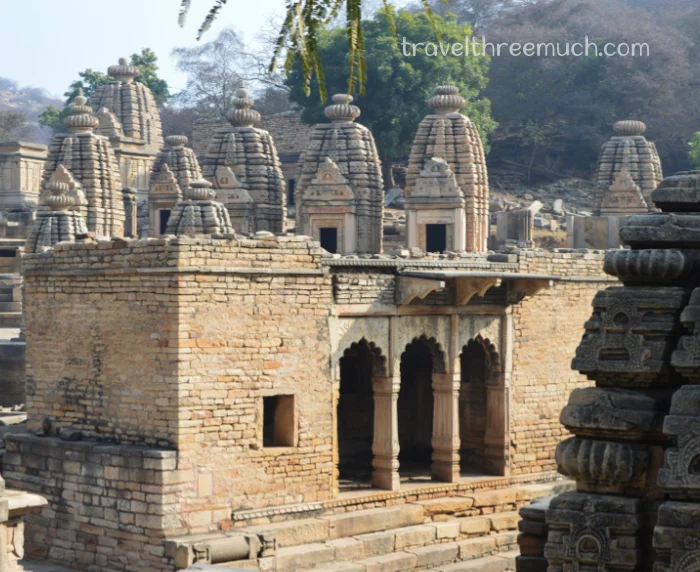
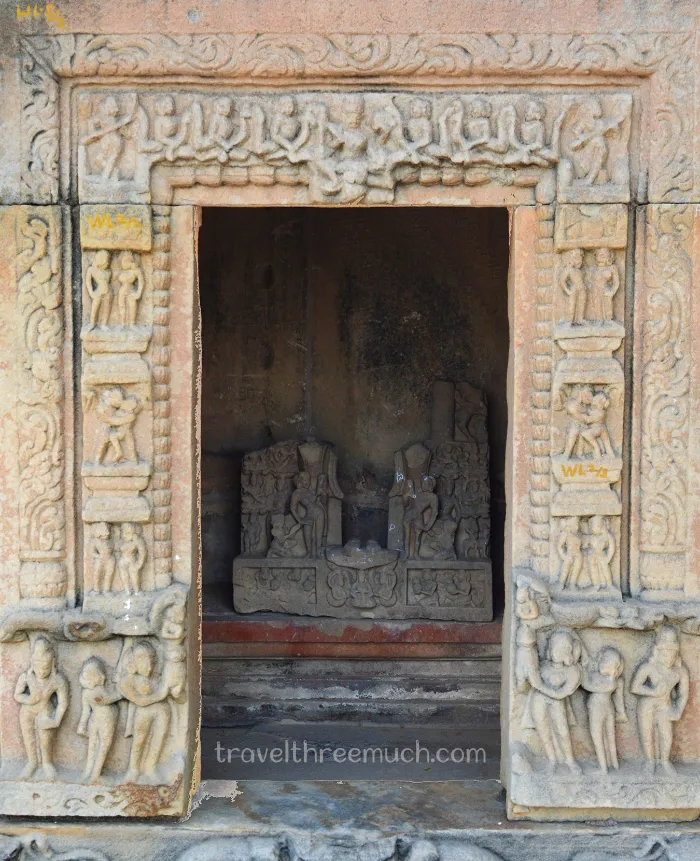
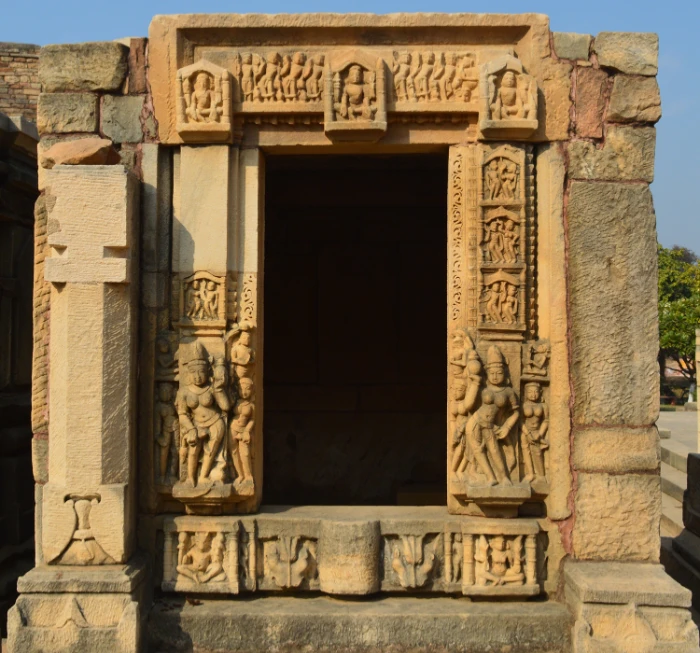
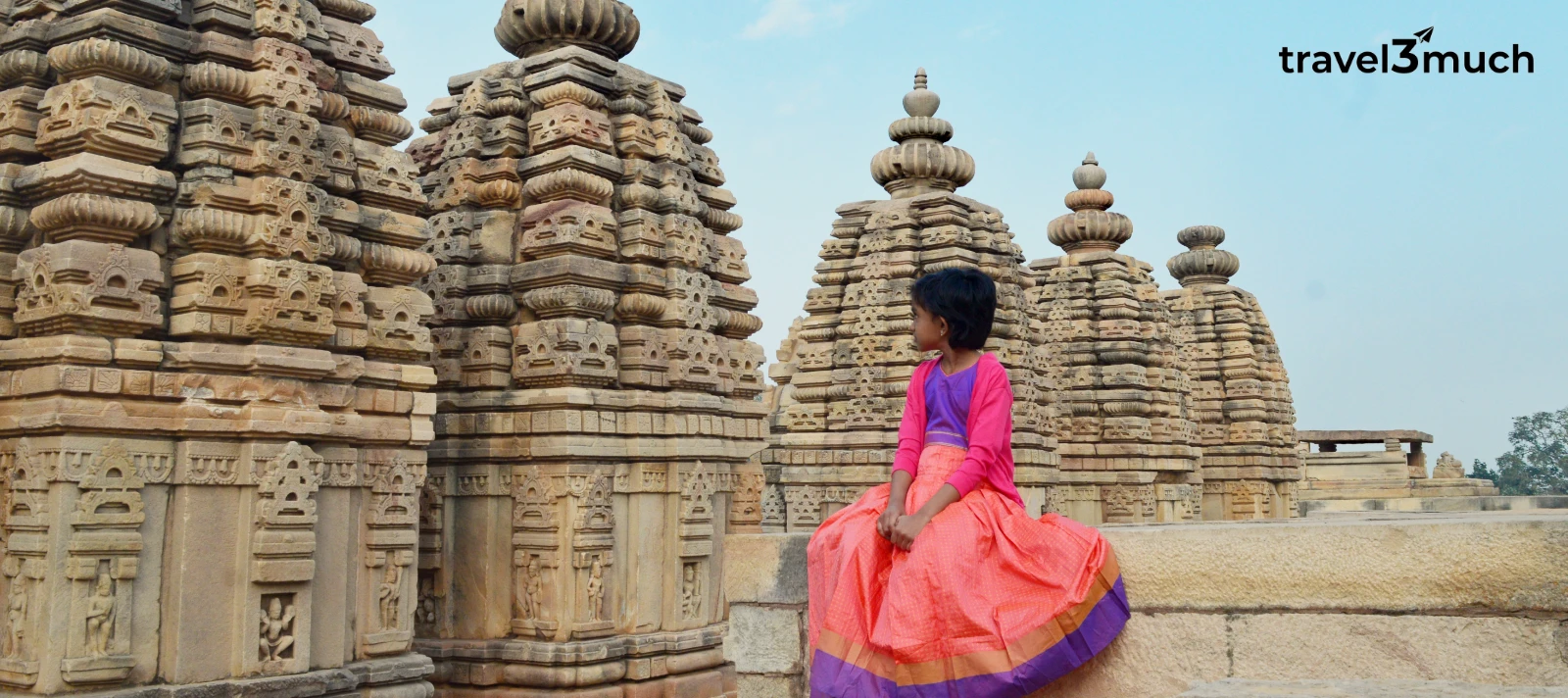
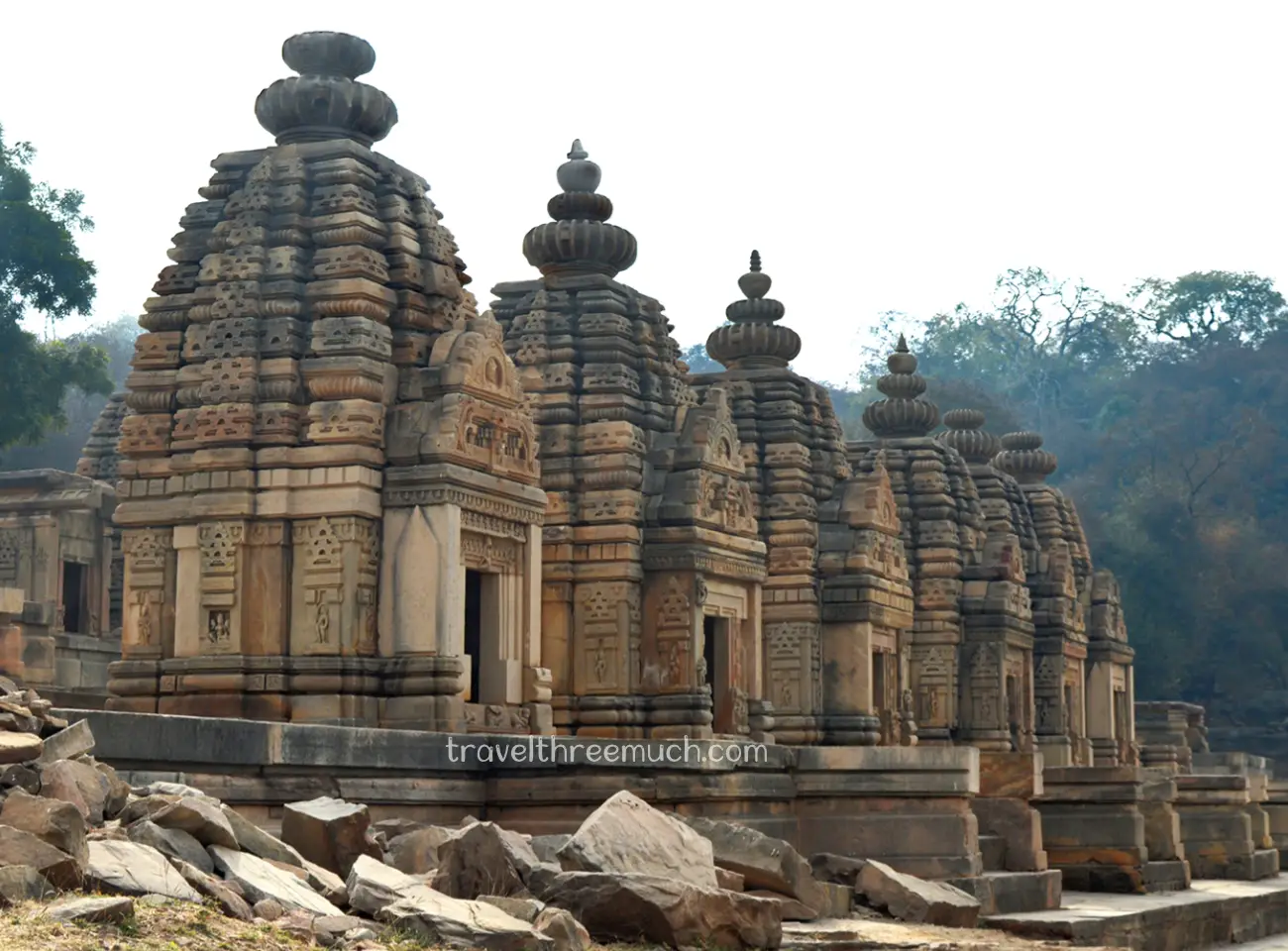
As you enter the main complex and walk in, you will see the rows of restored temples are a study in architectural repetition with small variations. Most are small Nagara-style shrines — square sanctums topped with curvilinear shikharas that taper upward in the classic beehive form of northern Indian temple architecture. Each temple follows the mandapika shrine concept: a sanctum on a raised platform, often with a small pillared porch. While we might have seen carvings of more intricacy, here, it is the cumulative effect of dozens standing together that is truly overwhelming.
The Bhuteshvar Temple
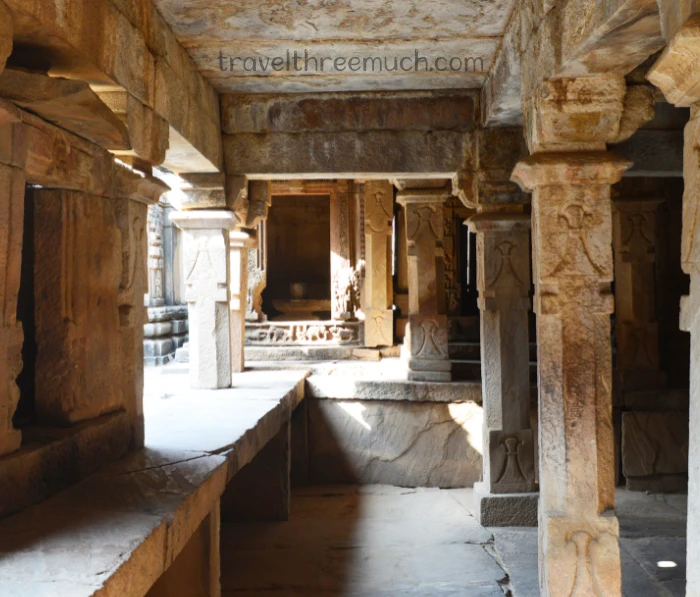
The largest and most important temple in the complex, named after Bhuteshvar — Shiva as the lord of all living beings. This is the only temple in the complex still in active worship, with a Shiva linga in the sanctum sanctorum. A priest is usually present. The outer walls carry carved niches showing various forms of Shiva and Parvati. Just outside the temple is a small stepped tank, still holding water.
Spend the most time here. Watch the light fall on the sandstone in the early morning — the golden hour at Bateshwar is worth building your departure time around. I honestly could not get enough of the place. This is probably one of those heritage sites where I really went overboard with the photos. Somehow, that feeling in the morning sun, it was so surreal.
Bateshwar – The place
You can’t help but wonder what the sunrise and sunset at this temple complex must have been like in its halcyon days.
The colours of the dawn/dusk skies must’ve surely set fire to the imagination of the devotees that would’ve gathered to pay their respects to the many deities enshrined here.
The Scale of What You’re Looking At
Consider for a moment, the scores of shrines littering the landscape illuminated only by torches and lamps in the bygone days when there was no electricity. The sight must’ve been spellbinding on a full moon day when from vantage points, it’d look like a sea of pagodas, symmetrically arranged in architectural precision.
These magnificent sandstone odes, that even though ravaged by time and possibly human actions, still serve as a portal to transport the visitor to the temples’ heyday.
It does not take much to conjure up images of worship in this oasis of calm, surrounded by the jungle and ravines with wildlife on the prowl just beyond the boundaries where the flickering torches and lamps fight the shadows.
The Colossal task at hand
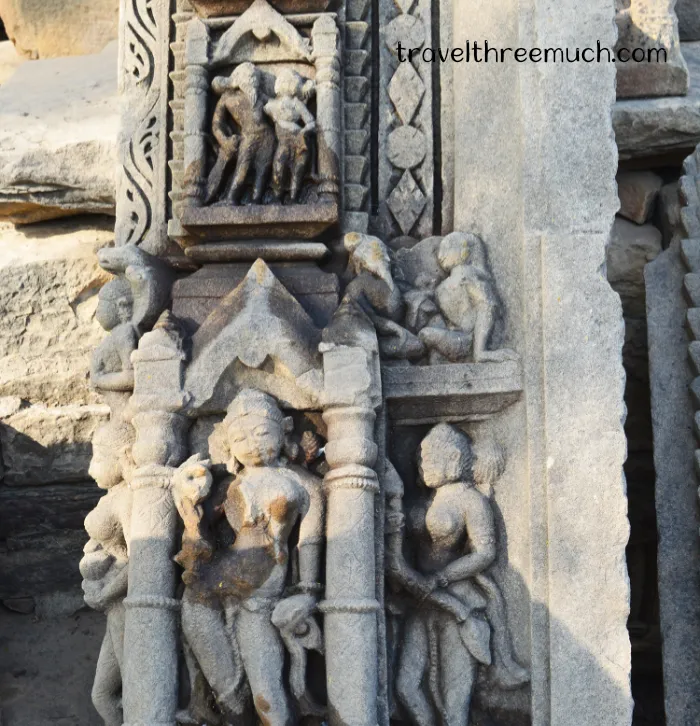
From goddesses, to avatars, to scenes from epics, we were able to find a multitude of such sculptures all over the vast space.
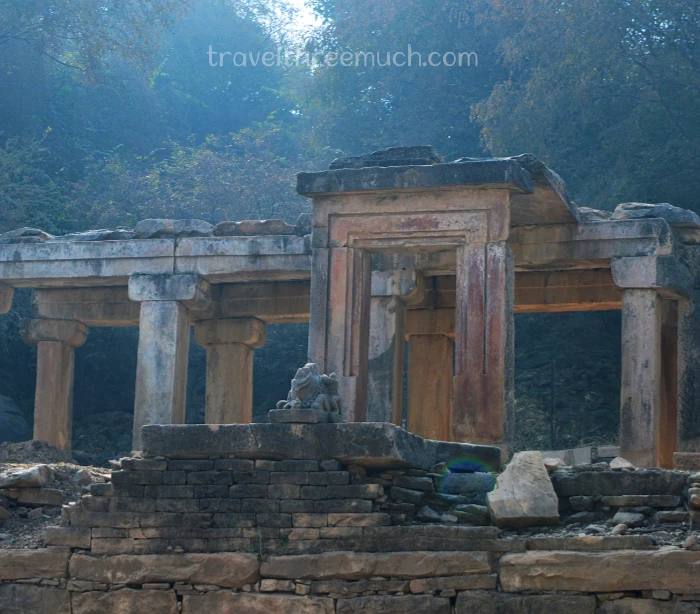
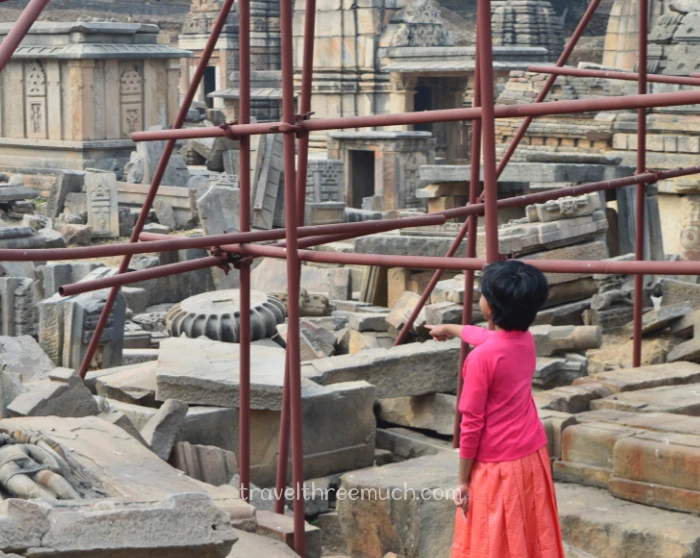
Fragments of sculptures litter the landscape. Restoring hands try to figure out a way and put the perfect piece and recreate the magic that has been shattered.
One of the main big temples has been restored to a large extent and another restoration is in progress. The National Culture Fund and Infosys foundation have been contributing towards this tremendous project in Madhya Pradesh.
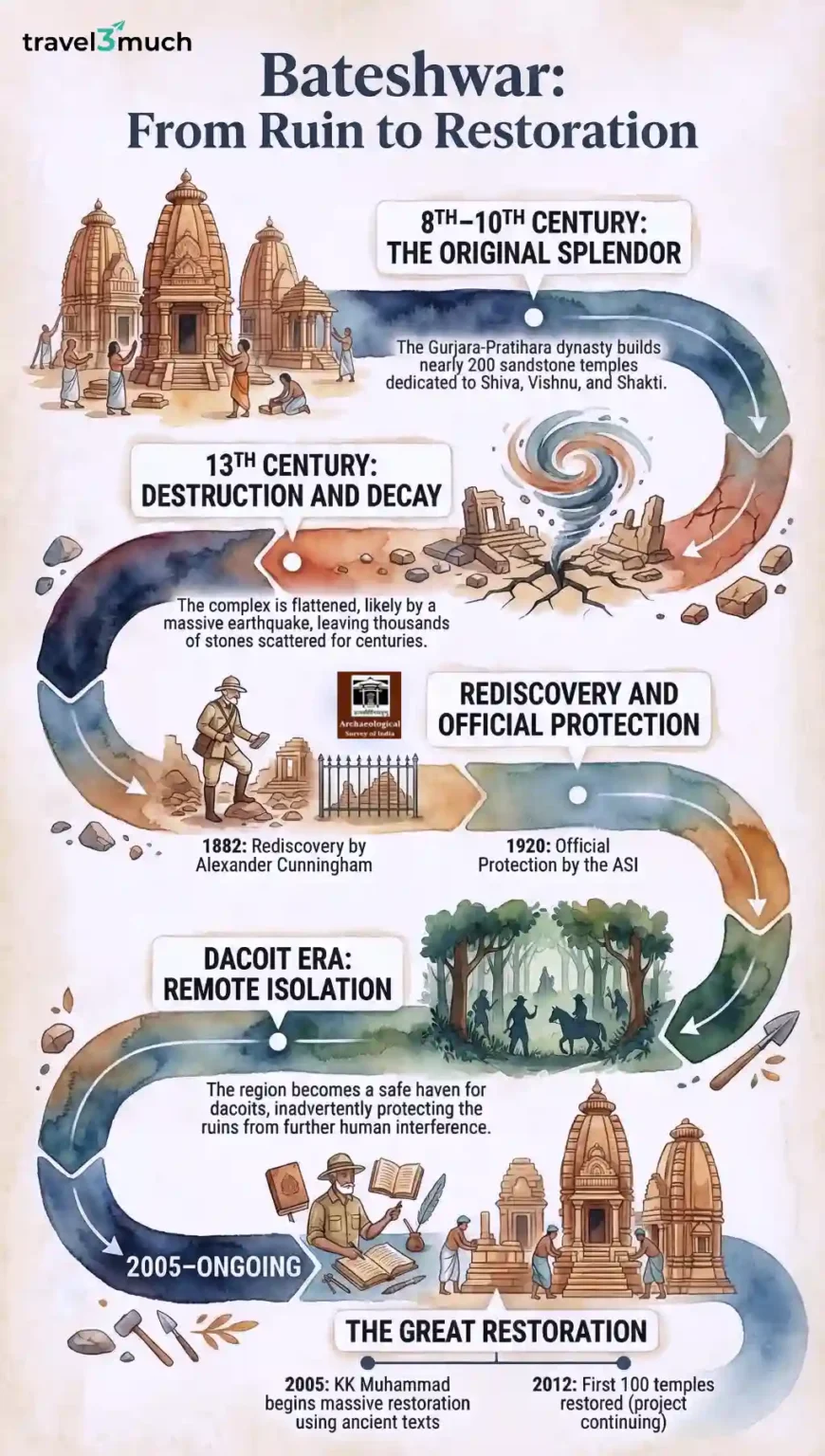
When Padma Shri KK Muhammad was posted as Superintending Archaeologist of the ASI’s Bhopal circle, Bateshwar was on his list. He first visited in 2004. What he found was staggering – thousands of temple components scattered across acres, entwined in roots, swallowed by scrub jungle.
Muhammad’s team used ancient Sanskrit architectural texts alongside still-standing regional temples as reference points. Each carved stone was examined for its joints, its iconographic position, its curve relative to the shikhara it must have belonged to. Over years of work, approximately 80 temples were restored. A large Vishnu temple comparable in ambition to Khajuraho’s temples was still being restored when this article was written. The National Culture Fund and the Infosys Foundation have contributed to the ongoing project.
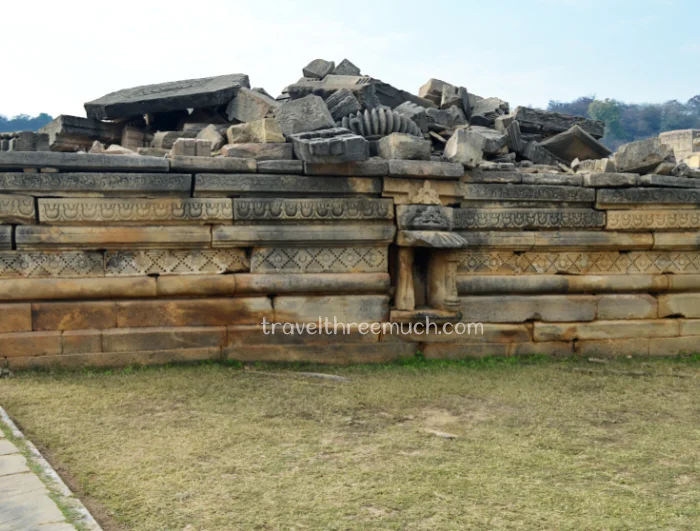
What remains today is something no other site in India quite offers: the coexistence of the completed and the incomplete, the restored and the still-scattered — a living archaeological process. A jigsaw puzzle that isn’t done yet.
Bateshwar — the History
The Bateshwar temple complex is a cluster of nearly 200 sandstone Hindu temples spread across 25 acres of rocky, ravine-cut terrain in Morena district, about 35 km north of Gwalior.
Built between the 8th and 10th centuries CE by rulers of the Gurjara-Pratihara dynasty — one of the most powerful kingdoms of early medieval northern India — these temples were dedicated to Shiva, Vishnu and Shakti.
According to some sources, these temples are said to have been built by rulers from the Gurjara Pratihara dynasty. The temples were most likely destroyed during the 13th century although who or what laid waste to the temple complex remains unclear.
Over the years, various historians and archeologists have written about Bateshwar and its magnificence.
What makes Bateshwar unlike almost anywhere else in India is this: the temples were not excavated from the ground. They fell. Flattened most likely by an earthquake sometime after the 13th century, thousands of stones lay scattered across this site for centuries. What you see standing today is the result of one of the most audacious restoration projects in Indian archaeological history. And it still, rightly, a work in progress.
Also Visit: Padavali and Mitawali
If you’re driving out from Gwalior, don’t stop at Bateshwar alone. About 1 km away is Garhi Padavali. Garhi Padavali is a medieval Shiva temple enclosed within a 19th-century fort, with carvings so dense and finely worked that multiple architectural historians have called it one of the most spectacular temple interiors in India. A few kilometres further is the Chausath Yogini Temple at Mitawali which is a circular, open-sky temple perched dramatically on an isolated hilltop, whose geometry has sparked decades of debate about whether it inspired the design of India’s Parliament House.
The Mighty 3 of Morena
The three sites together make a logical and deeply rewarding full-day circuit. We’ve written a complete guide to both Padavali and Mitawali separately.
Essential tips
- Once you reach the place, you can take a stroll around
- Bateshwar is quite far from the city and hence there are no good eateries nearby.
- Washrooms are also not available.
- Photography is freely allowed throughout the complex. No restrictions. No fee.
An early morning visit is ideal as you would have the whole place to yourself. Since we went around 9 AM, there were just two others in the temple complex and we were able to spend a lot of time amidst all the calm.
Travelling with Kids
- Bateshwar is more manageable with children than you might expect from a site this remote.
- The restoration work happening around you is fascinating for older children who can grasp the concept which is why we opened this post the way we did.
- The jigsaw puzzle metaphor is not an exaggeration: stones sorted in rows, templates used for matching, workers carefully fitting carved blocks. A child who’s done a puzzle will understand immediately what they’re seeing, and that is a rare thing at an archaeological site. In fact, the day before, we told our daughter that we were going to see a giant puzzle and hyped it up!
- The terrain is uneven throughout. It is not a site to let a toddler run ahead unsupervised as restoration is happening.
- There is almost no shade in the main temple area. In November we found it comfortable until mid-morning; in March or later, an early arrival becomes critical.
What Other Travelers Ask
Is there an entry fee at Bateshwar?
No. Entry to the Bateshwar temple complex is free. There is no ASI admission charge and no parking fee.
Can you visit Bateshwar, Mitawali and Padavali in one day?
Yes, comfortably. Plan for 2-3 hours at Bateshwar, 45 minutes at Padavali and 45-60 minutes at Mitawali. Start from Gwalior by 8 AM and you’ll be back by early evening.
Is Bateshwar safe to visit?
Yes. The dacoit era in this part of Chambal has effectively ended. The site is maintained by ASI staff and regularly visited. We felt very comfortable there. The workers involved in the restoration work were also friendly.
Are the Bateshwar temples older than Khajuraho?
Yes. The earliest temples at Bateshwar have been dated to around 750-800 CE. The Khajuraho group was built primarily between 950-1050 CE. Both were built under Gurjara-Pratihara patronage and share architectural lineage, though Bateshwar’s temples are smaller and more austere.
Prasanna Vasudevan
Prasanna is the Primary Writer and Technical Expert behind the posts. He is responsible for the detailed facts, historical context, and logistical breakdowns. He has a deep love for mountains, history, nature, and is the family's expert packer.
Leave a Reply