

Jantar Mantar Jaipur: Discover the UNESCO Solar Clock
Updated on March 11, 2026
Contents
A Legacy of Precision: The Vision of Sawai Jai Singh II
Jantar Mantar was constructed by Maharaja Sawai Jai Singh II in the 18th century. There are four other such astronomical observatories built by the same king – in Delhi, Ujjain, Mathura and Varanasi.
Some of these are the largest instruments built in their category and are very advanced in terms of their precision.
The Significance: Why Jantar Mantar Was Built
The guide was quite knowledgeable about the astronomical and astrological significance of the instruments. From our guide, we understood that the pursuit of precision for the calculation of time seemed to be driven by a two-pronged need.
- Firstly, to be free of dependency on the Islamic almanacs being referred to for agricultural milestones, which were becoming increasingly inaccurate due to the lack of correction factors for astronomical events.
- Secondly, the more immediate inability to accurately record the time of birth and prepare the ‘birth chart’ which relied on the accuracy of birth time and location of birth.
The birth chart is an Indian astrological element that plays a crucial role in the individual’s life decisions ranging from choice of education to compatibility with one’s partner. It was astonishing to see that provisions had been made to calculate the birth time with a great degree of accuracy irrespective of the presence of the sun or moon.
The only precondition seems to have been reasonably clear skies.
The Instruments (Yantras) of Jantar Mantar
Some of the yantras that can be found in Jantar Mantar Jaipur are listed below. There are many, and do read up on them before you visit the place. The details of which can be found in the official website.
Note: The word ‘yantra‘ simply means instrument.
Samrat Yantra
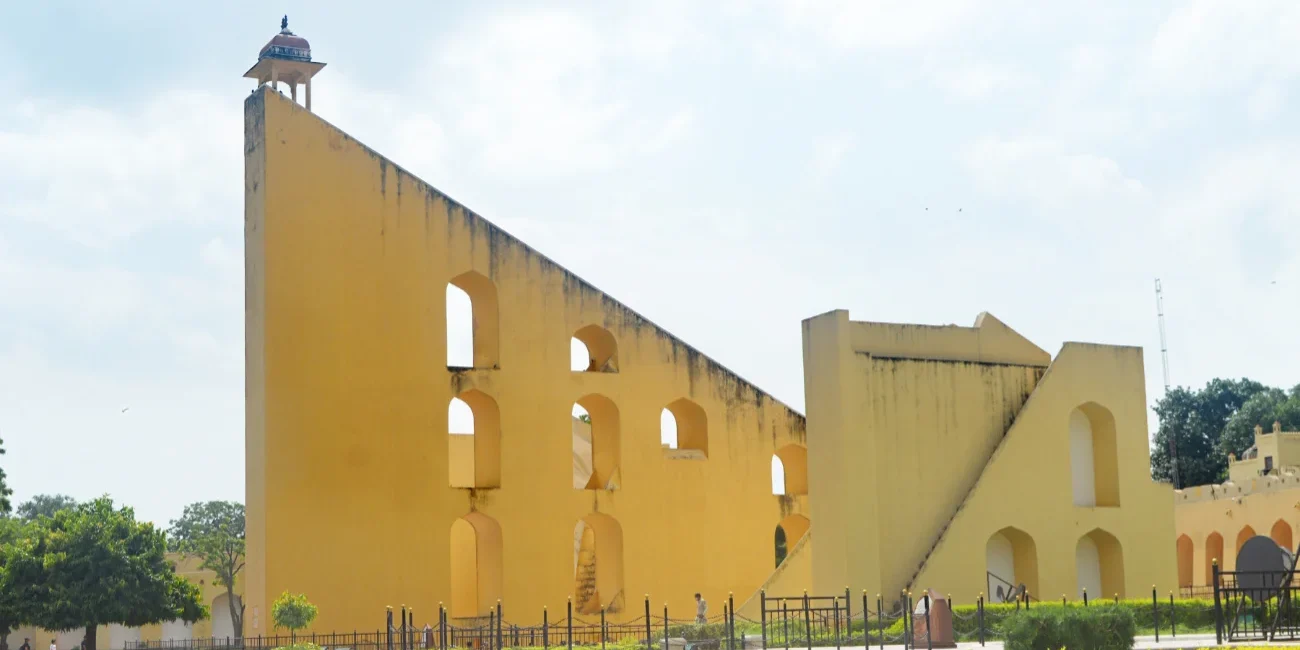
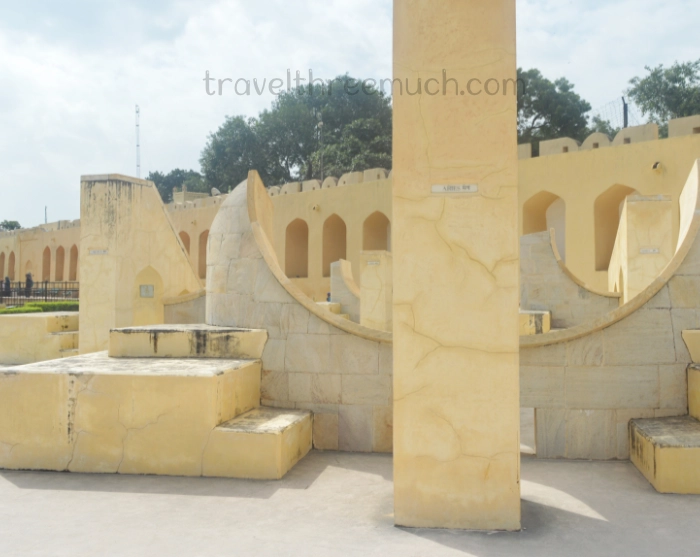
The Samrat yantra which is also referred to as the Supreme sundial and can measure time to an accuracy of two seconds.
Laghu (Small) Samrat Yantra
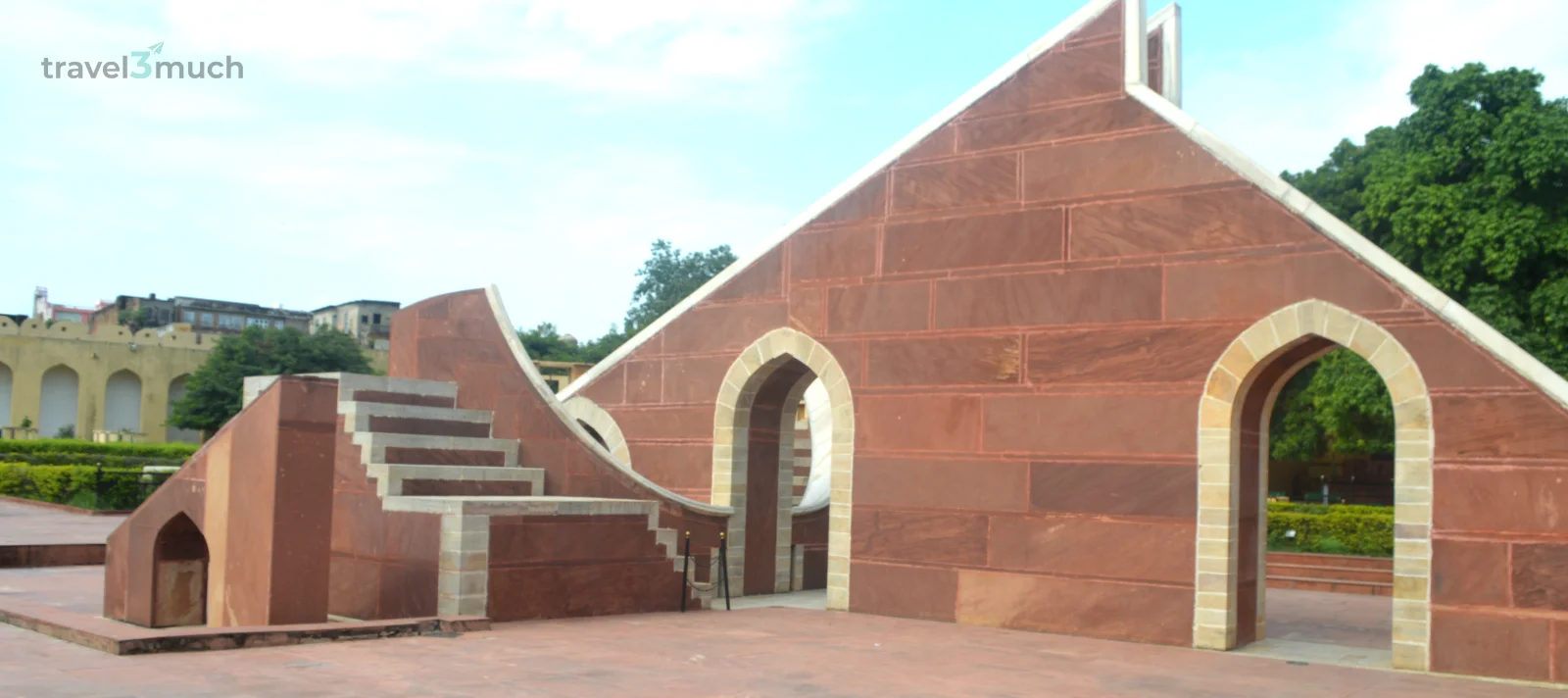
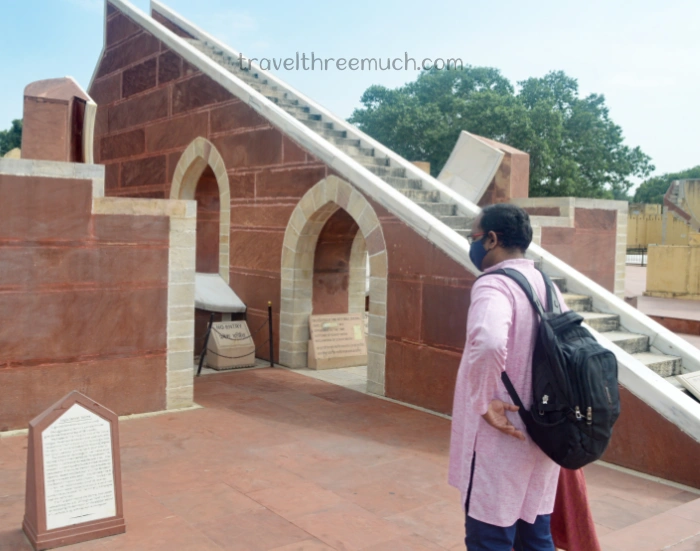
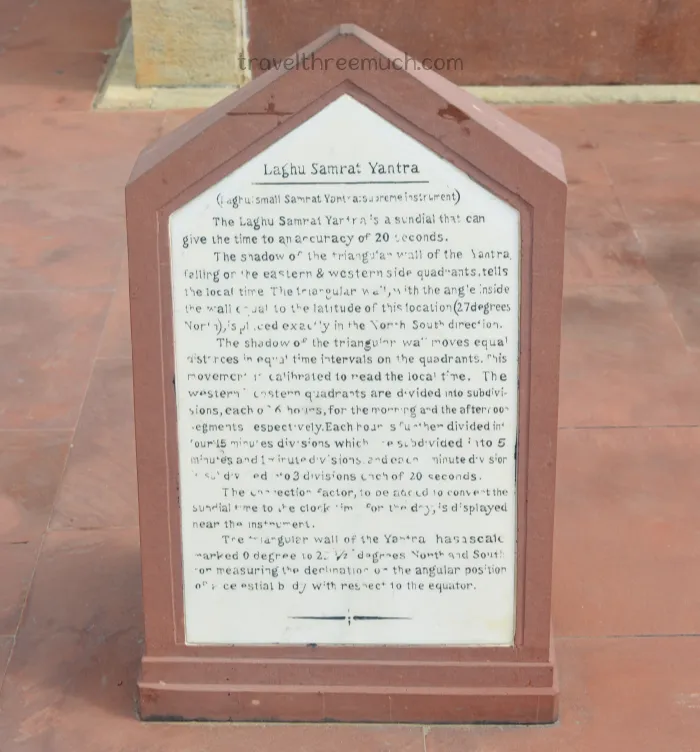
The small Sun dial or the Laghu Samrat Yantra is the instrument which is also used for time calculation. One of the side walls of this instrument is at an angle of 27 which is the latitude of Jaipur. There are two quadrants and both are divided by 6 hrs., 60 min. and each minute by 60 seconds. Based on the position of the shadow, the time is calculated.
Narivalay yantra
The Narivalay Yantra is an equatorial sundial that also works based on the latitude of Jaipur.
Rama Yantra
The Rama yantra and the Digamsa yantra are a pair of instruments. This instrument is used to observe the position of any celestial object.
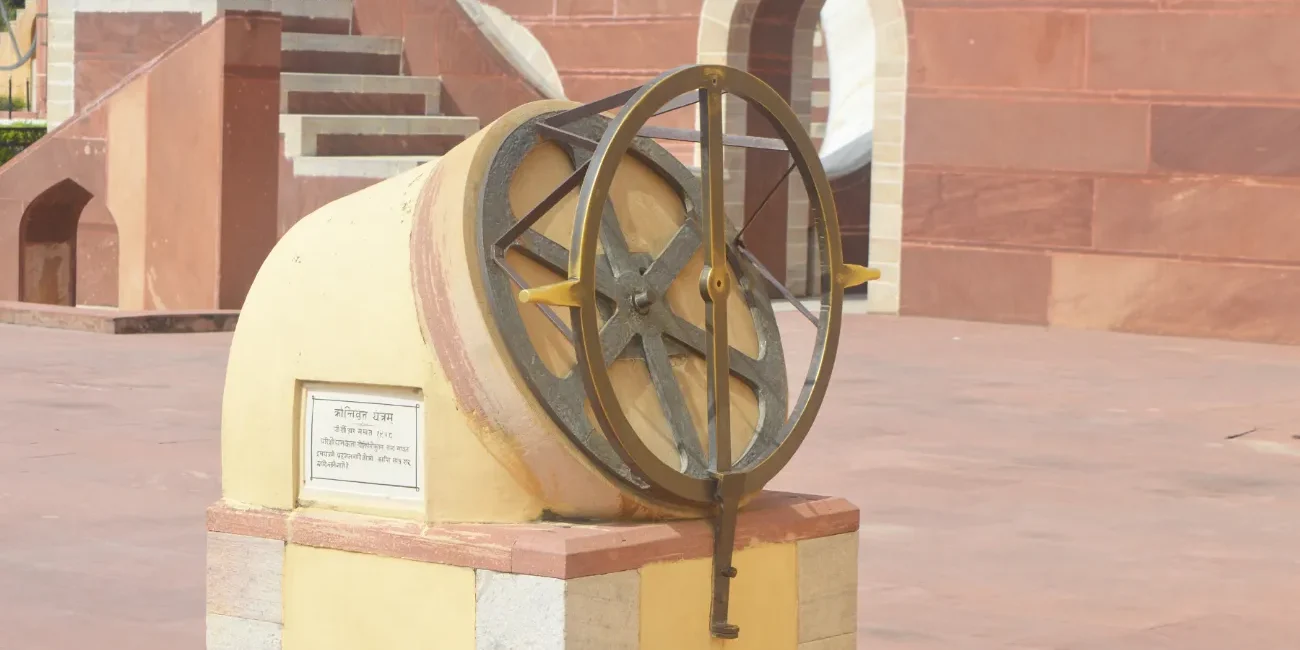
Kranti Writa Yantra
In comparison to the other instruments at this observatory, the Kranti Writa Yantra is a small masonry brass instrument which has two brass circles. The circles help in the direct measurement of celestial latitude and longitude.
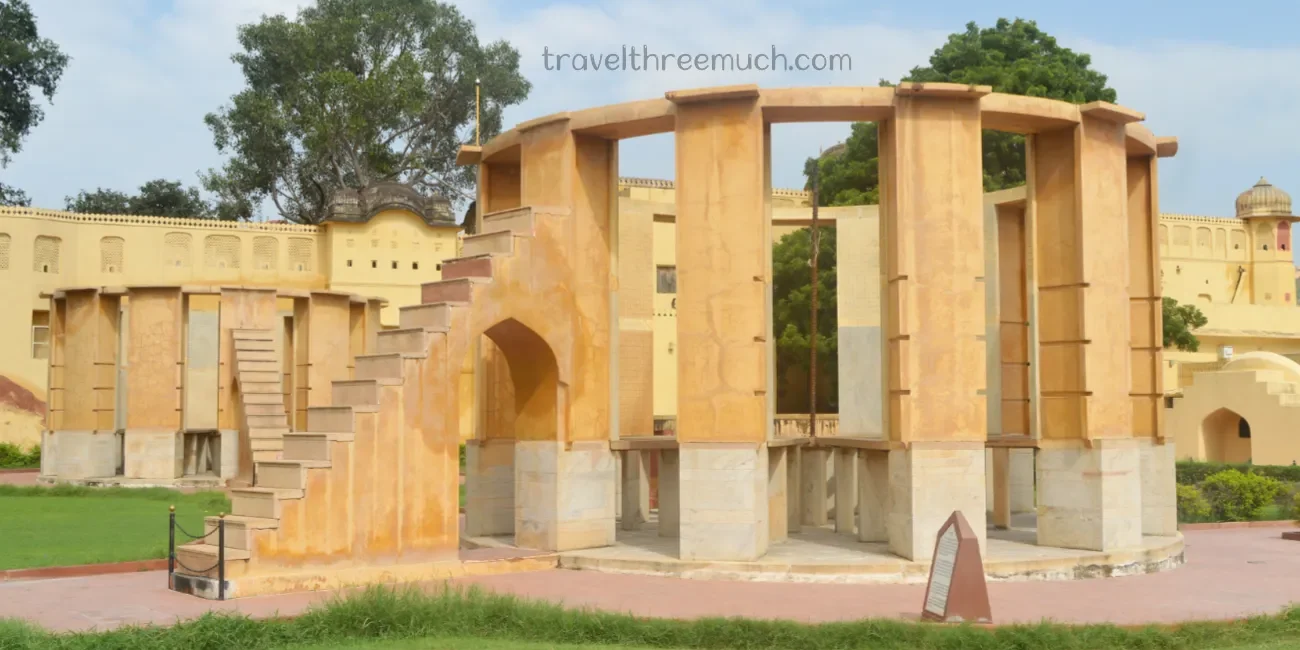
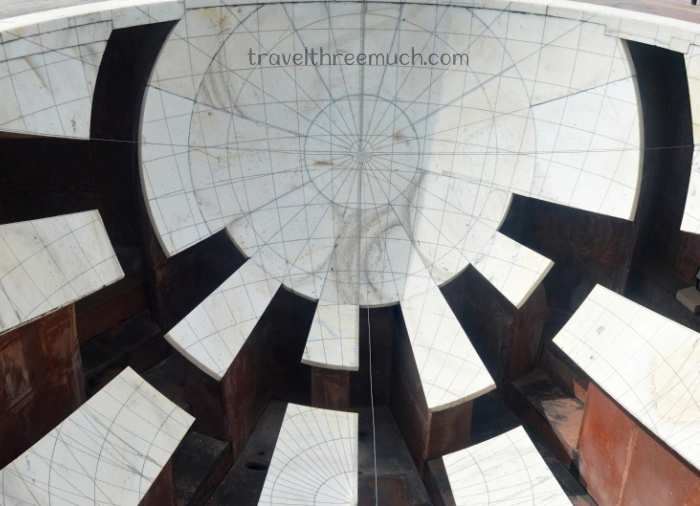
Jai Prakash Yantra
Rashivalaya Yantra
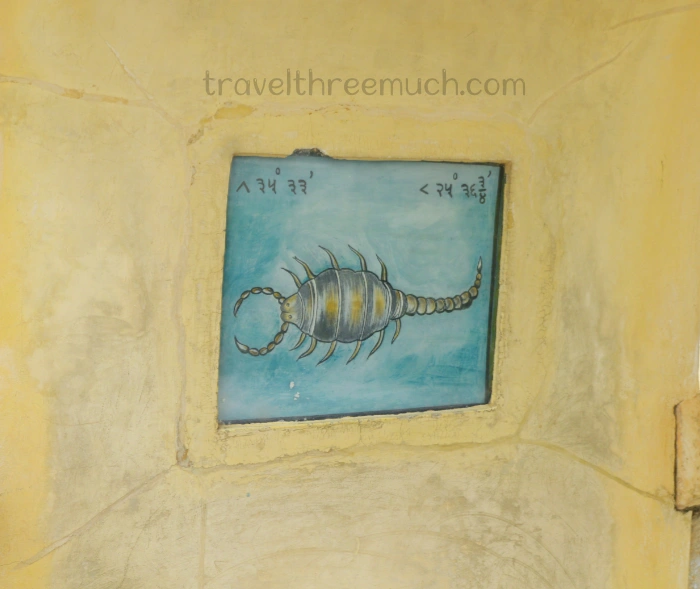
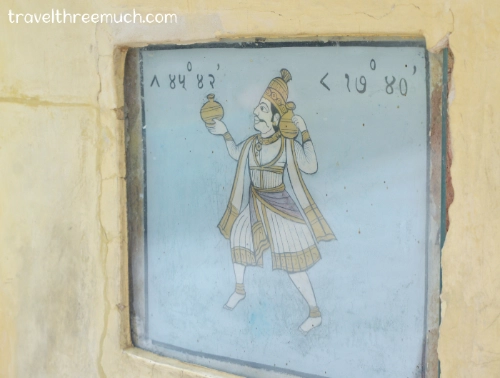
There are 12 Rashivalaya yantras – one for each rashi or zodiac sign. Each instrument measures the latitude and longitude of the celestial object of the respective constellations. This further helps in creating accurate horoscopes also based on the time of birth.
Tips for travellers
- Do hire a certified guide. They will help you understand the function of the instruments.
- The guides tend to hurry a bit. So tell them beforehand that you need things to be explained slowly.
- We did one round with the guide and then one round on our own trying to recollect whatever he said. We did this by explaining to our kid about each instrument.
- A sunny day is the best to see the play of shadows and their role in the calculations.
Note for families
- Rather than just telling your your kids to look at the Samrat Yantra (the world’s largest sundial) and see if they can tell what time it is just by looking at the shadow. Tell them it’s accurate to within 2 seconds – they will be amazed it’s faster than their digital watches!
- There is zero shade. Carry your umbrellas if travelling in the sunny season – which is most part of the year.
What Other Travelers Ask
How much time should I spend here?
We spent about 2 hours. We went early before the crowds came in. So, we did one round with the guides. Then, we went through one more round slowly by ourselves testing each yantra and letting our kid absorb the concept.
Is Jantar Mantar wheelchair and stroller accessible?
Mostly, yes. The park is flat and the paths are paved. However, there are no ramps to go up onto the platforms of the larger instruments.
Do I really need a guide for Jantar Mantar?
In our opinion, yes. I am not sure we would have been able to understand how the yantras worked without a guide. But, make sure yo only hire an authorized guide.
Is Jantar Mantar included in the Jaipur Composite Ticket?
Yes, it is included.
What is the best time of day to visit Jantar Mantar?
Since the instruments work on sunlight and shadows, the readings are most accurate and the shadows most visible when the sun is high in the sky. But having said that, we would suggest reaching by 9:30 am when the sun is out and shining. Although noon is also a great time to see the instruments in action, the city tends to get pretty hot.
After a couple of enriching hours at this observatory, we headed towards the City Palace. My left brain had been given enough work for the day… time for the right one to take over!
Ramya
Ramya is the Itinerary Mastermind and travel planner for the family. She specializes in crafting efficient, culturally-rich trips, with a passion for India’s art, heritage sites, forests, and waterfalls. She brings the human emotion and logistical precision to their journeys.


Leave a Reply