
Chand Baori Abhaneri: India’s Deepest Stepwell
Updated on March 3, 2026
Contents
Abhaneri is about 90 km from Jaipur. It houses one of the oldest and largest step wells in India – the Chand Baori or Chand Bawri.
Plan your trip
- Known as: Chand Baori/Bawri
- Construction date: 8th to 9th century CE
- Timings: 8:00 AM to 6:00 PM, open on all days
- Entry fee per person: INR 20 for Indian citizens and INR 250 for non-Indian citizens
- Getting there: Cab (90 km from Jaipur)
- Note:
- You can book tickets online here for Chand Baori (Jaipur Circle) up to a week in advance.
- There are a few places nearby that sell only water and not much else to eat.
- If you plan to stop here for lunch, bring your food and snacks.
Origins of the Abhaneri step well
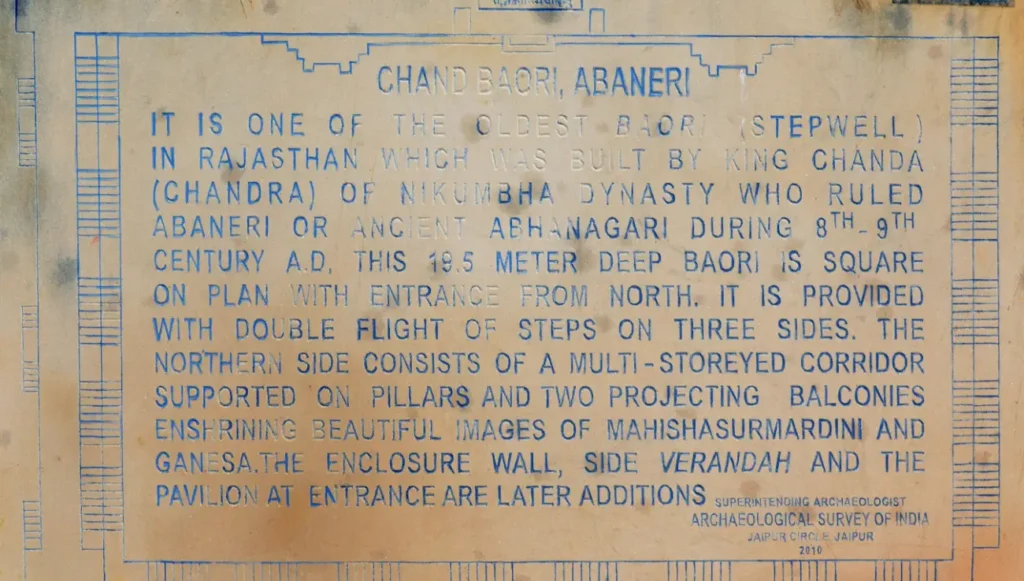
The Chand Baori or Chand Bawri, as it is spelt sometimes, is one of the largest and oldest step wells in India. A ‘baori’ or ‘bawri’ in the local language is a well from which water can be drawn. Dating back to the 8th-9th century CE, the step well’s construction features and carving styles suggest this period, though no inscriptions confirm it. The name Chand is ascribed to a local ruler of the Nikumbh dynasty called Raja Chanda.
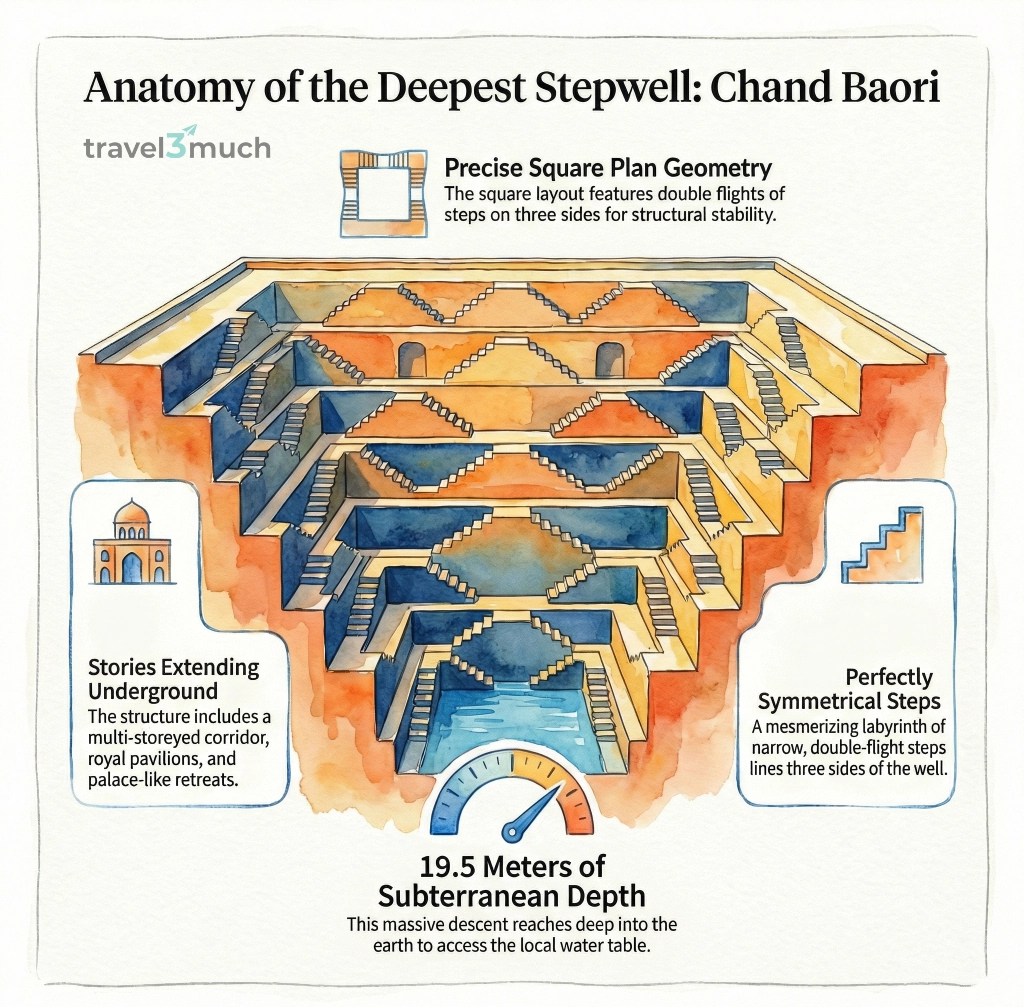
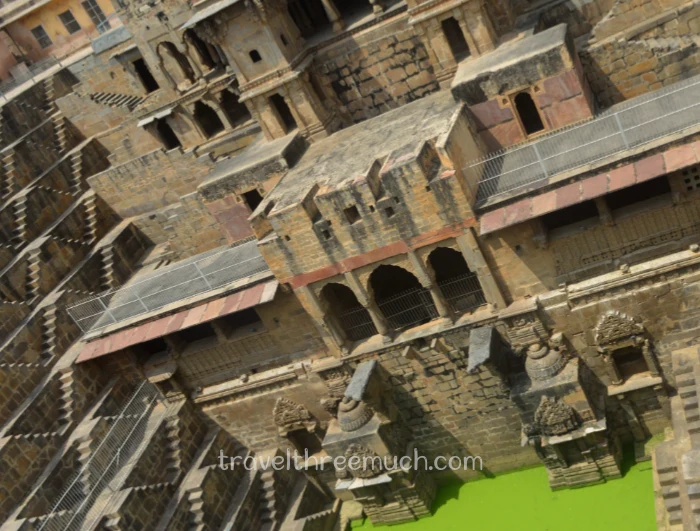
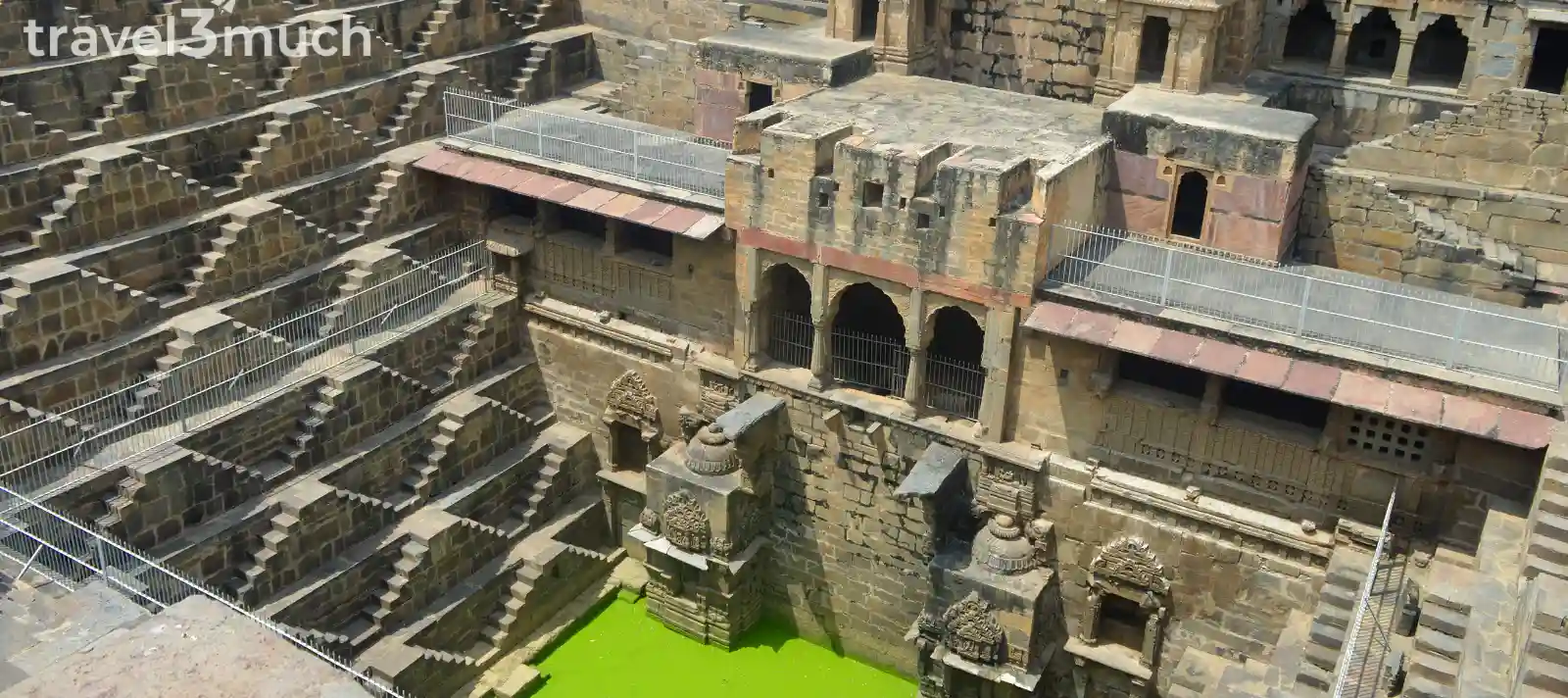
The step well and the adjoining temple of Harshad Mata are said to have been damaged in Mahmud of Ghazni’s repeated invasions of India. Due to the arid nature of the well’s location, it was built in the shape of an inverted pyramid to conserve as much water as possible.
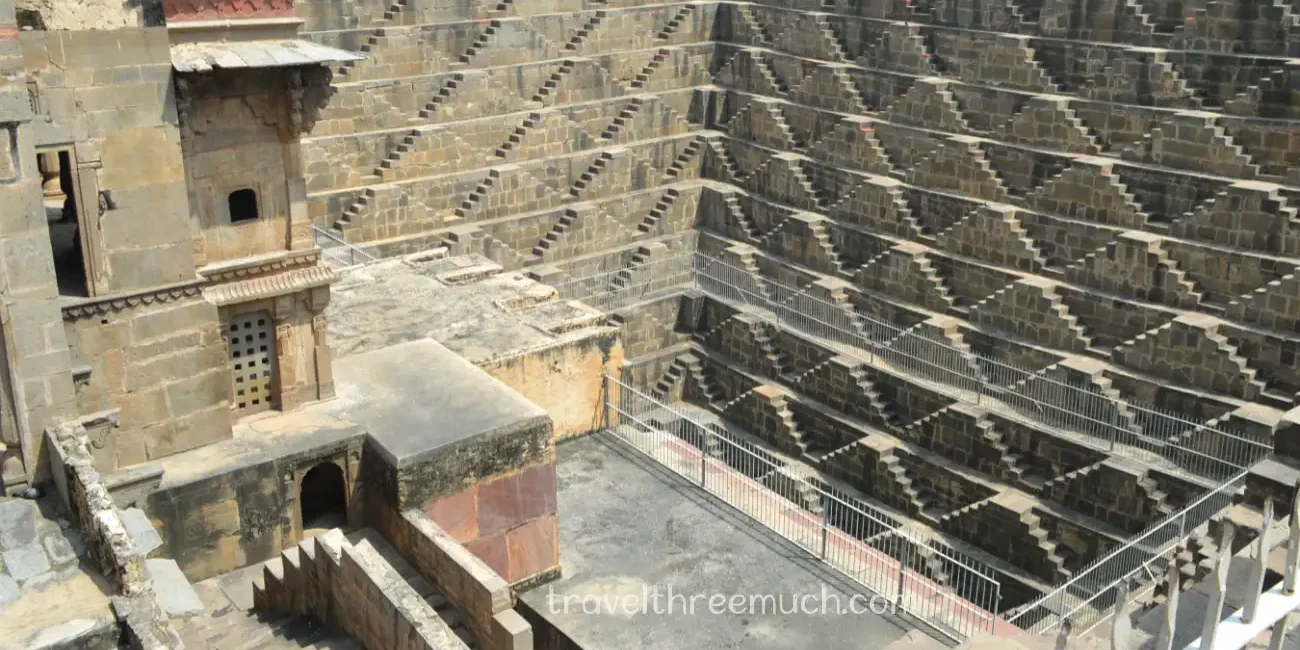
The 30 m (100 ft) deep well has 3500 steps over 13 stories extending under the ground level. This architectural marvel likely served religious ceremonies, community gatherings, and as a cool refuge for royalty during the scorching Rajasthan summers.
The Architecture
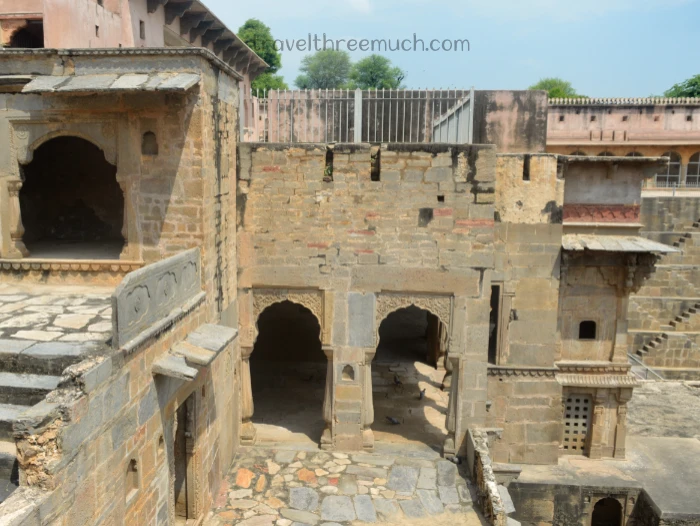
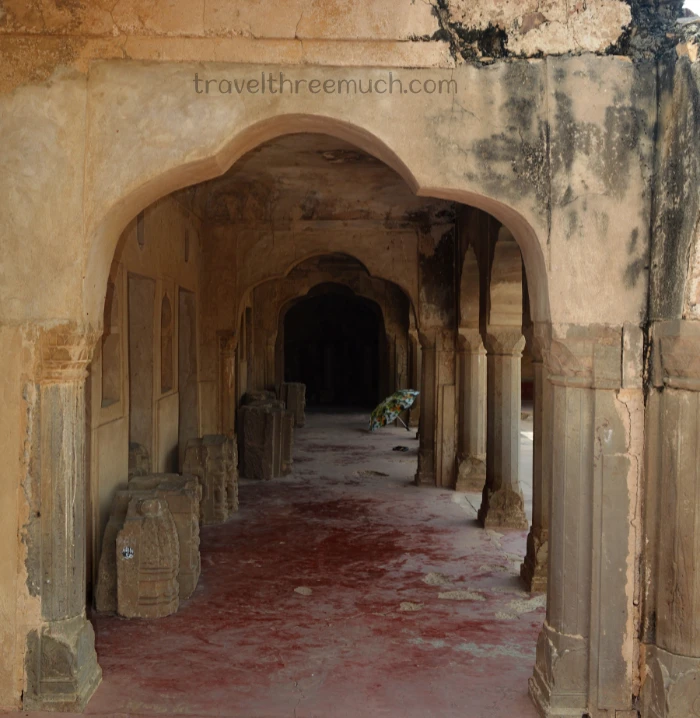
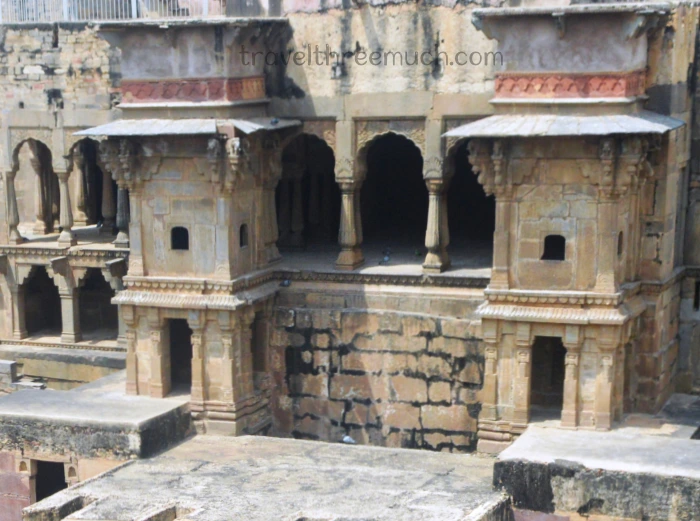
We entered the well’s first level through a deceptively small entrance, which then opened out into an arcade surrounding the well. Once in the arcade, we saw a palace-like structure that extended for about five or six stories into the well, probably used by the royals as a summer retreat. The next six or so stories that were visible had a pavilion and a couple of terraced temple-like structures that point to probable ceremonial uses of the well as well.
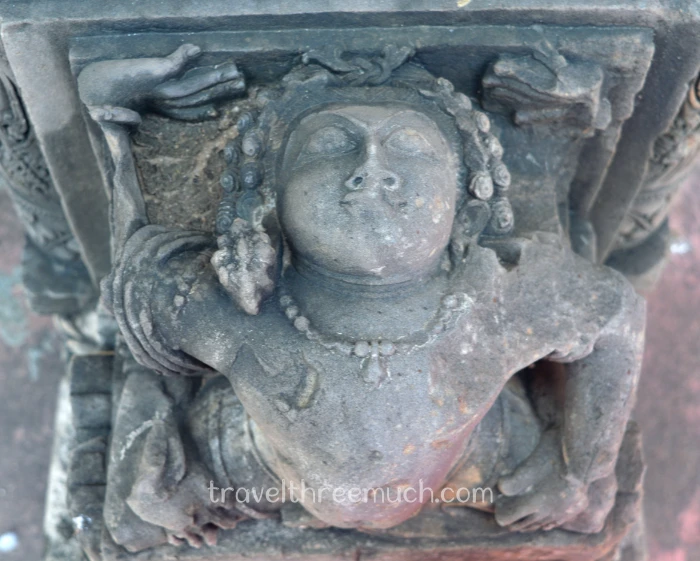
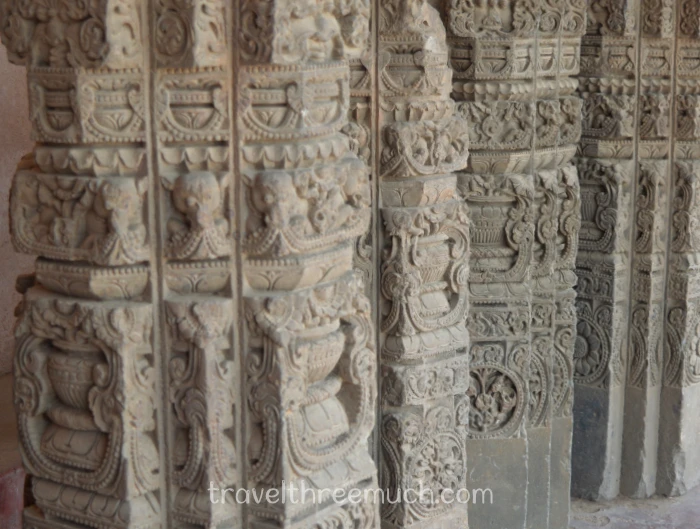
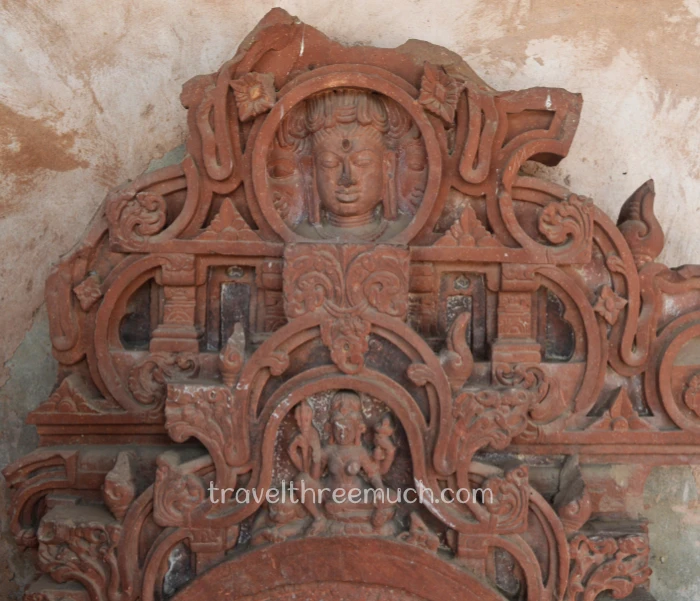
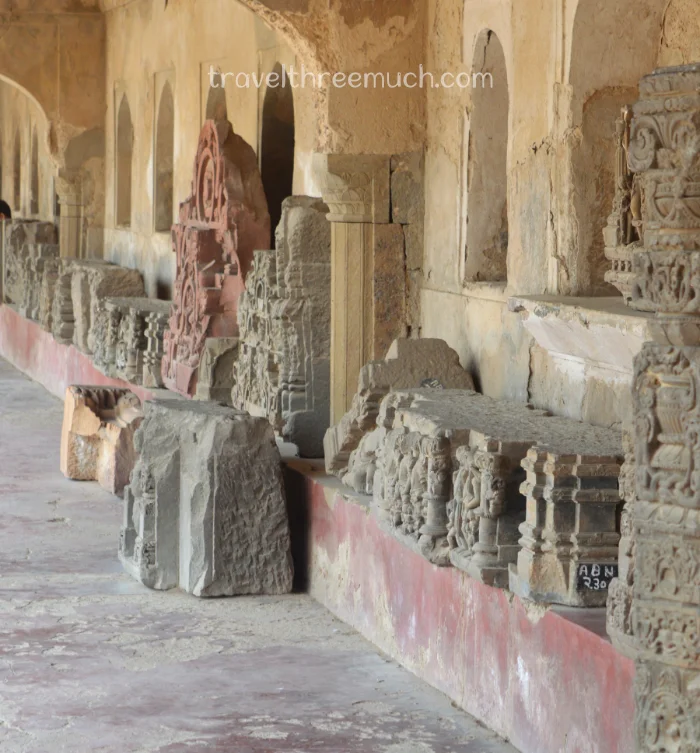
The arcade had a collection of different architectural elements such as pillar fragments, joineries of pillars to beams, pillar bases, bas relief fragments and other assorted decorative sculptures. These appear to be from the surrounding areas of Abhaneri and in some cases, places farther away. Many of these fragments are believed to date back to the time of Mahmud of Ghazni’s annual raids on India.
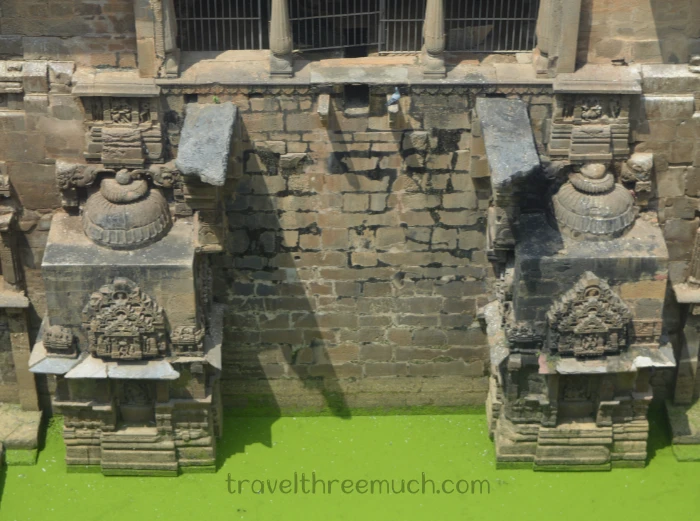
Inside the well itself, the northern wall featured two niche-like structures. One contained an image of Ganesh, the elephant-headed son of Shiva, while the other displayed Mahishasuramardini, a fierce form of Parvati who vanquished the buffalo-headed demon Mahisha. There were exquisite jaalis in the royal pavilion area of the stepped well.
Some Musings
As we made our way back, a guide lamented the lack of visitors to this magnificent monument compared to Rajasthan’s more popular attractions. Despite its appearances in Indian films and its inspiration for Hollywood set designs, Chand Baori remains relatively obscure, a hidden gem in the middle of nowhere.
The distance from Jaipur and the absence of other popular sites nearby likely contribute to the low visitor numbers. However, a breathtaking sight awaits those who venture to the well when it’s about half full.
Up for a detour to India’s Ghost Town?
Known as India’s most haunted location, the Archaeological Survey of India (ASI) strictly prohibits entry to Bhangarh Fort before sunrise and after sunset. If you’re planning a trip from Jaipur, there are a few things you need to know about the "curse" and the logistics.
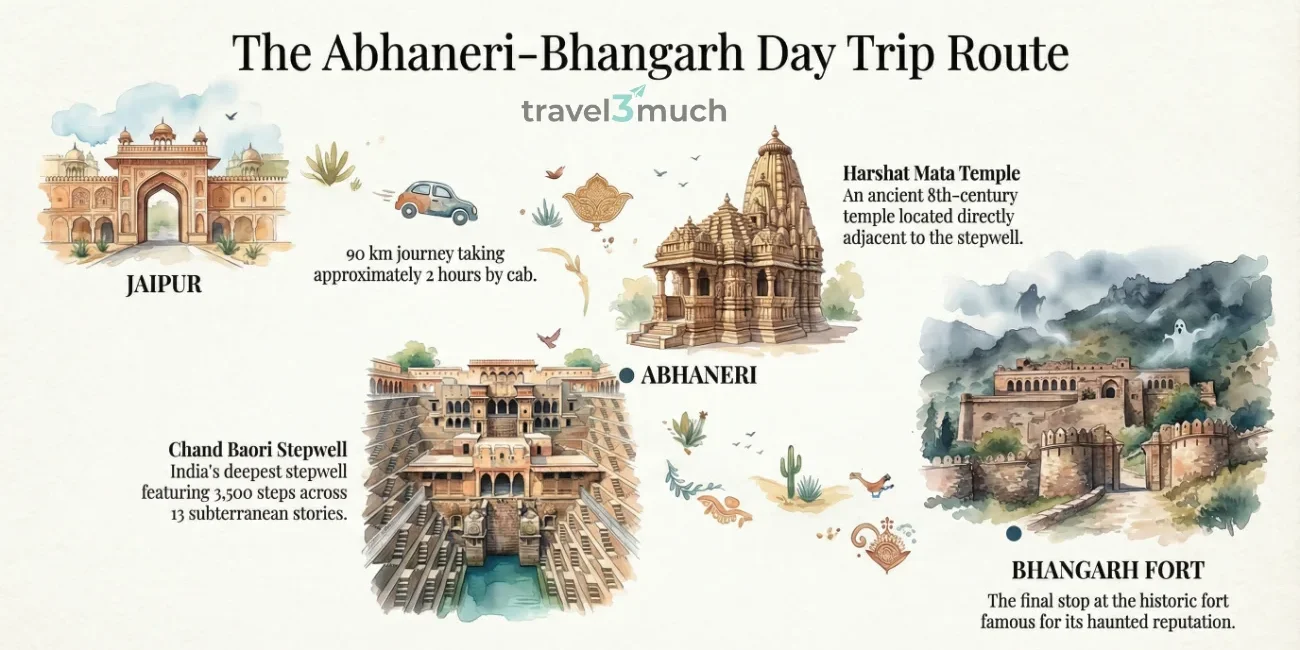
The Ultimate Heritage Day Trip: From Abhaneri to Bhangarh
We visited Abhaneri as part of a fascinating day trip from Jaipur. After spending the morning marvelling at the symmetry of Chand Baori, we continued our journey to the ‘haunted’ ruins of Bhangarh Fort.Â
The drive from Abhaneri to Bhangarh takes about an hour, leading you from the silent geometric depths of the stepwell to the sprawling, atmospheric remains of a 17th-century kingdom nestled against the Aravalli hills. Combining these two sites allowed us to experience the best of Rajasthan’s ancient engineering and its most famous local legends in a single day.
Although the Harshat Mata Temple is nearby, we decided to give it a miss as we spent too much time at the step well and the day was getting hotter. But if you have the time, you may also combine a short stope over at Harshat Mata Temple.
Abhaneri with Kids: What to Know Before You Go
Traveling with children to a “hidden gem” like Abhaneri requires a bit more preparation than visiting Jaipur. Here is how to make the trip smooth:
- Safety First: The steps at Chand Baori are extremely steep and protected by a low fence. Keep younger children close and explain that climbing is strictly prohibited.
- The symmetry of the steps is a great way to introduce them to basic geometry in a fun way.
- Pack sufficient snacks: Unlike Jaipur, there are very few tourist-friendly cafes in Abhaneri. Carry your own snacks and water, as the heat reflecting off the stone can be intense for little ones. We carries fruits and water to keep ourselves hydrated.
- Comfortable clothing: The weather is hot – wear light cotton clothes.Â
What Other Travelers Ask
How far is Abhaneri from Jaipur?
Abhaneri is approximately 97 km from Jaipur. It takes about 2 to 2.5 hours to reach by road.
Can we climb down the steps of Chand Baori?
No. For safety and conservation reasons, visitors are only allowed to view the stepwell from the surrounding corridors. You cannot walk down the 3,500 steps.
Is it worth visiting Abhaneri and Bhangarh in one day?
Absolutely. Abhaneri and Bhangarh day trip was far more enjoyable and enriching than we expected. According to us, it is a must do!
What are the timings and entry fees?
The stepwell is open from sunrise to sunset. For Indian citizens, the entry fee is ₹25, while for foreign nationals, it is ₹300. Children under 15 usually enter for free.
What is the best time to visit?
The winter months October to January or monsoon month of August will be ideal.Â
Prasanna Vasudevan
Prasanna is the Primary Writer and Technical Expert behind the posts. He is responsible for the detailed facts, historical context, and logistical breakdowns. He has a deep love for mountains, history, nature, and is the family's expert packer.
Leave a Reply