
osian temple_heroimage

Osian Temples and Desert Safari: A Day Trip from Jodhpur

Updated on March 15, 2026

Contents

    The History and Culture of Osian, Rajasthan

    Osian is a town that is on the edge of the Thar Desert. It has a rich legacy of commerce and culture. Osian was first a trading hub as early as the 4th century CE. It developed later into a major pilgrimage centre for Jains and Hindus. Mohammed of Ghor attacked the town in the 12th century CE. The invasion led to a sudden decline in Osian’s fortunes, from which it never recovered.

    We decided to visit Osian as well for two reasons. Firstly, the pictures of the ruined temples in this offbeat place reminded us of Hampi. Secondly, the chance to experience the desert was too good to pass up.

    Read on to find out about our trip and how you can plan your visit to this forgotten jewel. There are two key temples with active worship. These are for Hindus, the Sachiya Mata Temple, and for Jains, the Mahavira Temple.

    planplanettm How to Plan Your Osian Trip: Timings, Entry Fees, and Getting There

    Timings:

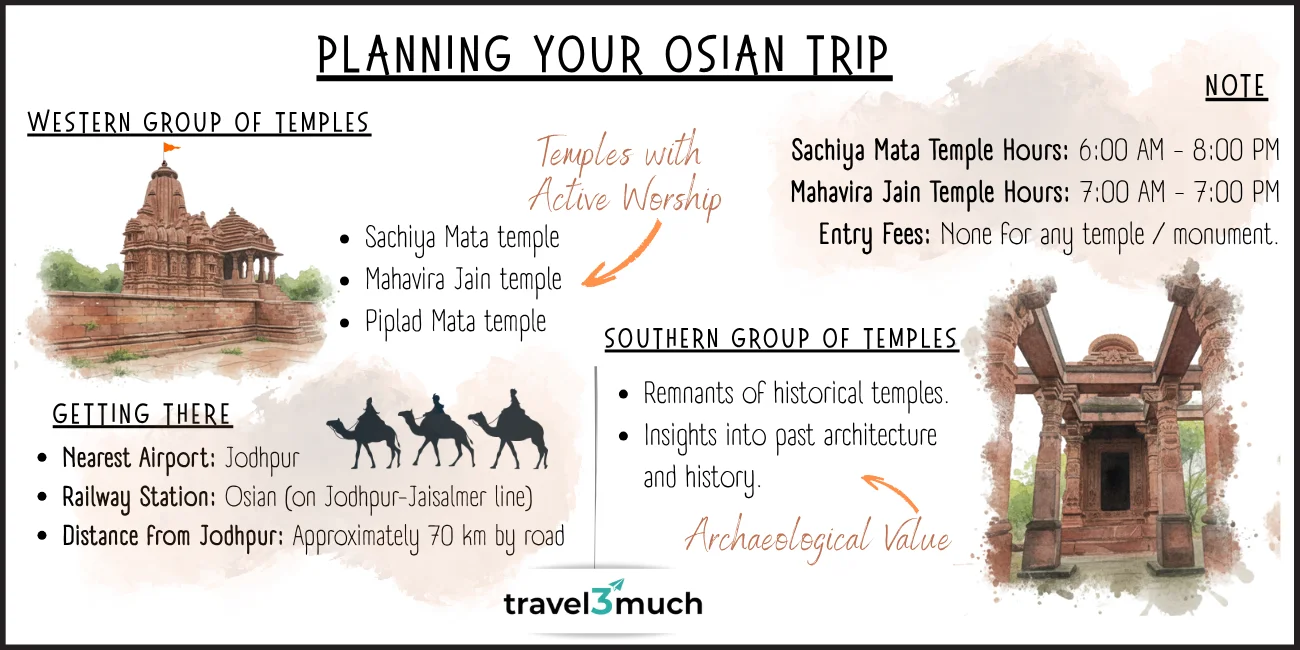
    • Sachiya Mata Temple: 6:00 AM to 8:00 PM; Temple closes at 10:00 PM during Dusshera (Navratri)
    • Mahavira Jain Temple: 7:00 AM to 7:00 PM
    • There are no entry fees to any of the temples or heritage monuments in Osian.

    Getting there: 

    The nearest airport is in Jodhpur. Osian has its own railway station on the Jodhpur-Jaisalmer line. Osian is about 70 km from Jodhpur by road. We took a cab from Jodhpur to Osian. 

    Osian’s temples can be divided into two groups – the Southern group and the Western group. The Southern groups of temples are ruins. The Western group are temples with active worship – Sachiya Mata, Mahavira, and Piplad Mata/Kali.

    Our cab driver dropped us at the start of the road leading to the Sachiya Mata temple. But we had spotted some ruins a little away from the drop-off point, and wanted a closer look. So we backtracked and reached the Southern Group of temples.
    osian infographic

    Exploring Osian’s Architectural Treasures: The Southern Group of Temples

    Vishnu and Shiva Temples

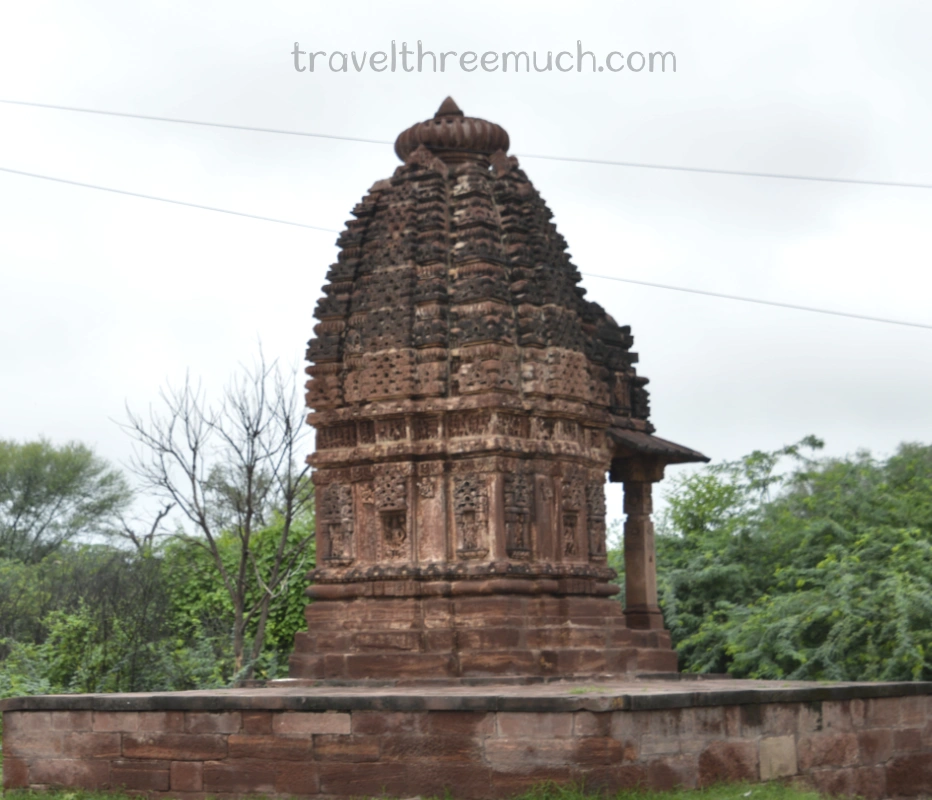
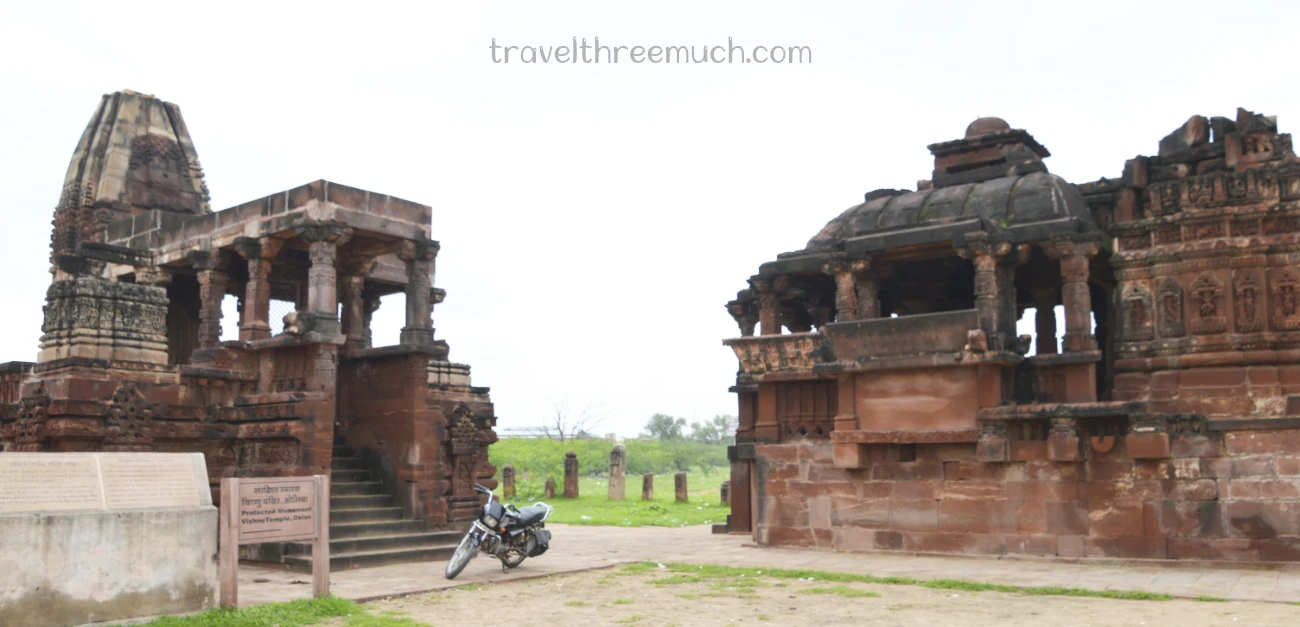
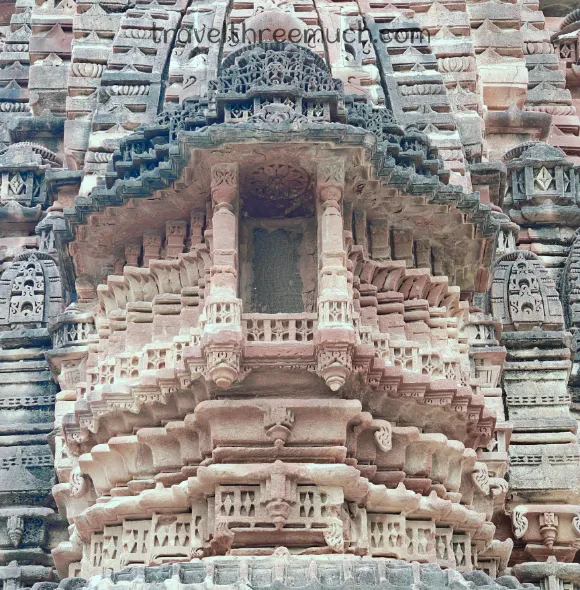
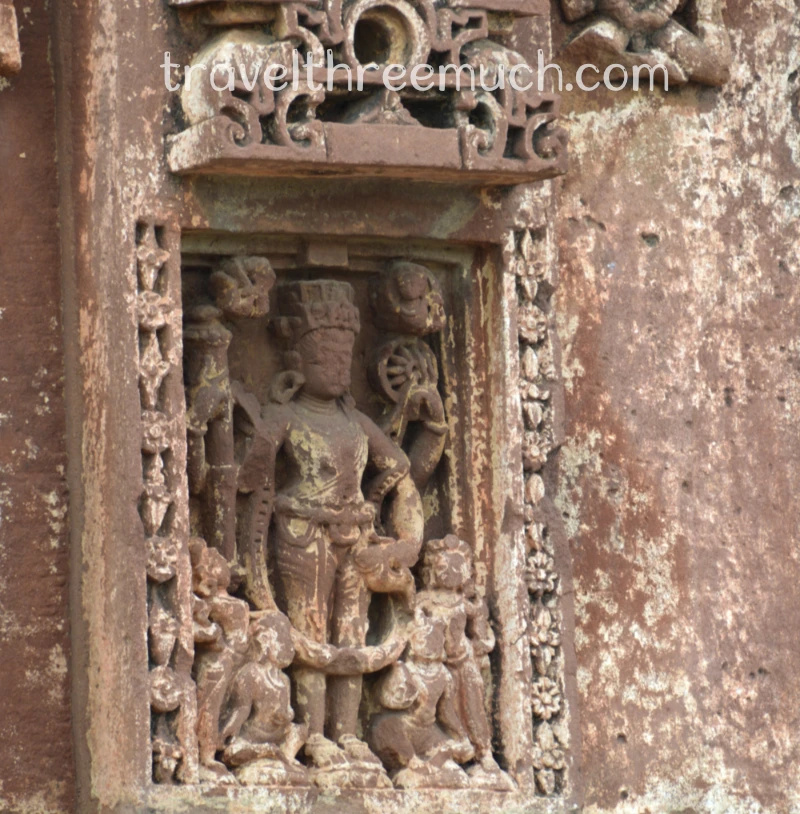
    The first temple we saw was the Vishnu temple on an elevated plinth. A small porch connected the staircase to the sanctum. We couldn’t find any idol inside the sanctum. The exterior walls featured exquisite carvings of Vishnu forms in niches. These, along with the images of Garuda (Vishnu’s anthropomorphic eagle mount), signified by a feather on his head, hinted that the shrine was dedicated to Vishnu. The tiered tower and the domed capping were all intact in this shrine, and we spent a while admiring them.

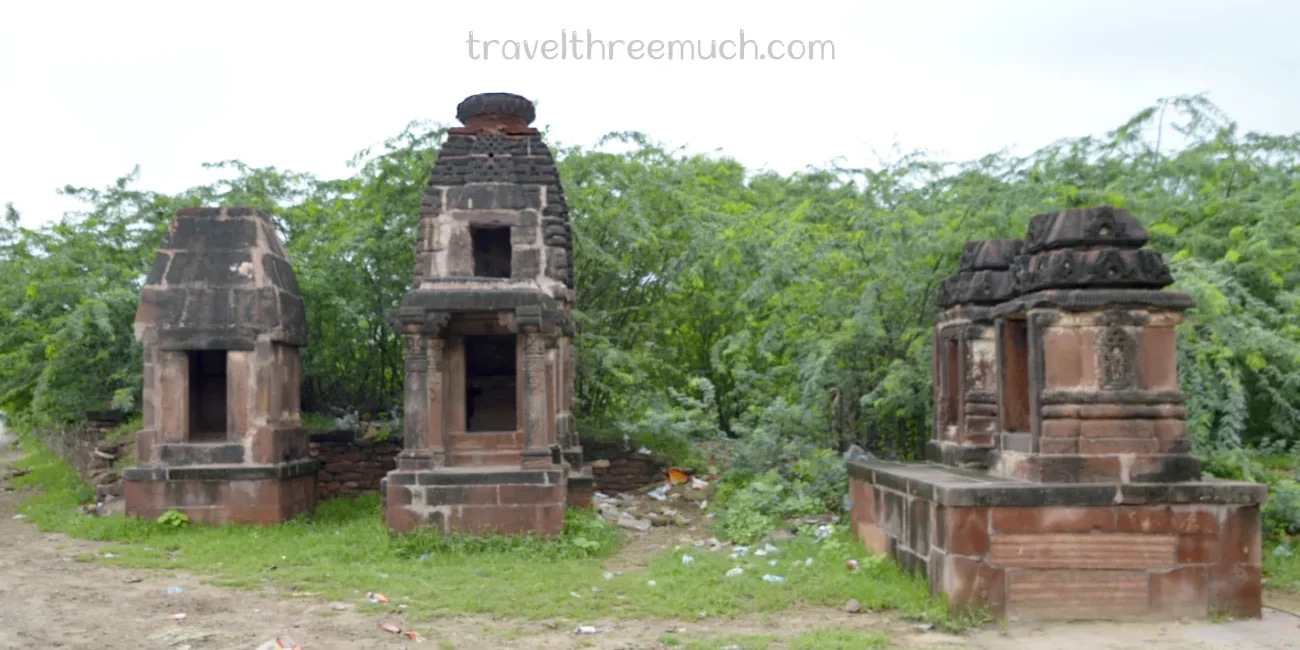
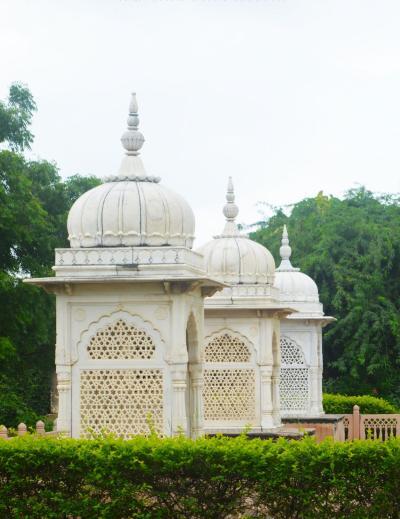
    We saw a small cluster of shrines further away and went there. The principal shrine was a Shiva Temple. The others are minor shrines called ‘dev kulikas’ in Rajasthan. None of them had any deities in the sanctum. The arrangement of the shrines and the ambience felt similar to the village temples in Tamil Nadu, yet the very different architecture gave an air of surrealism.

    shiva temple osian

    Harihara Temples

    Just opposite this cluster are the treasures of the Southern group – two temples dedicated to Harihara. Harihara is a combined form of Shiva and Vishnu, of the Hindu pantheon. This deity fuses the iconography of Shiva and Vishnu, dividing it vertically down the middle. You can see Shiva’s matted locks and trident alongside Vishnu’s orderly hairdo, discus, and conch. A stone tablet outside informed us that this was a part of the Osian Group of Monuments. There are at least three temples in Osian dedicated to Harihara. We were able to visit only two of those. A humongous mass of garbage blocked the way to the third temple. Only the temple tower, capped by a dome, was visible from afar.

    The Harihara temples date from the 8th century CE. The temples are on raised plinths and have no deities in the sanctum. One temple had most of the tower intact, except for the amlaka (the domed capping resembling a ridged Indian gooseberry), which was missing.

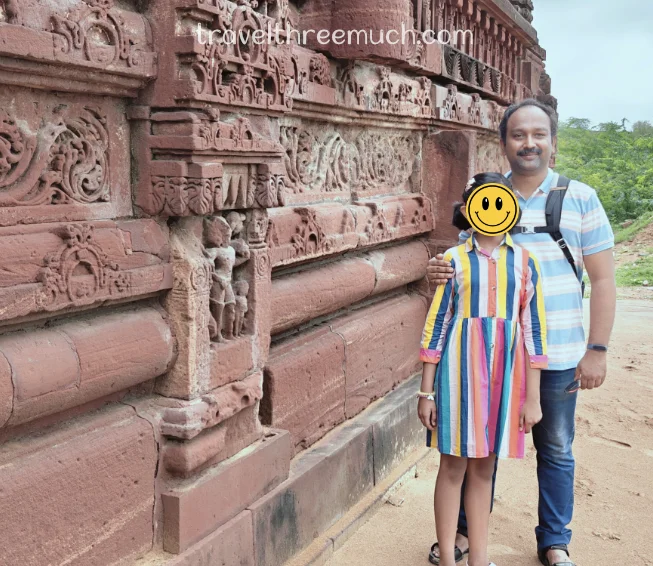
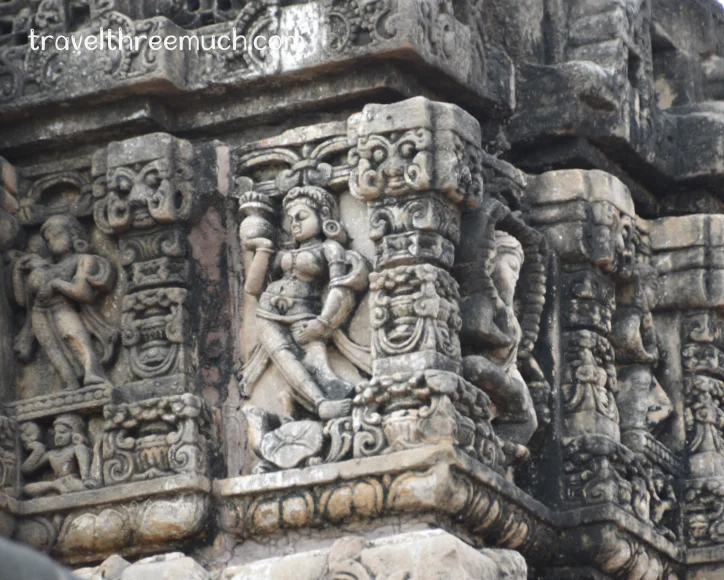
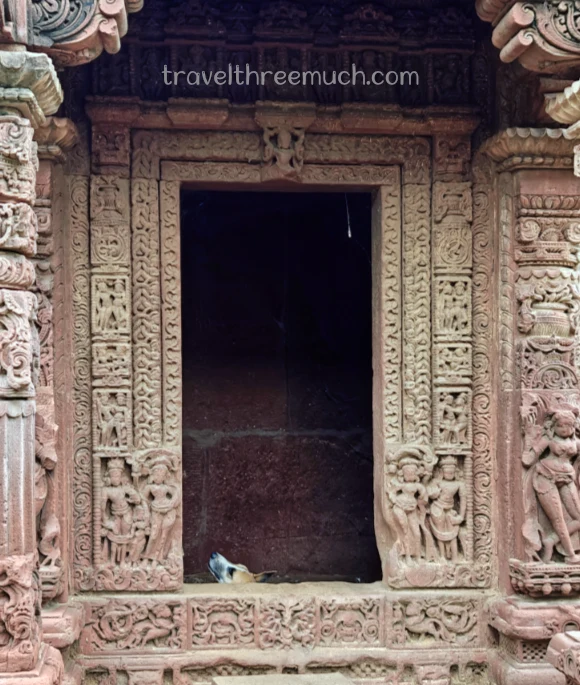
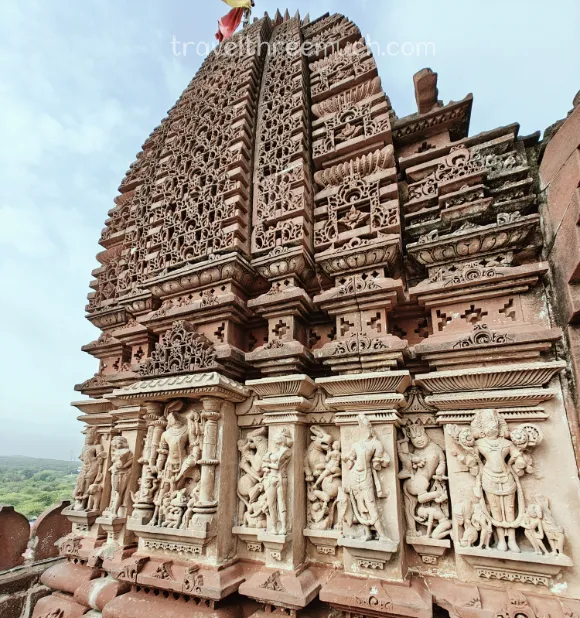
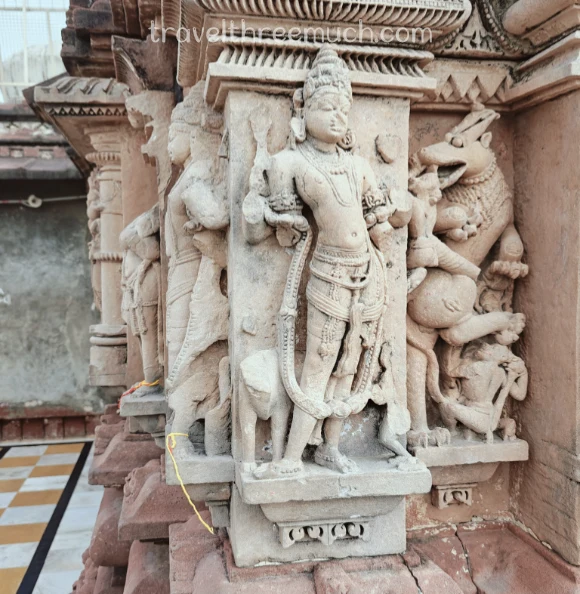
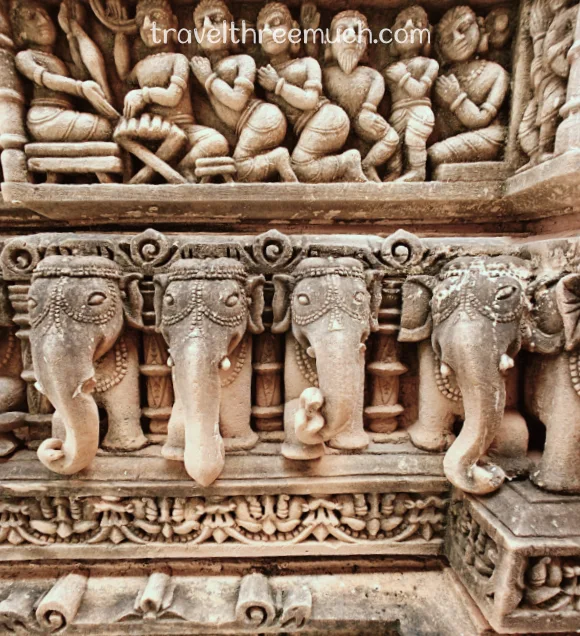
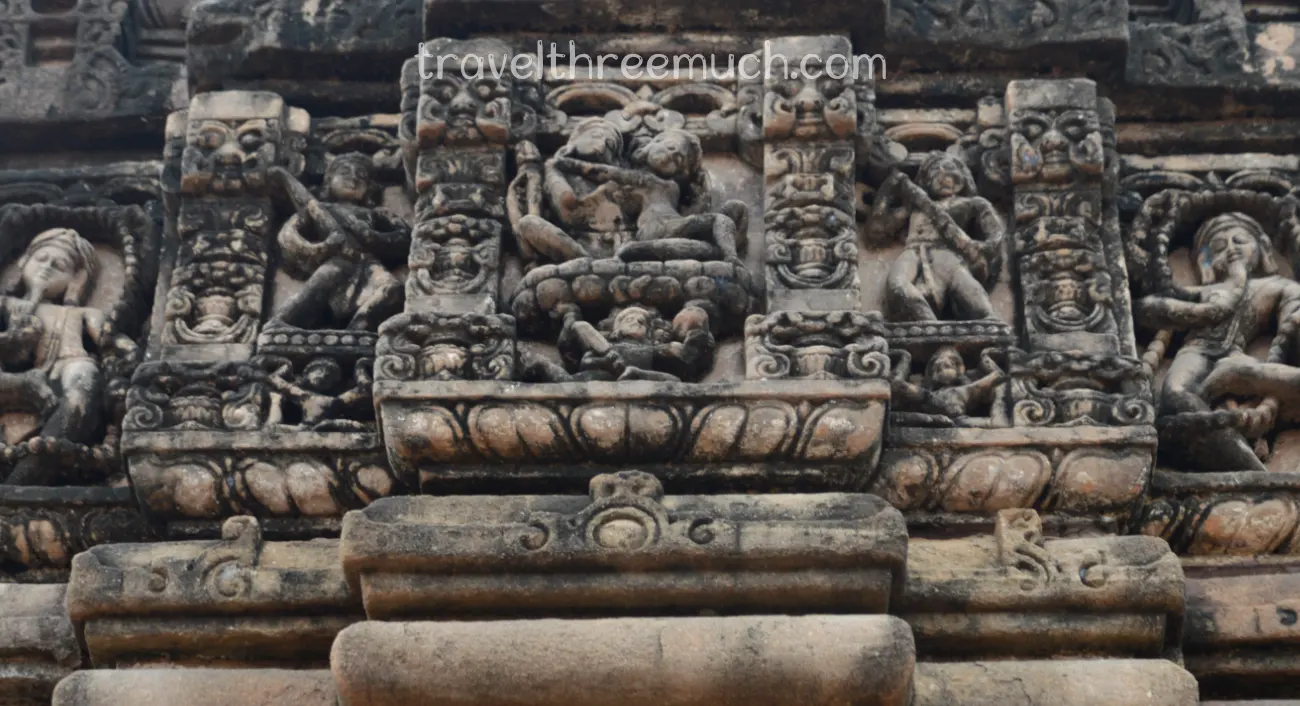
    The two temples we visited had distinctly different floor plans. The exteriors had impressively detailed carvings in niches. The different Vishnu forms from the Hindu pantheon, various aspects of Shiva, maidens in niches framing the corners, scenes from Hindu mythology all prominently feature in the carvings.

    Harihara osian

    However, the true spectacle awaits in the ceiling inside these temples. The elegant centrepiece – a flying Garuda is framed by tiered rows of writhing nagas (mythical anthropomorphic serpents). The serpents were bowing with folded hands to their sworn enemy! The guards on security detail stopped us from photographing any of these. No clue why!

    Sun Temple

    We walked back to a fork in the road where one way leads to Sachiya Mata temple and the other way away from Osian. We wanted to visit a step well in the vicinity called the Katan Baori. We couldn’t find any signage about this place, so we asked locals for directions. They gave us some general hints to get there. 

    We walked back to a fork in the road where one way leads to Sachiya Mata temple and the other way away from Osian. We wanted to visit a step well in the vicinity called the Katan Baori. We couldn’t find any signage about this place, so we asked locals for directions. They gave us some general hints to get there. 

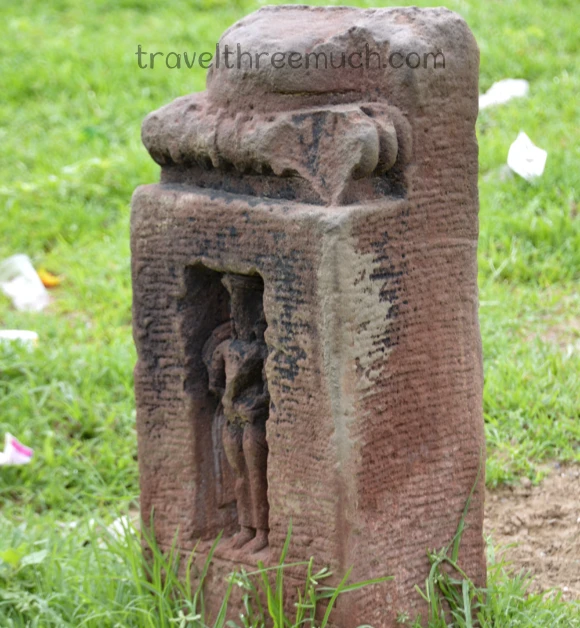
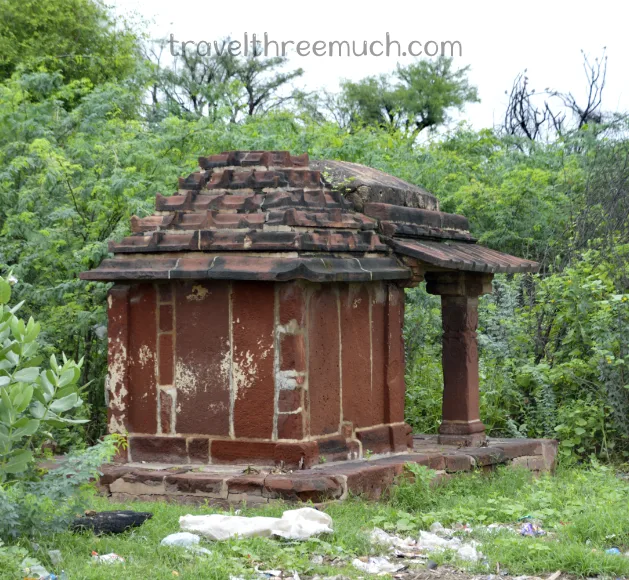
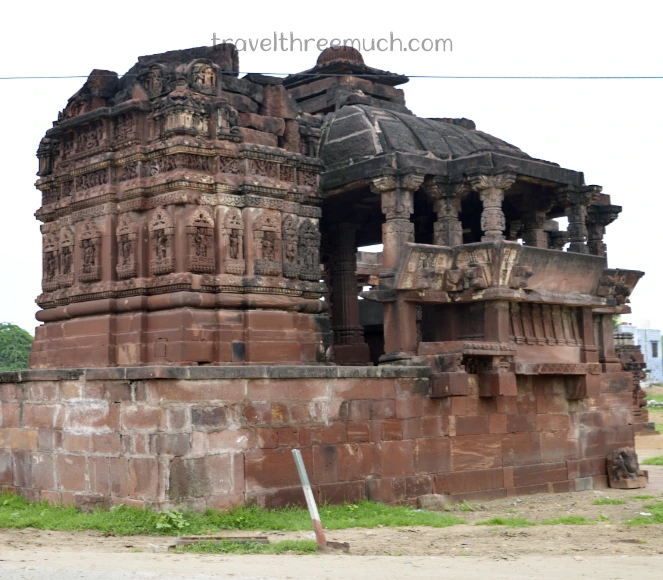
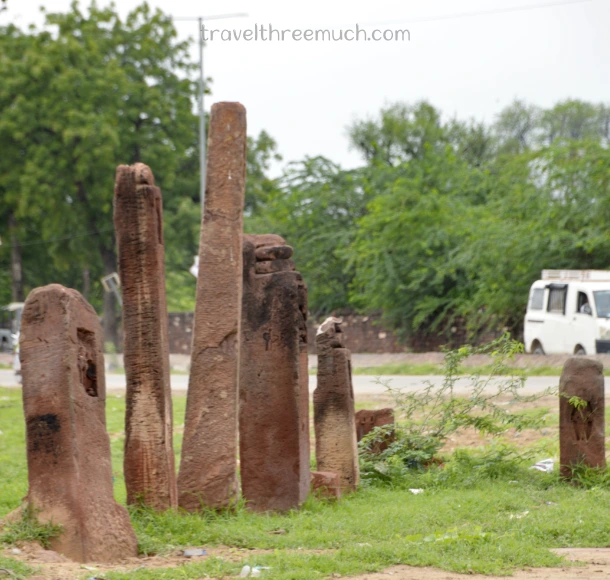
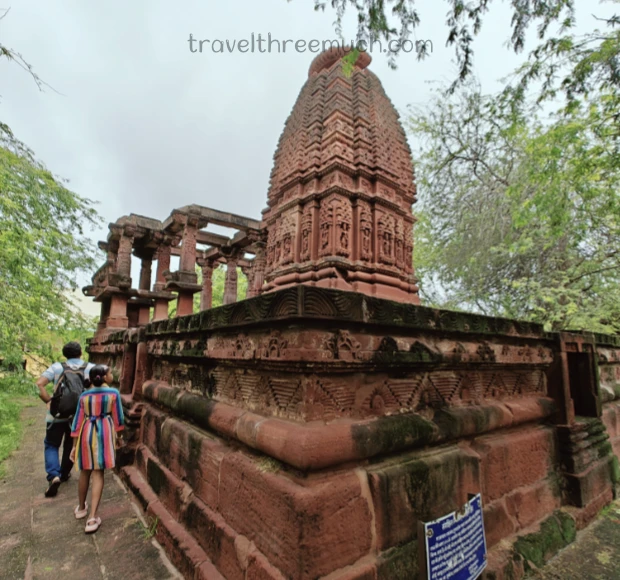
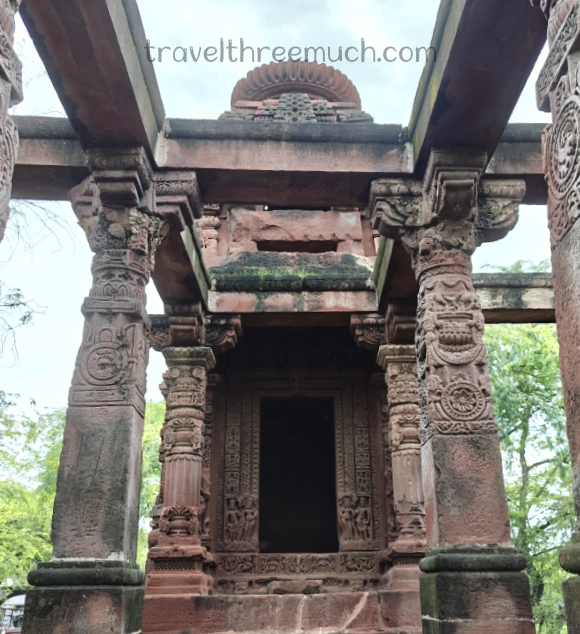
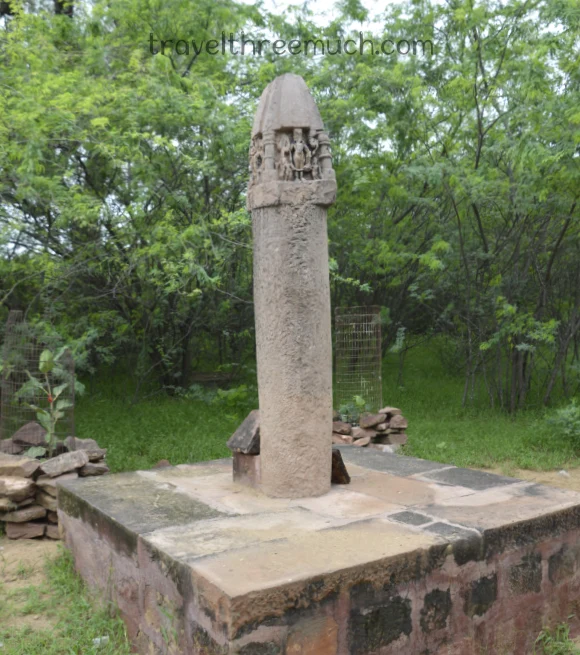
    As we wandered about trying to find the step well, we happened upon a stone pillar with a deity carved into it. We walked a bit more and we saw a dilapidated shrine. It had a plan similar to one of the Harihara temples. The temple was on an elevated platform. The porch roof was lost, though whether to the elements or to invasions, it is unknown. The pillars and beams remained in place though. The pillars had delicately chiselled bountiful pots signifying prosperity. The beams connect to the pillars with carved robust brackets. There was no deity in the sanctum. The outer walls had intricate carvings in niches. We learnt later that this was a shrine dedicated to the Sun god.

    Katan Baori: Visiting Osian’s 10th Century Step Well

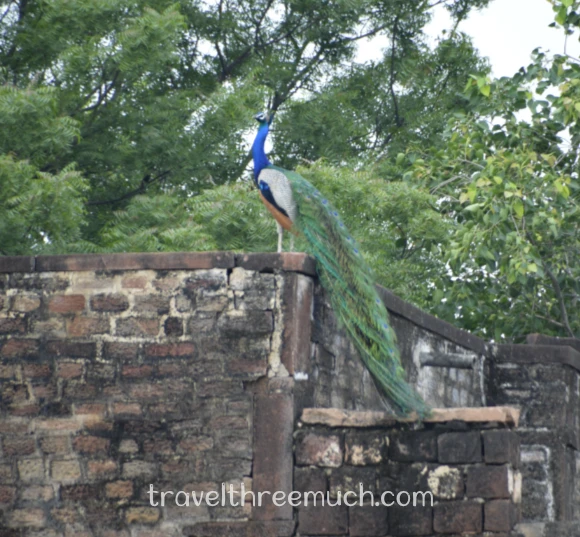
    We spotted a peacock sitting on another wall in the distance behind this shrine. We walked closer to catch a better look at it. We ended up finding an iron gate in the wall which led to the step well.

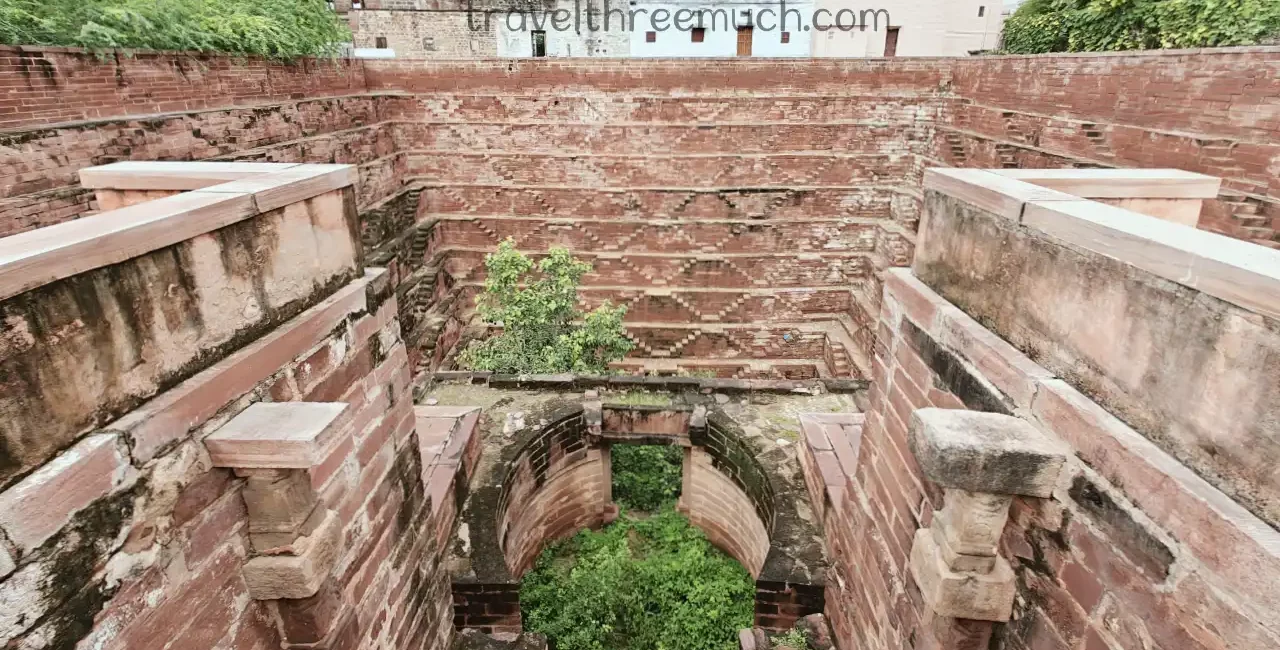
    Restoration work seemed to be underway in the Katan Baori step well. Katan Baori dates from the 10th century CE, making it a contemporary of the more famous Chand Baori step well of Abhaneri. It was parched when we visited. Water in the step well would’ve made for prettier pictures. But the lack of water helped us appreciate the well’s massive scale. Building something like this in the 10th century CE is mindboggling.

    osian temples stepwell

    It’s a shame these monuments don’t feature on Rajasthan’s popular tourist trails. There were vague hints of the monuments being under the Archaeological Survey of India’s (ASI) purview. In general, ASI does a good job of upkeep of the monuments they restore. However, the masses of garbage strewn around these monuments, and the blockage of access to the Harihara Temple didn’t seem to add up. In fact, we had to miss one temple because we weren't brave enough to walk through the garbage. We learnt later from our cab driver that this is probably due to an ongoing tussle between local governing bodies.

    The Active Worship Sites: Sachiya Mata Temple and Mahavira Jain Temple

    The Legend of Sachiya Mata

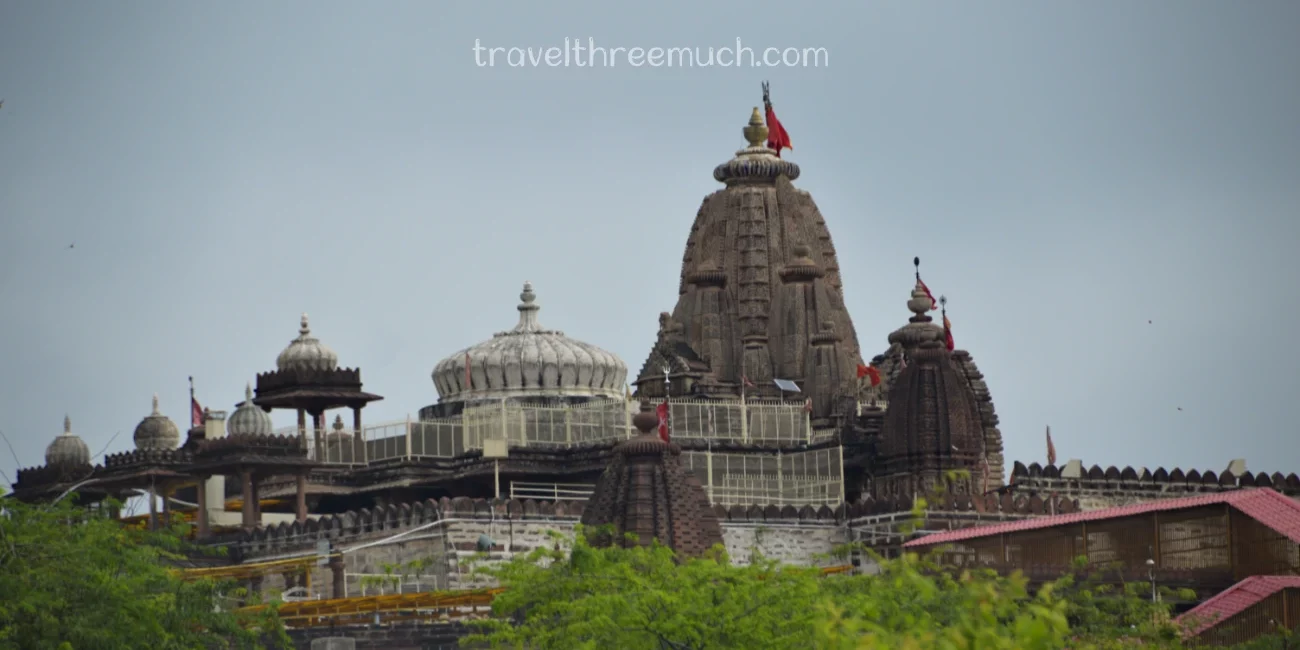
    Our next stop was the Sachiyay Mata Temple. This temple dates to the 12th century CE and is built atop a hill. The local legends around the deity enshrined here are an interesting combination of Jain and Hindu faiths. The Jain monk Ratnaprabhasuri performed miracles that made the populace of Osian convert to Jainism. His virtuous nature convinced the deity Chamunda, normally placated through animal sacrifices and blood rites, to adopt a vegetarian diet. Her guidance and protection helped the populace avoid starvation. Ratnaprabhasuri gave her the name of Sachiya Mata in recognition of her truthfulness and motherly love towards Osian’s residents.

    The approach to the temple complex was through a series of magnificent arches. The main temple has nine smaller temples surrounding it, each dedicated to an incarnation of the goddess. The exterior of the temple has spectacularly detailed carvings. The interior of the main temple is decorated with coloured glass pieces cut into geometric shapes. The sweeping views of Osian town from the top of the hill are worth the small hike. The temple is sacred to both Jains and Hindus.

    osian sachiyamata temple

    Mahavira Temple

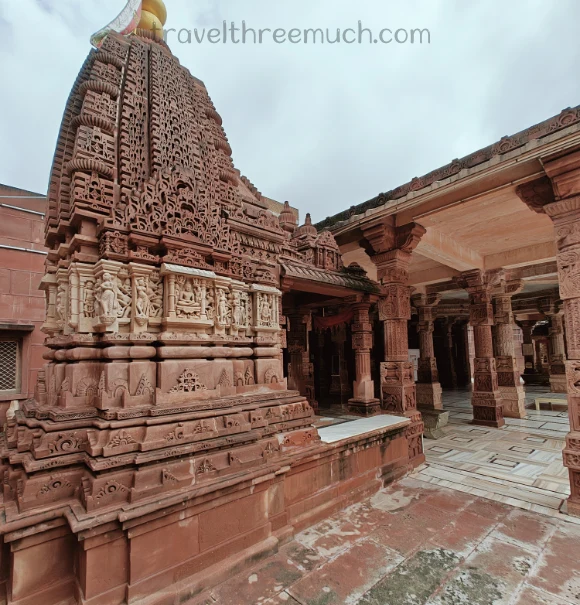
    We took the cab to our next step – the Mahavir Shvetamber Jain Temple. The original temple dates from the 8th century CE. King Vatsaraja of the Gurjara Pratihara dynasty built this temple. There have been restorations and renovations in the 11th and 12th centuries CE following the damage from invasions. The temple is a prominent pilgrimage site for the Jains of Rajasthan. It is dedicated to Mahavira, the 24th Tirthankara (Supreme Preacher in a particular age according to the Jain faith).

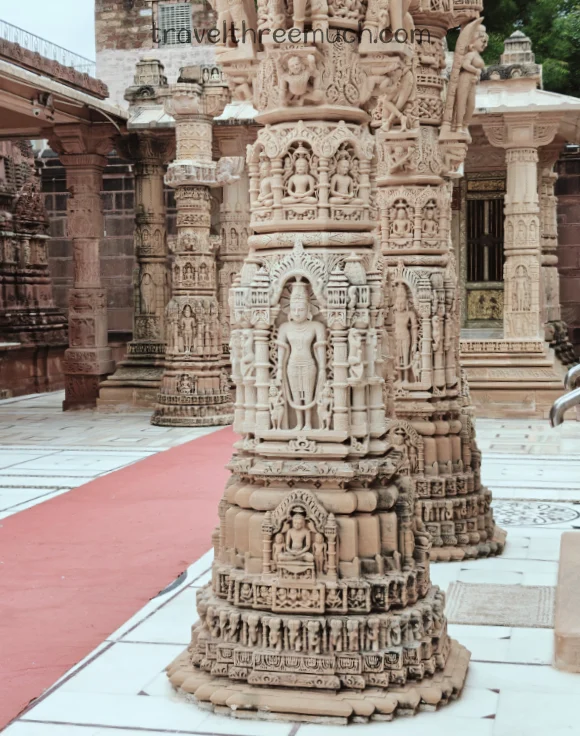
    The gateway arch (torana) was a sight to behold. It featured brackets inset with maidens connecting the pillars with the central arch. Seven smaller temples are a part of the main temple complex. The exterior walls and the ceilings all feature ornate carvings. So, as in all Jain structures, never forget to look up, lest you miss some hidden wonder!

    We took the cab back from the temple to our last item on the Osian itinerary – the desert.

    Desert Safari in Osian: Your First Taste of the Thar Desert

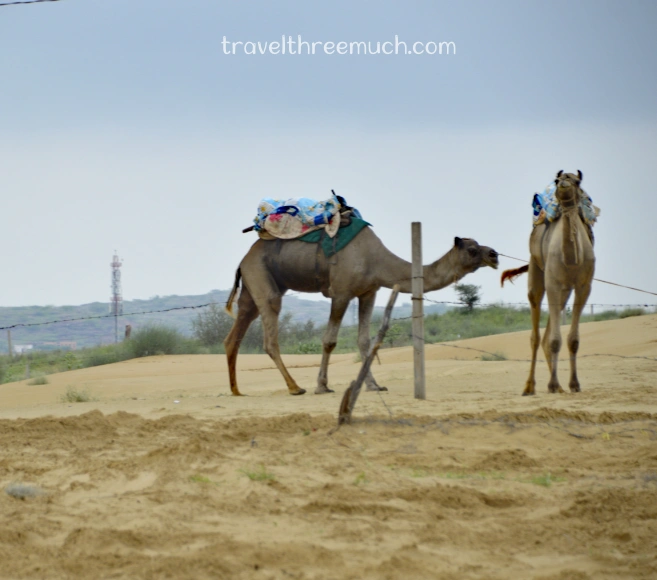
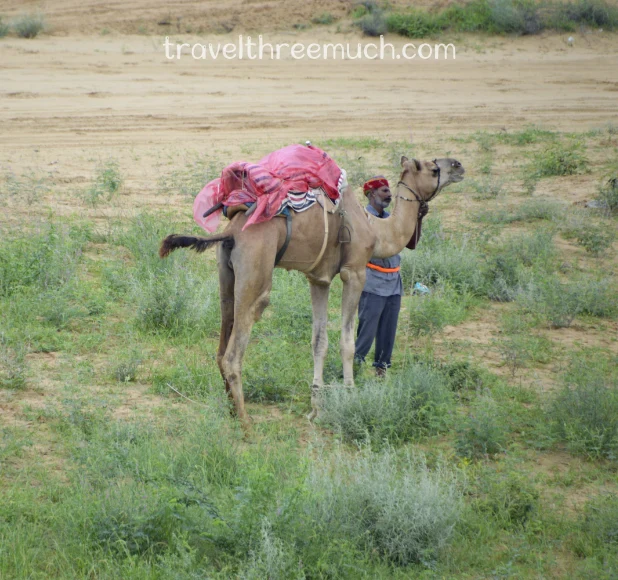
    We hadn’t made any plans for a desert safari, which was quite unlike us! We asked our cabbie if he knew anyone who could help us see the desert. Since he was local, he made some queries while we were out visiting the ruins and temples. By the time we were back, he had found someone who would take us in a four-wheel drive vehicle to the desert. It was a fun ride, and the driver showed us various ‘resorts’ which had sprung up recently, promising ‘desert activities’. After a while, we were in a patch of desert away from the crowds. The typical format of these ‘desert safaris’ is to drive out to the desert for about half an hour, have a couple of camel rides and photo-ops, perhaps a bit of spirited driving amongst the dunes, and return. We didn’t opt for the camel ride and we were content with seeing the desert and the camel.

    This was the first time we visited Rajasthan in the monsoons, and so we got to see a ‘green’ side of verdant Rajasthan. This was a far cry from the image of desert wastelands painted by our textbooks. We were dropped off at our cabbie after a couple of hours in the desert, and we returned to our stay in Jodhpur.

    planplanettm  Essential Tips for Visiting Osian Temples and Monuments

    Here are some tips to plan your trip to Osian, based on our experience.

    • Start early. This helps you avoid crowds at temples having active worship, as well as the desert safari. If the weather is warm when you visit, an early start helps. It keeps the hot sun from beating down on you while you visit the ruins, possible only on foot.
    • Carry cash, preferably in local currency (INR). Mobile network connectivity was spotty in many places, making digital payments difficult.
    • The Mahavira temple does not allow you to carry water or your backpack inside the premises. Therefore, plan to store your valuables on your person when you visit the temple.
    • We travelled as a family and had no trouble getting around. The people were friendly and were willing to help where we had some trouble finding the way. 
    • If you are unfamiliar with Hindi, please ask your driver/guide to help you communicate. This is especially important when agreeing on prices for the desert safari and understanding what’s included.

    What Other Travelers Ask

    Osian is perfect as a day trip. It is only 78 km (1.5–2 hours) from Jodhpur. Most people leave Jodhpur at 8:00 AM, see the temples, do a sunset safari, and are back in the city by 7:00 PM. I would not suggest to do star gazing at Osian as I feel the desert experience is honestly, not great. 

    Definitely not. Osian’s dunes are smaller and more “scrubby” compared to the vast, rolling Sam Sand Dunes of Jaisalmer.

    Like most Indian temples, modesty is required. Both men and women should ensure their shoulders and knees are covered. You will also need to remove your shoes before entering the temple. 

    Ramya is the Itinerary Mastermind and travel planner for the family. She specializes in crafting efficient, culturally-rich trips, with a passion for India’s art, heritage sites, forests, and waterfalls. She brings the human emotion and logistical precision to their journeys.
    Leave a Reply

    Your email address will not be published. Required fields are marked *