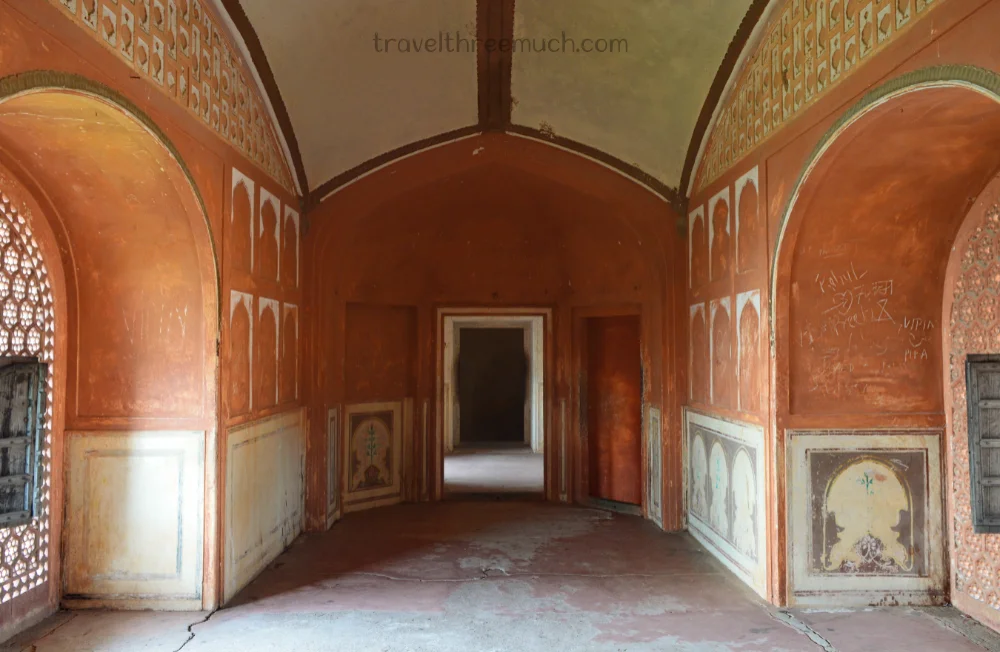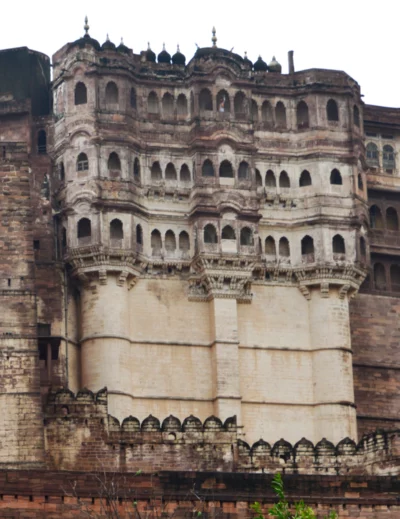

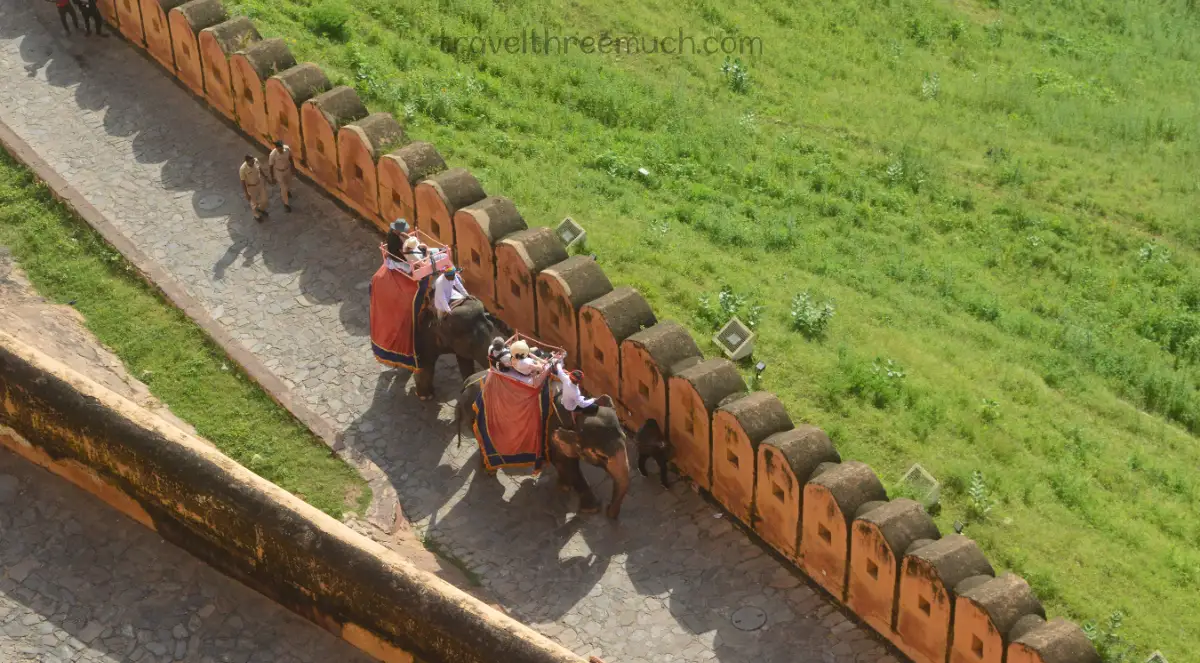
Amer fort_heroimage

Amer Fort to Jaigarh Tunnel Walk: Distance, Route & What to Expect

Updated on March 15, 2026
Contents

    Amer Fort

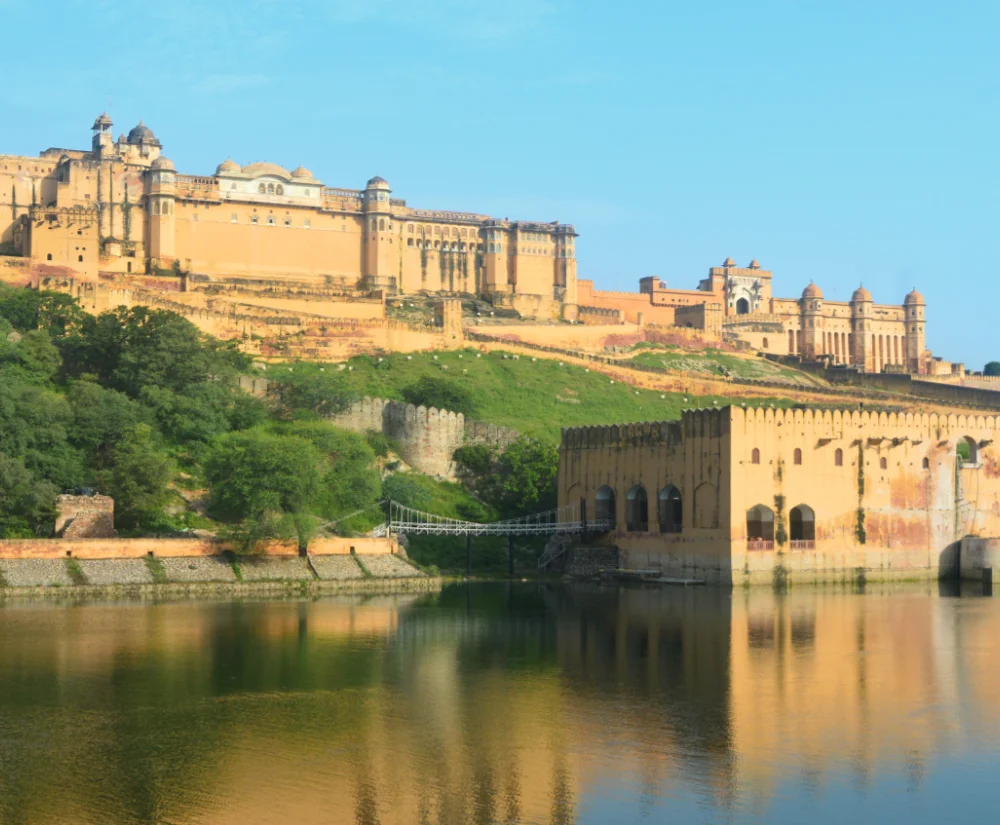
    We had planned half a day to see the beautiful forts of Jaipur – Amer fort and Jaigarh fort. So we started early to beat the sun. Even before reaching the fort, we stopped on the way to soak in the views of the fort from a distance.

    The guides at Amer fort are very very very perseverant.

    The guides and touts warned us that we’d either get lost or we’d miss out on parts of the fort without their ‘guidance’.

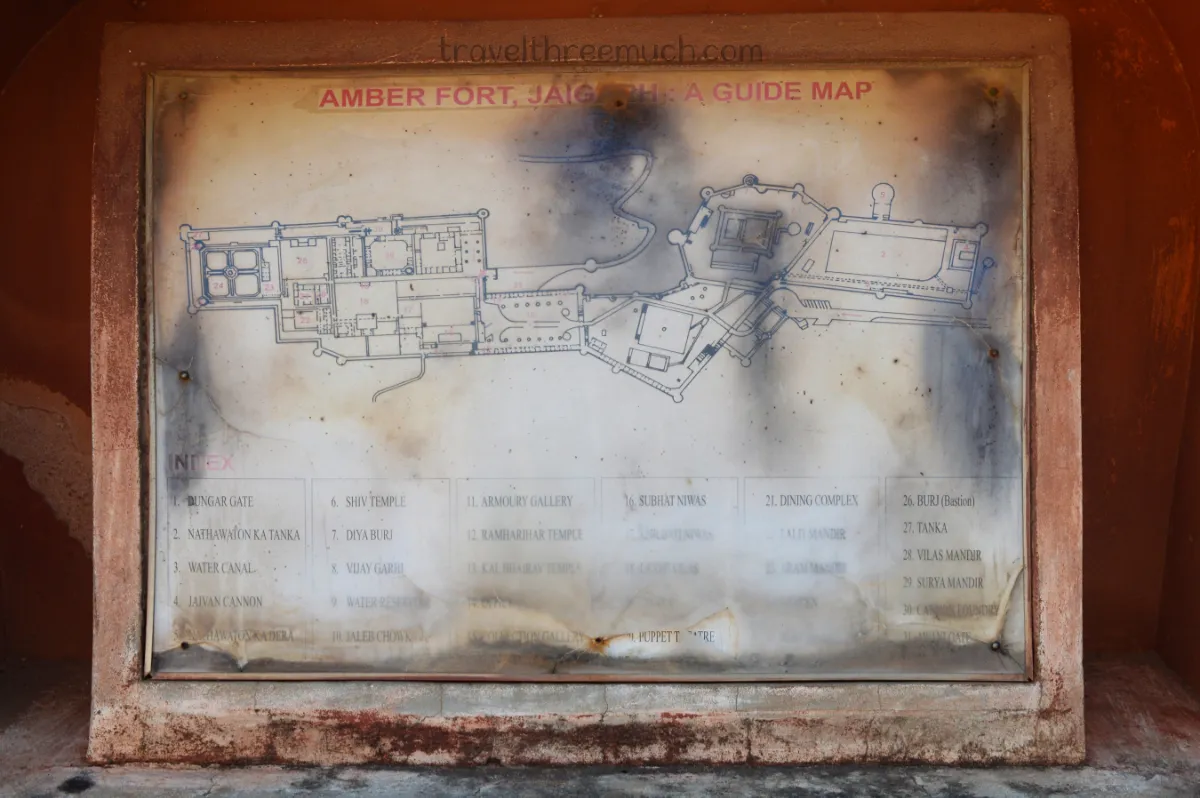
    Rest assured that you’re neither at a risk of getting lost thanks to the well-marked paths nor are you at a risk of missing portions of the fort thanks to the detailed layout maps that can be found online fairly easily.

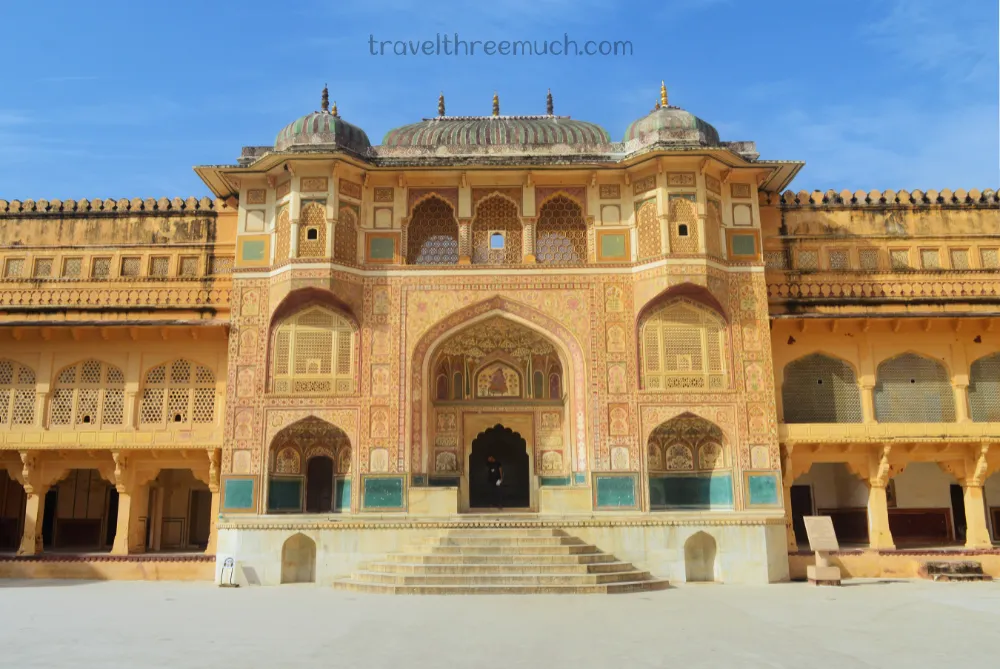
    The entrance is a beautiful structure with large murals.

    Diwan-I-Aam

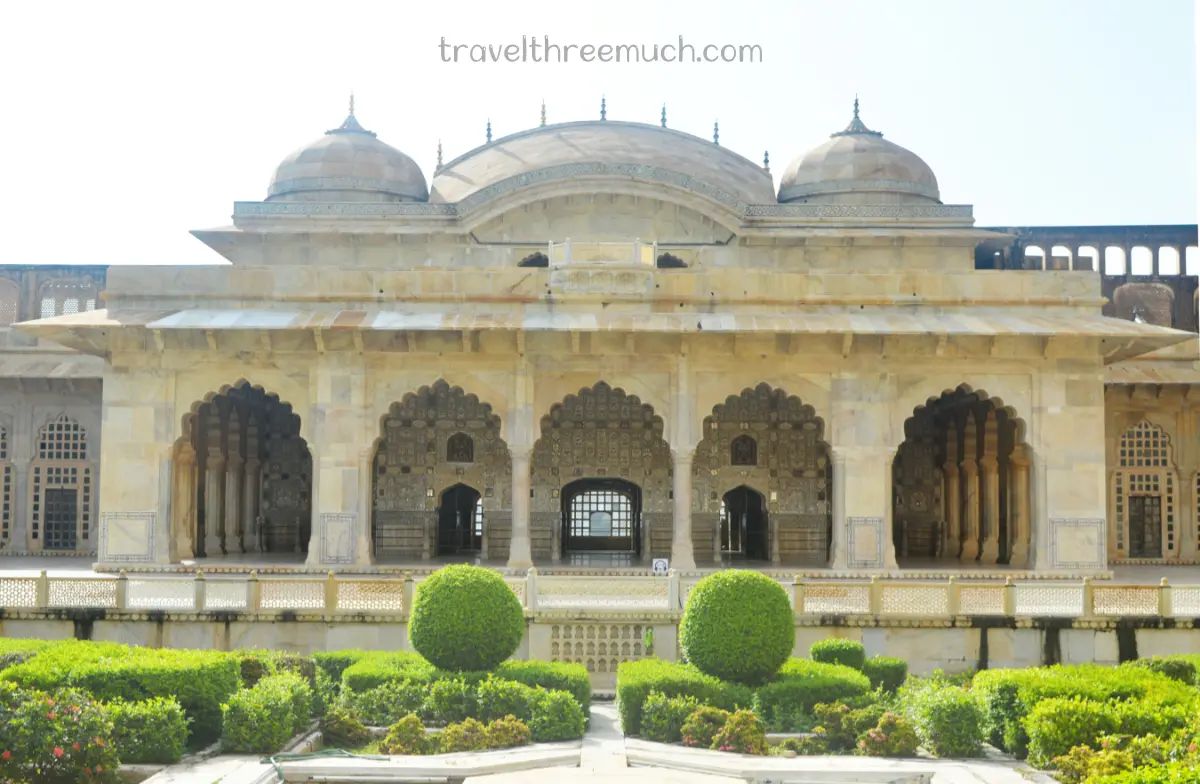
    Just past the entrance is the Hall of Common Audience or the Diwan-I-Aam. The hall is patterned after Mughal courts and has a seating space for the important nobles and an elevated space for the throne of the king. A little way after this is the Sukh Mandir or the Diwan-I-Khas, the Hall of Special Audience.

    The arrangements made for cooling the interiors through natural cross ventilation with the air passing through what must’ve been circulating water are ingenious, in an era where electricity was unheard of but summers that set the mercury soaring were commonplace.

    Sheesh Mahal

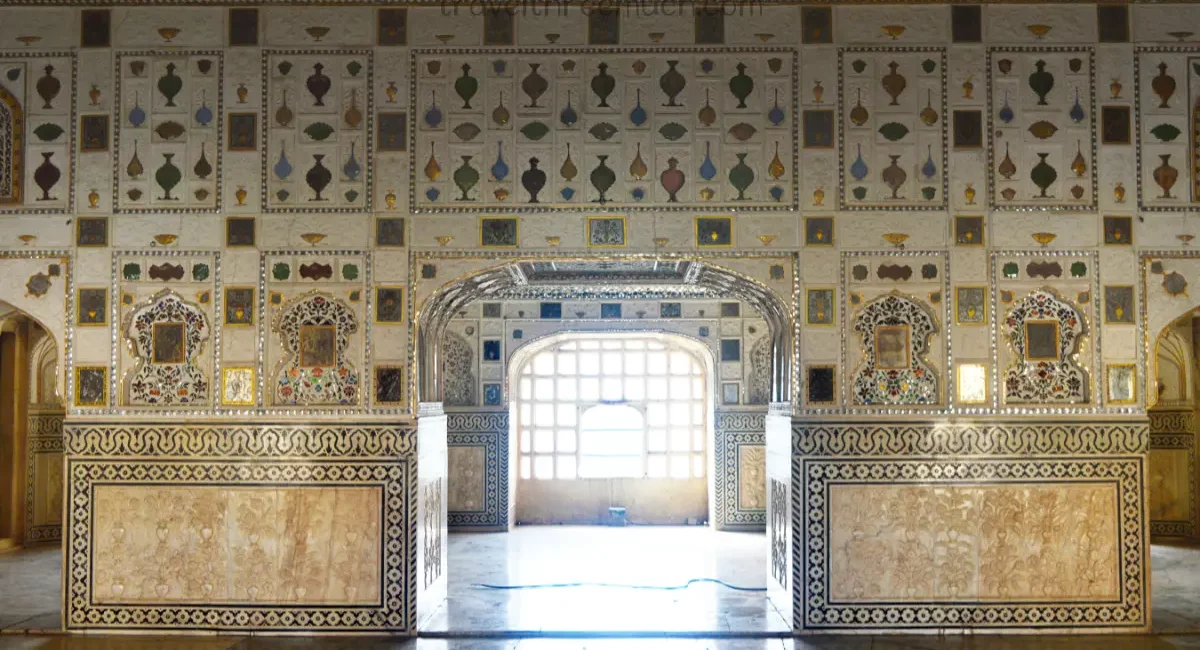
    Close to the Sukh Mandir is the Sheesh Mahal or the Mirror Hall. This is a structure that has plastered interiors with openings where either metallic pieces polished to a high degree of shine or mirrors were inlaid. The overall effect is quite striking.

    Both the mirrors and murals are in a relatively good state of preservation, considering the time they’ve weathered the elements.

    It is said that a single candle is sufficient to light up an entire room thanks to the reflections by the mirrors.

    Amer fort sheesh mahal

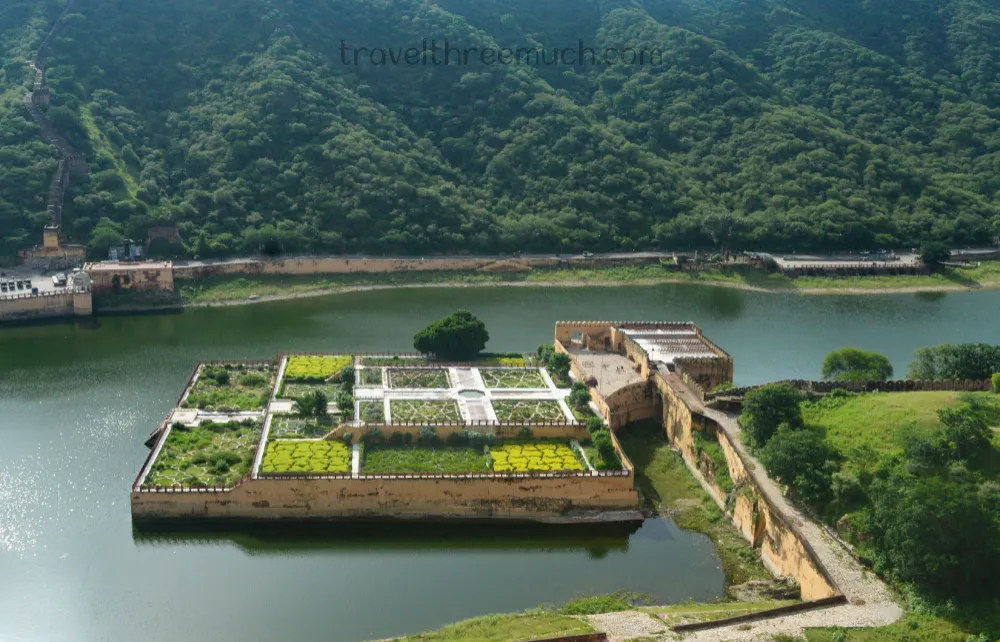
    The views from the upper stories of the fort are breathtaking. We could see some decorated elephants that were carrying tourists on a procession along the ramparts of the fort! Also visible were some gardens and a stage-like structure in the lake neighbouring the fort.

    Zenani Deorhi

    A little bit of wandering brought us to the palace of Raja Man Singh with its baradari or pavilion and the Zenani Deorhi, or the apartments of the Royal ladies.

    This served both as a residence of queen-mothers and those of the consorts of the king’s harem. We were almost at the end of our trail of the fort when we came across what looked like vessels and kitchen utensils for giants!

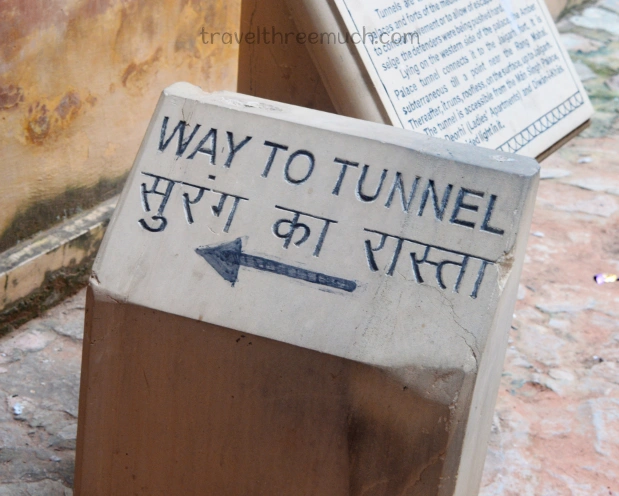
    Apparently, such was the scale of operations needed to keep the royal household and their attendants fed! When we were almost at the end of the path to the outside of the fort, we came across a sign that said ‘Way To Tunnel’.

    Tunnel Walk

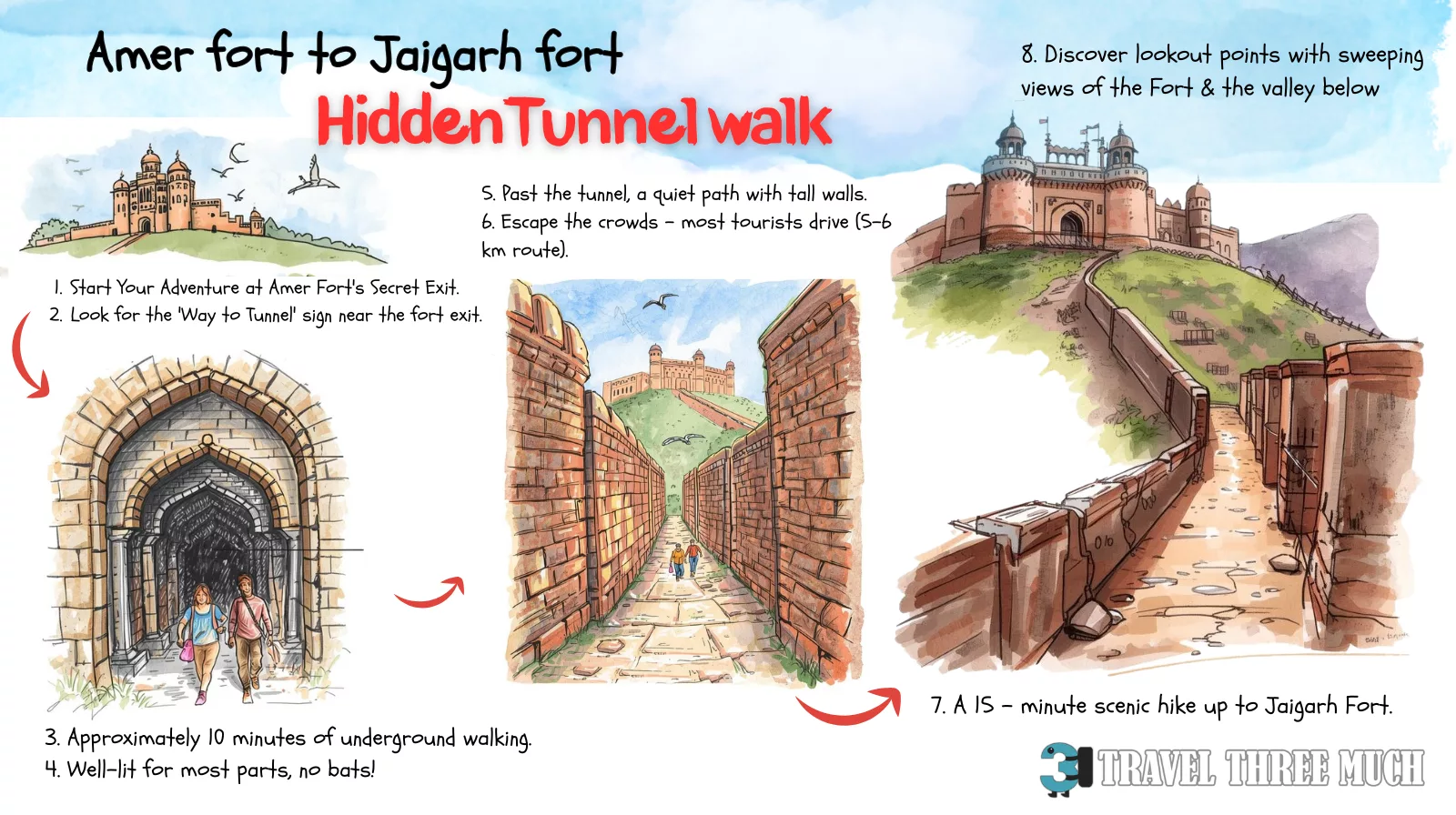
    The distance between the Amer and Jaigarh forts is 7 km by road. However, there is a much shorter ‘secret’ escape route that connects both these forts; the intriguing tunnel that led to Jaigarh fort from Amer fort, about which we’d read during our research for this trip.

    We followed the sign on the Amer fort side to the hidden entrance. But alas, the path was barred by a locked gate!

    The Rajasthan Police personnel stationed there for security kindly informed us that once we exited the fort, we’d not be allowed back in the same way. So they asked us wait around for 15-20 minutes by when the gate to the tunnel should be unlocked.

    As we were waiting around, 5 minutes later, a jolly gentleman came carrying a bunch of keys, bade us to follow him. He unlocked the gate at Amer fort end and with his pace, put us ’youngsters’ to shame as he made his way to unlock the other side that led to the Jaigarh fort.

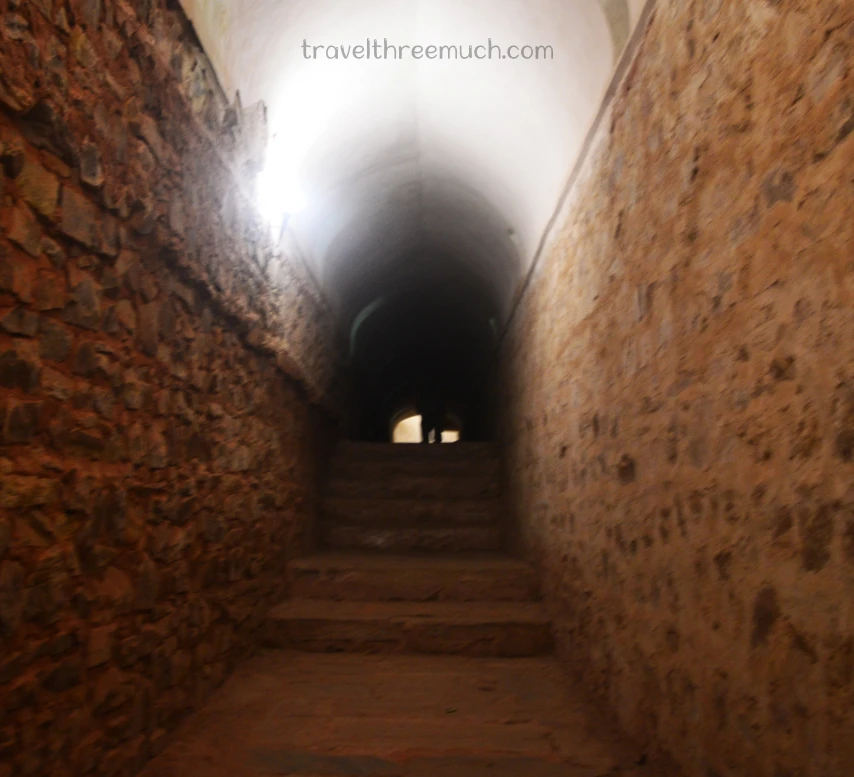
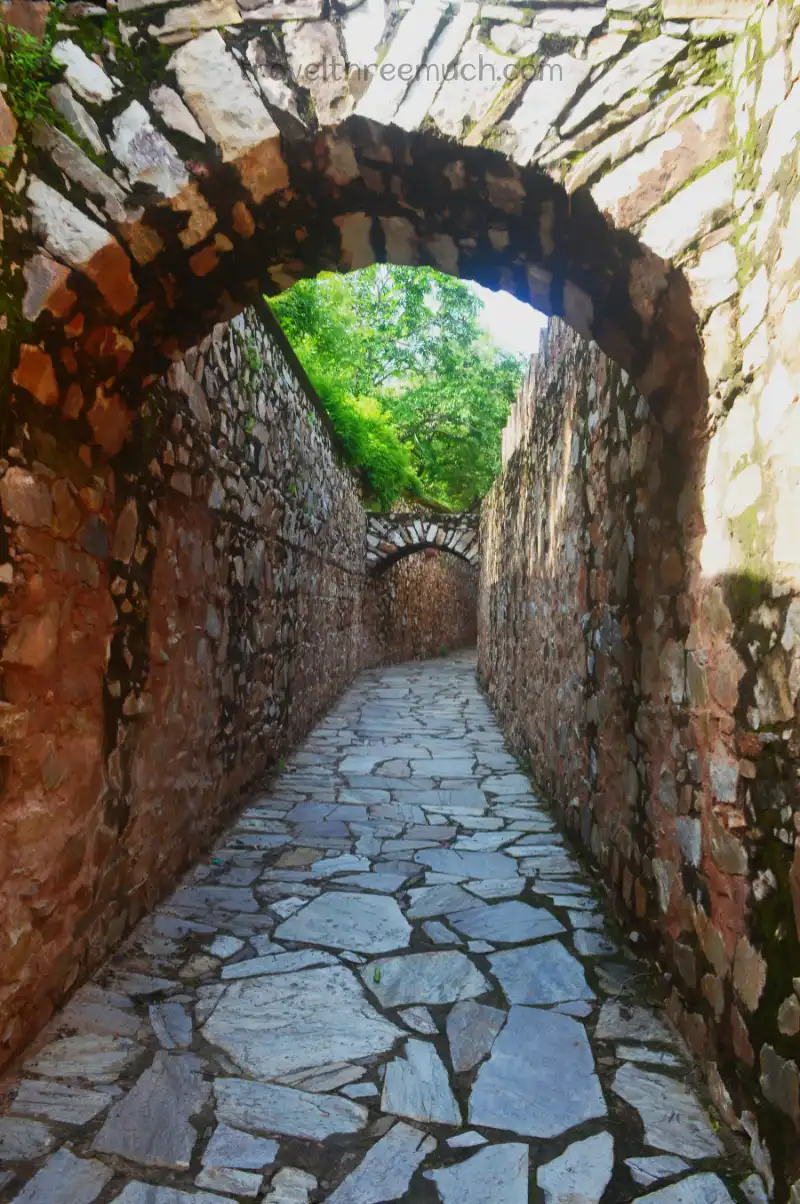
    Amer Jaigarh forts tunnel walk

    The tunnel levelled off after about 10 minutes of walking and led to another gate past which was a path with tall walls on either side and not many people in sight.

    This is because most tourists prefer to drive between the forts (a distance of 7 km) rather than walk through the tunnel.

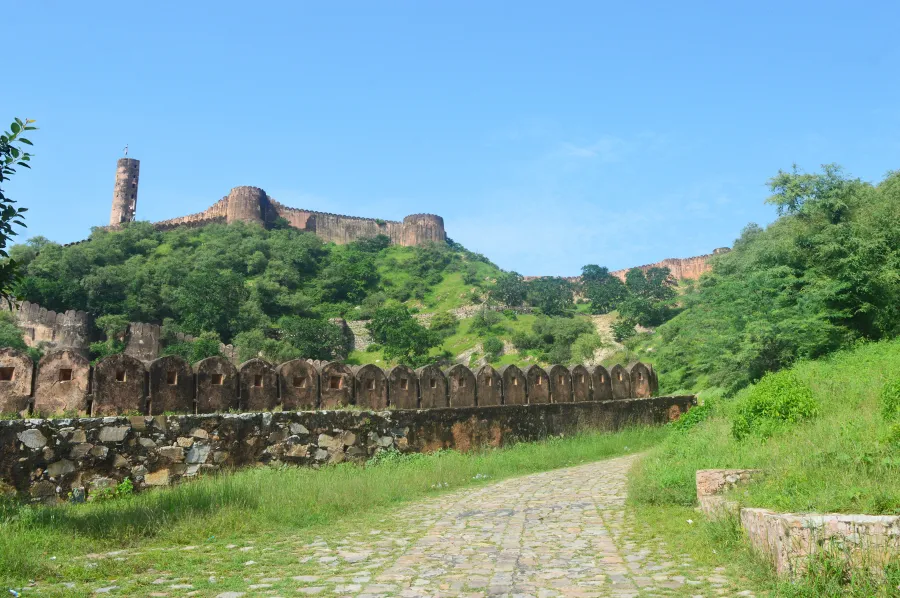
    The tunnel path then joined the paved cobblestone road, which climbed steeply toward Jaigarh Fort.

    We enjoyed the walk and were kept company by bulbuls, parakeets, mynahs and squirrels.

    The tunnel is only about 1.5 km but involves a 20 minute hike in the final stretch to Jaigarh fort.

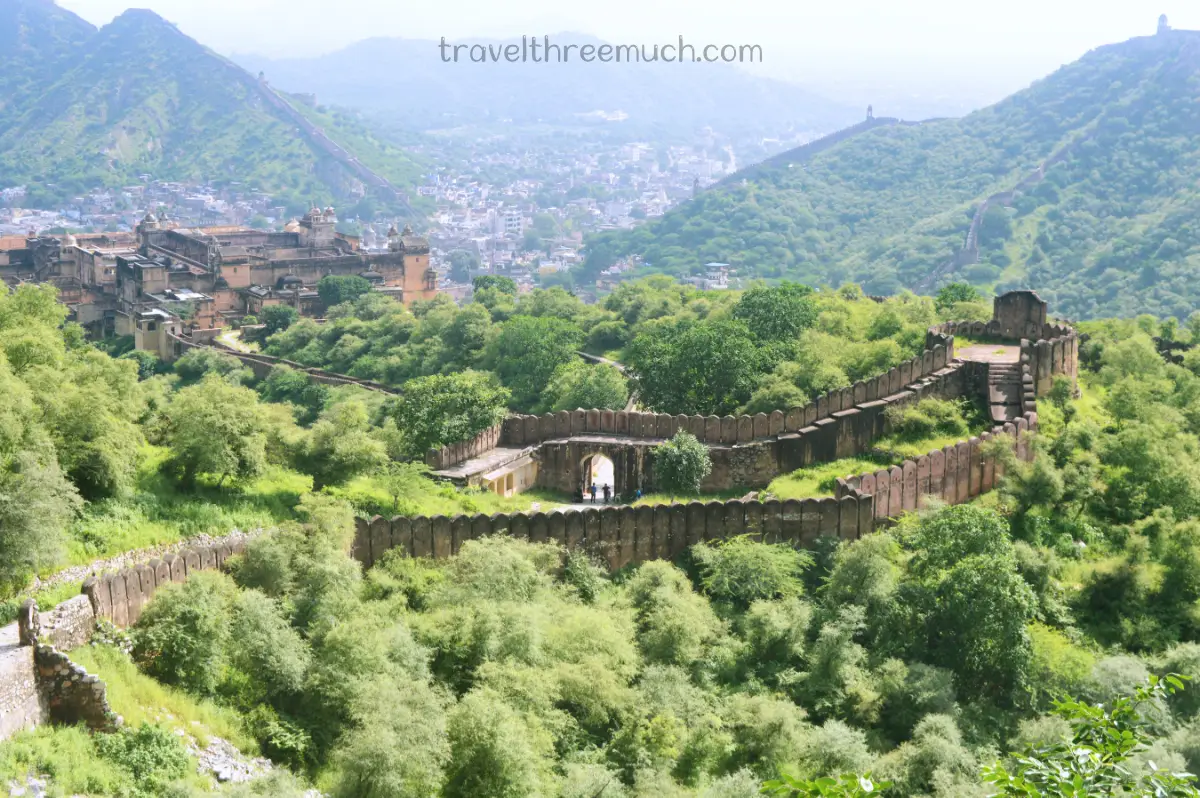
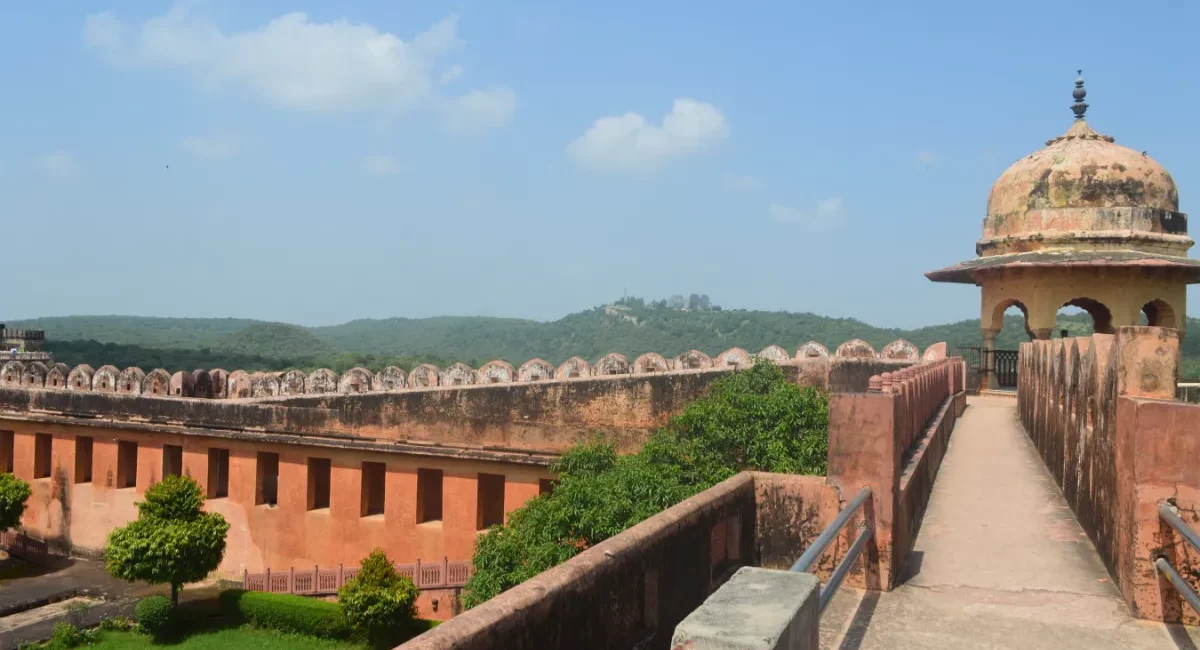
    There are various lookout points on the way to Jaigarh fort which offer sweeping views of the valley below in which Amer fort sits and the surrounding hills.

    Jaigarh Fort

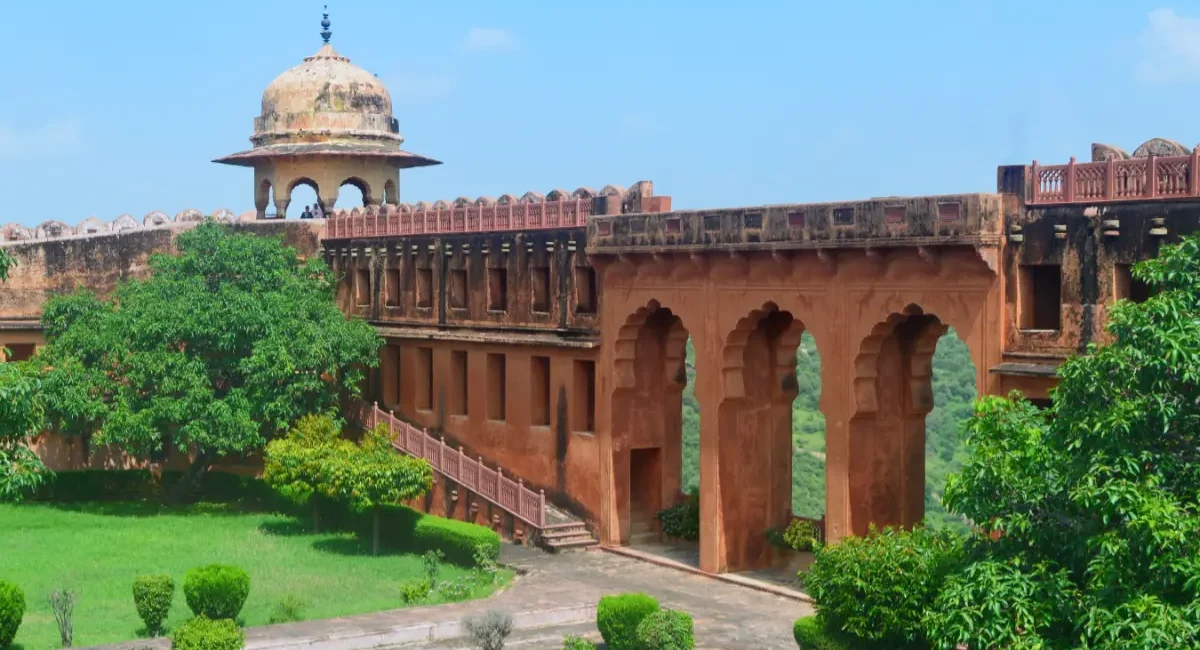
    The fort is located on the top of a hill, locally called Cheel ka Teela. This gives it a naturally advantageous position making it a very difficult fort to attack and conquer.

    This strategically important position is also one of the reasons the tunnel existed between Amer fort and Jaigarh fort so that in the event of an attack on Amer fort, Jaigarh fort could be a secure fallback position.

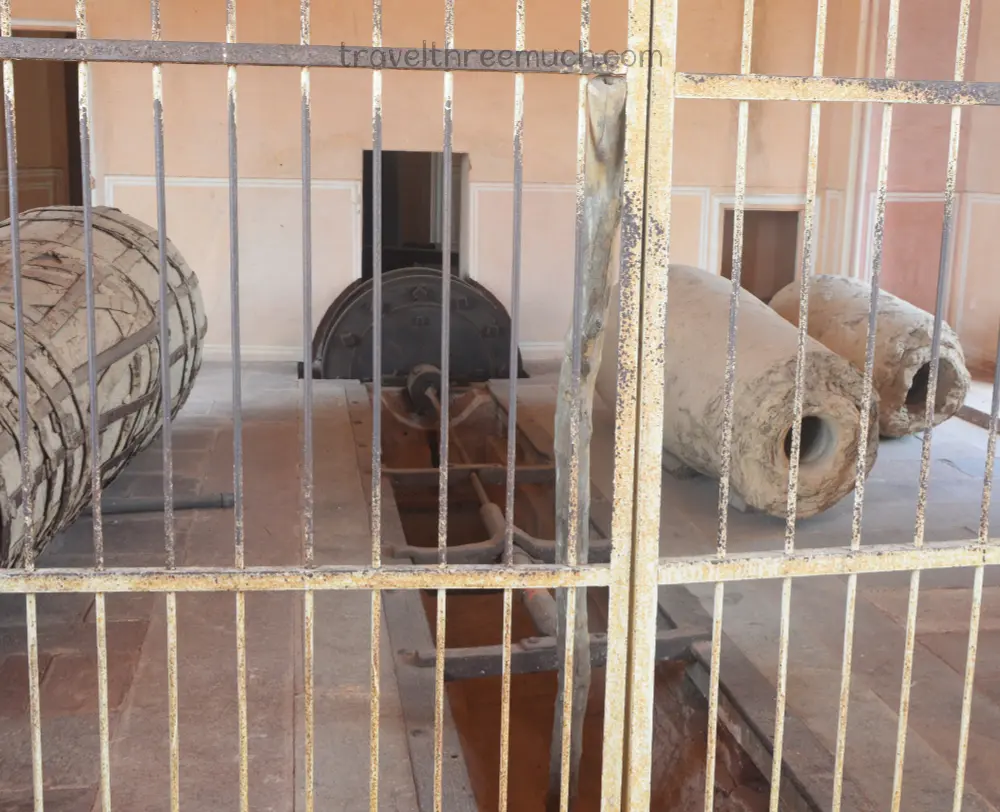
    A very interesting aspect of this fort is the extensive foundry facilities that exist within its walls for casting cannons.

    There is also an elaborate drilling setup which was oxen-powered and used a system of underground cogs and wheels to turn the shafts of drill heads, which could in-turn be fitted with massive ‘drill bits’ that bored the cast cannon blanks to barrels of the intended size. The foundries could attain temperatures hot enough to melt metal for the castings through the natural siting of a furnace which used the air draft between the valleys to heat the metal.

    The foundry and cannons

    An impressive feat of this setup is the cannon Jaivan, which was cast in these foundries and is now situated in Jaigarh fort. This cannon was one of the largest in the world when it was cast. Another similar cannon is named the Bajrangvan and is smaller than the Jaivan, but nevertheless is quite impressive. There’s a model of the drilling setup here. This makes it very easy to understand the mechanism as some of the cogs and wheels were ingeniously situated underground, out of sight.

    After the foundry complex, we visited the armoury and museum. Within the fort, you get a glimpse into the weapons of war and photographs of royalty. These are from the 18th and 19th centuries.

    We then made our way to the gardens which are fed by water harvesting structures in the surrounding Aravalli hills and have underground water storage areas to prevent loss by evaporation.

    The view from the surrounding walls of the gardens and the tall archways that framed the surrounding mountains was otherworldly and one can be forgiven for mistaking reality for a dream!

    jaigarh fort
    jaigarh fort

    Other parts of the fort

    We strolled around some more and found slices of royal life in the form of a pavilion that allowed the royalty to enjoy a puppet show while having their meal, with arrangements for the women of the royal household to enjoy the show from behind stone jaalis in a balcony, shielding them from public view, as was the custom of those years.

    Also read about this stunning haunted fort near Jaipur – Bhangarh here.

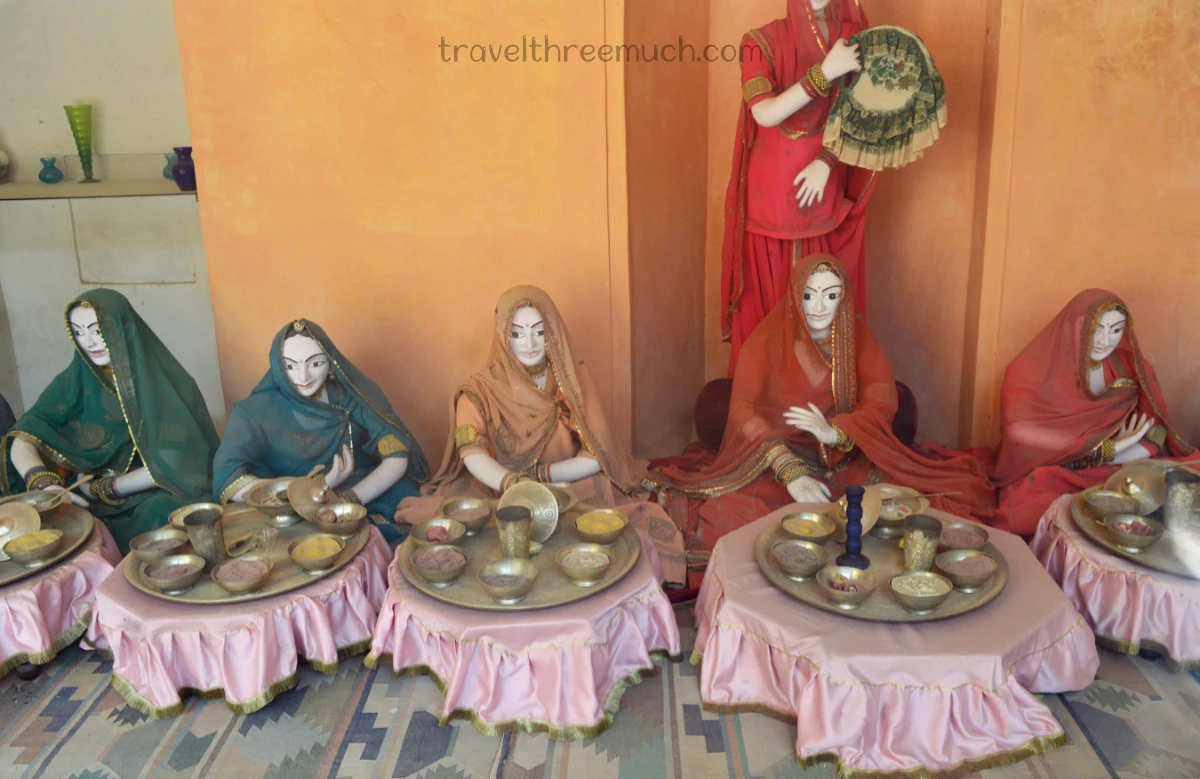
    Another interesting scene was the separate dining halls for the men and the women of the royal households where the king and queen broke bread with the noblemen and wives of the noblemen separately, respectively.

    And with that, our half day of fort tours came to an end.

    Another useful read – Our 4 day complete Jaipur Itinerary

    Amer & Jaigarh Forts with Kids — What to Know Before You Go

    They’ll love:

    • The idea of a “secret escape tunnel” usually keeps kids motivated to keep walking despite the distance. – Our daughter sure loved it. 
    • You’ll see a lot of birds – especially parrots in the last part towards Jaigarh and that made it extra special for her.
    • Very less crowded! Kids can walk, run, jump! 

    Remember:

    • Rajasthan is hot for a major part of the year. Hence, please carry water bottles for the whole family. 
    • There are no signages, rest stops or drinking fountains along the tunnel walk. But it is a single path – so you cannot go wrong.
    • You can’t abandon the walk midway. You will have to reach one of the forts. 

    What Other Travelers Ask

    No, you do not need a separate ticket for the tunnel itself. However, you must have valid entry tickets for both Amer Fort and Jaigarh Fort. 

    The walk is just about 1.5km. There is a very short hike towards the end. Easily doable. 

    There were hardly two people other than us when we did the walk. In spite of that, since most part of the walk is open to the sky, it feels very safe. 

    We prefered going Amer to Jaigarh because it follows the historical “escape route” logic. Another reason was Amer gets more crowded than Jaigarh. So we finished that early in the morning and then started toward Jaigarh. 

    Only a very short part of the walk is – probably around 8-10 minutes of the whole stretch. You can refer to the photos above in the post. 

    Ramya is the Itinerary Mastermind and travel planner for the family. She specializes in crafting efficient, culturally-rich trips, with a passion for India’s art, heritage sites, forests, and waterfalls. She brings the human emotion and logistical precision to their journeys.
    Leave a Reply

    Your email address will not be published. Required fields are marked *