

Discover Jodhpur’s Blue City: A Heritage Walking Tour Itinerary
Updated on March 15, 2026
Contents
Our Jodhpur Blue City Walking Tour Experience
Choosing Our Heritage Walking Tour
We usually try at least one walking tour during our travels. The old city at the base of Mehrangarh Fort, with the sea of blue buildings, is best explored on foot. We researched many walking tours available in Jodhpur when planning our itinerary. We evaluated the route covered, participants’ reviews, and timings.
We went with the Walk To Blue City Heritage Tour. They responded promptly to our queries on WhatsApp. We appreciated their flexibility with timings, transparency in charges, clear directions on where to meet, the waypoints, and their punctuality. They have a few guides on their team, who are all locals.
Meeting Our Guide at Ghanta Ghar (Clock Tower)
Our guide for the day was Hardayjeet Singh a.k.a. Bantu.
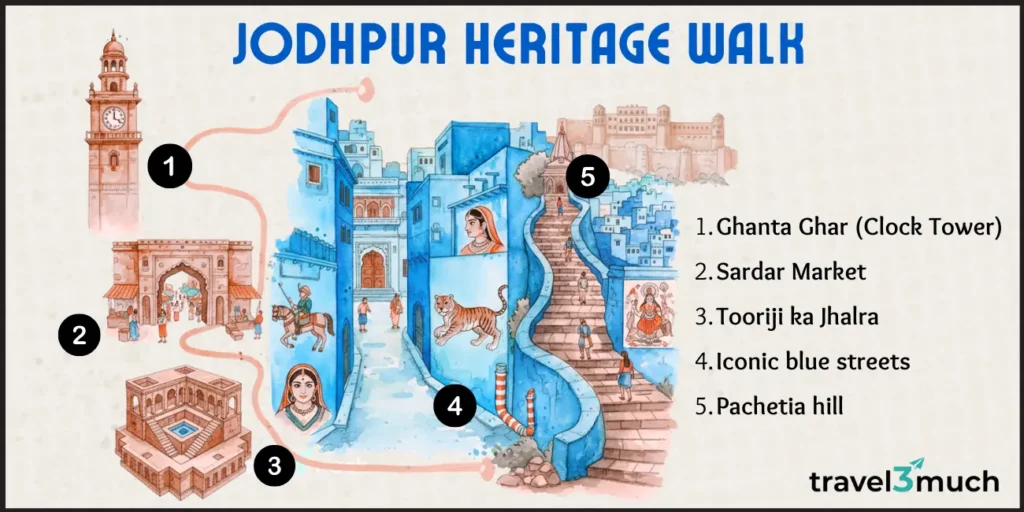
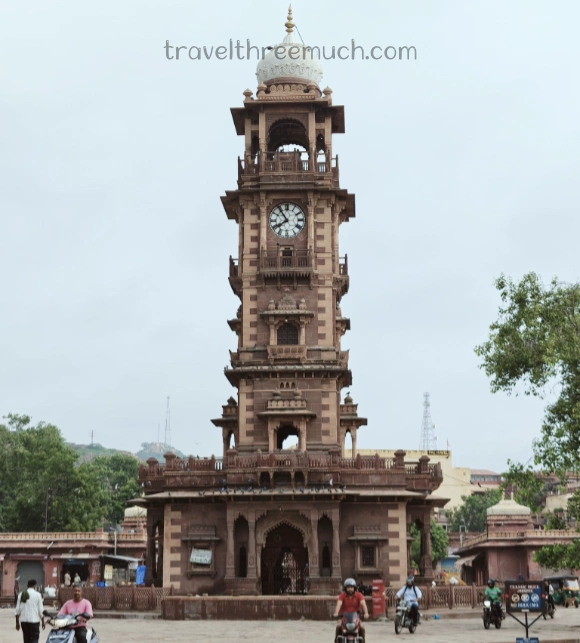
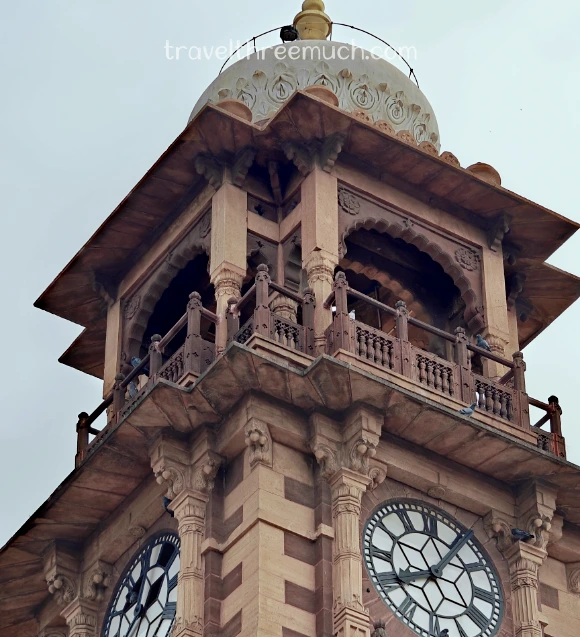
Our meeting point was the iconic Jodhpur Ghanta Ghar (Clock Tower). Bantu explained the history of the clock tower. The king of Jodhpur, Maharaja Sardar Singh, commissioned it at the beginning of the 20th century. He modelled it on the public clock towers in Europe. The clockworks were imported from England and installed in 1910 CE. The imposing structure is made from sandstone, a material abundantly available in Rajasthan.
The Enigmatic Girdikot Gateway & Sardar Market
We had entered the road to the clock tower through an arched gateway named Girdikot (Crowded Gate). The area is called Sardar Market in the erstwhile king’s honour. Bantu narrated an anecdote in which one of the tourists had asked why the gateway had such an unusual name. He didn’t have a ready answer, but fell back on his historian friends for hints. When that also turned out to be a dead end, he accessed public records to find out the real reason. We’ll not spoil it here for you in case you wish to find this out on the tour!
Toorji Ka Jhalra: The Ancient Stepwell
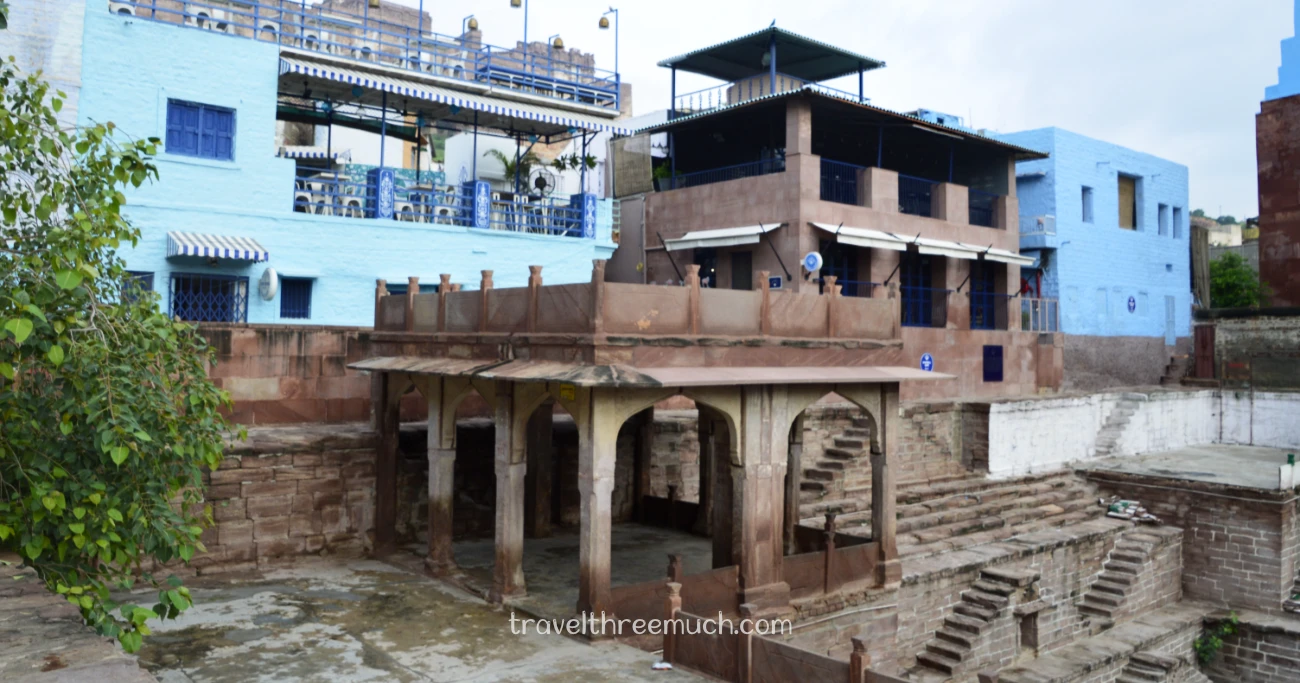
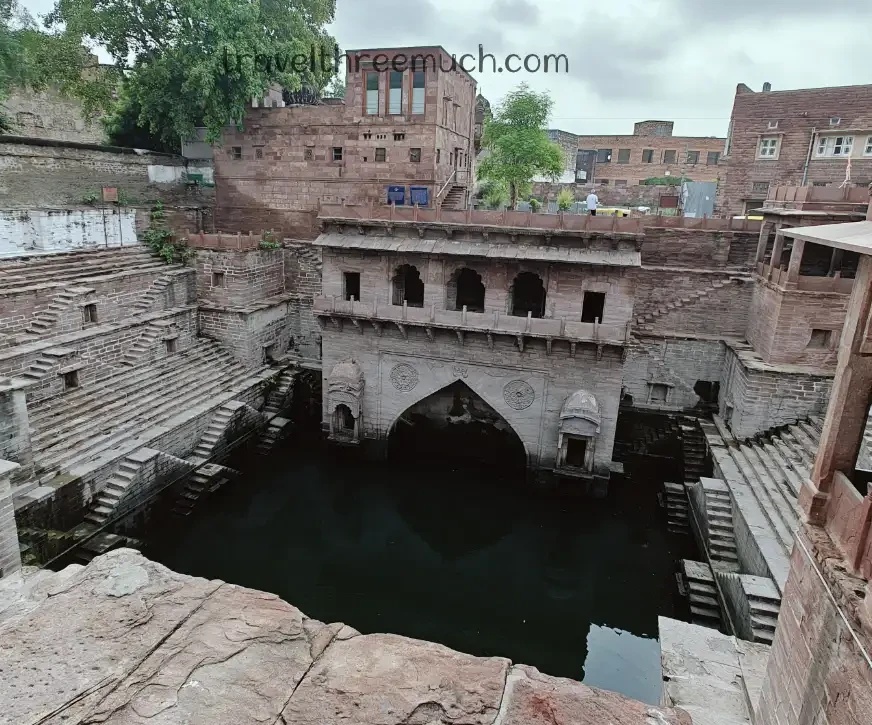
Our next stop was a magnificent step well named Toorji Ka Jhalra. Toorji refers to a community that once lived in the vicinity. The well would no doubt have been the main source of fresh water in this arid zone. Maharani Tanwar Ji, the queen consort of Maharaja Abhay Singh of Jodhpur, commissioned the step well in 1740 CE. An interesting trivia is that the queen hailed from Patan in Gujarat. Patan is home to one of India’s most ornate stepwells – the Rani Ki Vav. Toorji Ka Jhalra was fully submerged and in disuse until recent times. Cleanup and excavations have restored it to communal use. Bantu pointed out the various architectural and functional features of the well. He also showed us the best spots for photography at the well.
Exploring Navchowkiya: The Iconic Blue Streets
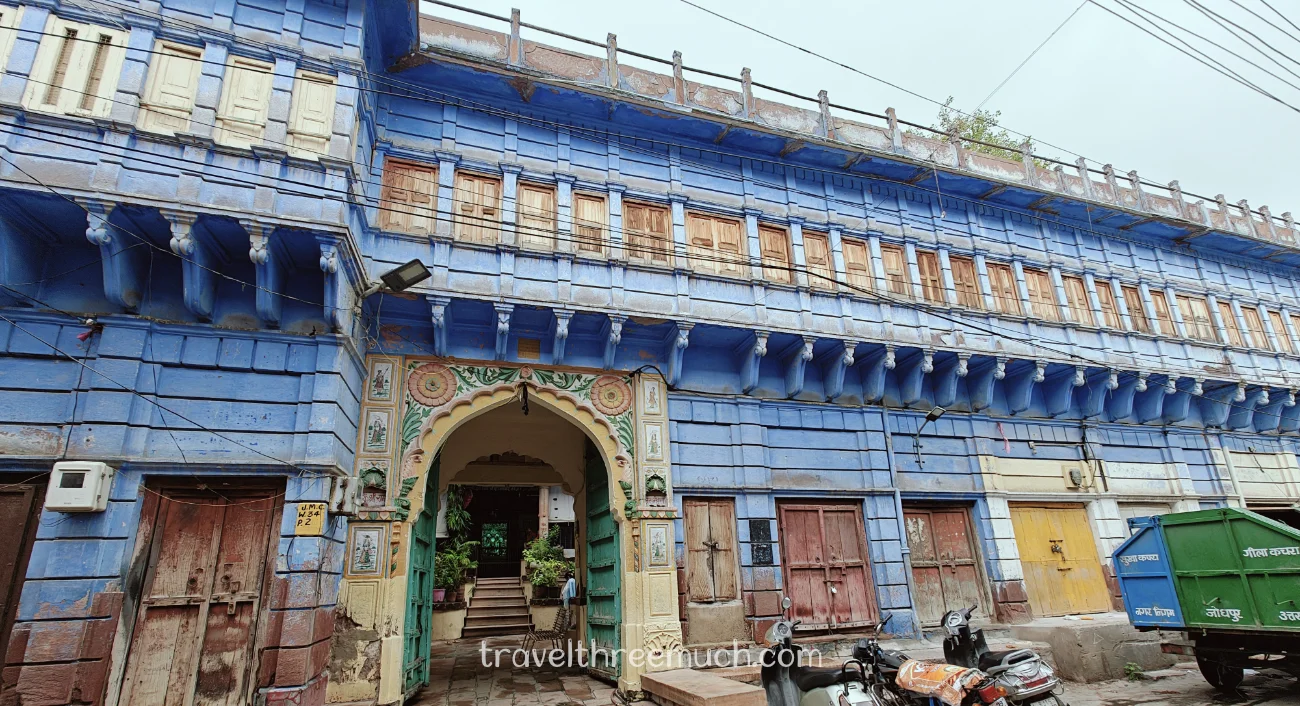
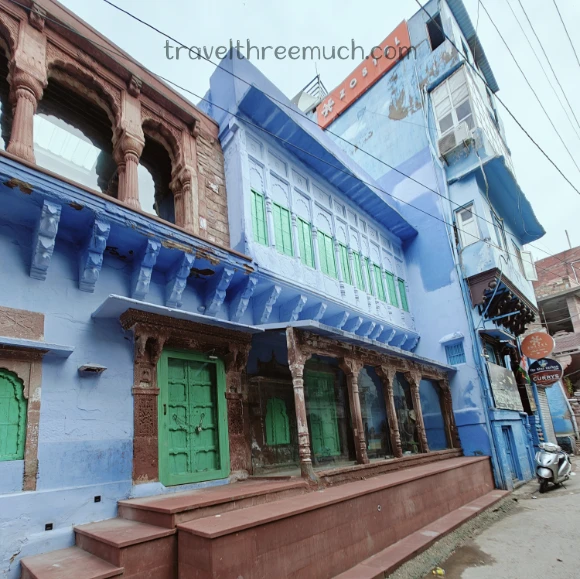
We visited the Navchowkiya (a portion of the old city), settled by the Brahmin community from the 15th century CE.
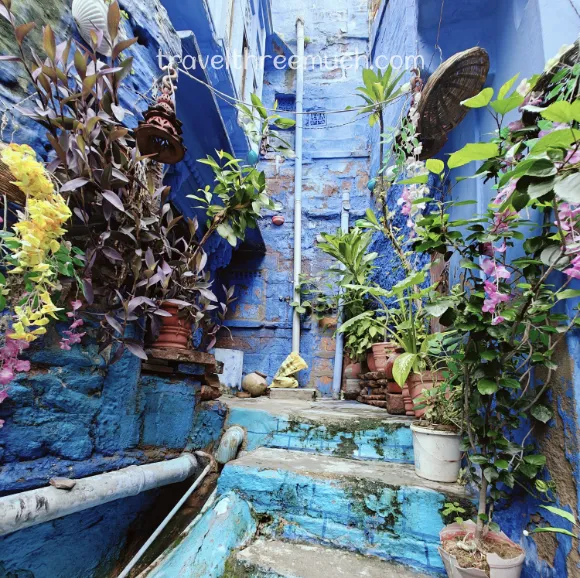
This is the iconic part of the city featuring the blue walls. We heard three different reasons for the blue walls, all equally fascinating.
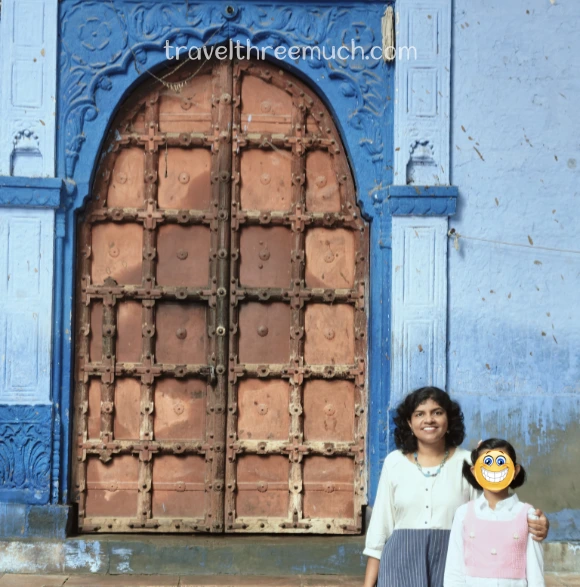
We then went to an old compound with a picturesque doorway. Cosy family shrines dedicated to Krishna gave us a glimpse into the lifestyle of the bygone era.
Art & Creativity on Blue Walls
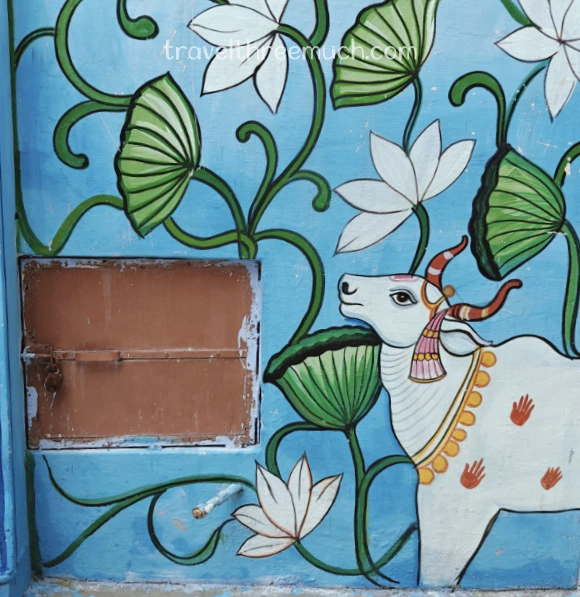
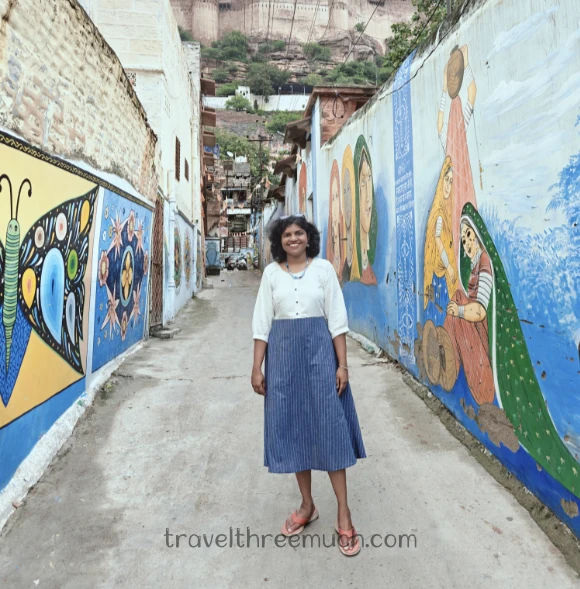
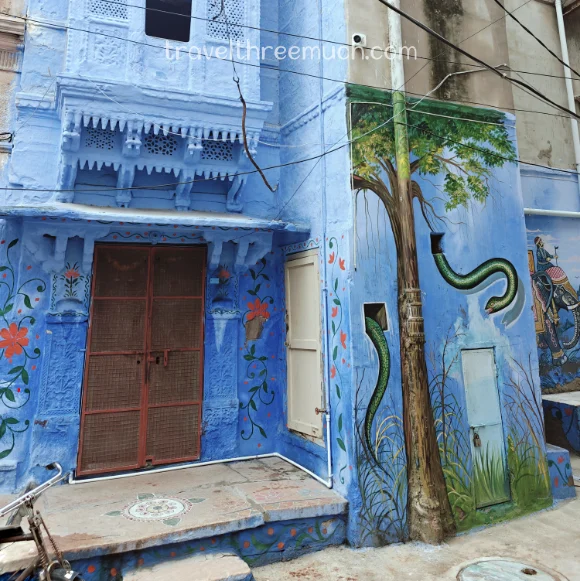
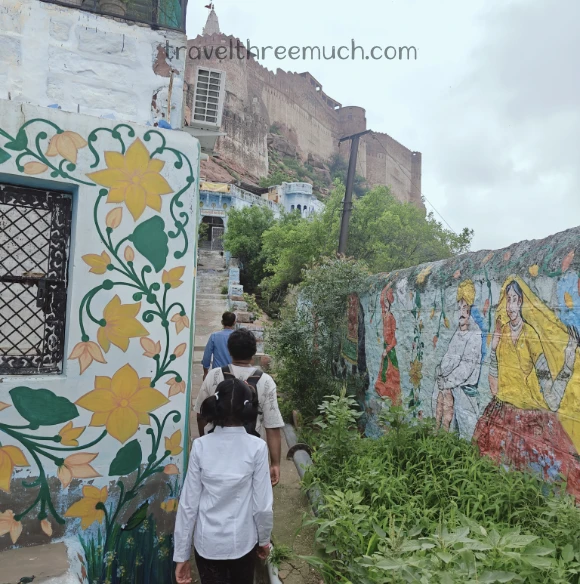
The walls showcased the locals’ creativity. Some of them featured murals on traditional themes such as Rajput warriors and princesses. Other murals had the more contemporary ’Padhaaro Sa’ and ‘Khamma Ghani’ phrases calligraphically written in English and Hindi. One of the paintings had a three-dimensional effect, with a tiger ready to leap out of the wall and join us! Even drainpipes were given a makeover to resemble vintage toothpaste tubes, a nostalgic nod to our childhood years and simpler times.
The Surreal ‘Moroccan House’
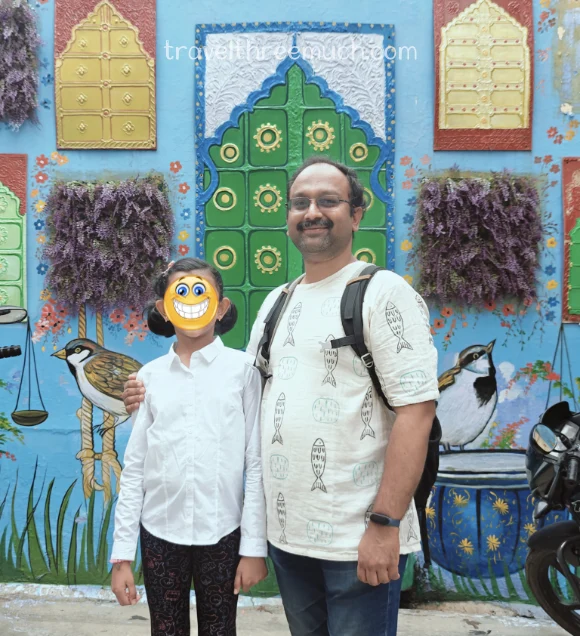
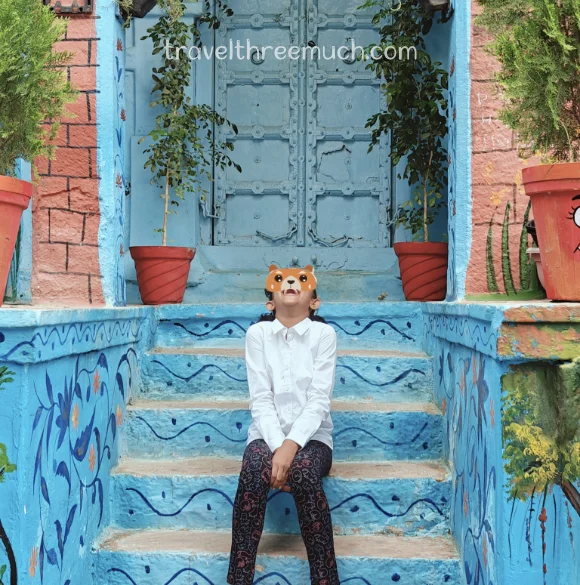
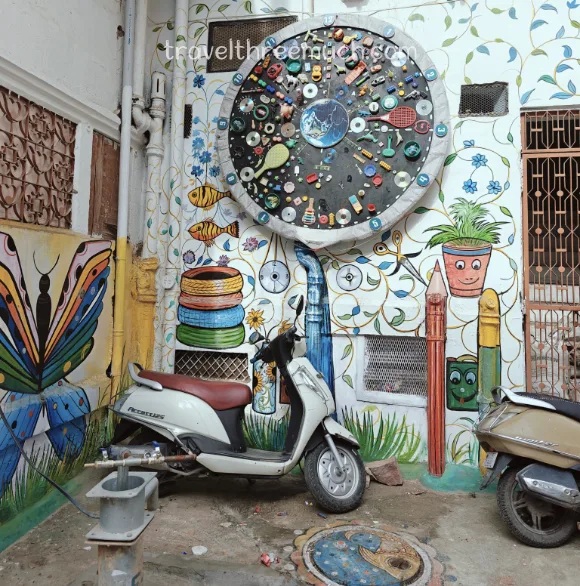
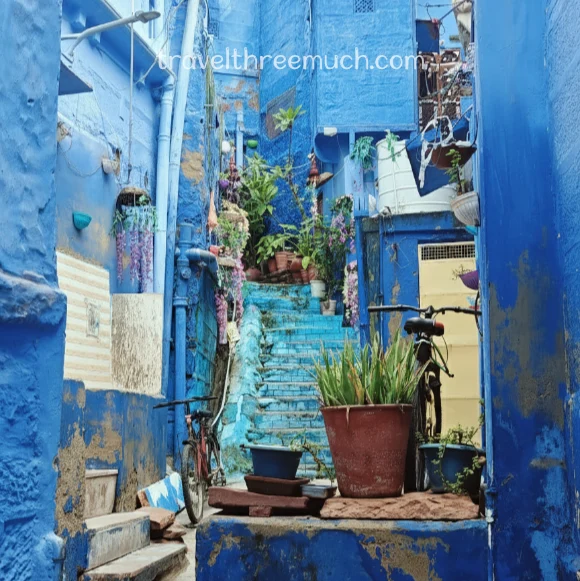
We found some walls adorned with art from discarded toys, plastic waste, and knick-knacks. This gave a quirky touch to the heritage vibes of the old city. We were now at a location listed as ‘Moroccan House’ in Google Maps. The entire setting was surreal. The decoration was simple yet tastefully done with hanging baskets of plastic flowers. The colours of the baskets and flowers complemented the blue walls. The stairs were also painted blue, completing the fairy tale setting.
Bantu told us that the State government annually sponsored the exterior painting for a fixed number of homes. This maintains the heritage and aesthetics for Jodhpur’s claim to being the Blue City. We were in awe of the locals’ commitment to upholding the city’s heritage.
Panoramic Views from Pachetia Hill
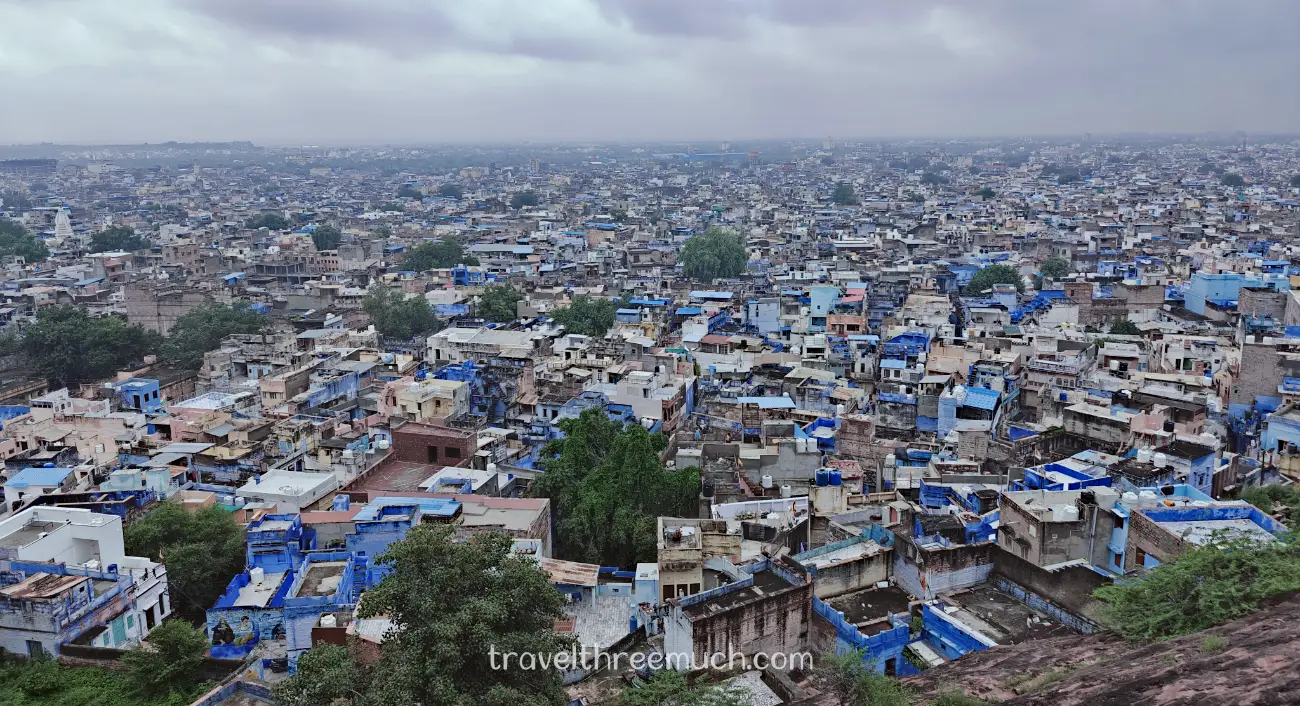
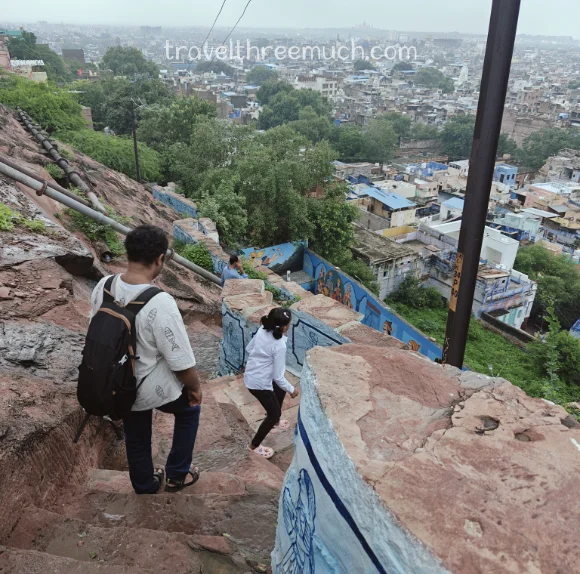
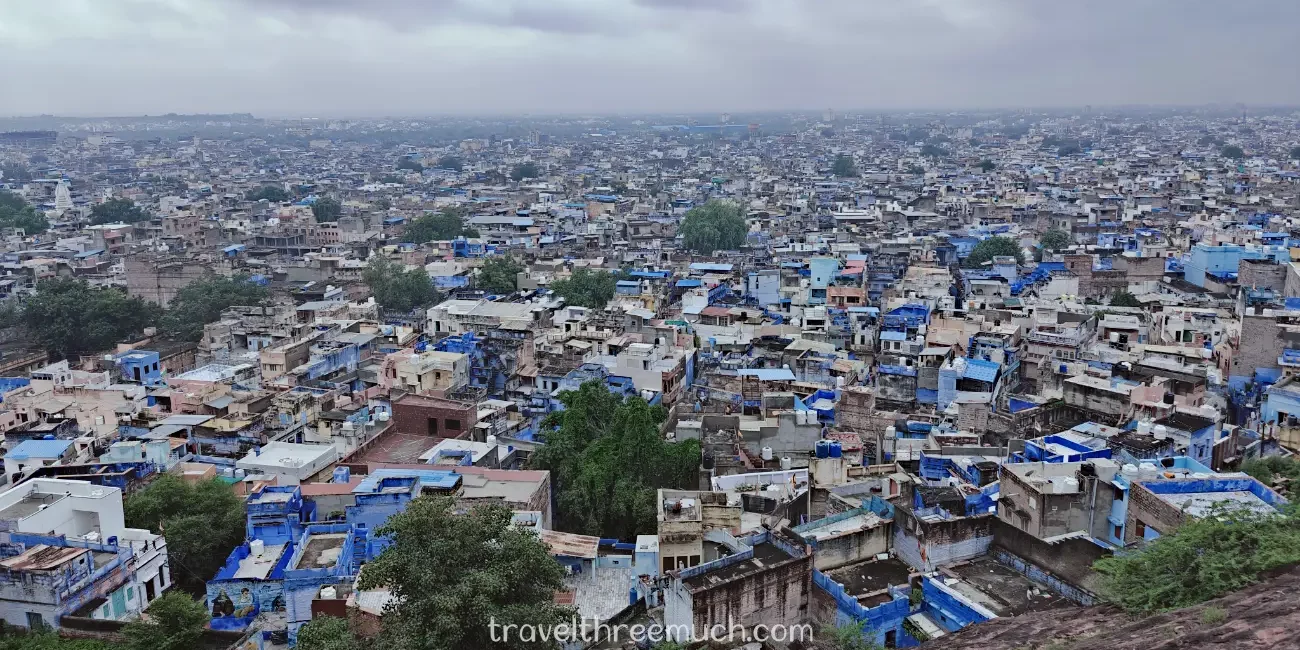
Our next stop was the Pachetia Hill. Ascending this hill took us a while due to the steep slope and the irregular steps. The early morning cool air definitely helped. We passed by the Jwalamukhi Mataji temple during the climb. The temple is nearly half a century old. It’s dedicated to a form of the goddess Parvati slaying a buffalo demon. There were pretty frescoes on the walls leading up to this temple. The top of Pachetia Hill offers panoramic views of Jodhpur. On one side, the ramparts of the imposing Mehrangarh Fort are visible. On the other side, we can see the sprawling view of Jodhpur. A mass of blue buildings indicates the Navchowkiya, while newer buildings are painted in more contemporary colours.
Concluding Our Tour: Tea & Pyaaz Kachori
The overcast sky started to turn drizzly. This made our descent even slower. We had to be sure-footed on the way down, lest we tumble back into the blue streets from the hills above!
We made our way back to the market near the clock tower. Bantu treated us to piping hot tea. We sampled one of Jodhpur’s culinary inventions, the Pyaaz Kachori, at Raju Namkin Bhandar. This fried snack had scrumptious onions stuffed into a lentil flour shell. We wolfed down a couple of kachoris and washed them down with the tea. This concluded our walking tour. Bantu gave us hints on options for curios and handicrafts in the old city and bade us goodbye.
Bantu told us that the State government annually sponsored the exterior painting for a fixed number of homes. This maintains the heritage and aesthetics for Jodhpur’s claim to being the Blue City. We were in awe of the locals’ commitment to upholding the city’s heritage.
Essential Tips for Your Jodhpur Walking Tour
- When planning your trip, remember the following:
- The walking tour is about 5 km long. So it’s best to start early in the day to avoid crowds and the sun.
- It has many parts that aren’t accessible to wheelchair users.
- Carry an umbrella with you to shelter from the sun and rain.
- Make sure to wear footwear with a good grip for climbing the Pachetia Hill.
- Ensure the footwear protects you from the slushy streets during rain.
Shopping ideas
You can wander around the neighbourhood of the Ghanta Ghar for some interesting shopping. Since we had started the walk early in the morning to beat the crowds, the stalls hadn’t opened yet. We spent a while taking in the sights and sounds of the market, slowly coming alive. Since the drizzle was turning into rain, we sheltered from it for a while in Sam’s Art Cafe.
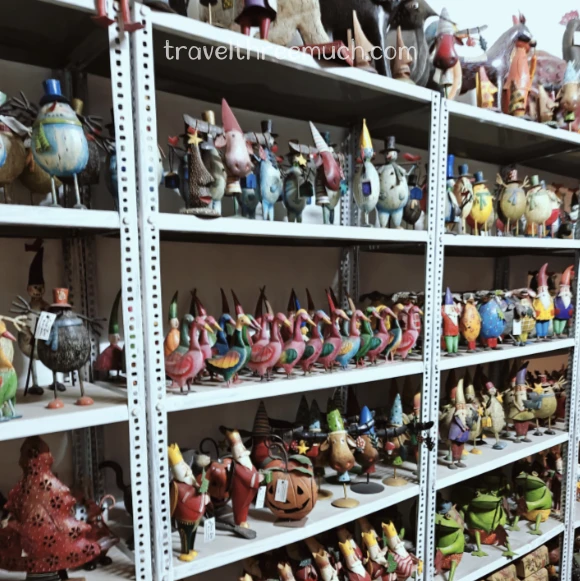
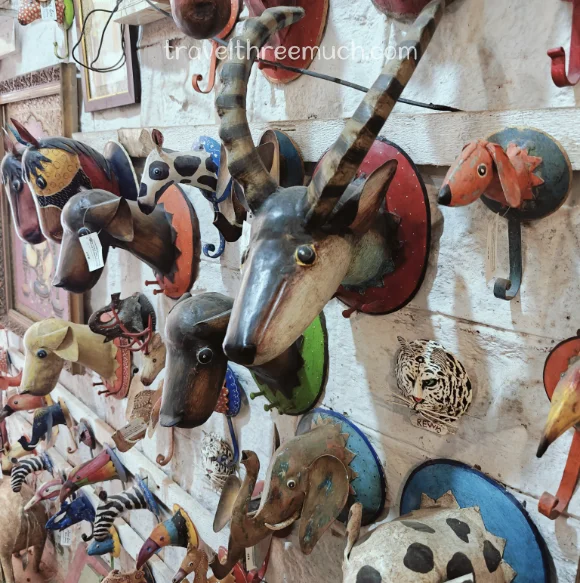
When the rain seemed to abate, we made our way to Iron Era Art Store. Their creations were very unique, and we spent a while looking around their gallery. It was interesting to see the decor pieces being made in the workshop, near the gallery. We picked up a couple of pieces for ourselves
We’ve shared our experiences of the heritage walk in Jodhpur guided by a local. Thank you for reading, and share your views and feedback below.
What Other Travelers Ask
What is the best way to explore Jodhpur's Blue City?
A guided walking tour is the best way. The lanes are narrow and exploring on foot is the bets way to see every piece of art and history. Availing the services of a knowledgeable local guide who can reveal stories and spots that you’d easily miss on your own will make the tour very interesting.
Where does the Jodhpur Blue City walking tour start?
The tour typically starts at Ghanta Ghar, the iconic Jodhpur Clock Tower which is located at the entrance of Sardar Market.
Is the Jodhpur walking tour suitable for all fitness levels?
Except for one set of stairs at the Pachetia hill, the complete walking tour is simple to do. The stairs can also be done comfortably by anyone with moderate fitness.
What can you see from Pachetia Hill?
From the top of Pachetia Hill you get panoramic views of Jodhpur from two sides — the ramparts of Mehrangarh Fort on one side, and the sprawling blue rooftops of Navchowkiya on the other.
What is the 'Moroccan House' in Jodhpur?
The ‘Moroccan House’ is a spot in the blue streets listed on Google Maps, known for its surreal fairy-tale atmosphere.
Prasanna Vasudevan
Prasanna is the Primary Writer and Technical Expert behind the posts. He is responsible for the detailed facts, historical context, and logistical breakdowns. He has a deep love for mountains, history, nature, and is the family's expert packer.
Leave a Reply