
Modhera featured

Modhera Sun Temple Gujarat: Architecture, Timings & Equinox Mystery

Updated on March 15, 2026

Contents

    Introduction: A Solanki Masterpiece

    The Modhera Sun Temple is dedicated to the Sun god. The temple, situated on the banks of the River Pushpavati, is one of the finest examples of Chaulukya or Solanki architecture.

    It dates from the 11th century CE.

    Administered by the Archaeological Survey of India, it has been declared a Monument of National Importance. There is a museum on the grounds with exhibits recovered from the conservation and restoration activities of the temple.

    planplanettm Planning Your Visit: Entry Fees & Online Booking

    The temple requires tickets for visitors. It is highly recommended to book your tickets online and beat the crowds. Online bookings can be made.

    • Select Vadodara City -> Sun Temple -> Date and Time (Forenoon, Afternoon, Evening)
    • INR 250 per person (Foreign citizens)
    • INR 20 per person (Indian citizens)
    • Children under the age of 12 years visit for free.
    Modhera sun temple

    How to Reach Modhera Sun Temple

    Ahmedabad is the closest airport, 100 km away from Modhera. Ahmedabad airport is two and a half hours away by road. Mehsana Railway Junction is about 30 km away from Modhera. It takes about an hour to reach Modhera by road from Mehasana Junction. Modhera and Gandhinagar are 85 km apart and are a two-hour drive away from each other.

    The History: A 11th-Century Legacy of the Solankis

    Modhera Sun Temple dates back to the 11th century CE. It is regarded as one of the finest examples of the Maru-Gurjara architectural school. The temple is said to commemorate the defense mounted by the royal armies of Bhima 1. The royal forces attempted unsuccessfully to stop an invasion by Mahmud of Ghazni in 1024-1025 CE.

    The temple was built in phases from the early 11th century CE until the end of the 12th century CE.

    Architecture Breakdown

    Gudhamandapa, Sabhamandapa, and the Kunda

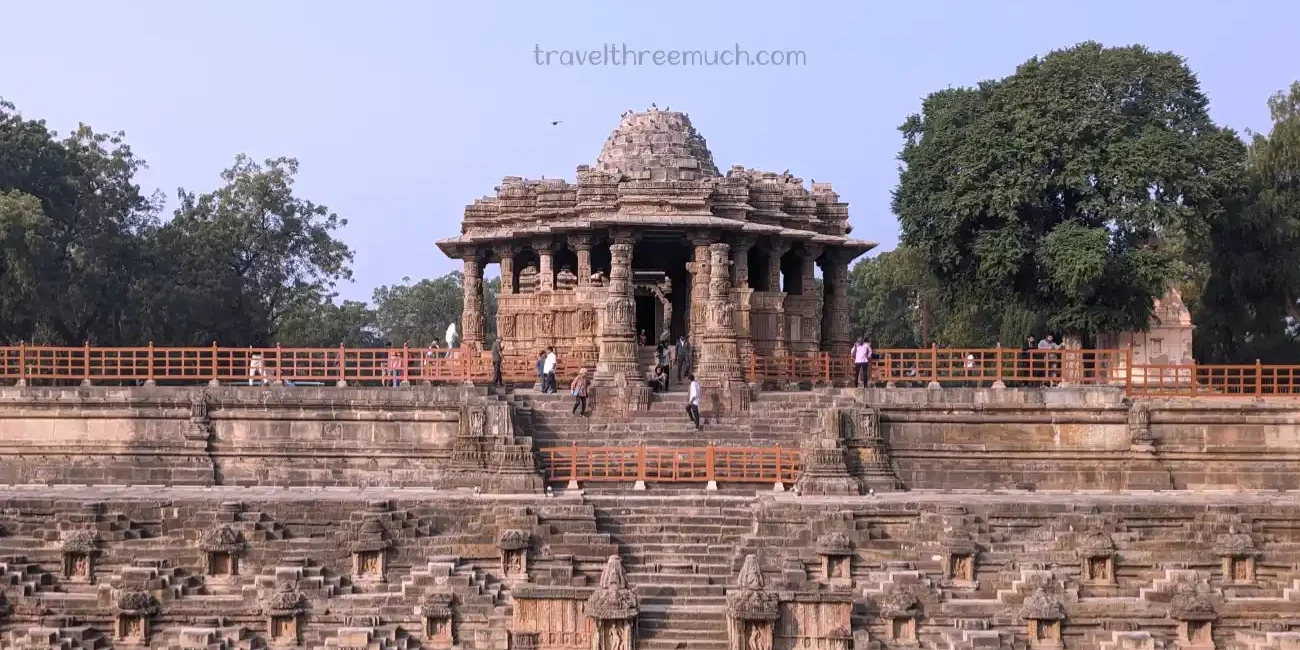
    The temple complex consists of three structures. The first is the Gudhamandapa, the hall enclosing the sanctum. The second is the Sabhamandapa, the assembly or dance hall. The third is a massive stepped tank called the Kunda.

    The earliest structures of the temple complex are the Gudhamandapa and the Kunda from the 11th century CE, built during the reign of Bhima 1. The Sabhamandapa dates from the 12th century CE. It was built during the reign of Karna.

    Astronomical Precision: The Equinox and the Sun’s Alignment

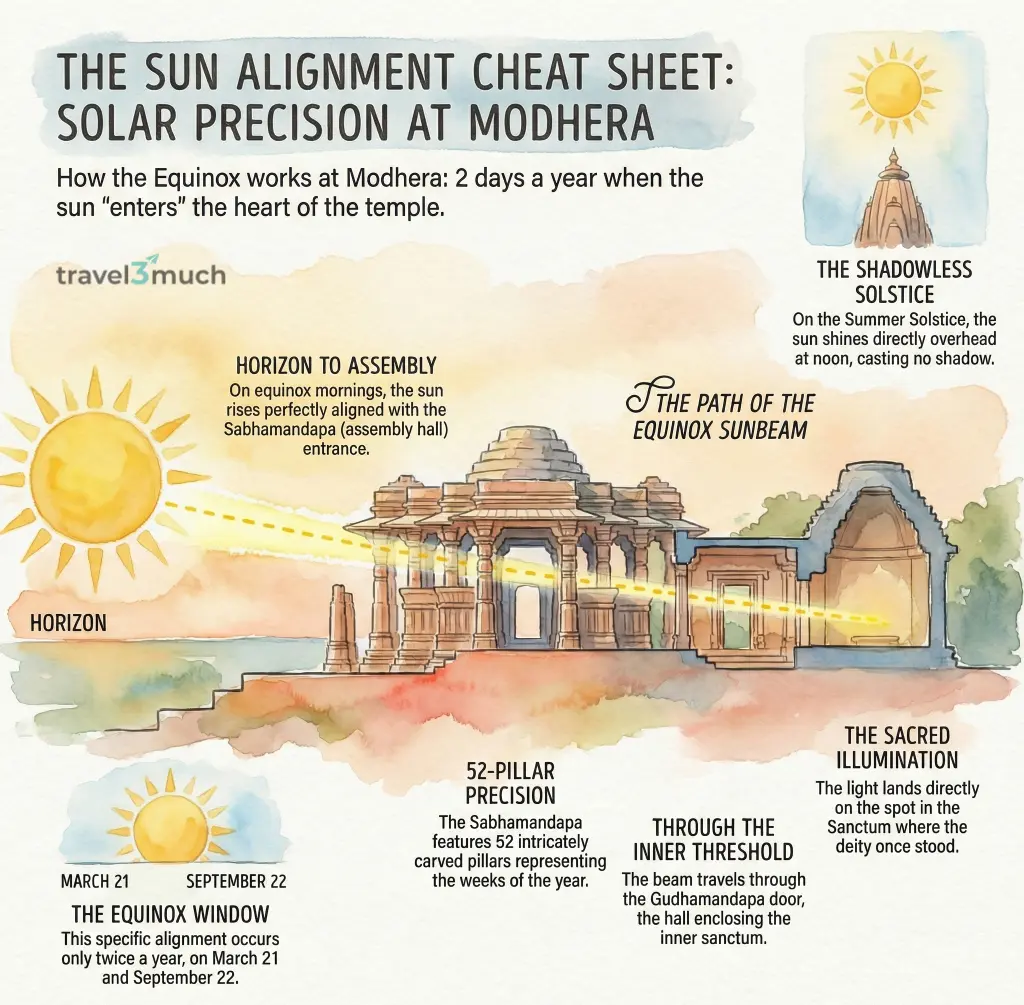
    The principal deity, lost to invasions in the vagaries of time, is missing from the sanctum housed in the Gudhamandapa. There is no active worship in this temple. The sanctum’s alignment is such that the deity would have been illuminated by the first rays of the rising sun on solar equinox days. The shikhara or superstructure above the Gudhamandapa is missing, lost either to invasions or weathered over time.

    Modhera Sun temple

    The Gudhamandapa: Sunrise in the Inner Sanctum

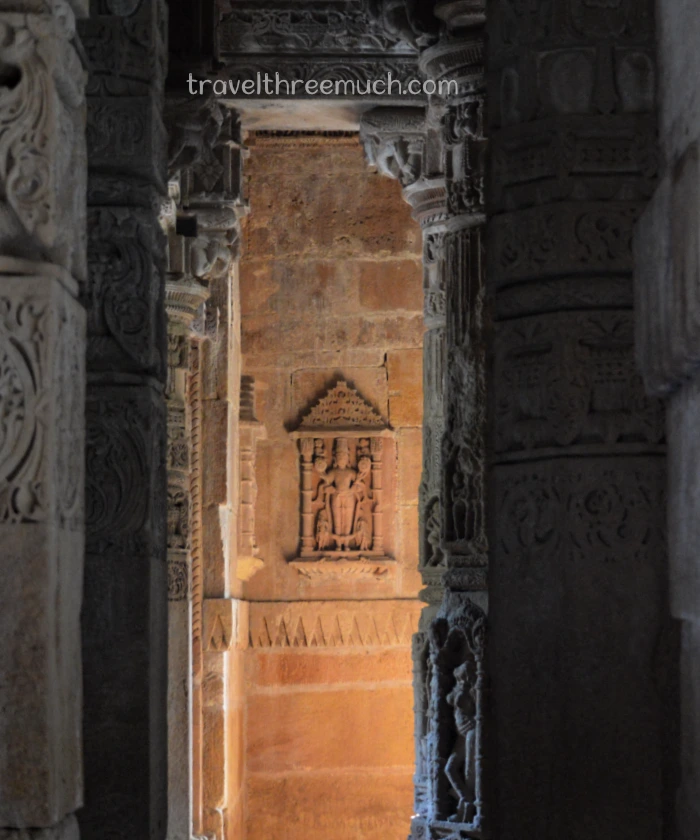
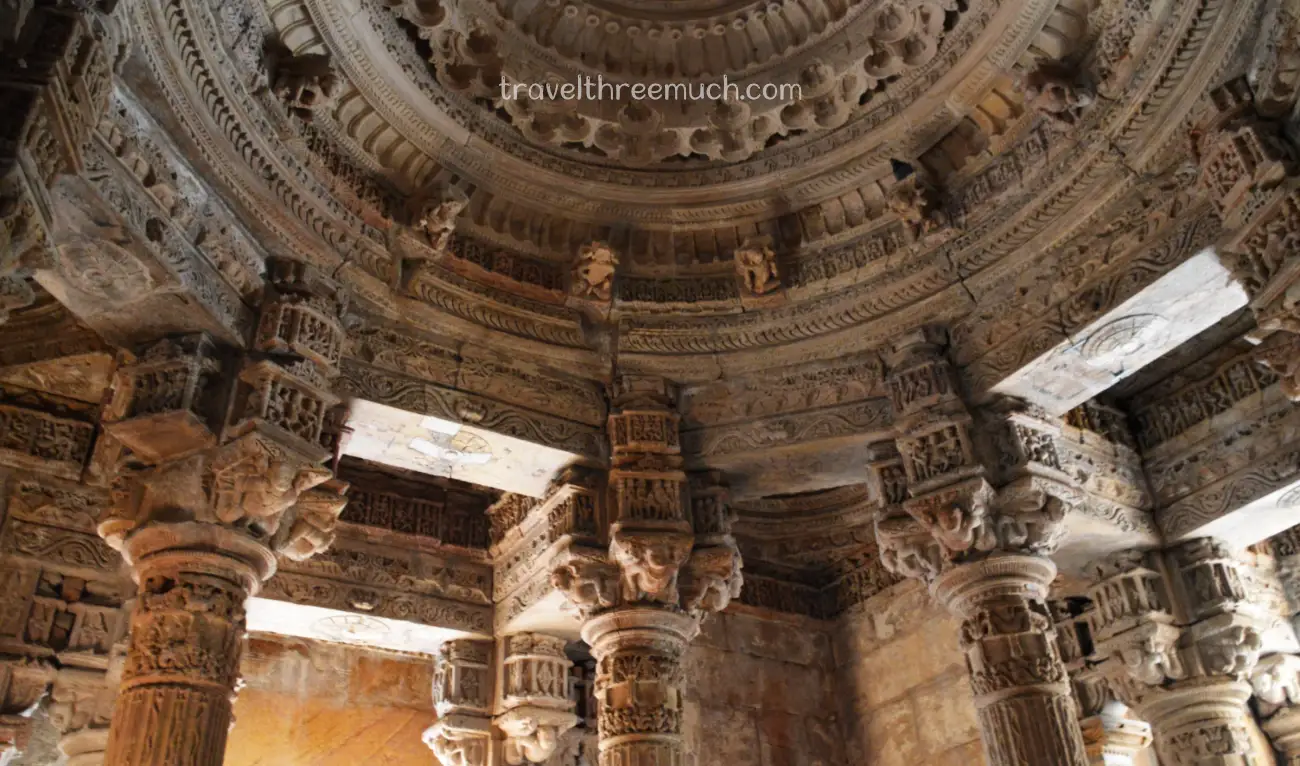
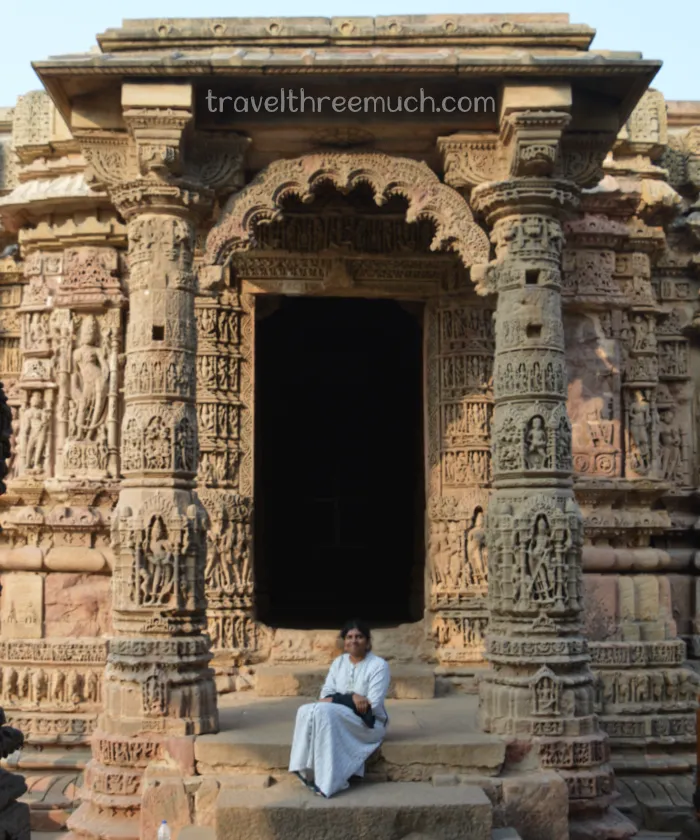
    We reached early in the morning to beat the crowd and catch the sunrise. Since we visited in December, it was still quite chilly when we reached the temple. We were drawn to the Gudhamandapa and the sanctum first. The entrance had a gravity-defying ‘flying arch’ with intricate floral patterns incised on it. The roof dome had an inverted plantain flower-like central carving surrounded by floral motifs. The morning light slowly changed from a deep yellow that set the carvings on fire. The interior walls were relatively less decorated. Some panels featured gods from the Hindu pantheon. Others had dancers. Many of the panels seemed damaged, though it was unclear if it was due to the weathering or the waves of invasions the temple faced. There was a passage between the sanctum and the inner side of the outer walls. The passage would have been used to perambulate around the deity as a part of the worship. Large windows on three sides of the chamber ensure adequate lighting inside the chamber. The windows probably had stone screens (jaalis) on them, which have been replaced with framed netting during the conservation work.

    Exquisite Exterior Carvings and Mythical Motifs

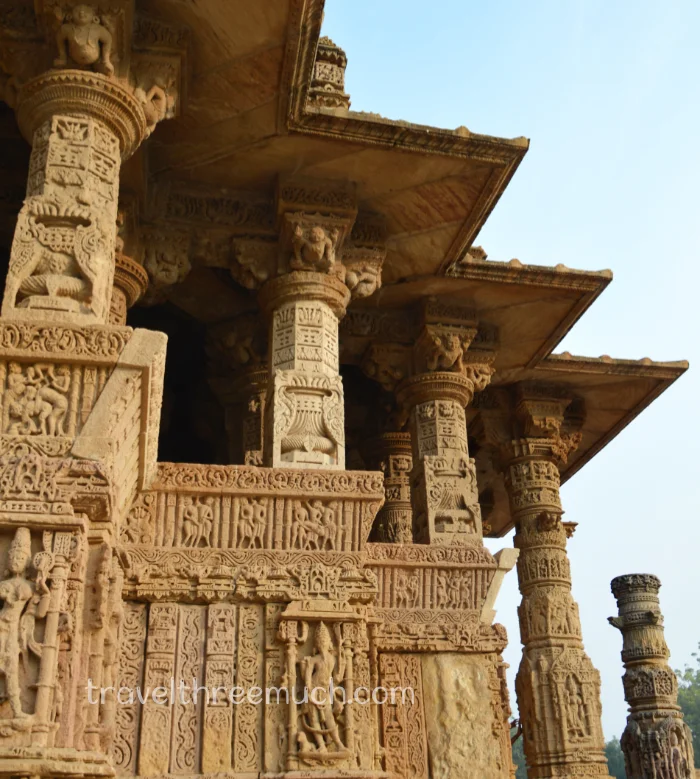
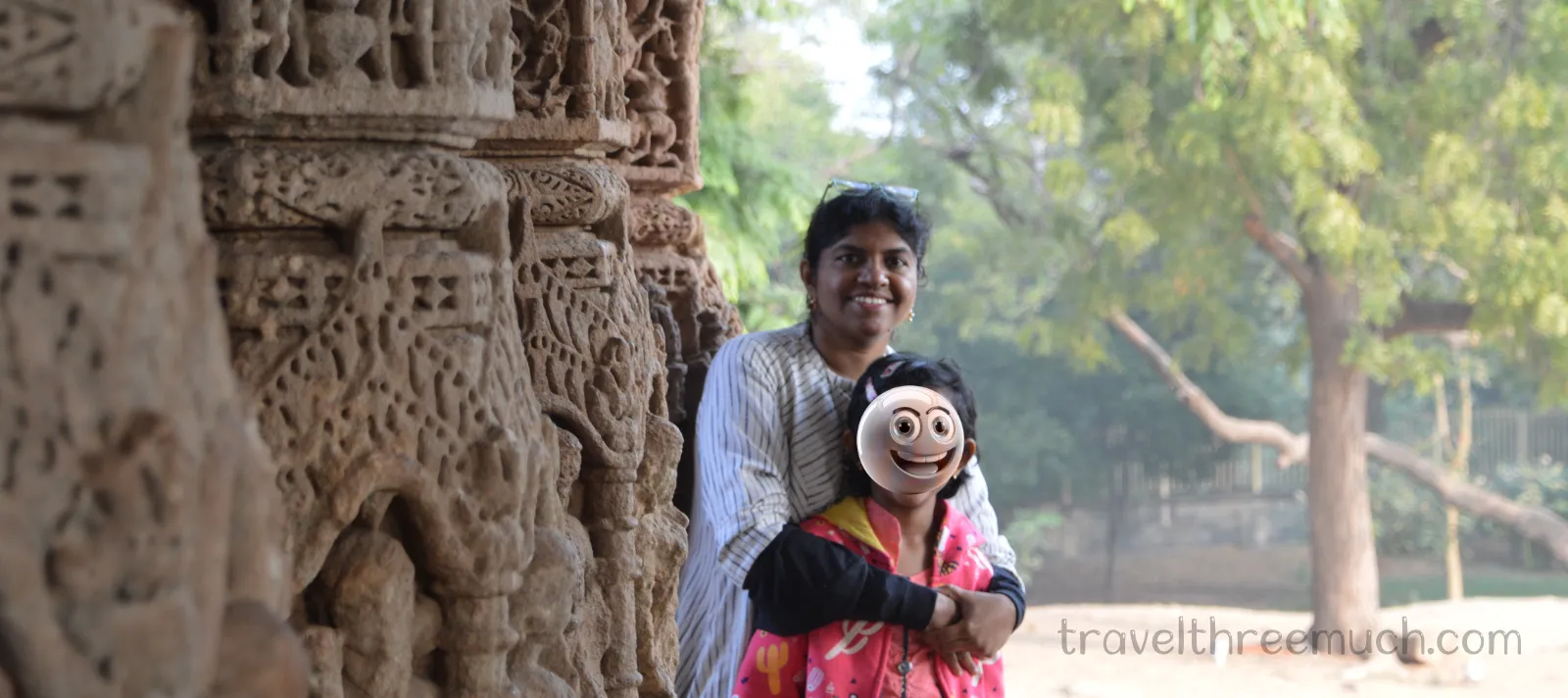
    There is still one portion on the Northern side of the external walls where the jaali opening has been walled up with stone slabs, with the framing intact. The exteriors had exquisite carvings starting from the multi-tiered plinth. The bottom-most tiers had lotus petals. The next tier had rows of heads of the mythical beast called yaali with leonine and serpentine features. The next tier had rows of elephants chiselled in relief, with each elephant’s trunk in a unique pose. Rows of dancers and soldiers completed the plinth on which the hall stood. The exterior panels had images of Hindu deities such as Shiva, the destroyer, the boar-headed Varaha, Surya, the sun god, goddesses, and graceful nymphs. We strolled about for a bit and went to the Sabhamandapa next.

    The Sabhamandapa: A Forest of 52 Carved Pillars

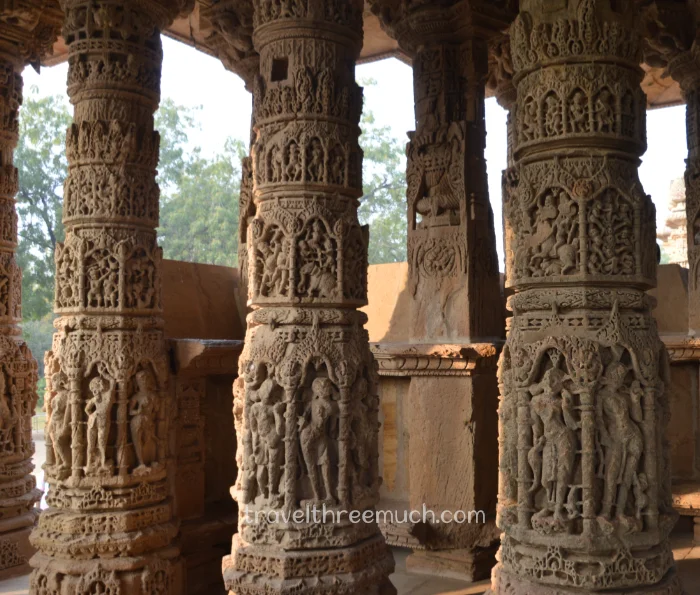
    The entrance of the Sabhamandapa from the Gudhamandapa had only the brackets on which a flying arch would’ve rested. The exit towards the stepped tank had an intact flying arch. We spent quite a while admiring the intricately carved ceiling of the Sabhamandapa. The structure is held by 52 pillars. There are two kinds of pillars. The short pillars begin on the raised bases that protrude inwards from the walls. The taller pillars start from the floor and have magnificent carvings on them. The taller pillars end in brackets, which support the domed roof through flying arches.

    Surya Kunda: The Geometry of the Sacred Stepped Tank

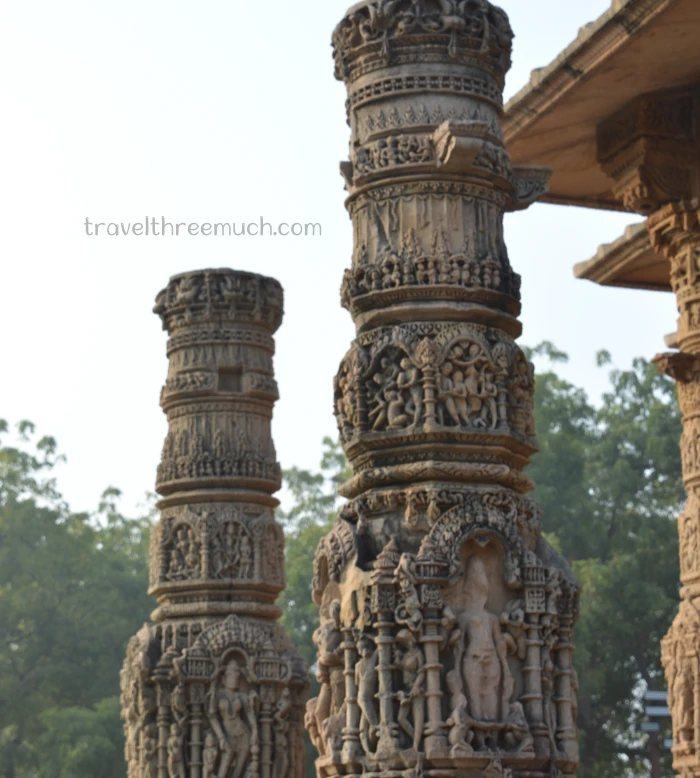
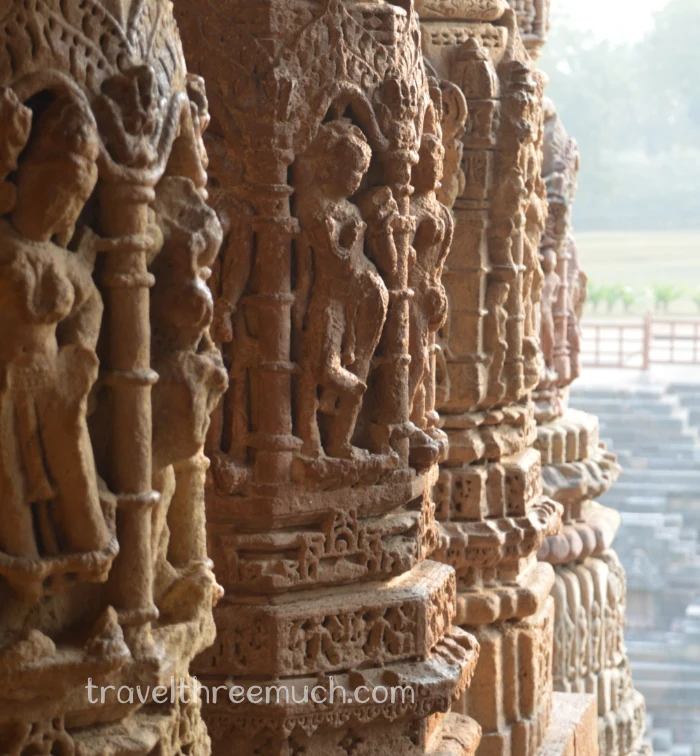
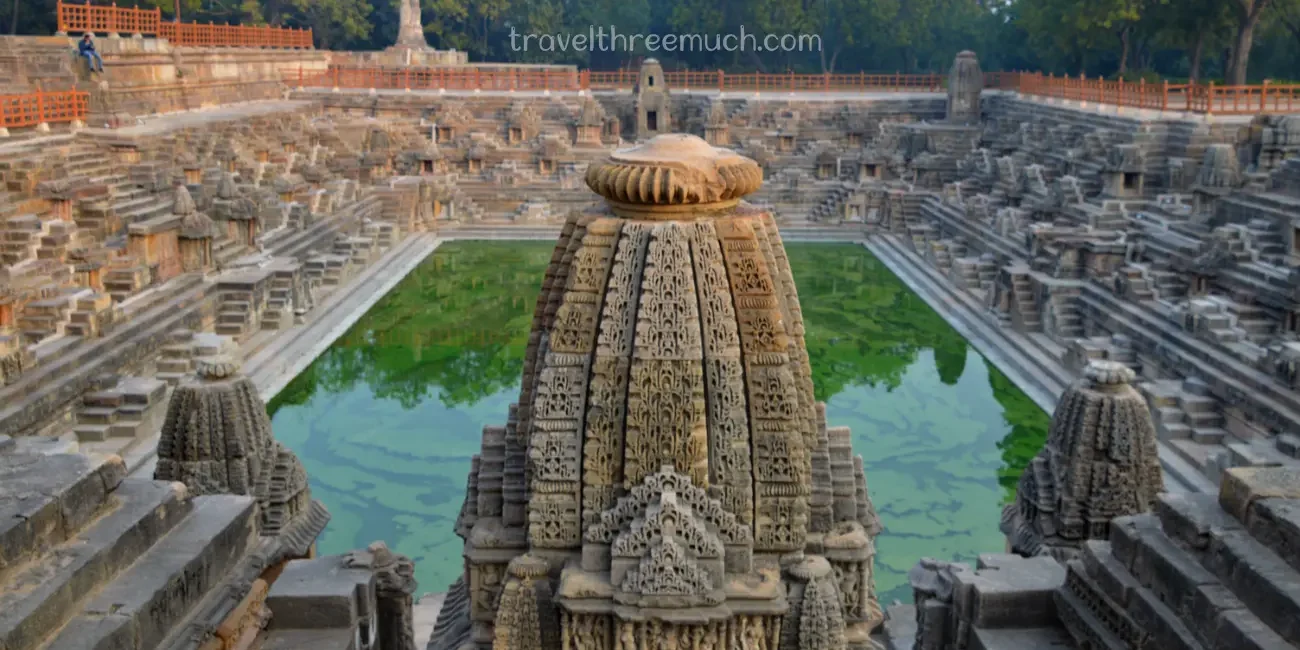
    The opening from the Sabhamandapa to the stepped tank has two pillars with gorgeous carvings of Shiva, Vishnu and Shitala. The tops of the pillars have no arch or roof connected to them. There were two more pillars on a raised platform. It is said that these pillars once had a kirti toran (victory arch) connecting them, but this is not intact anymore. The stepped tank, called Ramakunda or Surayakunda, was a sight to behold in the early morning light. Four terraces with recessed steps led to the bottom of the tank. The stepped tank had niches of various sizes, reportedly 108 in number. Some of them were small alcoves, each with a single deity in bas relief. Others were more elaborate, resembling small temples complete with amlakas atop their shikharas.

    Modhera tank

    The Archaeological Museum and Local Wildlife

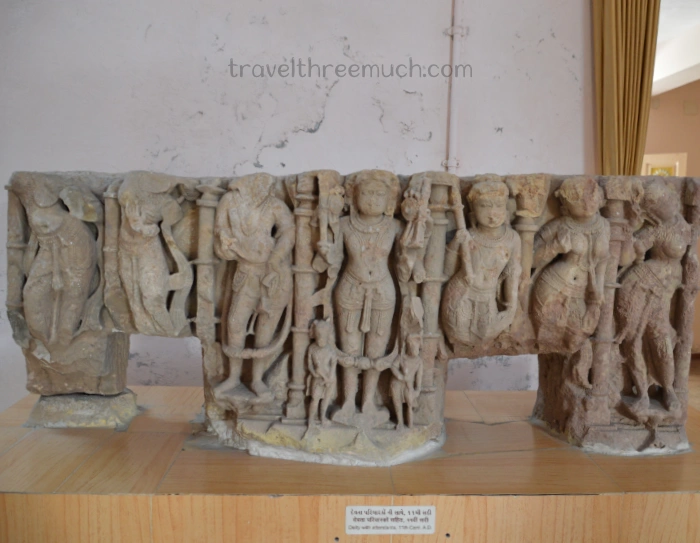
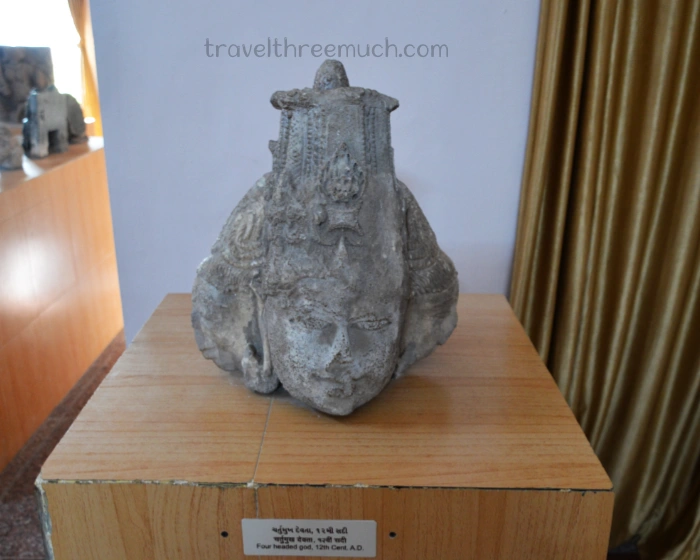
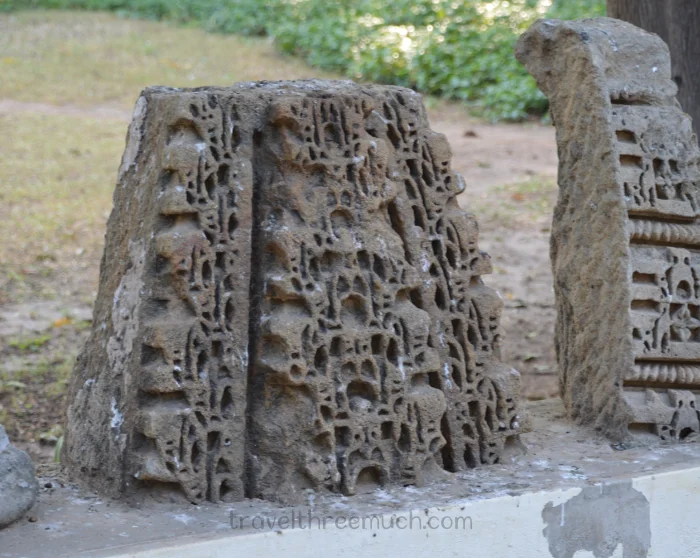
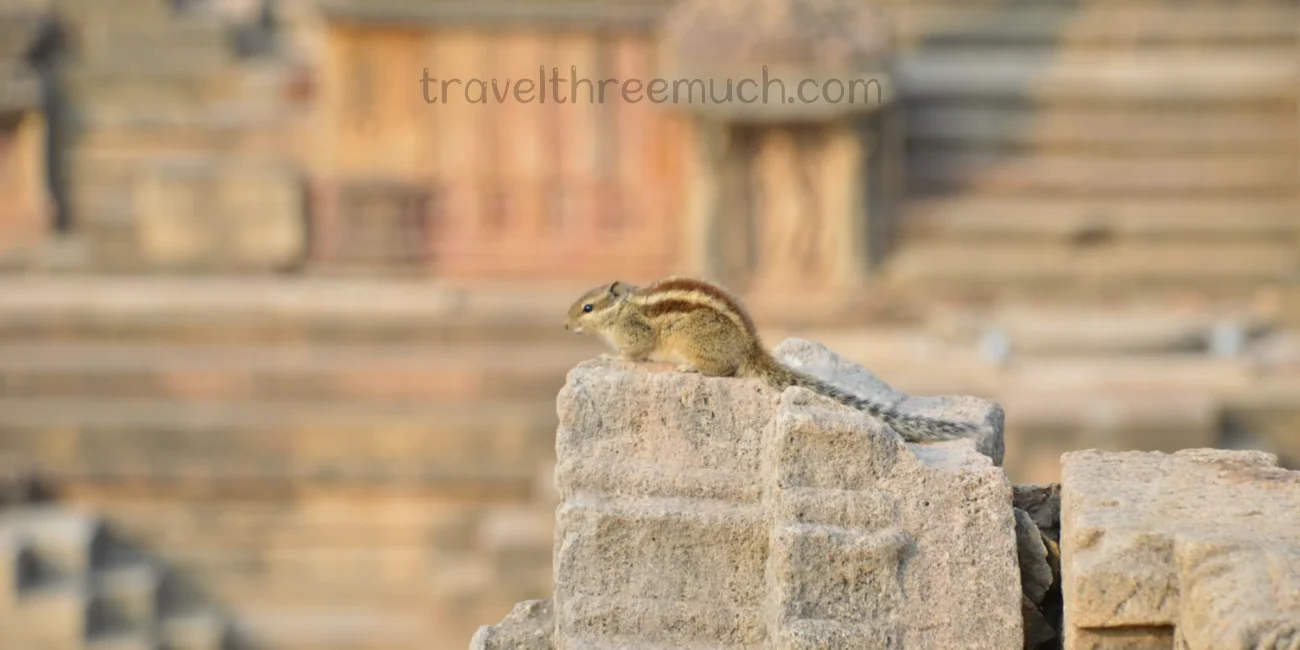
    There was still some time for the Archaeological Museum in the temple to open. While we waited for the museum to open, two troops of langurs gambolled onto the grounds. They started to noisily quarrel amongst themselves. As we waited outside the museum, a flock of parakeets set up a raucous concert. We took a closer look at the exhibits that lined the passage to the museum, and some cattle egrets kept us company.

    The museum opened at around 10:00 AM. Inside, we saw artefacts dating from the 8th century CE.

    Modhera with Kids: What to Know Before You Go

    Plan the trip early in the morning if you are visiting with kids. This will help you avoid the crowds and heat later in the day. On the plus side, the early morning golden light makes for stunning photographs.

    You can also keep the museum as an optional stop on your itinerary if you are visiting with kids younger than 12, as they may not be thrilled by the exhibits.

    Pro-Tips for an Optimal Experience

    • While the temple complex opens at sunrise, the onsite museum only opens at 10:00 AM, so plan your exploration of the galleries for later in the morning.
    • Be mindful of the resident monkeys. Keep your belongings secure and avoid carrying visible food or plastic bags to prevent any unwanted interactions.
    • There are virtually no breakfast options in the immediate vicinity of the temple, so it is best to eat before leaving your hotel or pack your own meal.
    • The stone complex gets extremely hot, so carry plenty of water and bring an umbrella or hat to stay shielded from the intense afternoon sun.
    • Stay for the spectacular evening 3D projection show after sunset, which uses solar energy to narrate the temple’s history in a stunning visual display.
    • If you visit in the third week of January, don’t miss this three-day Uttarardha Mahotsav dance festival, where the temple serves as a breathtaking backdrop for classical Indian performances.
    Modhera last

    What Other Travelers Ask

    The temple is famous for its astronomical precision. Equinoxes (March 21 & Sept 22): The temple is designed so the first rays of the rising sun illuminate the inner sanctum. Best Daily Time: Visit as early as possible (6:00 AM – 7:30 AM).

    Yes, and it is a major highlight. The Show: A solar-powered 3D Projection Mapping Show that depicts the history of the temple. Time: Usually begins after sunset, around 7:00 PM – 7:30 PM. But, let us be clear, we are not great fans of shows and hence we’ve not seen it. 

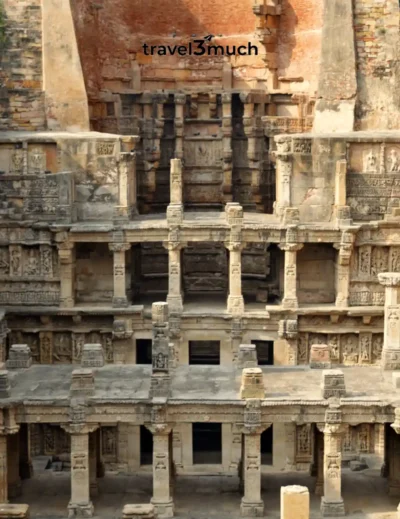
    Most travellers turn this into a “Heritage Circuit” day trip. The most popular additions are: Rani Ki Vav (Patan): A UNESCO World Heritage stepwell located about 45 minutes away. Adalaj Stepwell: Located on the way back toward Ahmedabad. We did it slightly differently. We combined Modhera Sun temple with Rani ki Vav, Sahastraling talav and Akhaj Shakthi kund. 

    No. Unlike many other temples in India, the Modhera Sun Temple is a protected monument maintained by the Archaeological Survey of India (ASI). There are no active religious rituals or priests; it is visited purely for its historical and architectural value.

    There is no strict religious dress code since it is not an active temple. However, modest dress is recommended out of respect for the site’s heritage. Comfortable footwear will be needed. 

    Ramya is the Itinerary Mastermind and travel planner for the family. She specializes in crafting efficient, culturally-rich trips, with a passion for India’s art, heritage sites, forests, and waterfalls. She brings the human emotion and logistical precision to their journeys.
    Leave a Reply

    Your email address will not be published. Required fields are marked *