
Champaner-Pavagadh Archaeological Park: A Complete Historical Guide
Updated on March 20, 2026
Contents
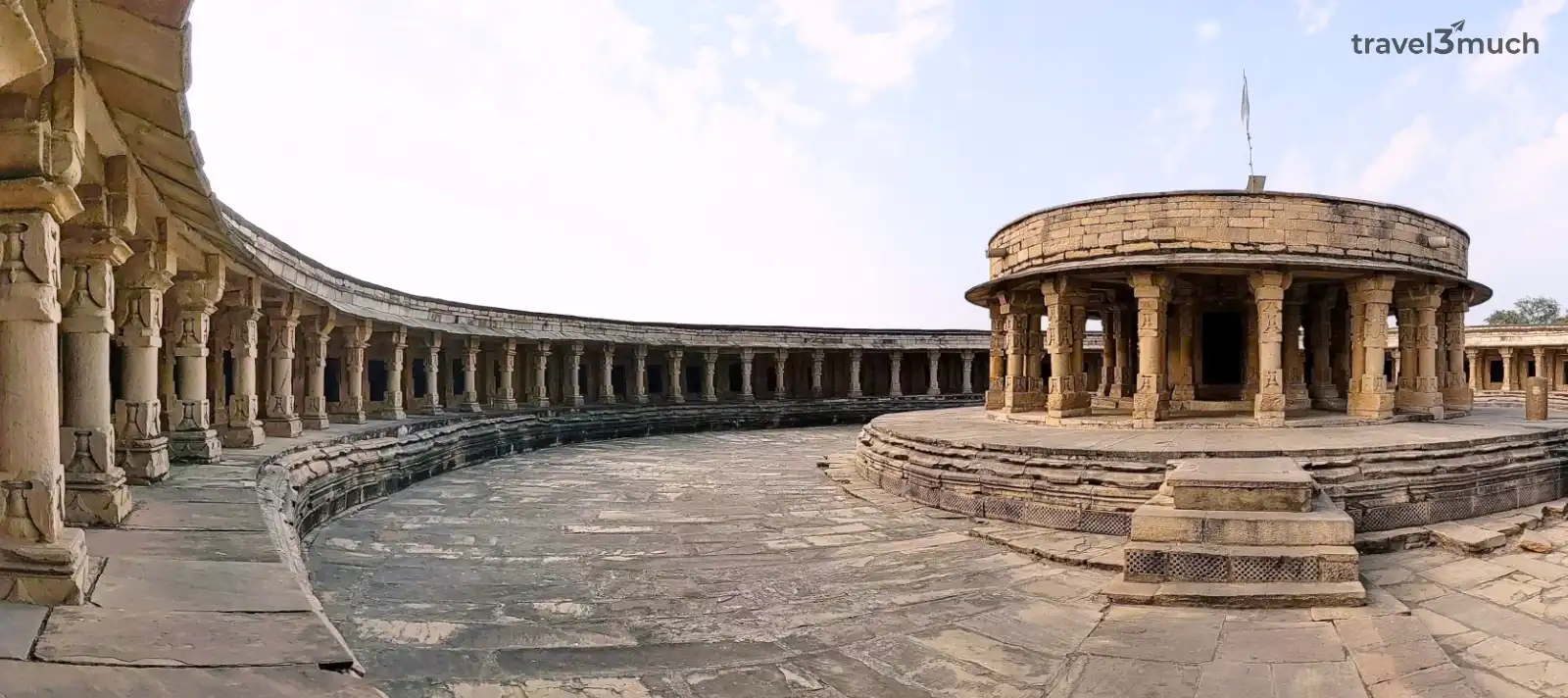
Champaner is a city founded in the 8th century CE by Vanraj Chavda. According to the founding legends, the city derives its name from Chavda’s friend and general Champaraj. Pavagadh is a hill with forts and temples. The hill is home to important pilgrimage sites for both Jains and Hindus. Together, the hill and the city form the Champaner-Pavagadh Archaeological Park.
Planning Your Visit: Logistics and Timing
Timings: The park is open from 8:30 AM to 5:00 PM.
Weather:The best time to visit the park is from November to February. The weather is pleasant at this time. The Pavgadh hill can be trekked, or you can also take a cable car that directly takes you to the Kalika Temple.
The trek is about 2 to 3 hours long each way, depending on one’s fitness. An alternative to trekking up is to take the cable car up to the Kalika Temple and trek down the hill. This way, you can also visit the other sites on Pavagadh hill that won’t be accessible by the cable car.
Entry Fees and Online Booking
The archaeological park requires tickets for visitors. It is highly recommended to book your tickets online and beat the crowds. Online bookings can be made here.
Select Vadodara City -> Champaner Monuments -> Date and Time (Forenoon, Afternoon, Evening)
Ticket charges:
- For foreign citizens are INR 550 per person
- For citizens of India, SAARC and BIMSTEC countries, INR 35 per person.
- Children under the age of 12 years visit for free.
This link can be used to book cable car tickets to the Kalika Temple atop Pavgadh hill.
The cable car ticket for a round trip costs INR 150 per adult (> 110 cm height) and INR 80 per child (> 90 cm and < 110 cm height). Children < 90 cm in height ride the cable car for free.
Getting There
Vadodara is the closest airport, 44 km away from Champaner-Pavagadh. It takes about 1 hour by road. Ahmedabad is about 155 km away, or about 3 hours by road. Vadodara Junction is the nearest railhead to Champaner. A cab’s the best way to make the most of your visit to Champaner-Pavagadh. It’s also possible to take an auto rickshaw from Champaner to the sites you want to visit. Some of the sites don’t have motorable roads and can only be hiked to. Read on to find out more.
Exploring the Hill
Military Architecture and Strategy
We didn’t visit the Kalika Temple atop the Pavagadh Hill. As our time was limited, we decided to visit only the archaeological sites of Champaner-Pavagadh park. We took a cab from Ahmedabad. Champaner and Pavgadh are on opposite sides of the main highway which connects Ahmedabad. We started early and wanted to finish visiting the sites on the hill before the day grew warm.
The Saat Kamaan (Seven Arches)
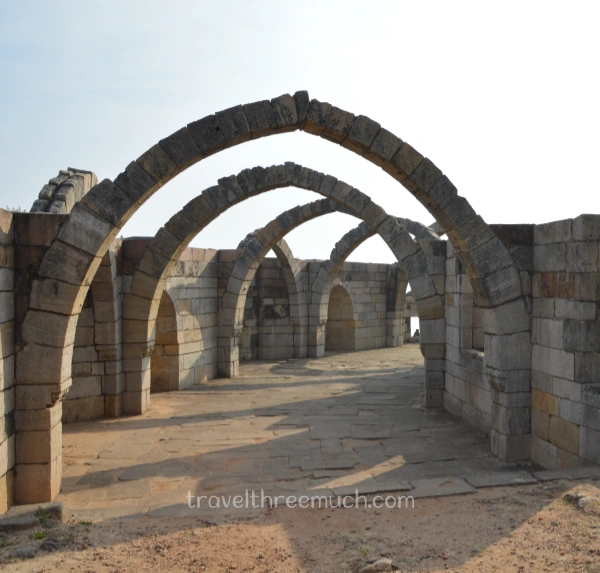
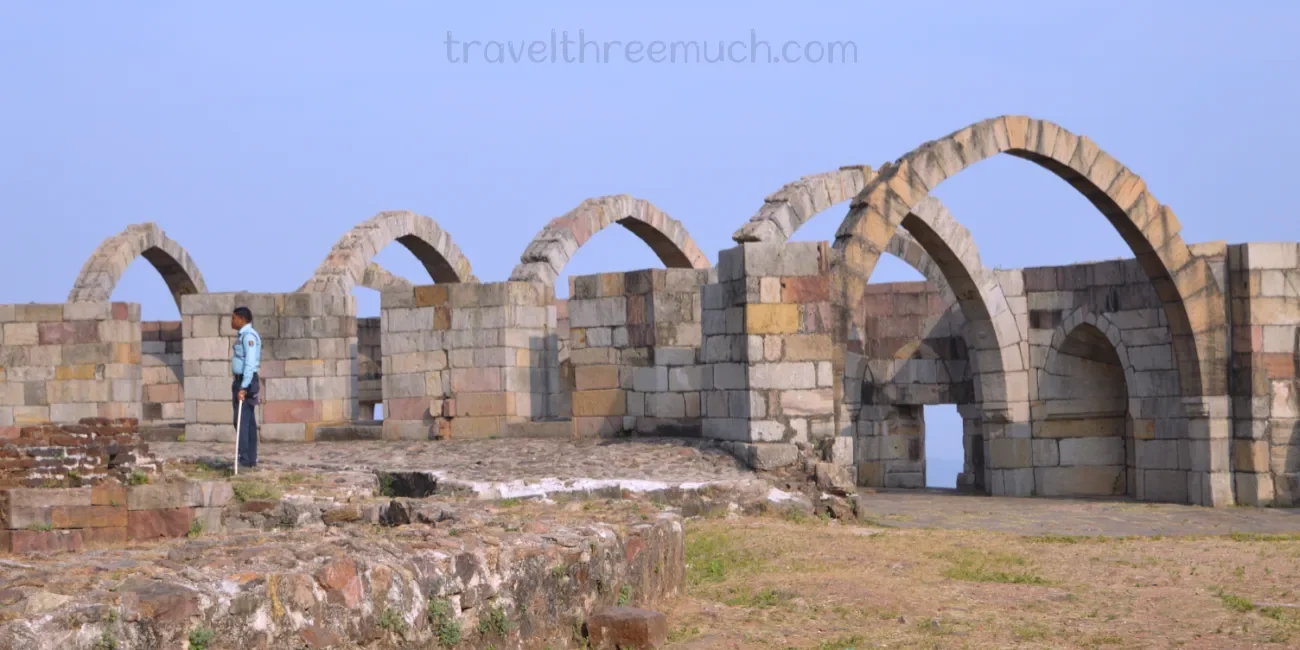
Our first stop was the Saat Kamaan. The name is derived from Saat (Seven) and Kamaan (Arches). It served as a lookout for the royal forces as they stood guard over the palaces in the plains.
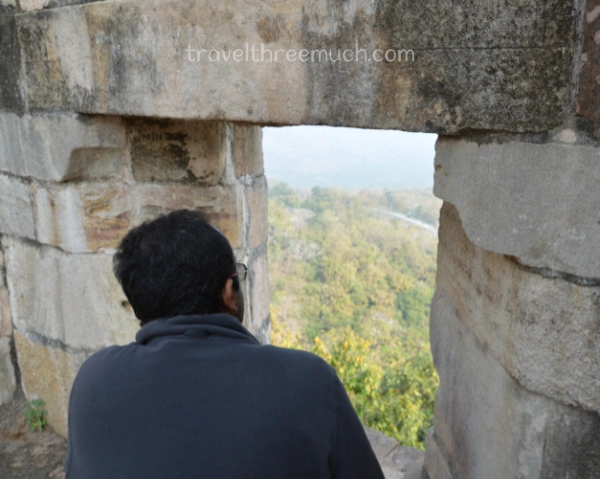
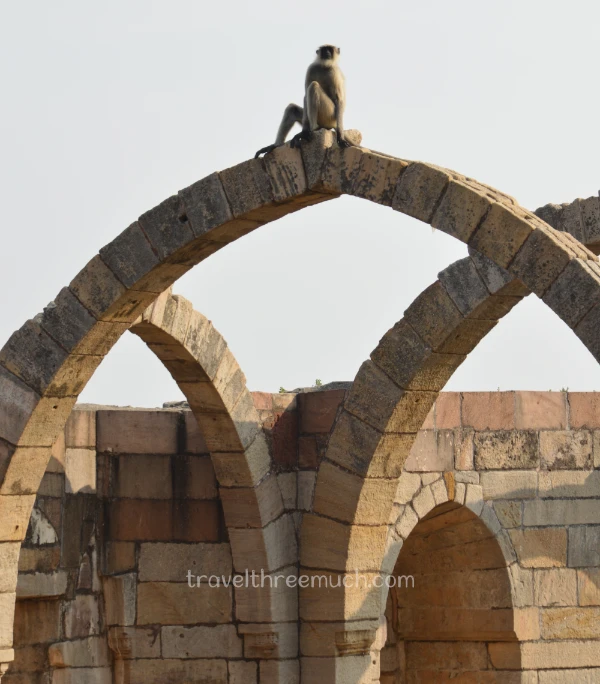
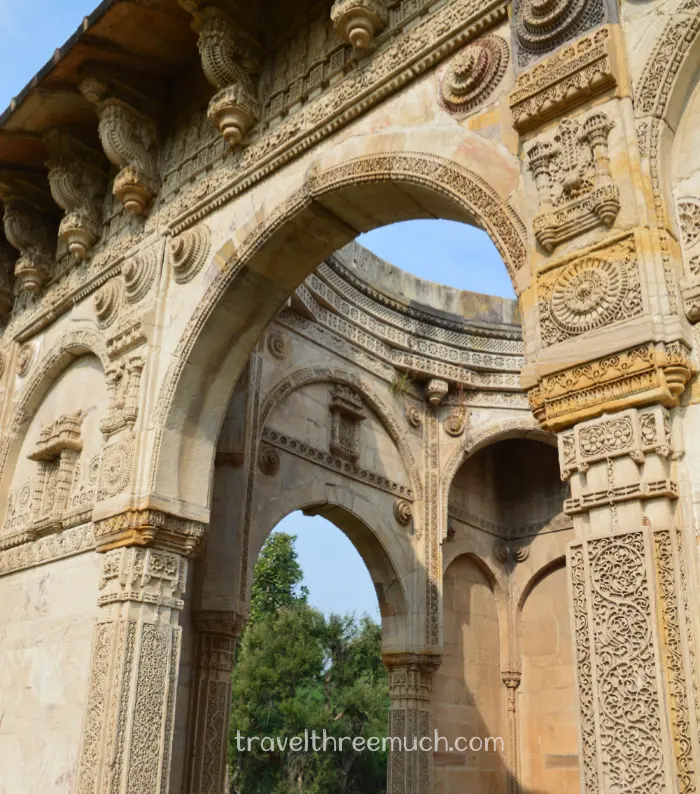
Six of the seven arches have survived to this day. It is likely that the arches supported a roof at some time in the past, but none remain. The bare arches against the blue sky made for a surreal setting. It is easier to appreciate the keystone’s importance in the arch’s construction in this setting, uncluttered by roof or walls. We found subterranean passages to make getting to the different parts of the lookouts quicker for the troops. A few cannonballs were lying in these passages, vestiges from the past. As we were leaving, a langur appeared and enjoyed leaping about the ramparts, unperturbed by the chasm a mere step away.
The Gate Complex: Defense and Fortification
Our next stop was the Gate complex. The first of the gates is the Atak gate. This was the entrance to the fortifications on the hill. An arched facade with alcoves on either of the inner sides was all that remained. A series of steps from this gate led to the Sadan Shah Gate. The gate is named after a Sufi saint who is highly regarded by people of all faiths in that region. The gate had the remnants of what seemed like a balcony on the upper storey. The balcony was supported by four elegant brackets. We saw two massive stone supports that were stands for catapults. The catapults, now nonexistent, were used to defend the palaces in the plains from invasions. The elevation of the hills provided a natural strategic advantage. The third and last gate we saw was named the Tarapore Gate. It was originally two-storeyed, but now only the gateway topped with rubble remains.
Note –
We didn’t have a lot of time to visit the Kalika temple, Lakulish temple, Digambar Jain temple and the Sadan Shah pir dargah. These sites are higher up the hill and are active worship sites. We made our way back to the Champaner side. We got the tickets checked at the entrance and bought a guide published by the Archaeological Survey of India (ASI), which administers the monuments in the park.
The Mosques of Champaner: Fusion of Architectural Schools
Bawaman Mosque
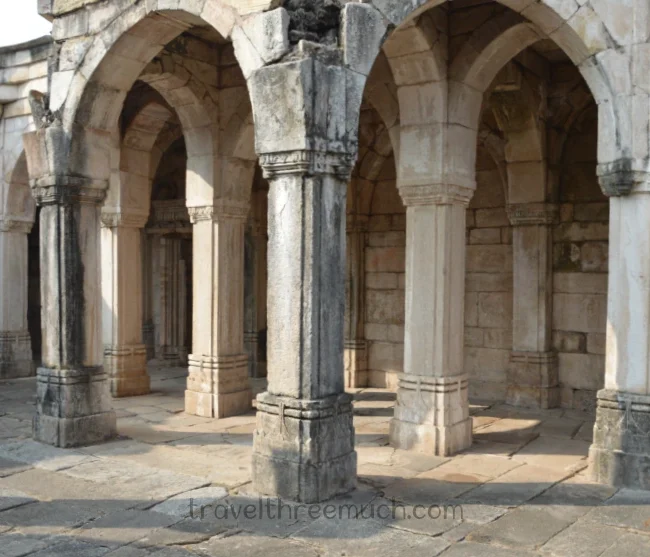
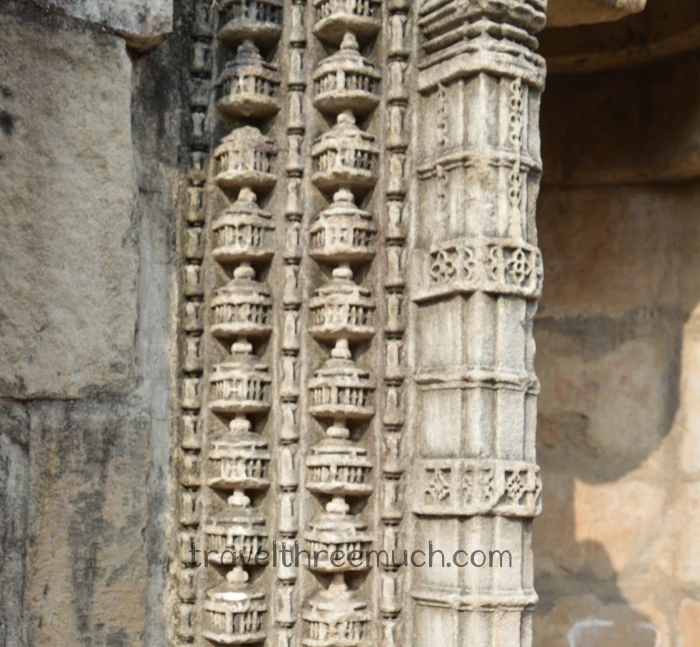
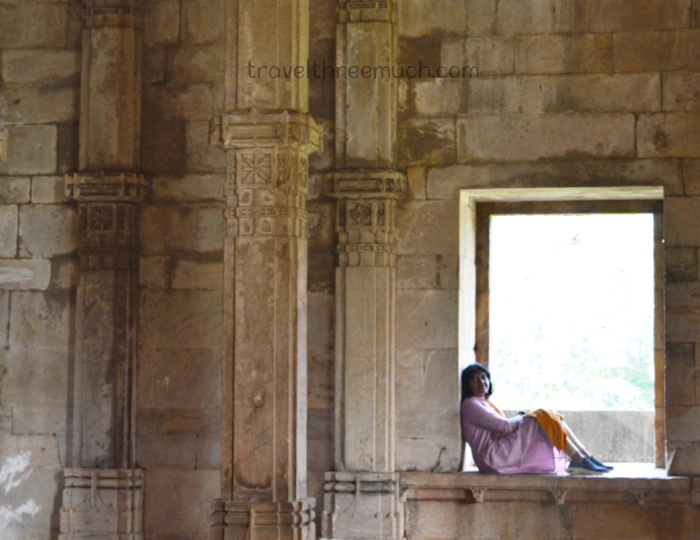
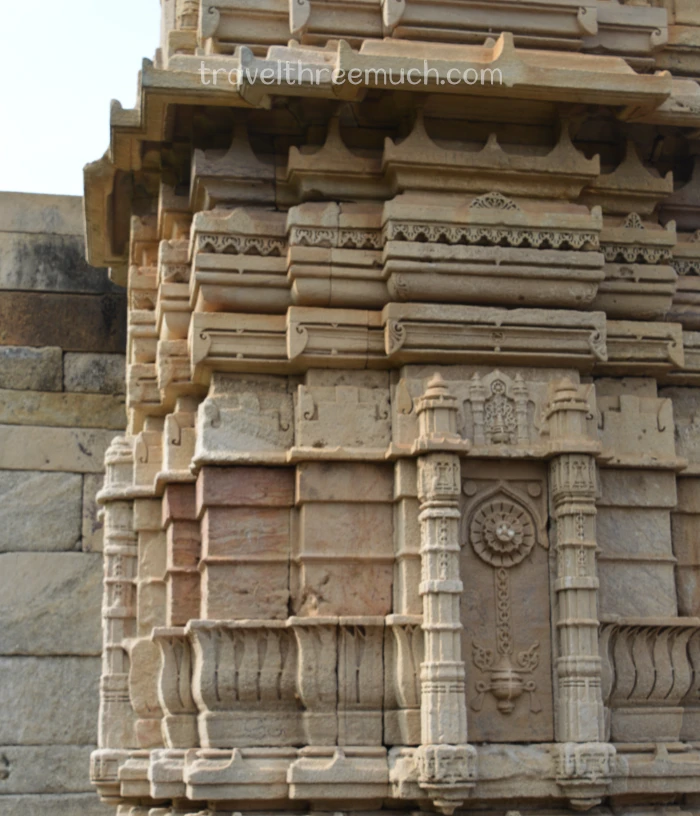
Our first stop was the Bawaman Mosque. The mosque is named after Saint Bawaman, who was mentored by Saint Sadan Shah. The mosque was an interesting fusion of Indian and Islamic schools of architecture. There were round pillars with tiered finials on top resembling shikharas. The pillars framing the windows had chains with bells at their ends, chiselled on them. The main dome of the mosque had collapsed. The roof had four cupolas at the corners of the mosque, still intact. The mosque’s arch-dome construction was unique for us. Mosques have niches called mihrabs that indicate the direction of Mecca for the congregation to pray. The Bawaman mosque has three mihrabs. The mihrabs have delicately chiselled floral motifs, censer-like vessels suspended from chains.
Kevda Mosque and Cenotaph
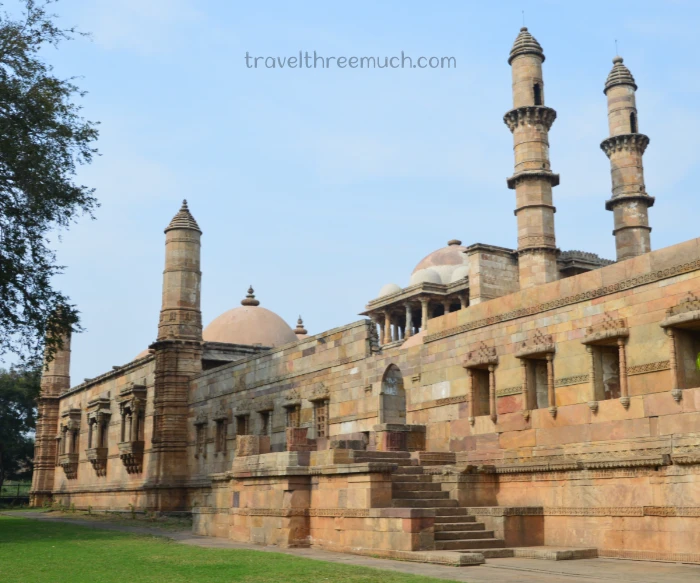
Our next stop was the Kevda Mosque. The name, according to some sources, is due to. It dates from the reign of Mahmud Beg, between 1458 CE and 1511 CE. Twin five-tiered minarets on either side of the main entrance had a profusion of carvings on their lower tiers. The tree of life, floral themes are all recurring motifs.
The mosque originally had three domes. The largest central dome has collapsed. Only the domes on either side remain.
The two-storeyed main prayer hall had its upper storey gated off. Exquisitely carved mihrabs framed with tiered bas relief roofs were topped by serpentine arches. Reminiscent of Jain schools of architecture, they showed the congregation the direction to Mecca for the prayers.
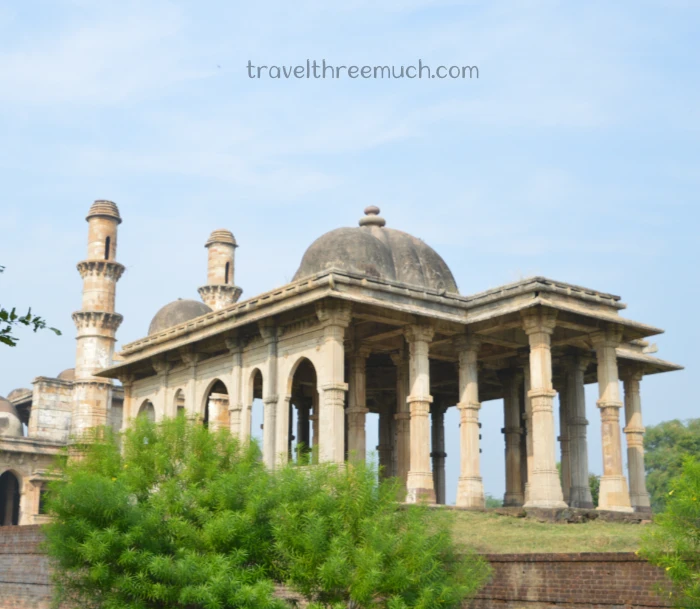
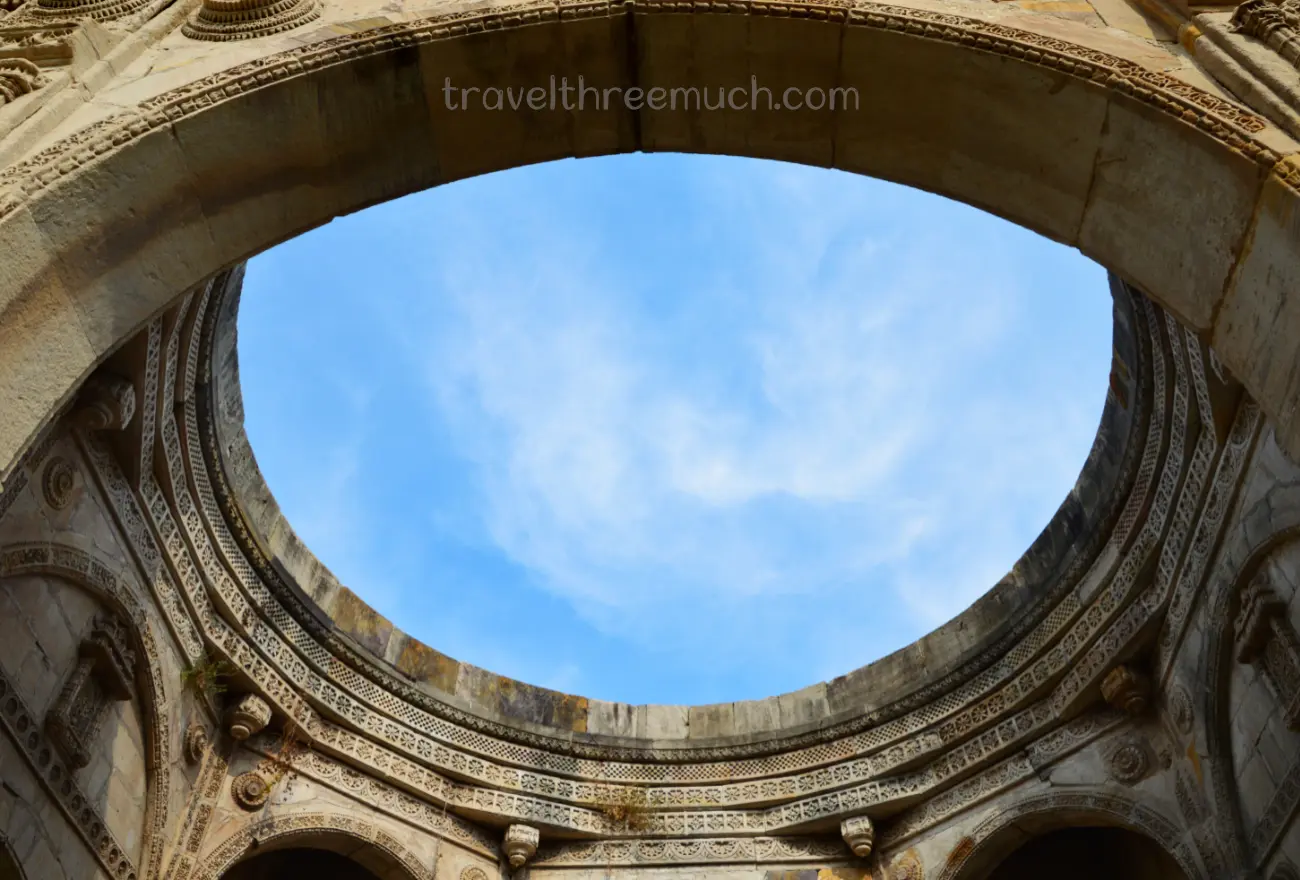
A large cenotaph nearby had four cupolas at the corners of the square portion of the roof and a large central dome. One of the walls had arches framing the support pillars. The inner side of the central dome had concentric circles with an inverted spire at the centre. We wandered about for a bit as we pretty much had the place to ourselves.
Nagina Masjid: Intricate Details and Hidden Paths
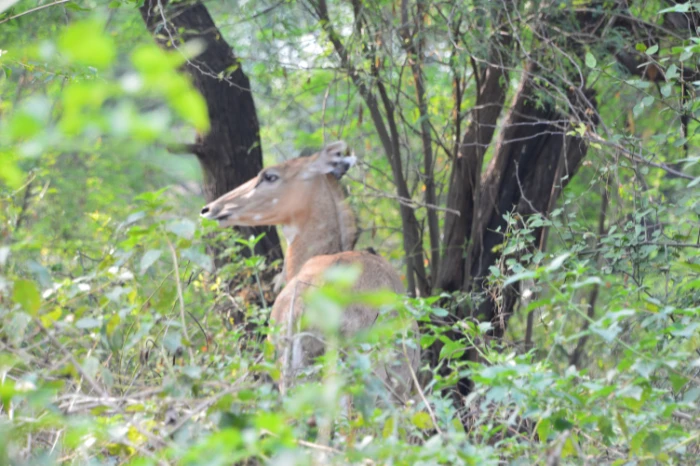
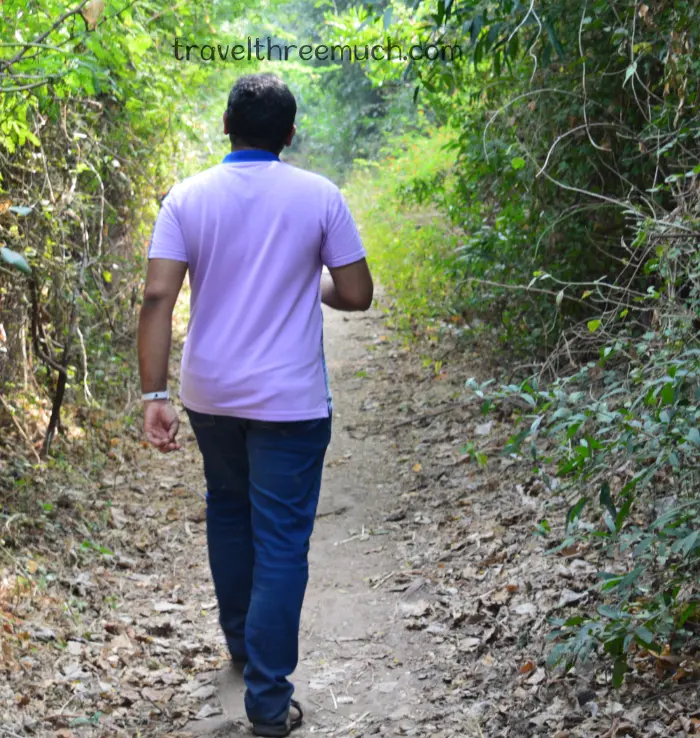
We visited the Nagina Masjid (mosque) next. We had to navigate a wooded path to get to the mosque. There were no directions to guide us. So we used navigation on our phones and the guidebook from the Archaeological Survey of India to figure out our bearings. We came across a nilgai in the bushes while we made our way to the mosque. It was a bit of a surprise for us, and eventually the antelope disappeared into the woods.
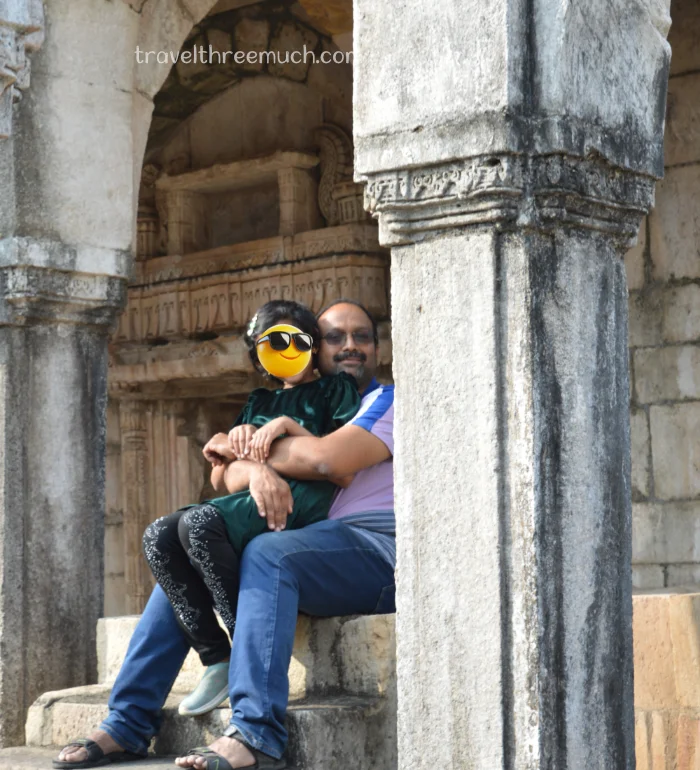
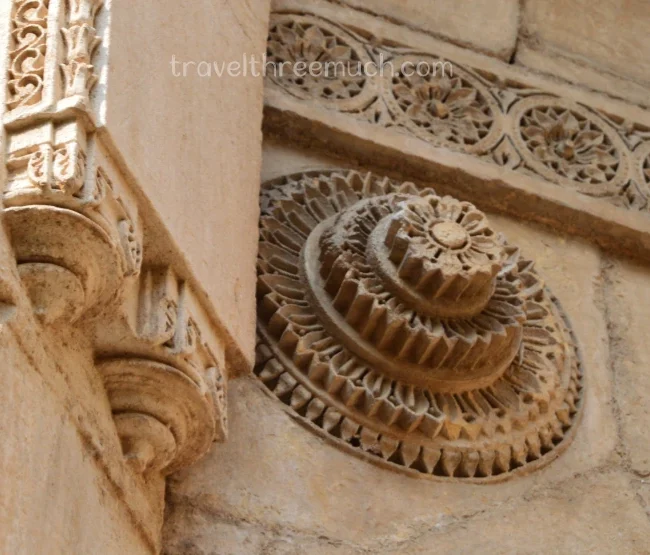
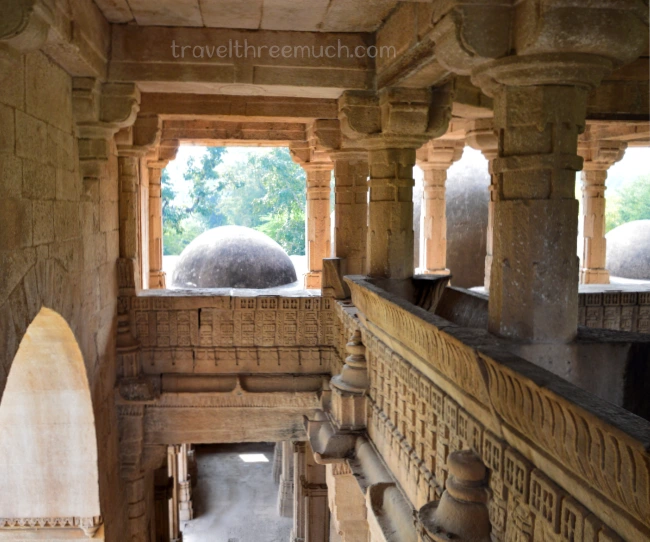
We reached the mosque. There was a small square cenotaph and the mosque, both built on a raised platform. The cenotaph had no dome, but the walls and the pillars were decorated with delicate carvings. We spent a while taking in the amazingly detailed fine carvings before moving on to the mosque. The mosque had two minarets at the entrance, but only the base was intact. The mosque was two-storeyed, and the upper storey was accessible by a narrow set of stairs. The lower level of the stairs is in near total darkness, though. So if you’re uncomfortable with darkness or narrow spaces, you may want to consider skipping the upper levels. The views from the upper levels are worth it, though. The mosque had beautiful columns supporting the roof with 3 domes and 10 cupolas. There were 3 mihrabs in the mosque. These were smaller than the previous mosques, but were also better preserved and more delicately carved than the others.
Jami Masjid: The Architectural Masterpiece
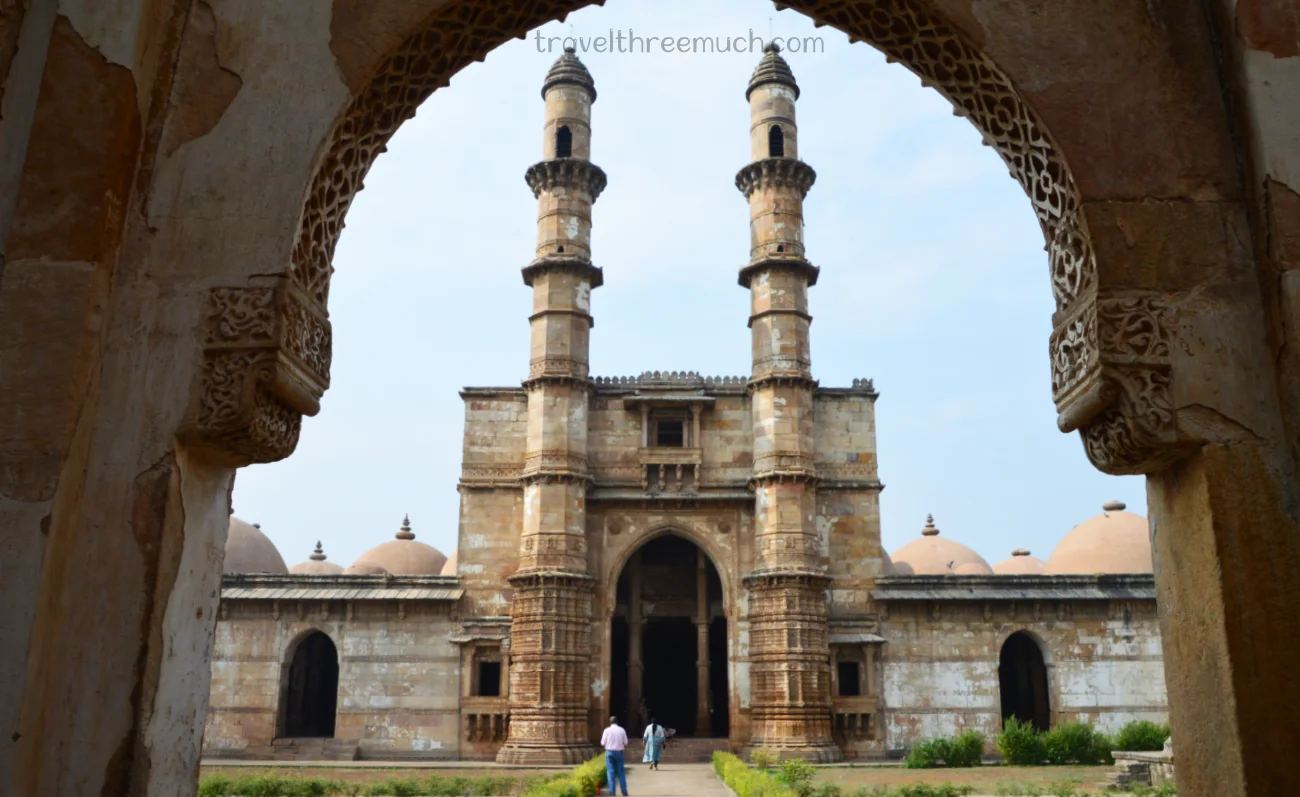
We made it back to one of the largest mosques in Champaner – the Jami Masjid (mosque).
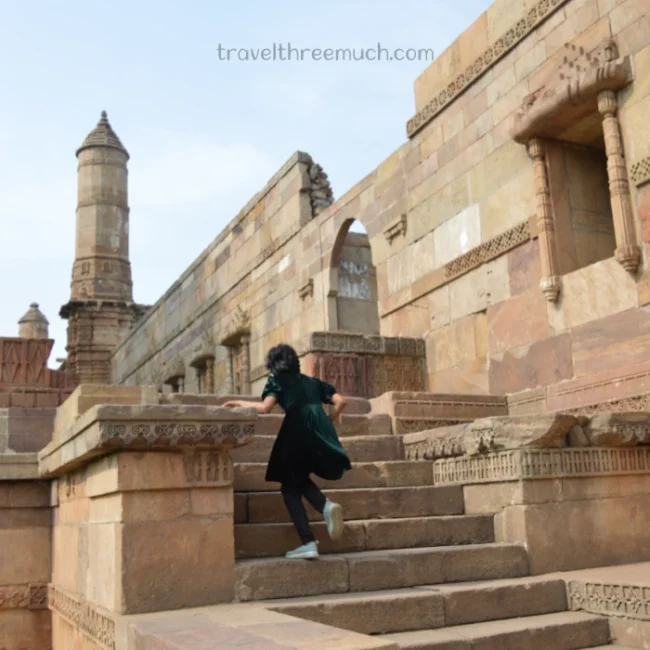
The mosque has parking nearby, and you can drive right up to the mosque. The imposing mosque, dated to 1509 CE, is built on a raised platform.
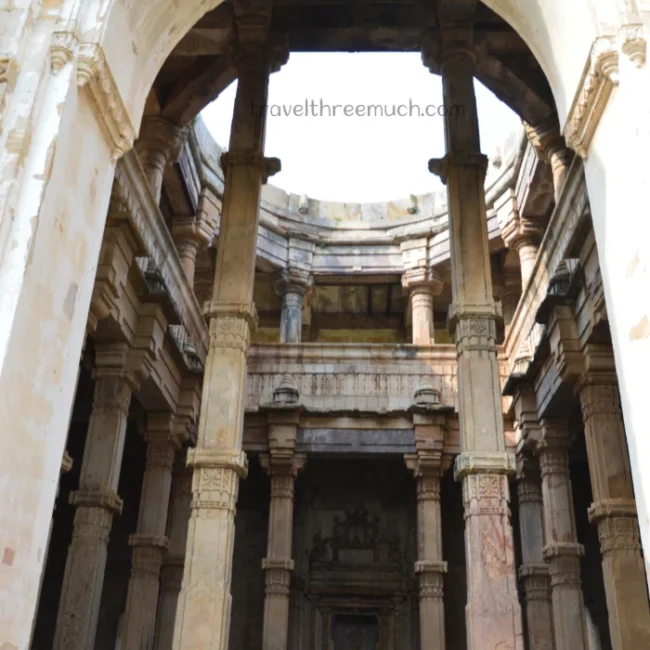
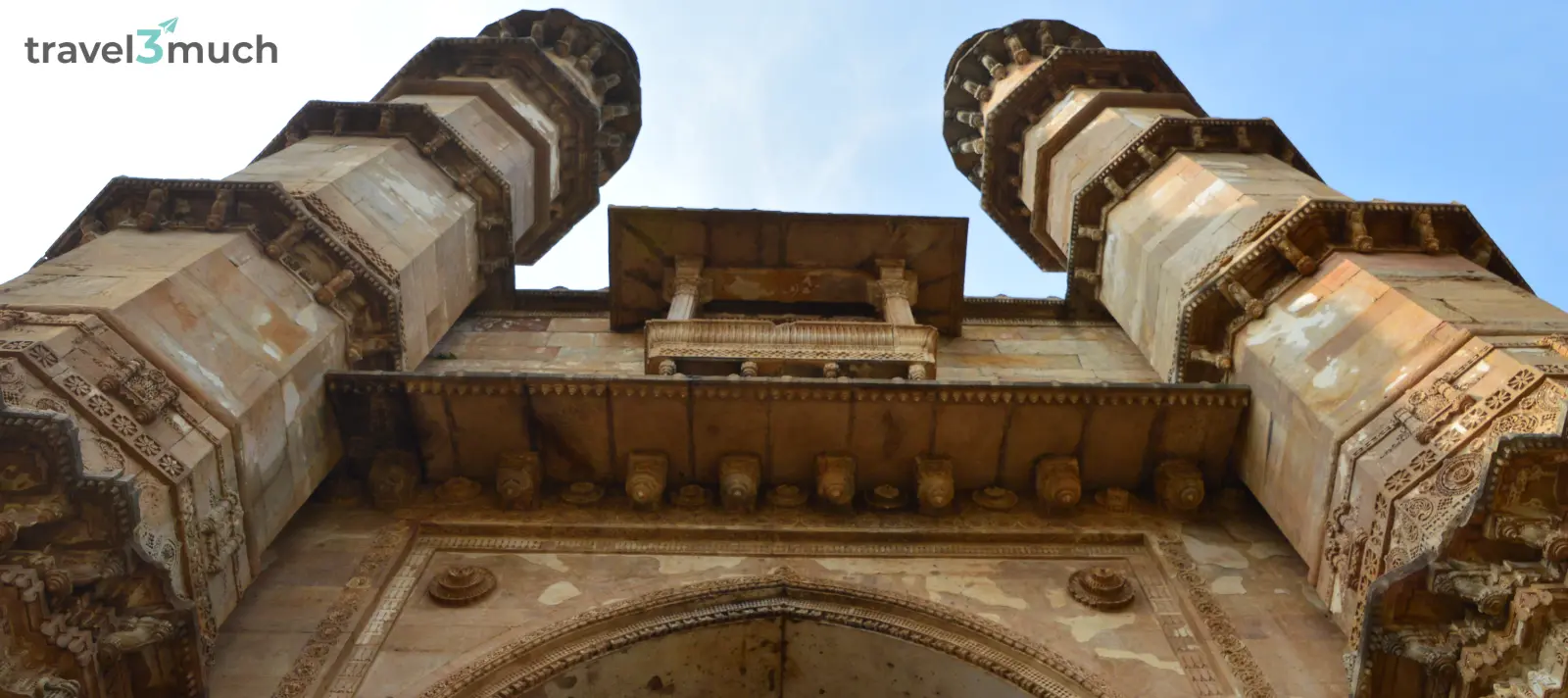
There is a large stepped tank or well for the ablutions before prayers. There are three porches through which we can access the mosque. The porches have elaborately carved jaalis or perforated sandstone screen windows. The porches also had domed roofs, which are now lost. The mosque has two tall and slender minarets at the entrance, and four more minarets at each corner of the prayer hall.
There are five pointed archways to enter the prayer hall. The three-storeyed massive mosque has 172 pillars supporting its domed roof. There are seven mihrabs with the stone polished to a very reflective finish.
Shaher Ki Masjid: The Royal Private Mosque
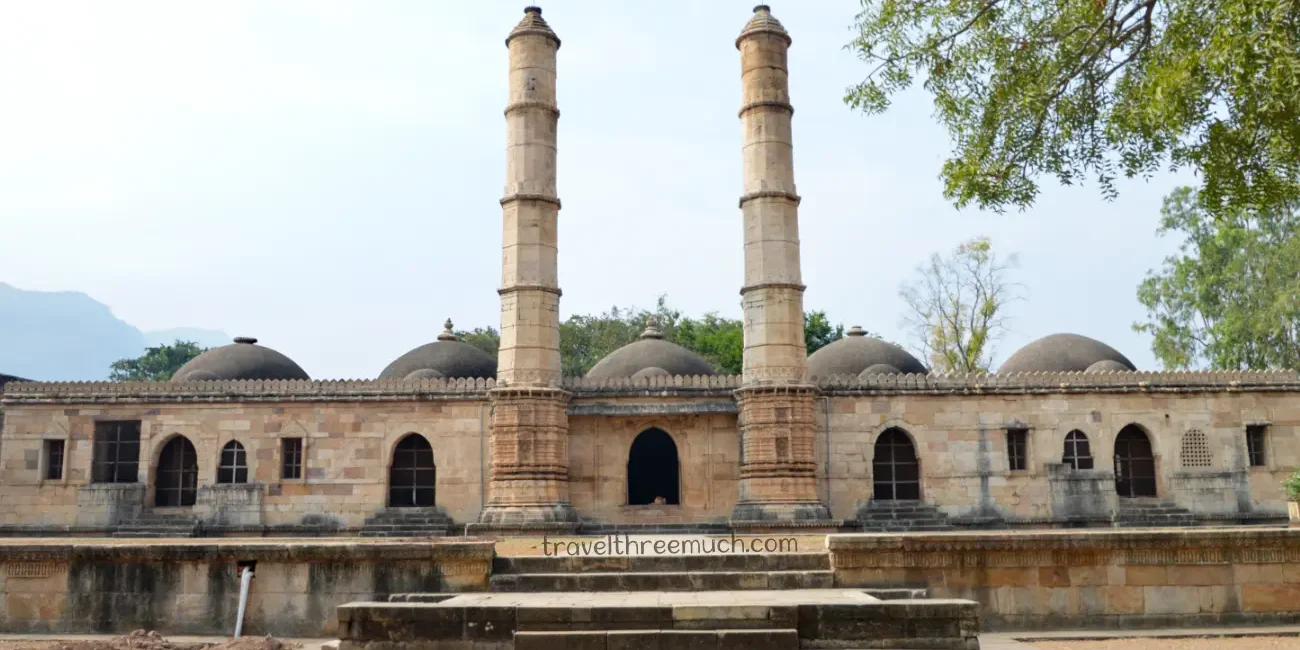
Our next stop was the Shaher Ki Masjid (City Mosque). The mosque was near the ticket counter in Champaner town. It was intended as the Gujarat Sultanate’s private mosque for the royalty. Twin five-tiered minarets were on either side of the mosque, built on a raised platform. Five arched entrances point to five mihrabs in the prayer hall. Five large domes with cupolas next to them were intact on the roof. As a crowd of school children dropped into the relatively smaller mosque, we made our way to the last site of the day.
Ek Minar Ki Masjid: Mathematical Artistry
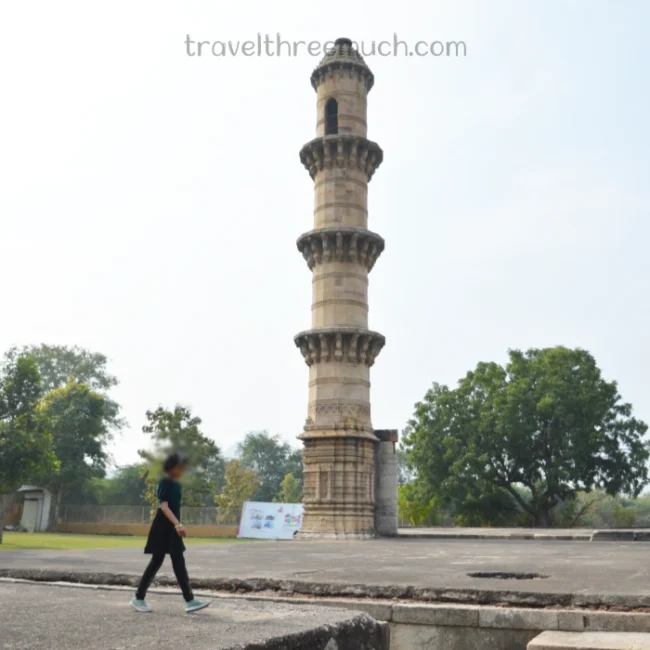
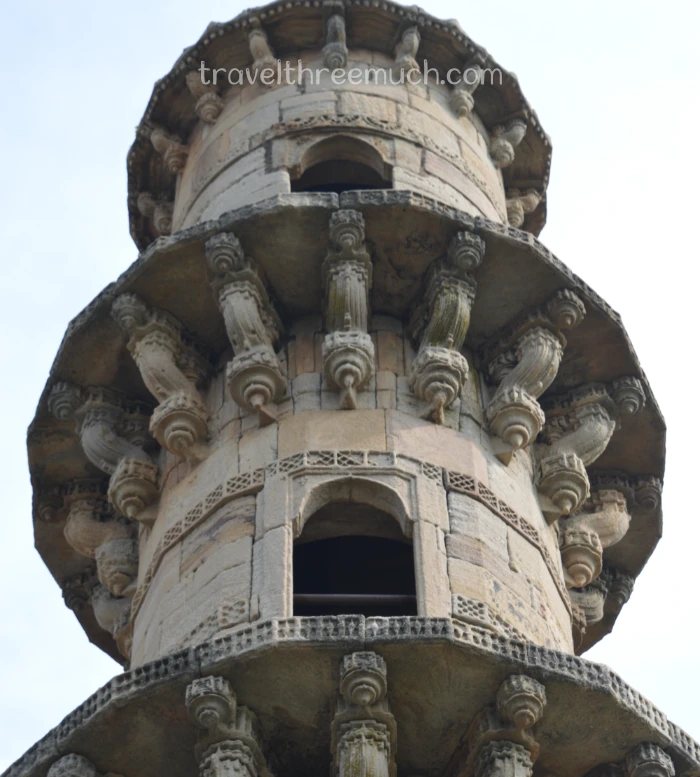
The Ek Minar Ki Masjid (one-minaret mosque) was our last stop for the day. The weather had by now become quite warm. A few graves and a single five-tiered minaret are all that survive of the mosque on a raised plinth. The minaret showcases the talent of the artisans to seamlessly meld different shapes together. The lowest tier is square in shape. The next level upwards is an eight-sided figure. The next two tiers are a sixteen-sided shape. The uppermost level, capped by a tiered conical cap, is cylindrical in shape.
We made our way back to the car, mulling over our memories from this unique archaeological park.
Visiting Champaner Pavgadh with Kids — What to Know Before You Go
- Many of the sites on the Champaner side are accessible only on foot. Be prepared with umbrellas, adequate sunscreen and hydration for the hikes.
- Do not step off the trail and beware of snakes. We saw shed snake skin on the way. Hence this note for parents.
- There are no food options in the area, so plan to bring along snacks/picnic food if you are travelling with children.
- Ask for the printed guide on Champaner-Pavahadh published by the Archaeological Survey of India, as the directions to the Champaner mosques are limited.
- Consider starting early and visiting the Pavagadh hill in the morning so that you can keep the shaded parts of the Champaner for the warmer part of the day.
Champaner-Pavagadh Archaeological Park is a unique UNESCO World Heritage site where 16th-century Islamic architecture sits at the base of a volcanic hill topped by an ancient Hindu Shakti Peeth. Travellers often find the layout confusing because the site is divided into the “Plains” (Champaner) and the “Hill” (Pavagadh). Here are the most frequent questions and essential tips for your visit:
What Other Travelers Ask
What are the must-see monuments in the Plains?
Because the monuments are spread out, we suggest you prioritize the places to visit.
- Jami Masjid: The “crown jewel” with 172 pillars and intricate stone carvings; it served as the model for later Mughal architecture.
- Shahar ki Masjid: Formerly the private mosque for the royal family.
Are there any local customs or wildlife warnings?
- Monkeys: Pavagadh Hill is home to many bold monkeys. Secure your bags and avoid holding food or flowers in the open. Do not taunt/feed/approach any wildlife that you encounter. We saw so many monkeys but none of them bothered us. Some of them even beautifully posed for our camera 🙂
- Dress Code: While it is a heritage site, the Kalika Mata Temple is an active place of worship. Modest dress (shoulders and knees covered) is recommended, and you must remove your shoes before entering the temple sanctum.
When is the site most crowded?
- Navratri (Oct/Nov): This is the most spiritually powerful time, but it is extremely crowded with hundreds of thousands of pilgrims. Expect 4–5 hour wait times for the ropeway.
- Monsoon: The volcanic hill turns lush green with waterfalls, making it the most beautiful time for photography, though the stone paths can become very slippery.
Is it worth visiting Champaner - Pavgadh?
This heritage site was very memorable for us. Be it the trail, the monuments or the calmness in each place, according to us, these are a must see. We did go with our child and although the grass was unkempt, we did not feel it unsafe anywhere. There are some lone security folks in each of these places and they are more than happy to share whatever they know!
Prasanna Vasudevan
Prasanna is the Primary Writer and Technical Expert behind the posts. He is responsible for the detailed facts, historical context, and logistical breakdowns. He has a deep love for mountains, history, nature, and is the family's expert packer.

Leave a Reply