
Airavateswara Temple Darasuram_heroimage

Airavateswara Temple Darasuram: The Chola Shrine with Musical Steps

Updated on March 15, 2026
Contents

    Our visit to Darasuram

    Darasuram’s Airavateswara Temple has been on our to-do list for a very long time. Yet somehow, whenever we visited the Thanjavur–Kumbakonam region, making time for a relaxed visit to this temple always seemed to slip away. This one trip, when we visited the Oppiliappan Temple in Kumbakonam, we had time to spare in the evening. We set off with the goal of finally visiting the Airavateswara Temple and ticking it off our travel list.

    If you would like to know more about the Chola temples such as Gangaikonda Cholapuram, click here.

    planplanettm Plan your trip

      • Construction date: 1166 CE
      • Timings: 6:00 AM to 12:00 PM, 4:00 PM to 8:00 PM, open all days
      • Entry fee: There is no entry fee, but vendors near the entrance may request a small amount to watch over your footwear during your temple visit.
      • How to get there: Darasuram is 4 km away from the nearest major town, Kumbakonam. Auto rickshaws, taxis, State transport and private buses are available. The nearest railhead is Darasuram with regular trains from Kumbakonam and Thanjavur. Tiruchirappalli is the closest airport, about 100 km away, and a 90-minute drive.
      • Note:
    • This temple has an actively worshipped deity.
    • Appropriate temple attire rules apply.
      • When to visit: The best time to visit the temple is from October to February, as these are the cooler months.
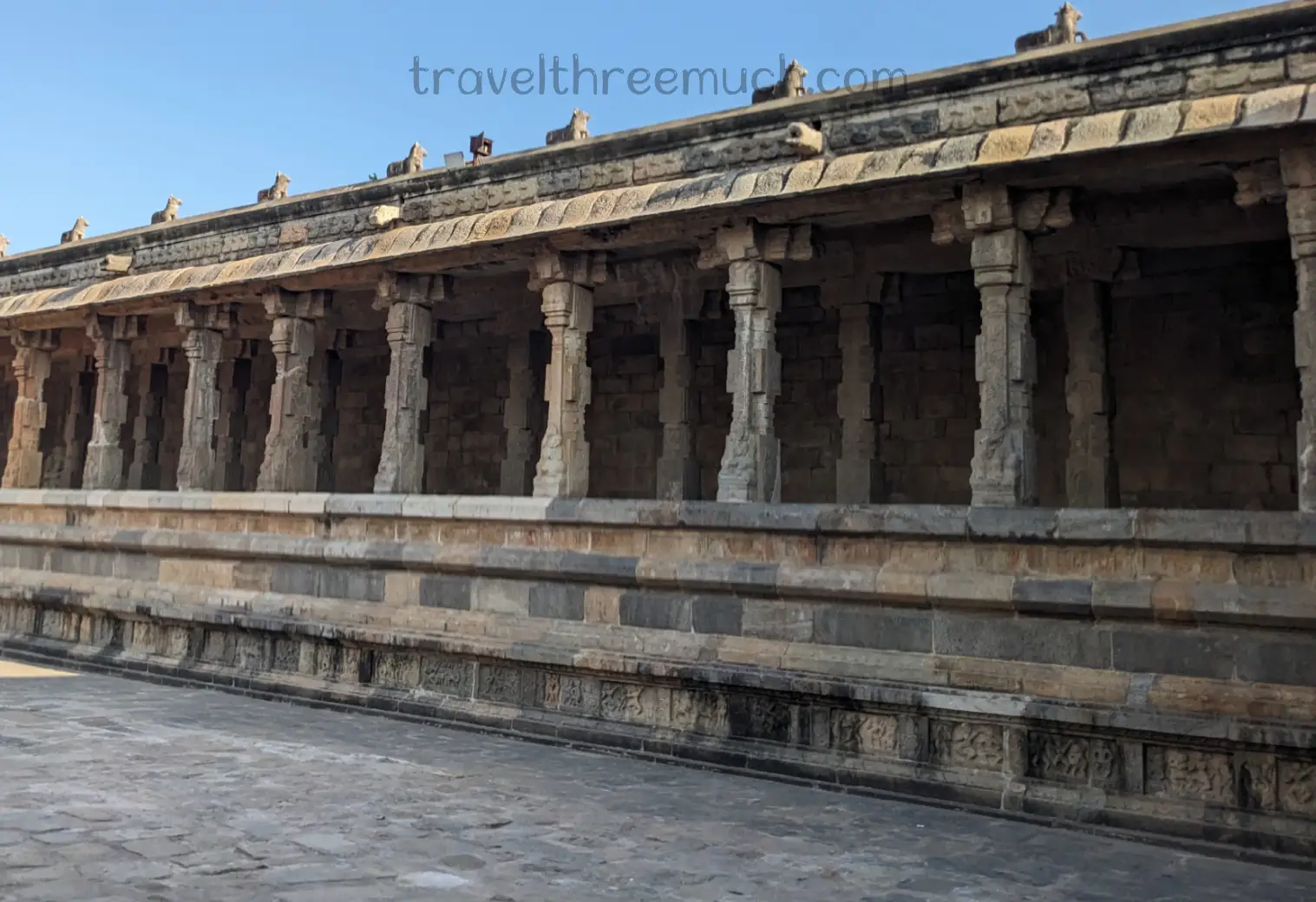
    Additional piece of information for travellers: There is very little shade in the space between the outer corridor and the inner structures. This is the only space to do a pradakshina (circumambulation of the sanctum and its deity). Be sure to carry plenty of water to stay hydrated, and take necessary precautions to protect yourself from the sun if you’re visiting during the warmer months.

    Darasuram special features infographic

    History of Airavatesvara Temple

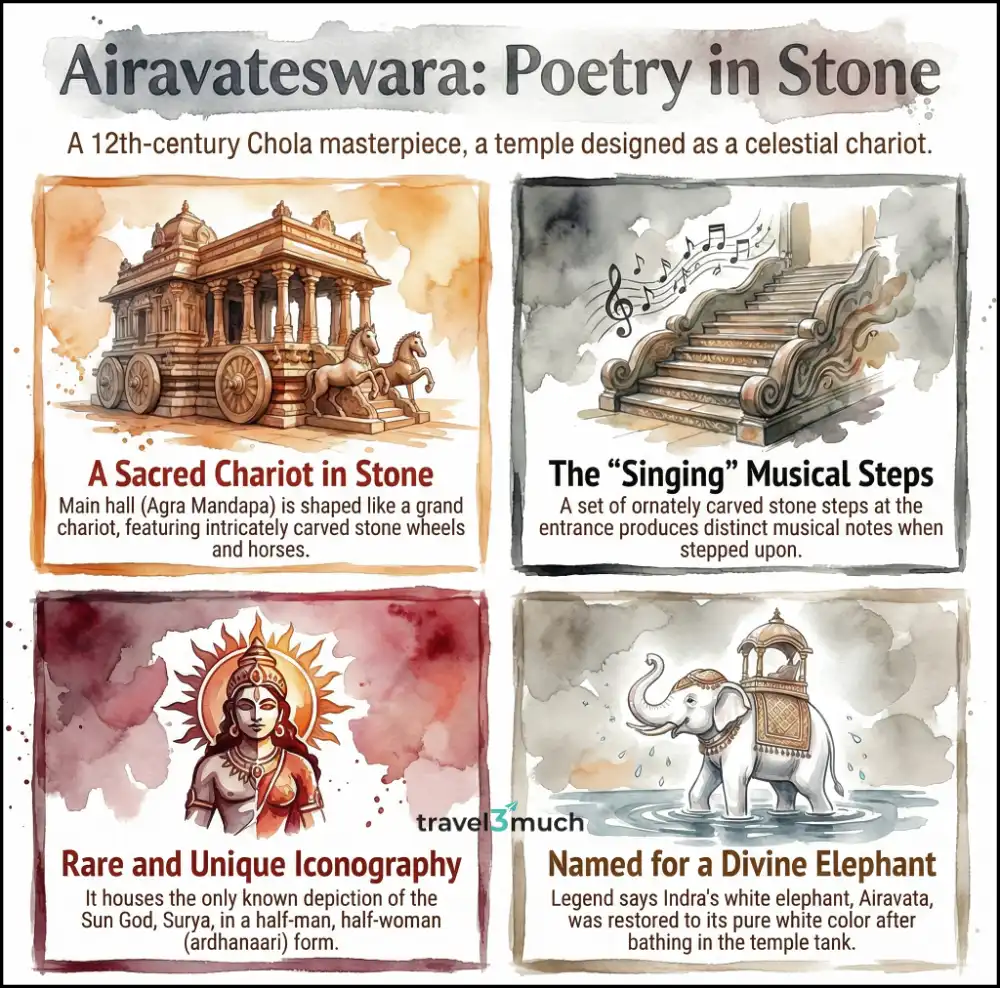
    Airavatesvara Temple at Darasuram is dedicated to the Hindu god Shiva. Raja Raja Chola II (reign: 1146 CE to 1173 CE) built this temple. It is one of the larger temples in Kumbakonam and is a UNESCO World Heritage Site. Shiva’s consort, Periya Nayaki Amman, has a dedicated temple located to the north of this shrine. The temple’s name is from a legend about Indra’s divine elephant, Airavata. The elephant lost its resplendent white colour due to Sage Durvasa’s curse. The beast beseeched Shiva to come to its rescue. A dip in the temple tank relieved the elephant from its curse and restored it to its former splendour. Since the lord granted pardon to the elephant Airavata, the temple came to be known as Airavatesvara, meaning ‘Lord of Airavata’.

    Outer walls of the temple

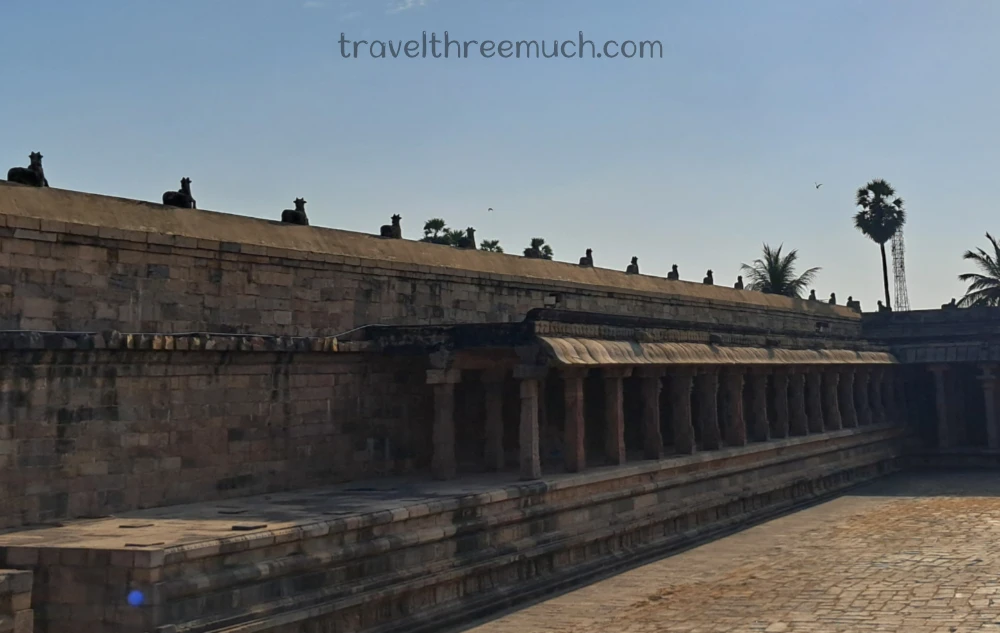
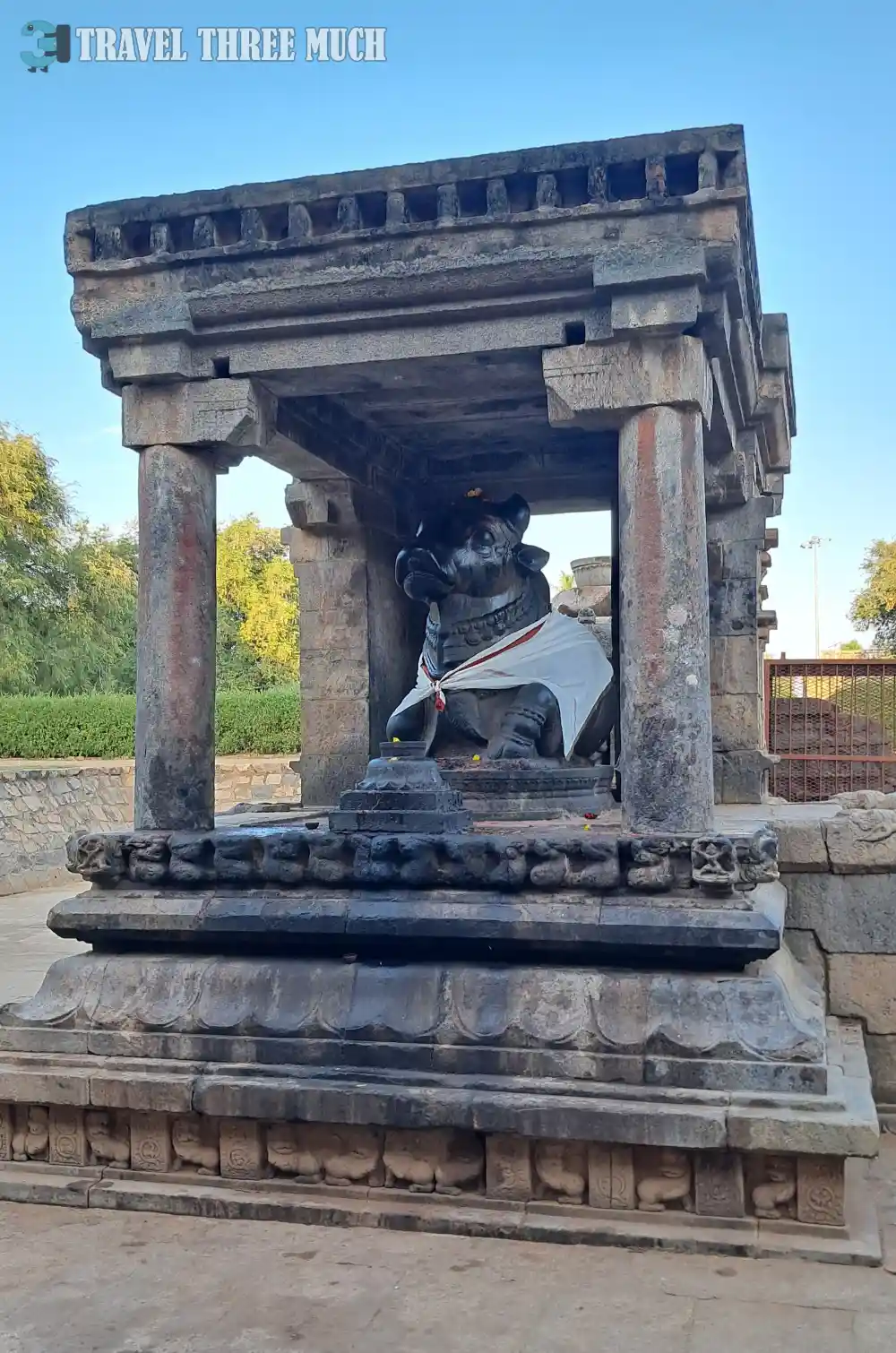
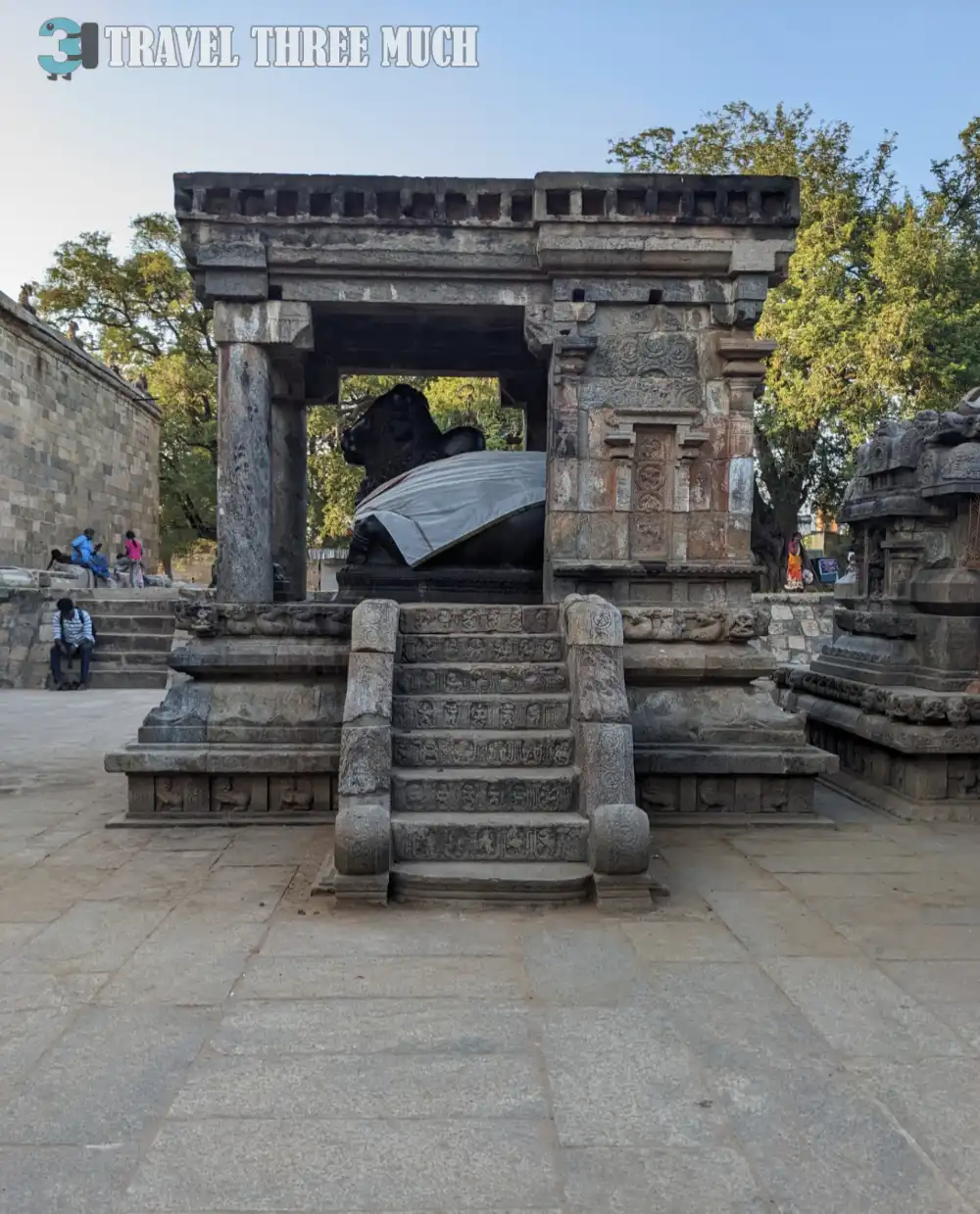
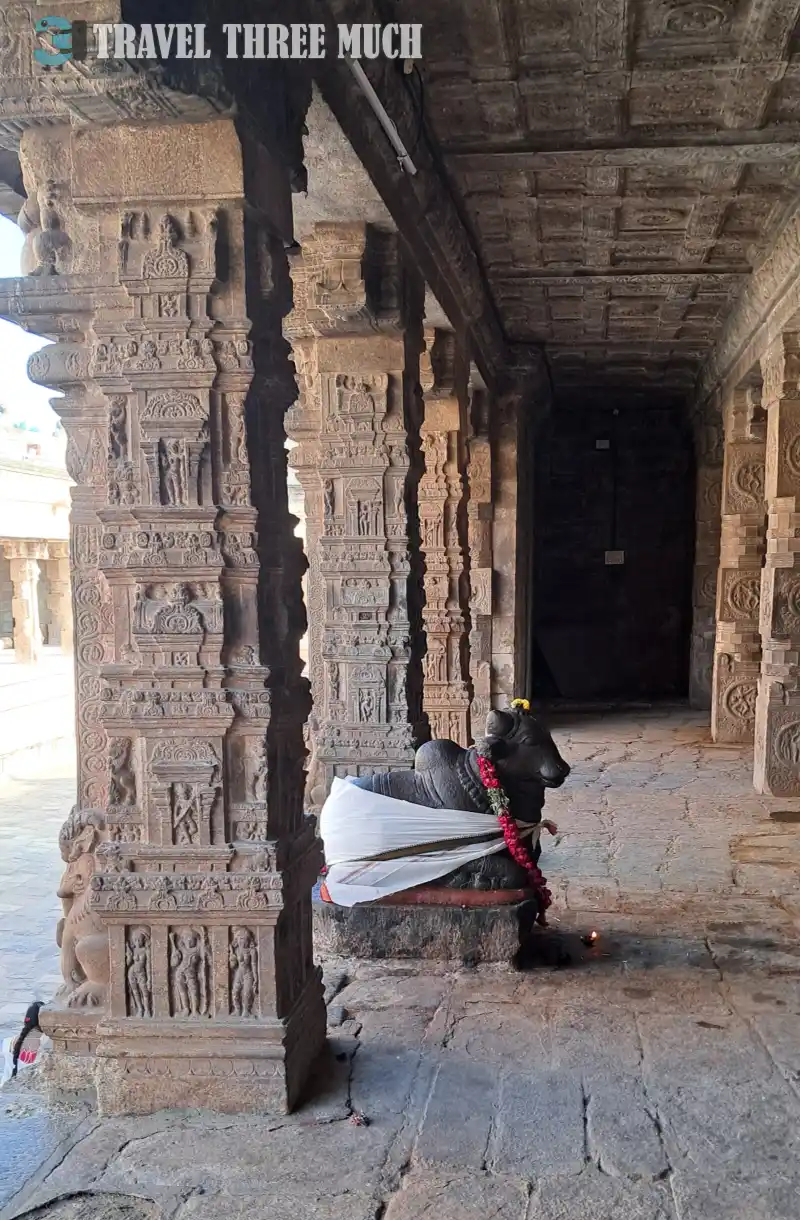
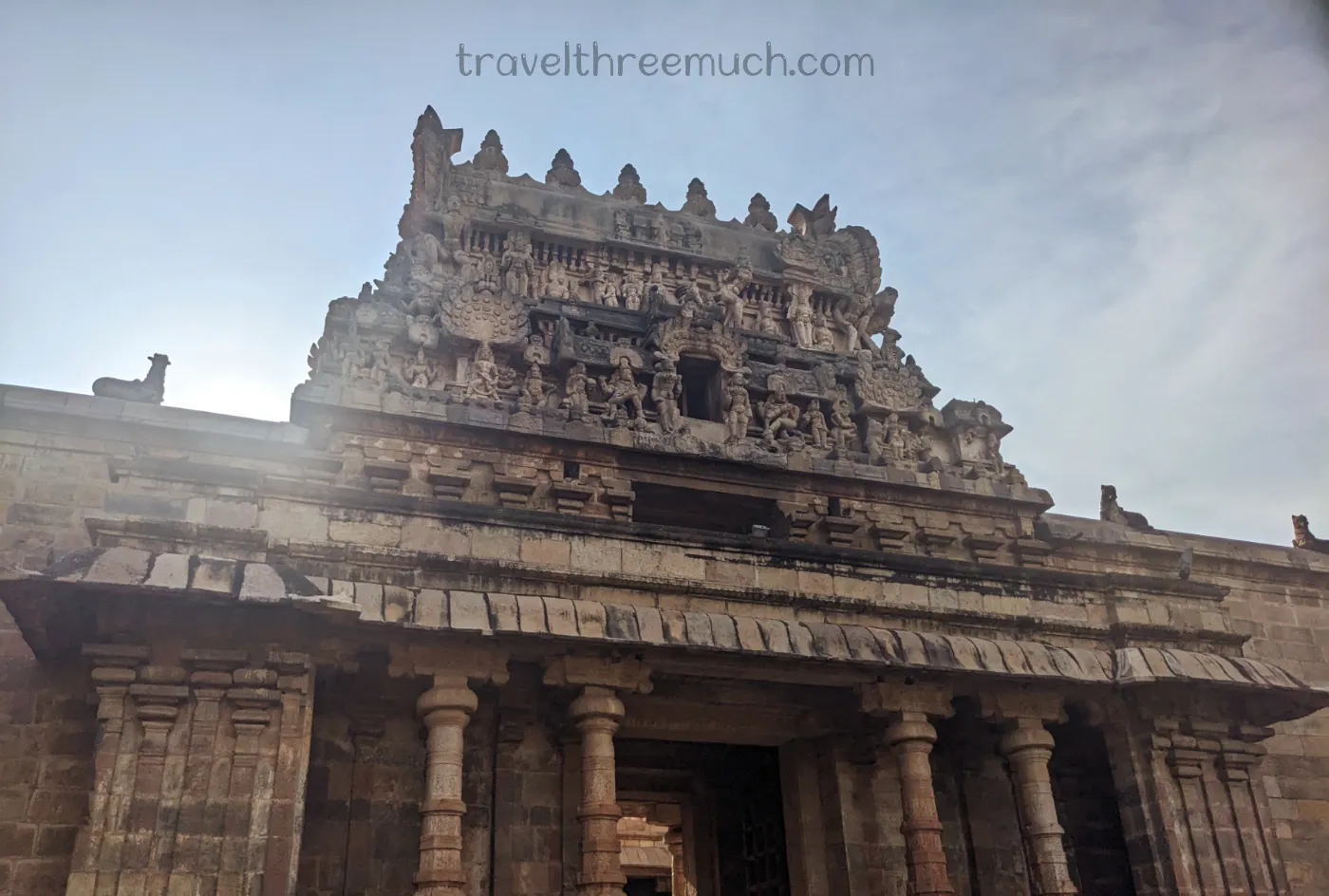
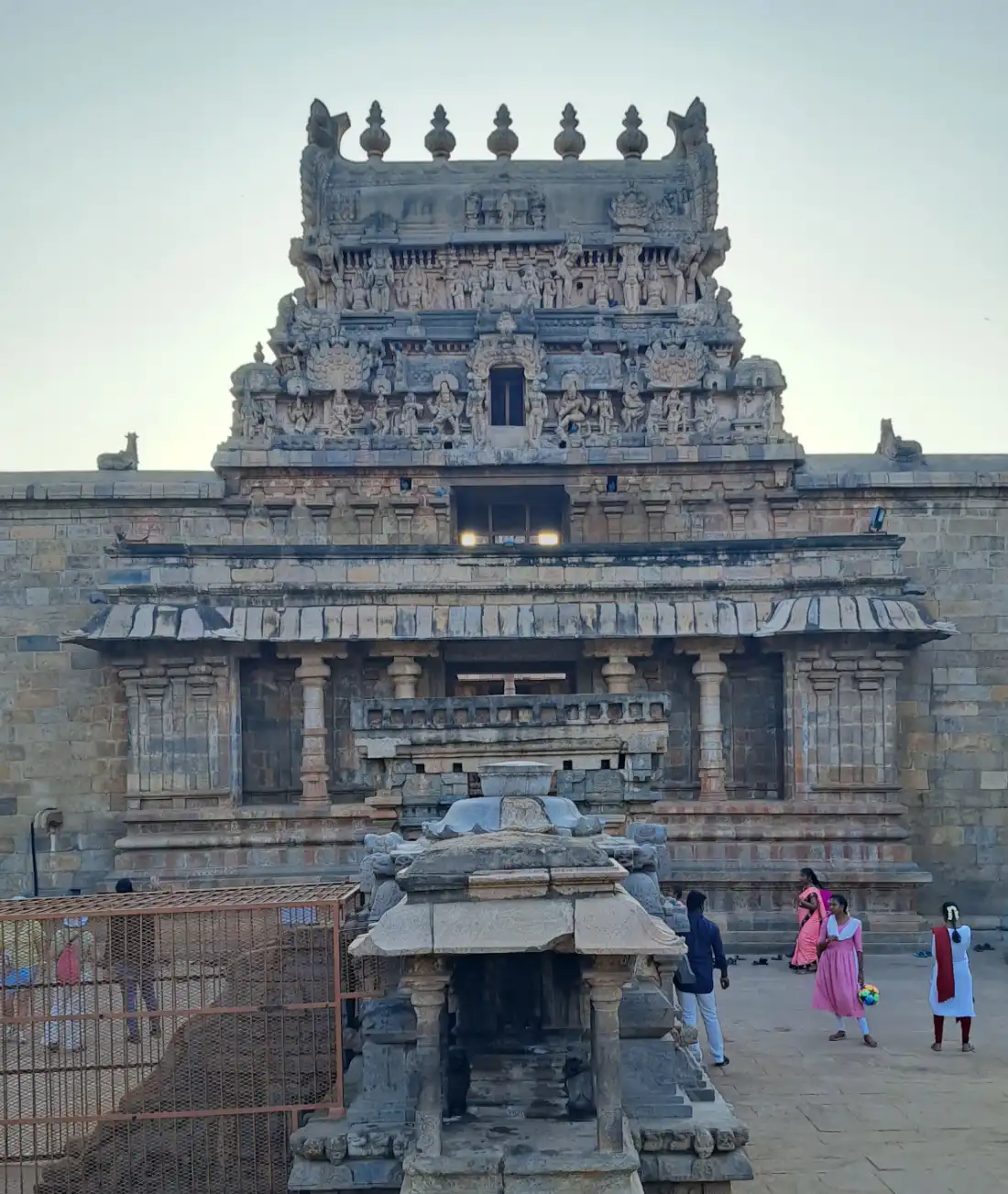
    The temple was originally much larger with seven-tiered outer walls. These walls can still be glimpsed in the ruins along with the main entrance, which is missing its tower. These structures probably fell prey to the successive invasions of the Deccan in the late 13th century CE to early 14th century CE. We made our way into the temple through a gopuram beside a hall of stone pillars, where the divine bull Nandi sat in quiet majesty.

    Musical Steps

    Next to the Nandi hall was a set of seven steps enclosed in a metal cage, leading up to a sacrificial altar or ‘bali peedam’. These steps produced musical notes when stepped on, and so were called singing steps. The cage now protects them from vandalism. 

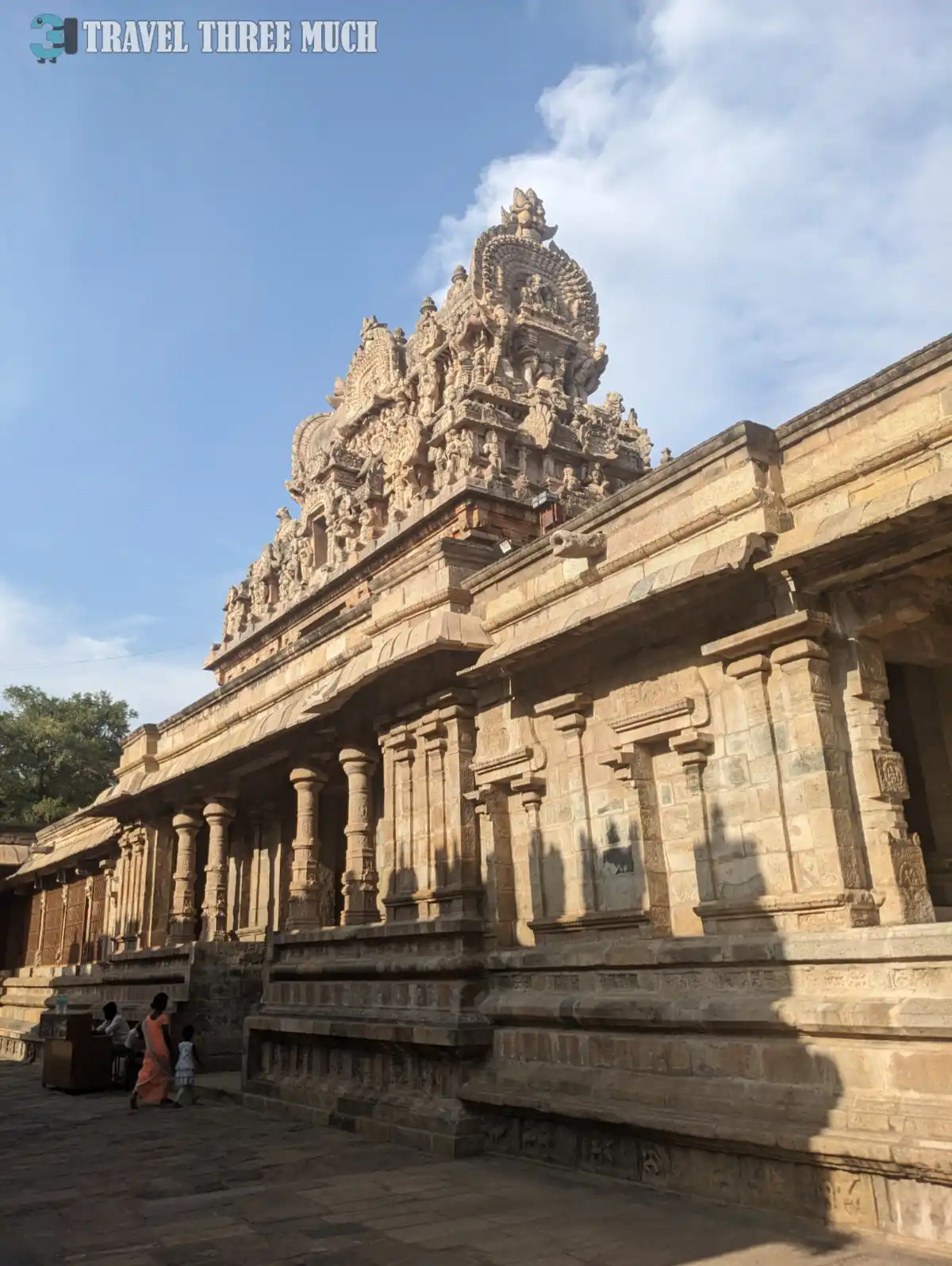
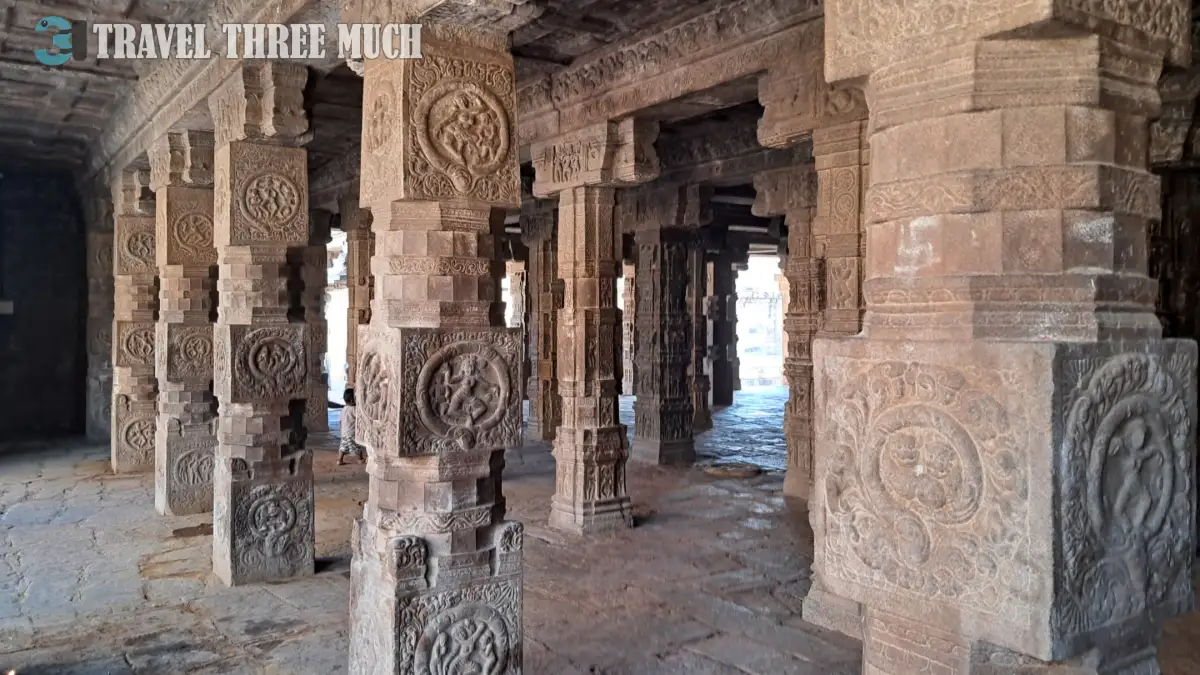
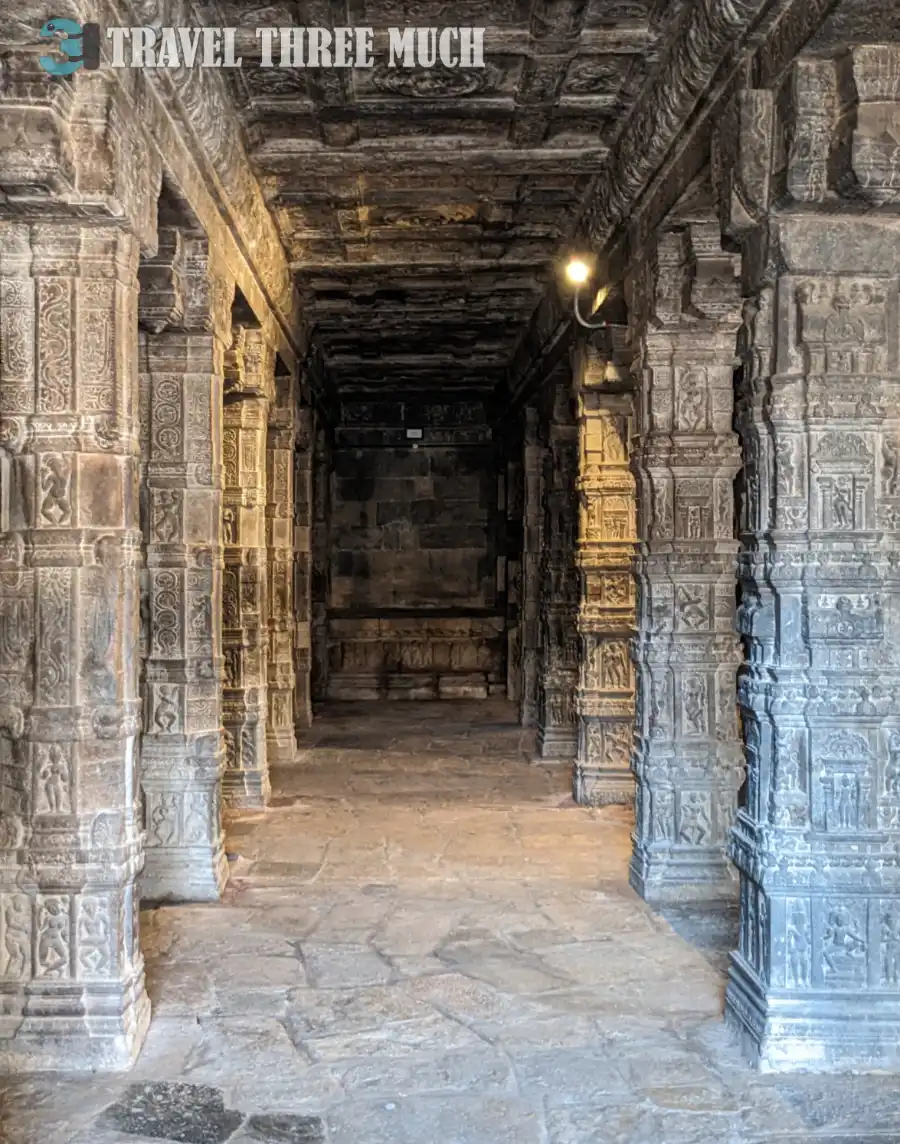
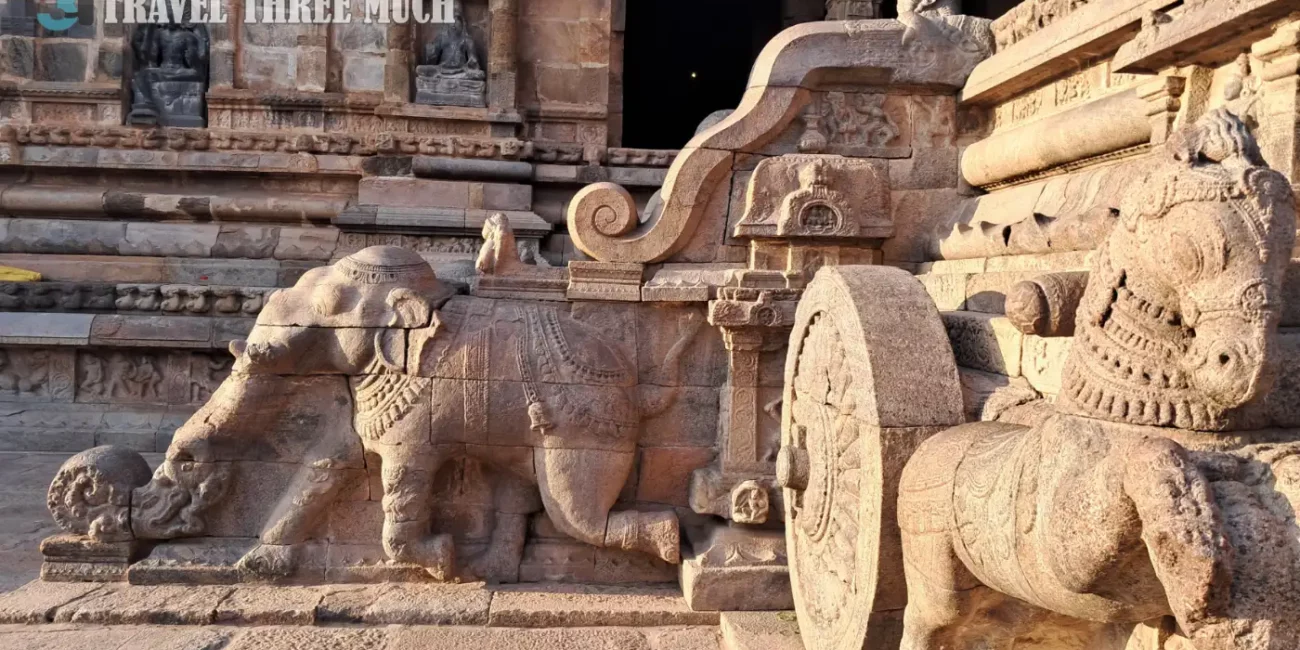
    The entire temple complex is a profusion of intricate granite carvings. A Rajagambhira Thirumandapam, or pillared hall, surrounds the main sanctum, known as the garbagriha. The hall is reached by ascending through a set of stairs with balustrades that have horse-drawn chariot wheels. The principal deity in the sanctum was lit only with lamps, as there was a power cut. The scene of the Shiva linga being illuminated by lamplight was otherworldly.

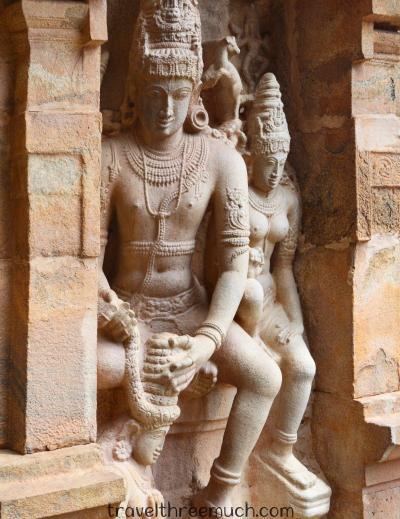
    There are also bas-relief shrines for other deities in the halls outside the sanctum. One of the interesting ones is that of Kannappan. A legendary saint who offered both his eyes to stem the bleeding of a Shiva statue, he is shown with hands clasped in prayer. He is depicted in his hunter form holding a bow. The sculpture had some of the most exquisitely carved footwear we’d ever seen.

    The Vimanam

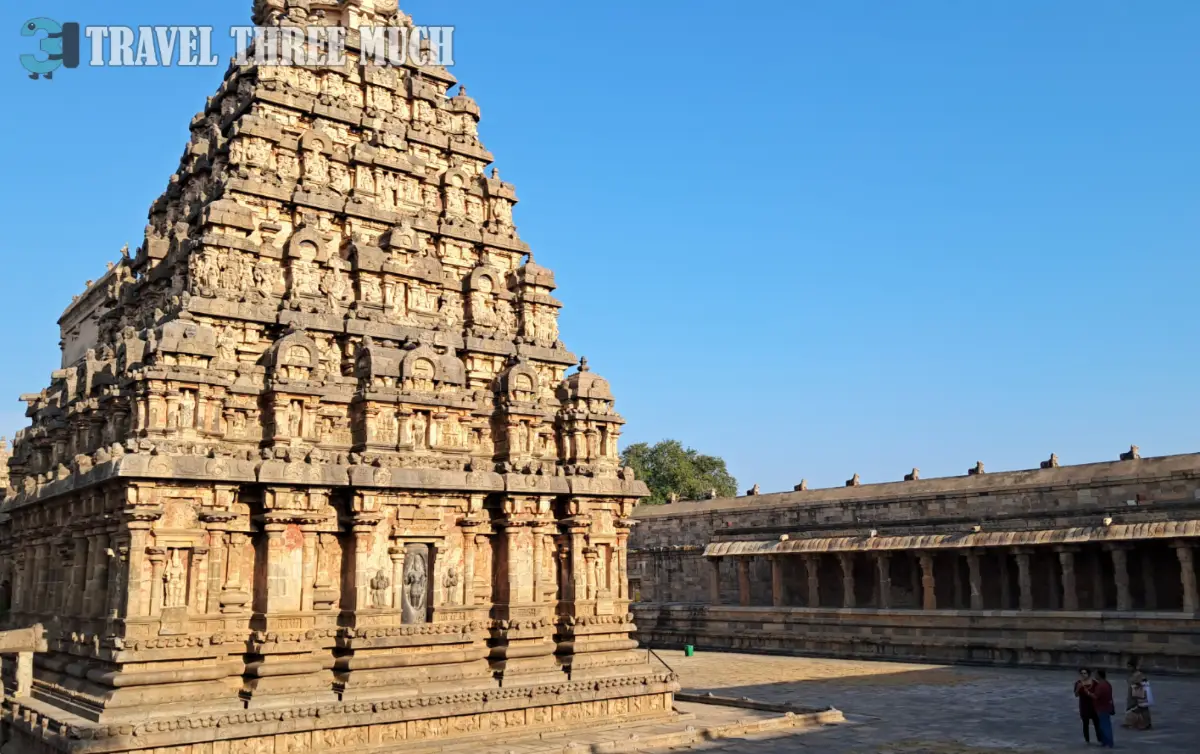
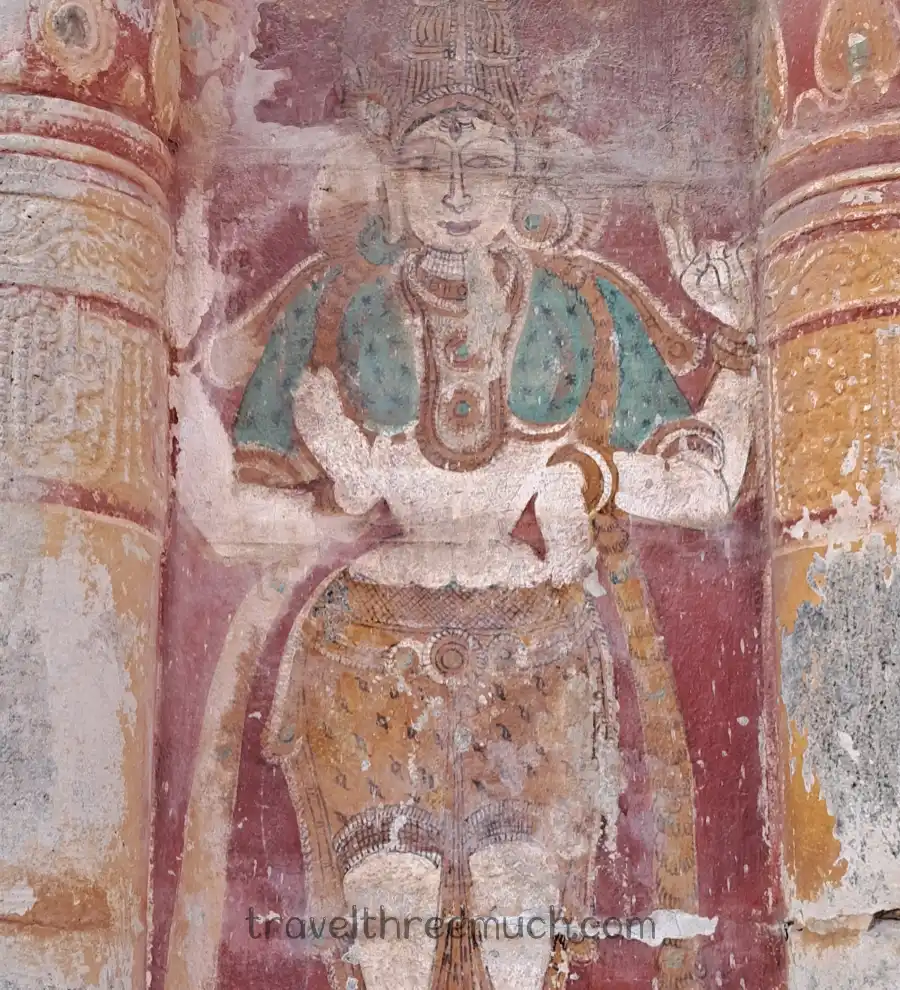
    The outer walls of the vimanam (the tower over the sanctum) have murals with some of the paint still intact. It gives us a glimpse into the temple’s grandeur in its heyday. The vimanam itself stands tall at an impressive 80 feet, its spire piercing the heavens. The hall around the sanctum is supported by 8 humongous pillars with yalis (mythical beasts) carved at their base. Each of the yalis’ tails had a different pose.

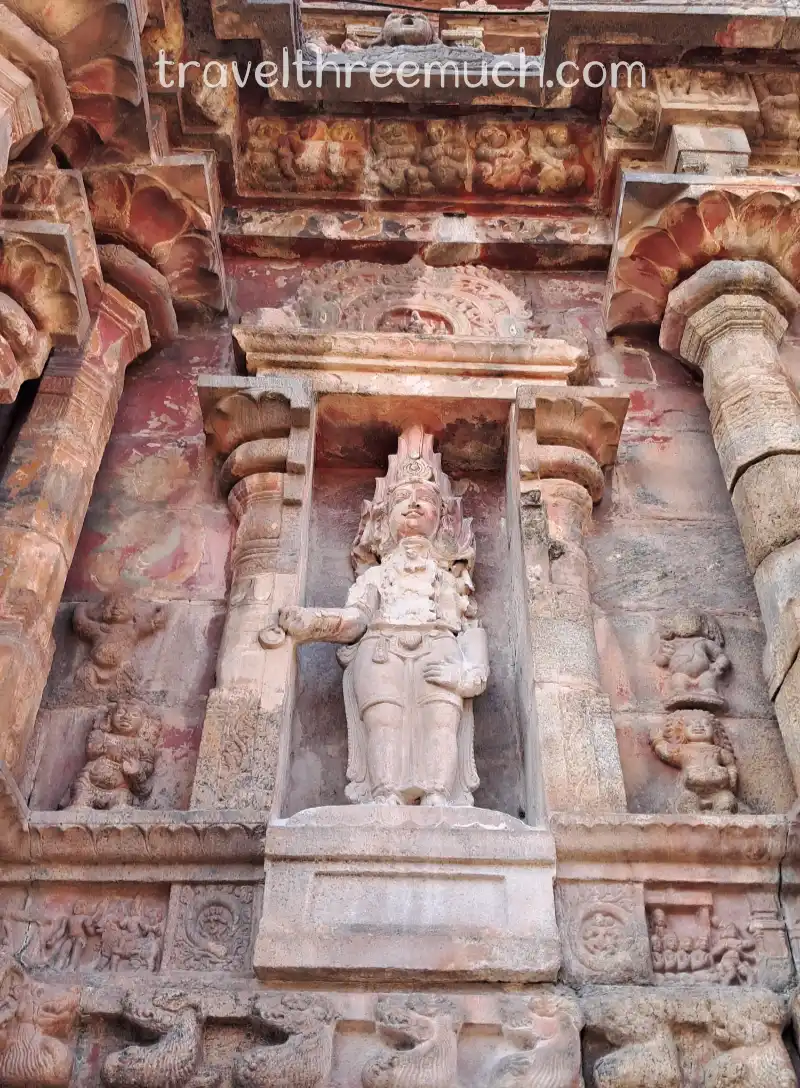
    Other exquisitely sculpted deities are the bas-reliefs of Saraswati, Ganga, Nagaraja, Lingodhbhava and Sarabeshwara. The legend of Lingodhbhava has Vishnu taking his boar form and Brahma (then five-headed) taking the form of a swan to find the foot and tip, respectively, of a towering shivalinga. Vishnu admits that he can’t find the foot of the linga, whereas Brahma lies that he was able to reach the tip of the linga. Shiva destroyed Brahma’s hubris by removing one of his heads, leaving him in the four-headed form that he is depicted today. The legend is captured in stone, with a swan and boar chiselled on the top and bottom portions of the linga, which shows Shiva emerging from within it.

    darasuram17

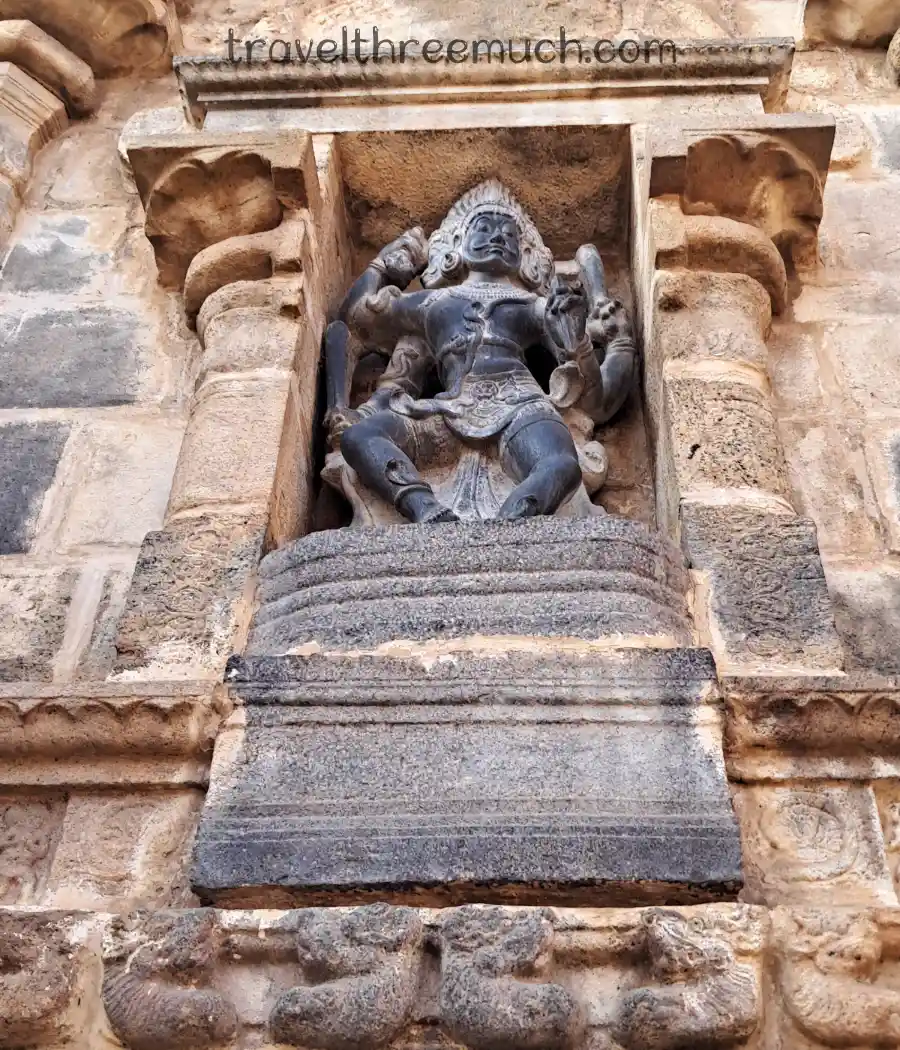
    Sarabeshwara is considered a fierce half-animal, half-bird form of Shiva. In the legends, this form pacifies the raging Narasimha and saves the other gods from his wrath. The sculpture of Sarabeshwara in this temple depicts an eight-legged, half-lion, half-human with wings, holding down a struggling eight-armed Narasimha. Narasimha’s conch and discus have fallen. This iconography is also considered a subtle hint at the supremacy of the Saivite school over the Vaishnavaite schools of Hinduism.

    darasuram11

    Other Treasures of the Airavateswara temple

    We learnt about a very unique depiction of Surya in this temple, which we missed. There is only one known depiction of Surya in the ardhanaari (half-man and half-woman) form, and it is in this temple. We’ve saved this and other treasures we missed for another visit.

    After wandering about the outer arcade surrounding the sanctum and taking in the sights, we made our way back to the Nandi mandapa at the entrance. The sunset set the sky aglow and the entrance tower aflame, adding to the beauty of the poetry in stone.

    What Other Travelers Ask

    These seven stone steps produce different musical notes (swaras) when tapped. To preserve the heritage, they are currently protected by a metal grill, but you can still view their unique construction.

    No, there is no entry fee for this UNESCO World Heritage site. 

    You can go before noon and afternoon. We went in the evening and stayed till sunset. It was dramatic and glorious.

    You might be able to only if you rush at each temple. These temples are stunning and to see them properly, you will need at least 3 hours per temple – in our opinion. 

    Yes, unlike many archaeological sites, the Airavateswara Temple remains an active site of worship. Hence. visitors should dress modestly (covering shoulders and knees) out of respect for local customs.

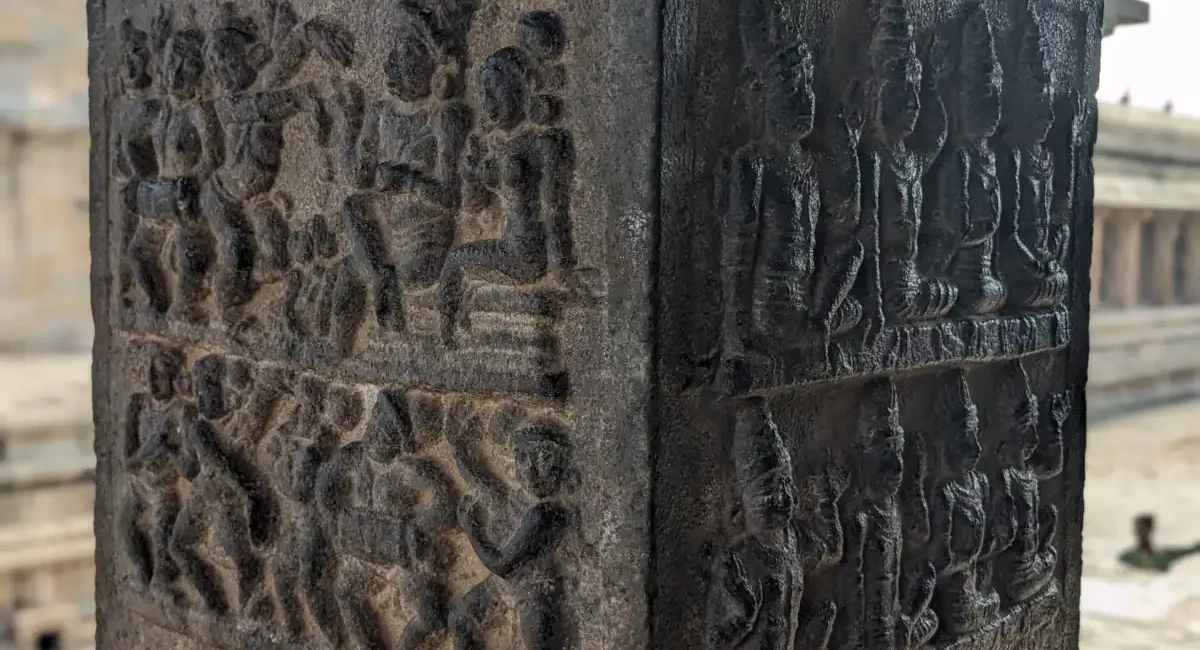
    The Raja Gambira Mandapam (pillared hall) is designed to look like a chariot pulled by horses and elephants. It features 108 intricately carved pillars depicting life and legends from the 12th century. Oh, and it is a beauty!

    Ramya is the Itinerary Mastermind and travel planner for the family. She specializes in crafting efficient, culturally-rich trips, with a passion for India’s art, heritage sites, forests, and waterfalls. She brings the human emotion and logistical precision to their journeys.
    Leave a Reply

    Your email address will not be published. Required fields are marked *