gangaikonda cholapuram_heroimage

Gangaikonda Cholapuram: The Forgotten Chola Capital (2026)

Updated on March 18, 2026

Contents

    In June 2017, we had the chance to explore the magnificent Gangaikonda Cholapuram temple, a remarkable place that holds a significant piece of South Indian history. This temple, located in Tamil Nadu, India, stands as a testament to the Chola dynasty’s architectural and artistic prowess.

    The history

    The history behind the Gangaikonda Cholapuram temple is quite interesting. It was built during the reign of Rajendra Chola I, the son of the famous Chola king, Rajaraja Chola I. In the early 11th century, Rajendra Chola I embarked on a victorious military expedition that led to the conquest of the Ganges region, earning him the title “Gangaikonda,” which means “the one who conquered the Ganges.” To celebrate his conquest and establish his authority, he decided to build a grand temple that would rival the Brihadeeswara temple in Thanjavur.

    Our experience

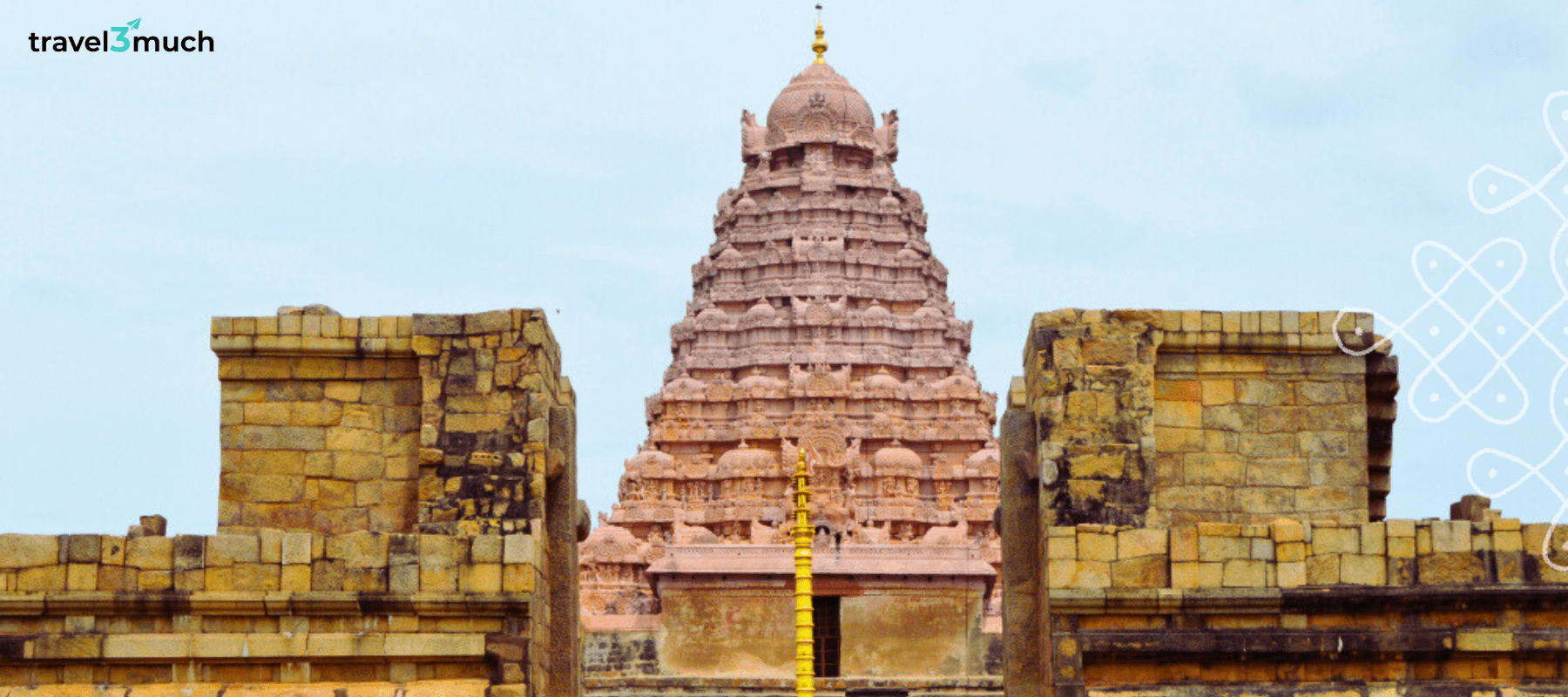
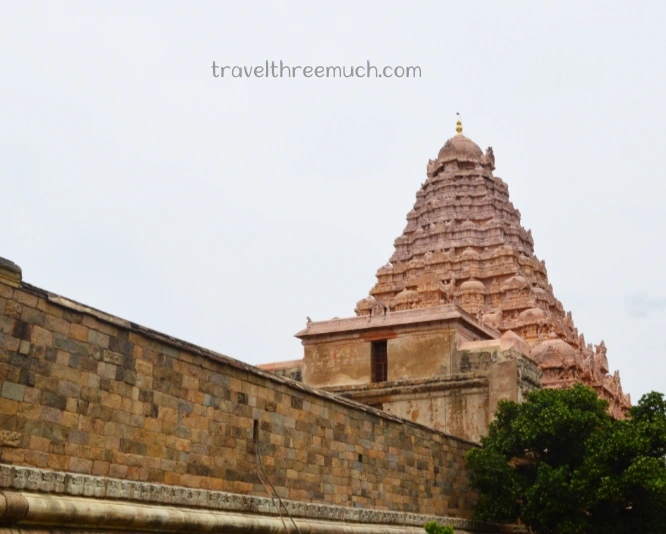
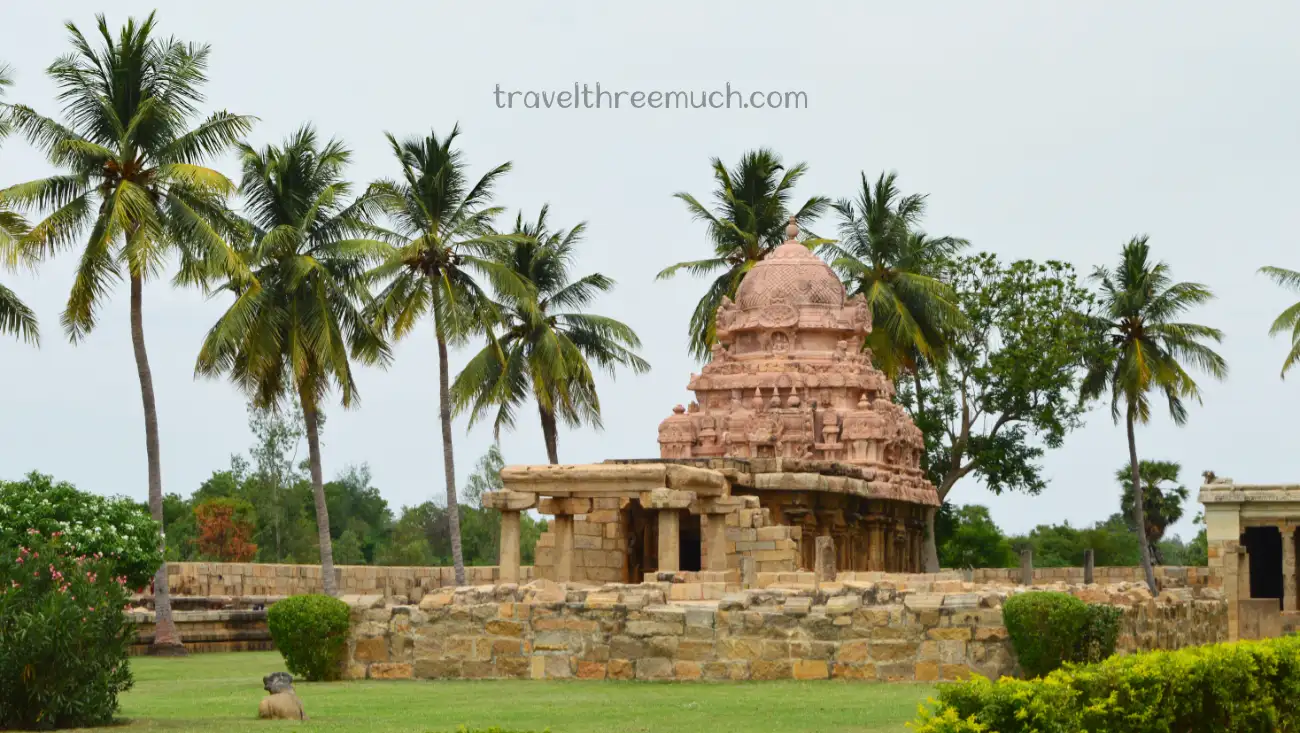
    The temple’s architectural marvel is immediately apparent upon arrival. The tower above the sanctum is a striking feature, and it closely follows the design of the renowned Brihadeeswara temple. The Brihadeeswara temple, also known as the Big Temple, is famous for its towering vimana (temple tower), which is a prime example of Chola architecture. The temple in Gangaikonda Cholapuram mirrors this grandeur, and its vimana stands tall, demonstrating the Cholas’ architectural excellence.

    Architecture of Gangaikonda Cholapuram

    The Gopuram

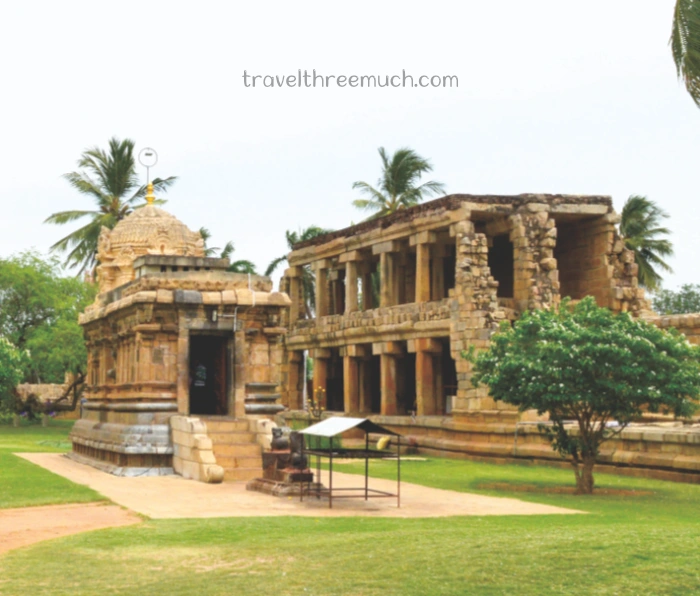
    As we approached the temple, our entry was through the remains of a gopuram, the ornate entrance tower that is commonly seen in South Indian temples. While time has taken its toll on this structure, leaving only the walls behind, the gopuram’s remnants still convey a sense of the temple’s former grandeur.

    Nandi

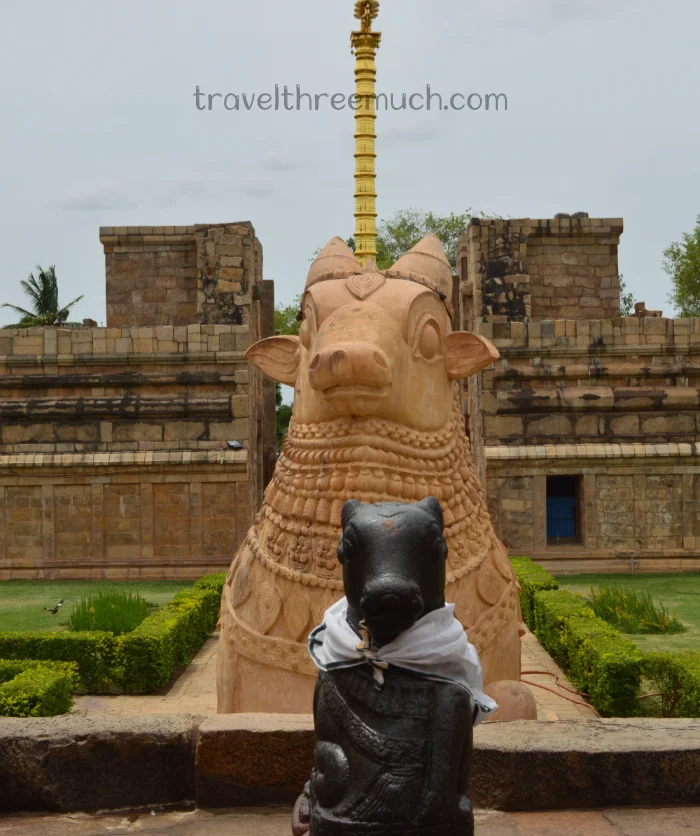
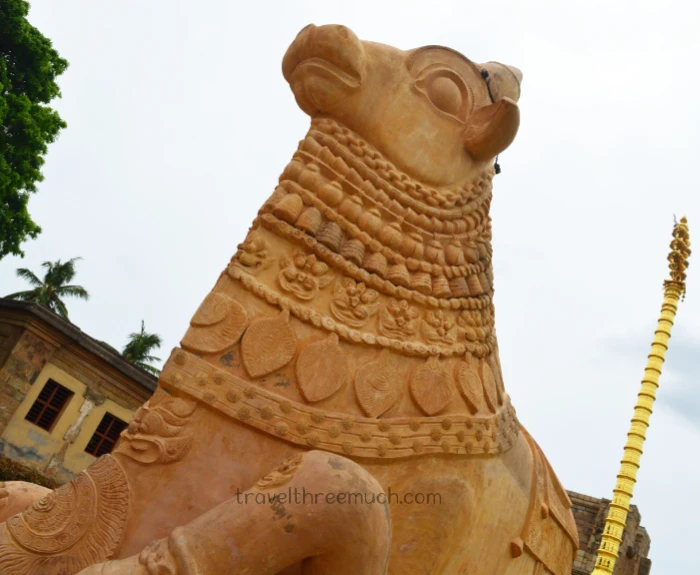
    A particularly awe-inspiring sight greeted us at the entrance. A colossal Nandi, the sacred bull and vehicle of Lord Shiva, was seated majestically facing the sanctum. This Nandi statue is not only a symbol of devotion but also a testament to the Cholas’ sculptural skills. The sheer size and intricate detailing of this Nandi statue left us in amazement.

    Outer walls of the temple

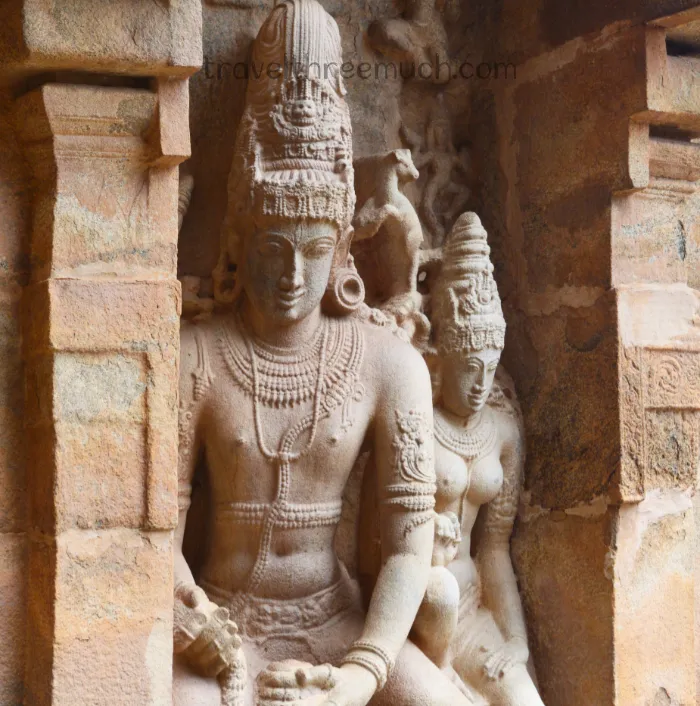
    The temple’s outer walls are adorned with intricately sculpted granite images, narrating tales from Indian mythology. These images, carved with remarkable precision, provide a glimpse into the artistic talents of the Chola dynasty. Each sculpture tells a story or represents a deity from Hindu mythology, making it a visual delight for visitors and devotees.

    Lion well

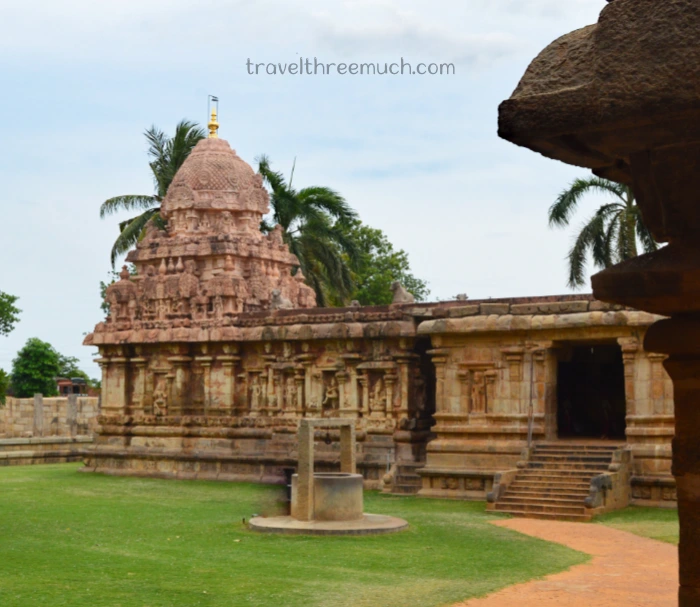
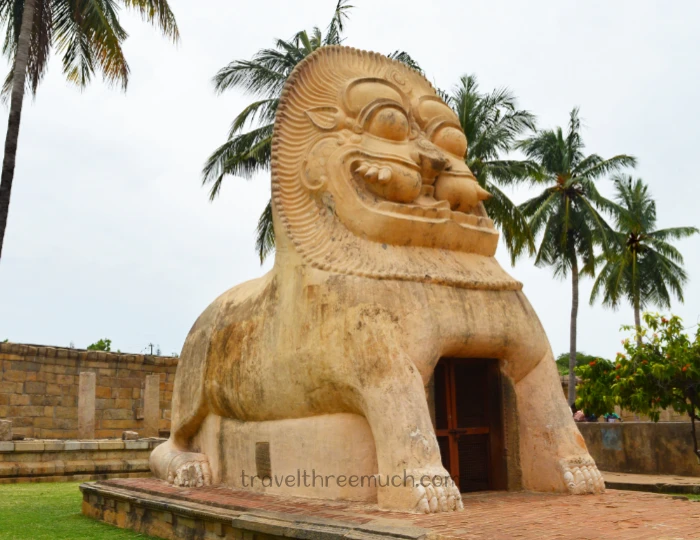
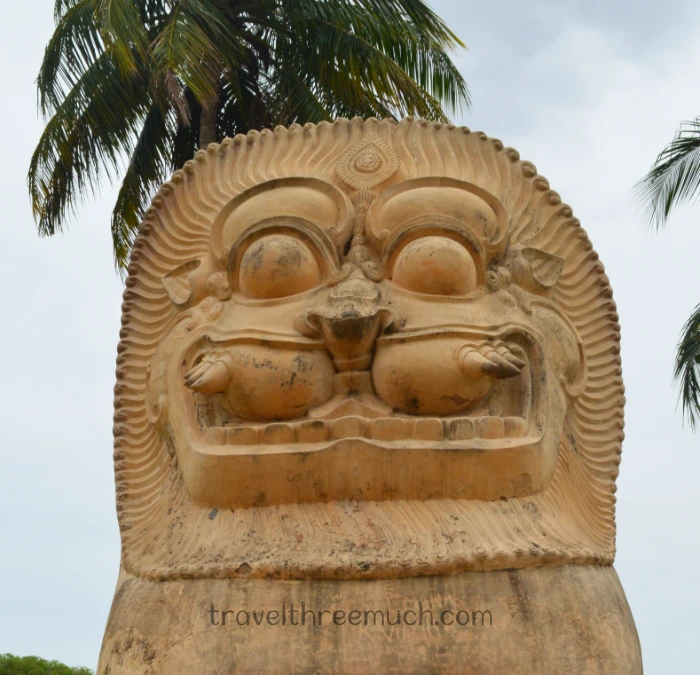
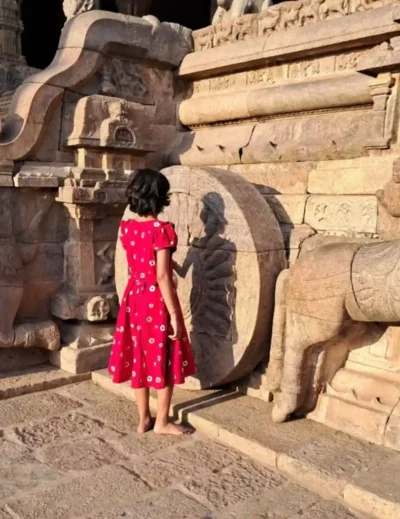
    One of the most notable features of Gangaikonda Cholapuram is the giant lion well. Standing about one storey tall, this lion is not just an artistic marvel but also houses a well within it.

    This unique architectural element showcases the innovative spirit of the Cholas.

    The lion sculpture is not only visually stunning but also serves a religious purpose, as the water from the well was used for the rituals in the temple. A flight of steps takes one to the bottom of the well.

    A Chola legacy

    The Cholas were renowned for their patronage of art, culture, and architecture. Gangaikonda Cholapuram temple is a prime example of their commitment to these pursuits. The temple complex itself is a treasure trove of artistic and architectural wonders, and it reflects the Chola dynasty’s cultural and religious significance during their reign.

    Significance

    In addition to the architectural splendors, the temple also holds historical and religious importance. It served as a hub for worship and religious activities during the Chola dynasty’s rule. The consecration of the temple and its subsequent rituals were carried out with great pomp and grandeur. It was hence a center of religious and cultural significance in South India.

    Why visit Gangaikonda Cholapuram?

    Visiting Gangaikonda Cholapuram temple is not just an exploration of history and art; it’s a spiritual journey as well. The sanctity of the temple and the peaceful ambience within its walls provide a serene environment for devotees and tourists. The temple complex allows visitors to connect with the rich religious and cultural heritage of Tamil Nadu.

    In conclusion, a visit to Gangaikonda Cholapuram temple is a remarkable experience that takes you on a journey through time. It showcases the glorious history and culture of the Chola dynasty. The temple’s architectural splendors, including the towering vimana, the giant Nandi, and the intricate sculptures on its outer walls, are a testament to the Cholas’ artistic prowess.

    What Other Travelers Ask

    The name Gangai + konda + Chola + puram means “The City (puram) of the Chola who Conquered (konda) the Ganges (gangai),” after Rajendra Chola I’s military victory.

    Yes, this site is part of the Great Living Chola temples UNESCO heritage circuit. 

    This temple is a place of active worship. As a general rule, taking photos in any temple with active worship is not encouraged in Tamil Nadu. This is applicable to many temples in South India as well. 

    Absolutely. Although both the temples were built by the Cholas – father and son (Rajaraja Chola I and Rajendra Chola I respectively), they both offer a different kind of experience. While Brihadeeswara temple is massive, the calmness, the architecture and the energy that one experiences in Gangaikonda Cholapuram is truly unique.

    We spent around 2.5 hours here. Since the temple was not too crowded when we visited. it have us enough time to admire the sculptures, take photographs and spend time in a relaxed manner. Mornings and evenings will be ideal considering Tanjavur’s heat. 

    Look for the Lion Well (Simhakeni). Unlike most temple wells, the steps are hidden within the structure. It’s a fascinating bit of medieval engineering that kids love to “discover,” and it proves the Cholas were as skilled in water management as they were in grand architecture.

    Prasanna is the Primary Writer and Technical Expert behind the posts. He is responsible for the detailed facts, historical context, and logistical breakdowns. He has a deep love for mountains, history, nature, and is the family's expert packer.

    Comments

    Leave a Reply

    Your email address will not be published. Required fields are marked *