
belum _heroimage

Belum Caves Andhra Pradesh: India’s Deepest Cave System, History, and Family Guide

Updated on March 15, 2026

Contents

Belum caves are in the Indian state of Andhra Pradesh. They are the second-largest cave system known in the Indian subcontinent. The cave system has been explored for about 3.5 km, out of which 1.5 km is open to the general public.

    planplanettm Plan your trip

    Timings: The caves are open to visitors from 10:00 AM to 5:30 PM (Last entry: 4:30 PM)

    Entry fee:

    • Foreign Nationals are charged an entry fee of INR 300 per person.
    • Indian nationals are charged the following entry fees:
      • INR 50 for children (5 to 10 year olds) per child
      • INR 70 for adults (> 10 years) per person

    planplanettm Getting there

    Driving to Belum is the best option, but if you prefer public transport, there are a few options.

    Banganapalle and Tadipatri are the nearest towns with bus connectivity to the Belum caves.

    Nandyala is the nearest railway station with buses to Tadipatri.

    Kadapa is the nearest airport, but flights to Kadapa are generally not direct. Hyderabad is a better option for flying closer to Belum.

    planplanettm How you can club your visit to Belum

    We visited the Belum caves as a brief stopover during our trip to Gandikota. These caves showed evidence of being used by Buddhist and Jain monks. Relics of this period were recovered from this cave by the Archaeological Survey of India. During the initial explorations, even older relics (dating to 4500 BC) were also found. These are on permanent exhibit in the Anantapur Museum.

    Belum caves infographic

    A Walkthrough of Belum’s History and Geology

    Buddha Statue

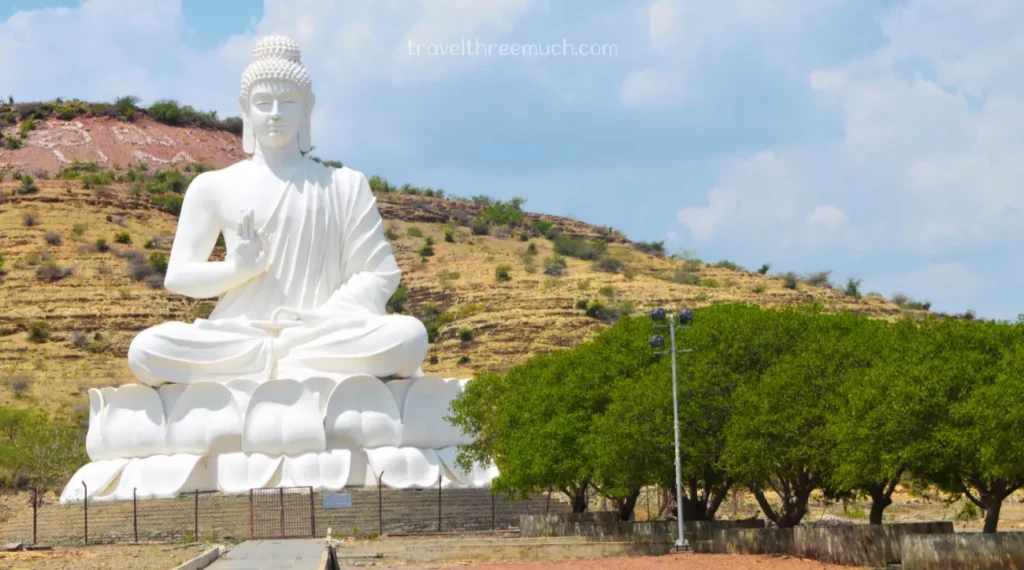
    A massive white Buddha statue outside the cave complex commemorates the cave’s early inhabitants. The Buddha is seated on a lotus in a padmasana posture. The right hand is in a Vitarka mudra used when explaining teachings. The left hand is resting on his lap with the same mudra. 

    belum Buddha statue

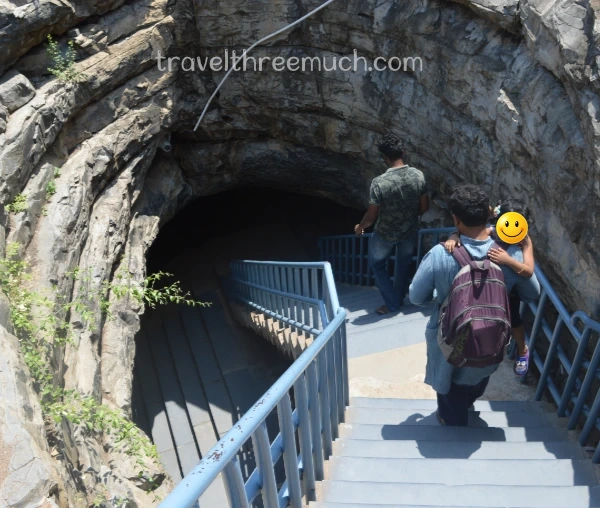
    The caves are at a subterranean level. The ticket counter is at the entrance to the caves. Just past it, a turnstile and a spiral metal staircase lead to the cavern entrance.

    Inside the cavern

    Entry is through a natural limestone arch poetically named Simhadwaram (Lion Gate). Signage is somewhat minimal but functional within the caves. A map of the cave complex highlighting the major attractions is at the entrance. There are two main forks in the cave’s accessible regions.

    The arch opened out into a large space named the Gebauer Hall. This is a homage to the German speleologist Herbert Daniel Gebauer. He led teams in 1982 CE and 1983 CE to explore and map the cave complex. The local villagers and administrators helped him complete the task. This led to the caves being designated a protected site by the State government in 1988 CE.

    Formations and Subterranean Wonders

    The cave boosted the budding field of biospeleology in India. A previously unknown species of isopod was discovered in the Pathala Ganga region of these caves. The species was named Andhracoides Gebaueri by the biospeleologist Shahabuddin Shaik.

    We went further into the cavern. The deeper we went into the caves, the more humid the air became. We were sweating a lot, and it was a good thing we had brought enough water.

    Dhyana Mandir

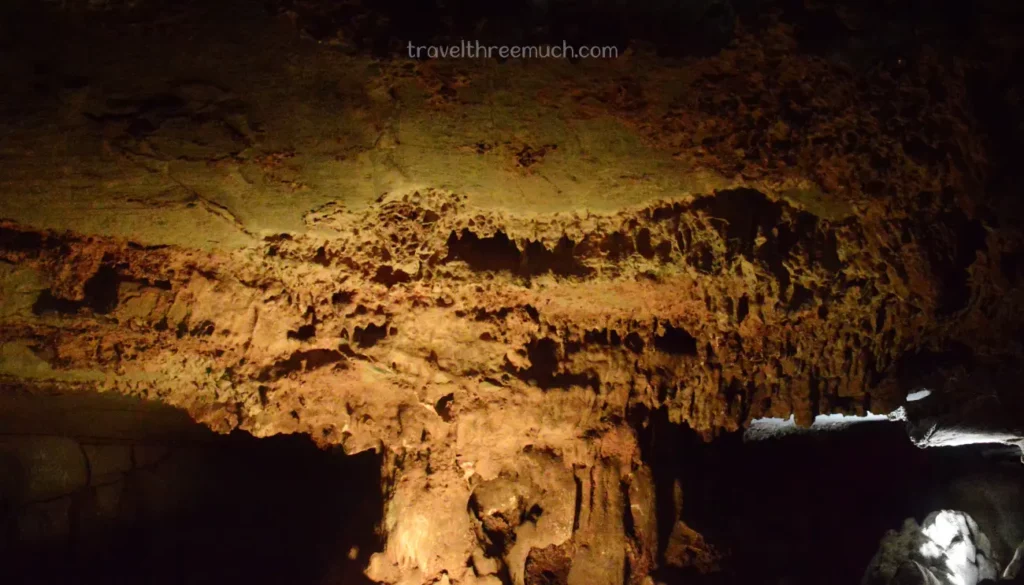
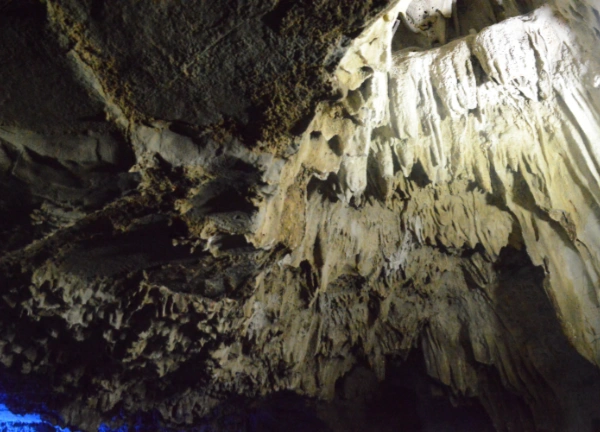
    A large cavernous chamber named the Dhyana Mandir, or the meditation hall was the next stop. The paths were well-lit and easy to navigate. After backtracking to a fork we marched forward to a formation named Thousand Hoods. These stalactites are so named because they resemble the unfurled hoods of cobras.

    Saptasvarala Guha

    We saw a formation named Saptasvarala Guha (the cave of the seven notes). This probably refers to the different tones produced when the stalagmites are struck. We took the name at face value. We did not test the delicate limestone structures built up by the Chitravati River on geological time scales.

    Banyan Tree Hall

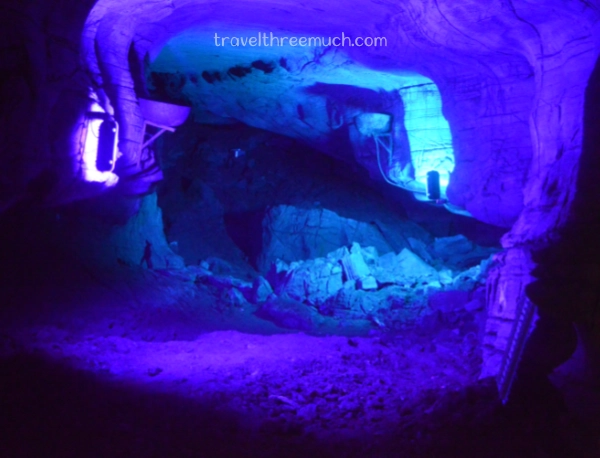
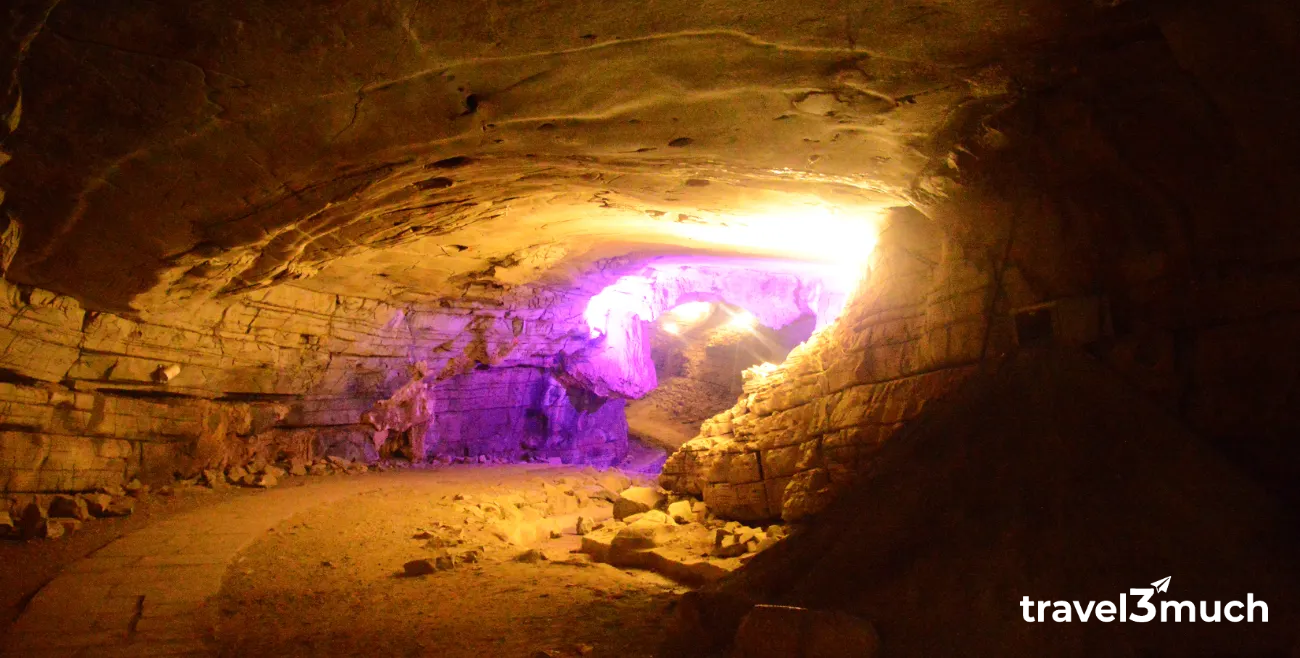
    Next up were the Mandapam, or the hall, and another formation named the Banyan Tree Hall. The lighting in some points of the cave, depending on your aesthetic sensibilities, could come off as garish or striking!

    Our kid had fun looking at the ever-changing neon hues. The colours lit up the cavernous insides, punctuated by brief interludes of darkness.

    BELUM CAVES BANYAN

    Koti Lingalu

    We backtracked to a fork in the path and took the other branch to Koti Lingalu. Shiva is the god of destruction in the Hindu pantheon. A cylindrical column represents him in many shrines. This column is called a linga. Koti is the Telugu term for ten million. The fantastic formations of stalactites and stalagmites resemble innumerable Shiva lingas.

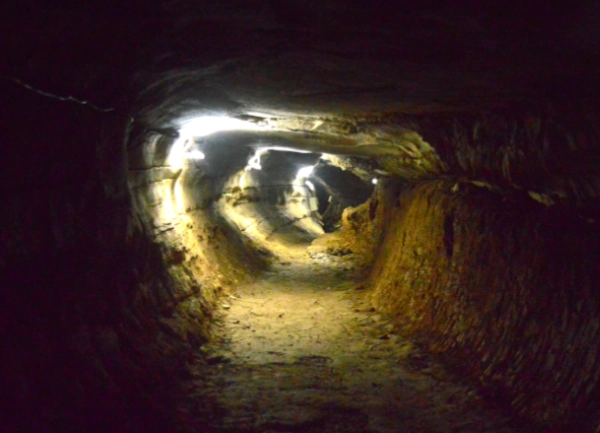
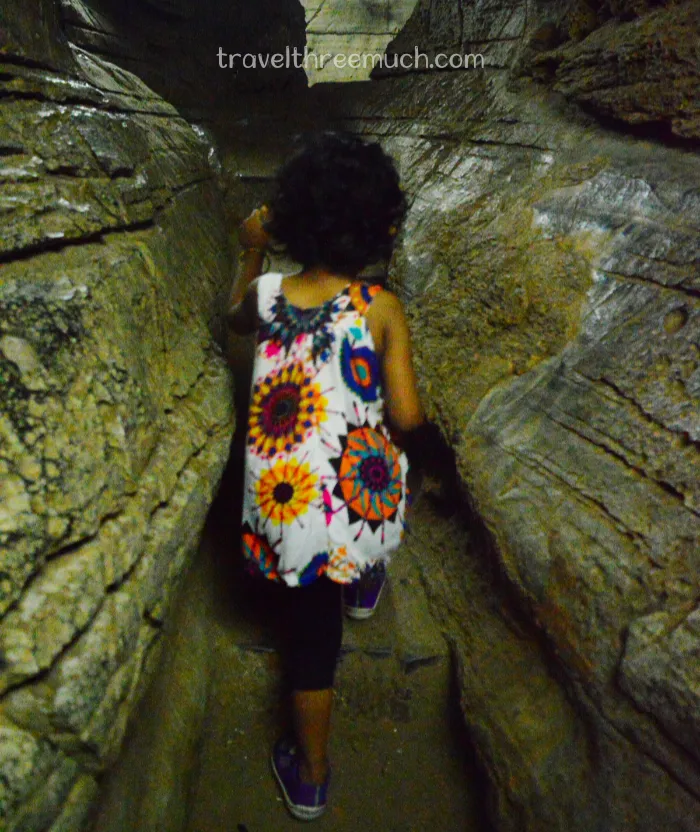
    Most pathways were wide, but some of the narrower passages required us to bend to pass through. We were reminded of the scene from Indiana Jones where ‘only the penitent shall pass’. It doesn’t require a master’s in limbo dancing and should be manageable for most folks.

    In some places, the overhead lighting was sufficiently bright, casting harsh contrasting shadows. When we look back at the pictures, we can’t help but think of scenes from Manjummel Boys! The next stop was the famous Pathala Ganga (Ganga of the Underworld).

    Pathala Ganga

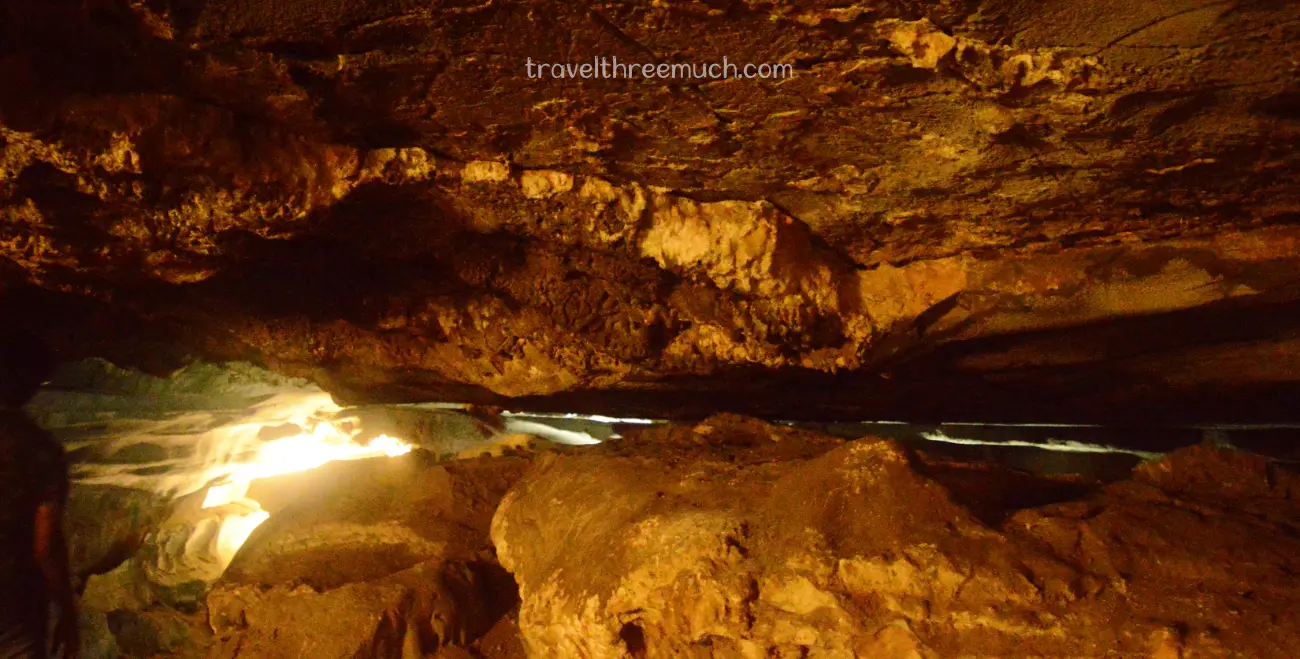
    The approach to this spot became progressively slushy. A subterranean stream that disappears into the bowels of the earth is the highlight here. This is also the spot where the isopod (not visible without magnification) was discovered. It was named in honour of the team leader who mapped the caves.

    After the Pathala Ganga, we backtracked to the path and made our way to the last of the highlights on the cave trail. This was a formation poetically named Maya Mandir (temple of illusions). We returned to the entrance retracing the same path we had taken from the Simhadwaram to Pathala Ganga. It took us about three hours in all to explore the caves completely at a leisurely pace.

    Essential Tips for Exploring Belum Caves with Ease

    Here are some tips to help plan your trip better:

    1. Carry cash with you to buy tickets, as mobile connectivity for online payments can be sketchy.
    2. The best time to visit the caves is the relatively cooler months from October to February.
    3. There is ample parking outside the caves, but it is open parking. Your vehicle can get very warm in the midday sun. So plan accordingly.
    4. There are no options to buy food/drinking water in the vicinity of the caves. Take your own snacks and water to stay hydrated.
    5. The cave flooring can get quite wet and slushy due to the constant influx of underground water. In some places, you may have to wade through water. Wear water-resistant footwear with a good grip.
    6. An additional tip for parents – Our kid was fortunately wearing thin, light clothes. That helped a lot with the humid conditions. Ensure kids aren’t wearing warm clothes as they tend to get soaked!

    Thank you for reading and let us know your views. We have saved Yaganti and Tadipatri for our next trips to this region. We shall post updates when we visit these places!

    Prasanna is the Primary Writer and Technical Expert behind the posts. He is responsible for the detailed facts, historical context, and logistical breakdowns. He has a deep love for mountains, history, nature, and is the family's expert packer.
    Leave a Reply

    Your email address will not be published. Required fields are marked *