
Gandikota_heroimage

Gandikota Gorge: Visitor Tips for India’s Grand Canyon

Updated on March 28, 2026

Contents

    planplanettmPlan your visit

    Getting There

    From Chennai – We travelled to Gandikota from Chennai with a stopover at Nellore. The drive from Nellore to Gandikota is especially scenic. We stayed at the Haritha resort in Gandikota which was also close to the points-of-interest there.

    From Bengaluru – Gandikota is about 285 kms from Bengaluru. Similar to Chennai, this can also be done as a road trip. Due to unforeseen road works these days, its always better to check the route before you hit the road.

    By train – The nearest railway station is Jammalamadugu which is less than 20 km from Gandikota. Nandyala is a larger junction with better connectivity but is about 95 kms away and honestly doesn’t make much sense to go from there as the cab fare might end up on the higher side. Driving is the best option for Gandikota as it will make it easier to get around within the town as well.  
    About Gandikota – The Name, the History, the Gorge

    Gandikota is a small village which has seen the rule of different dynasties such as the Chalukyas, the Vijayanagara empire’s vassals and Golconda Sultanate before passing into British control over time.

    The name Gandikota as such comes from the Telugu words (Telugu is the local language) ‘Gandi’ meaning gorge and ‘Kota’ meaning fort. The fort is named after the gorge which is the right way around. So, like many places, the geology came before the history and that influenced the name.

    Fort history

    There are multiple references about who built the fort. However, the fort dates back to pre-Vijayanagara times. At one point, it was captured by Golconda and was then taken over by the Pathan Nawab of Cuddapah. 

    The Qutub Shahis occupied Gandikoda even when the French traveler Jean-Baptiste Tavernier visited the place in 1652. Travelogues by the him talk about how it was one of the strongest cities in Golkonda and he also talks about its likeliness to Hampi. 

    The unique aspect of this fort is definitely its setting. With the gorge on one side and the Penna river, the fort would have been breathtaking in its times of glory. 

    The gorge of Gandikota

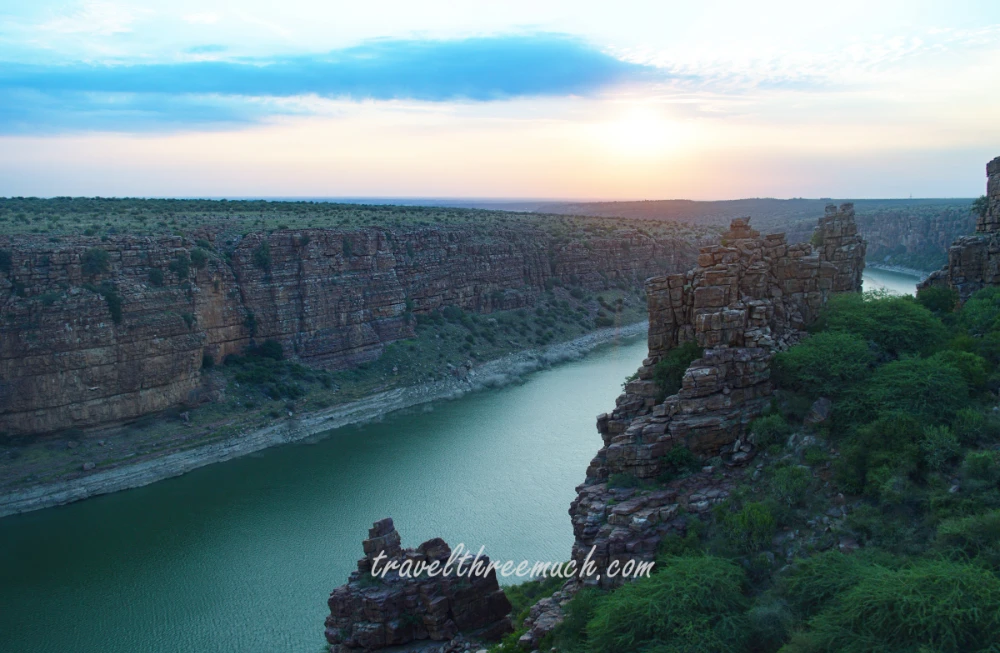
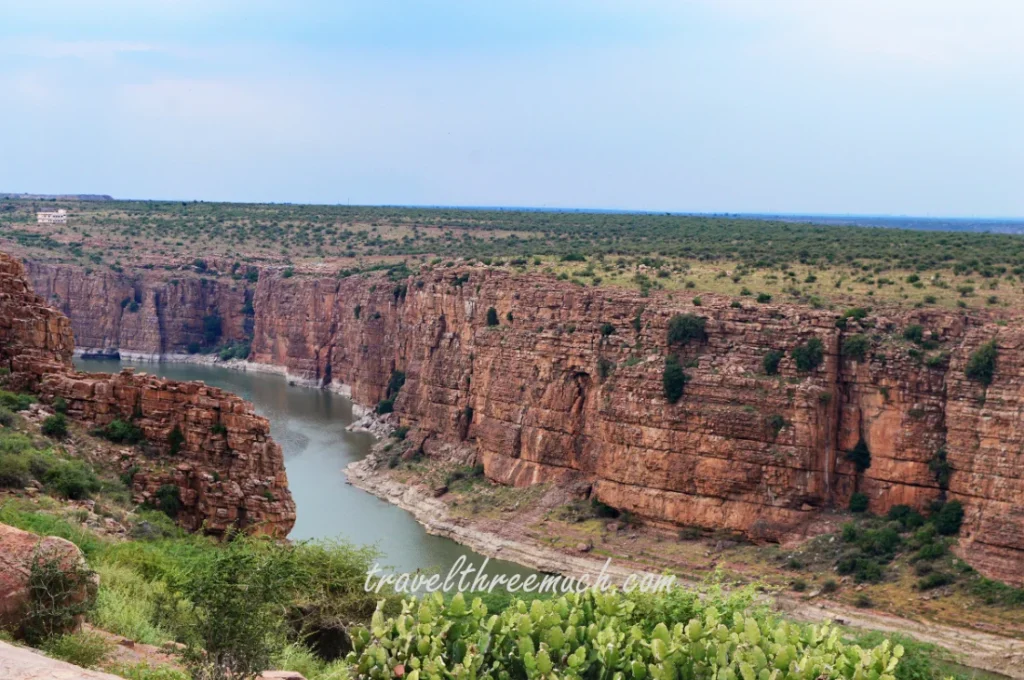
    The gorge has a width of approximately 100 metres, a depth of roughly 100 metres, and a length of under 5 km. Since a lot of times this gorge is referred to as India’s Grand Canyon, let me provide some context. The real Grand Canyon in Arizona has an average width of 1,600 metres, a depth of 1,220 metres, and a length of 446 km. For us, the spectacular nature of this site is not just the gorge, but also the history that it holds within. 

    The gorge was formed by the erosional activity of the Pennar River over millions of years, cutting through the Erramala Hills. The rock formations consist mainly of quartzite and granite. As a result, the colours of the gorge look really beautiful and make for some gorgeous photographs! 

    gandikota cover

    What to see inside the fort

    The Charminar

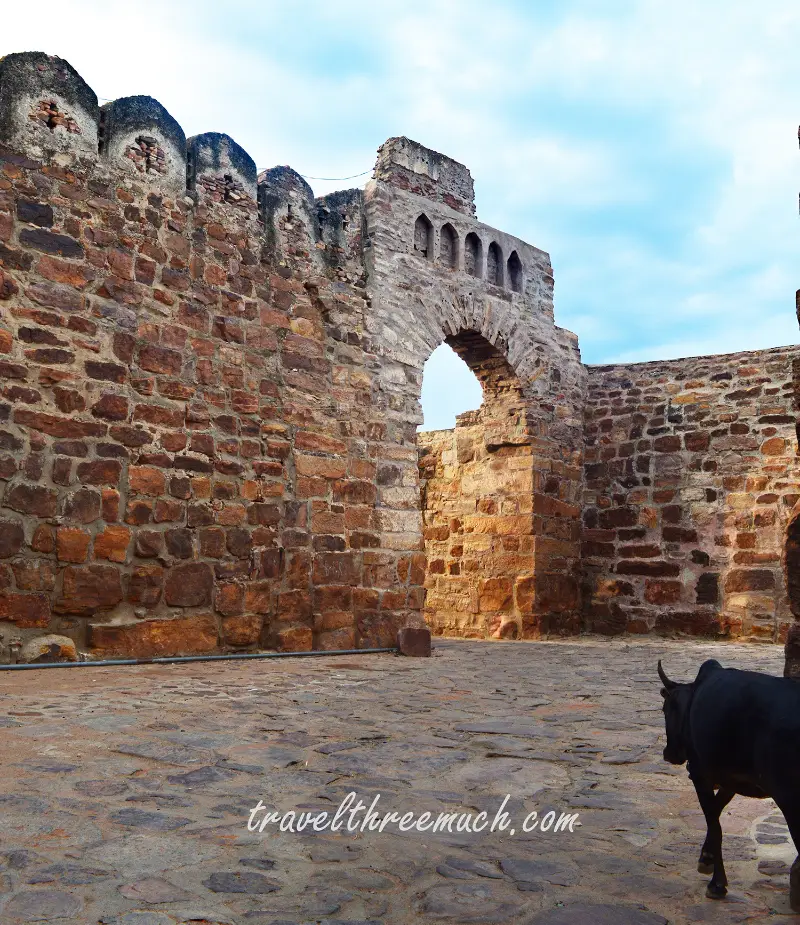
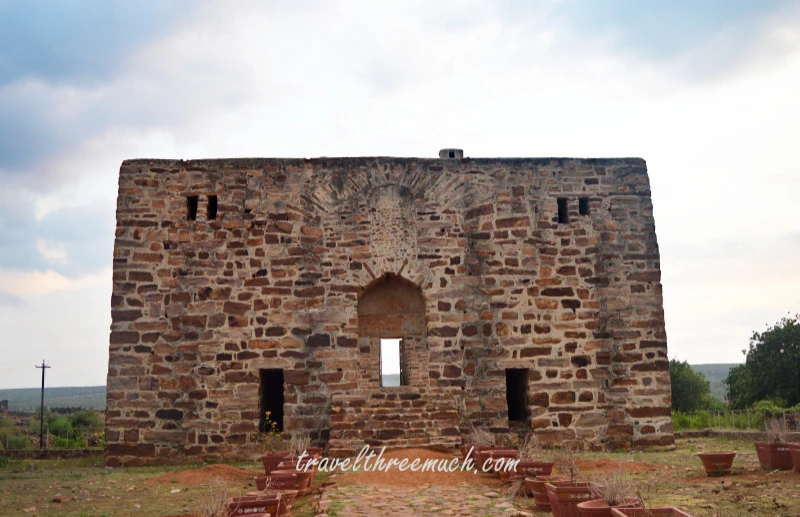
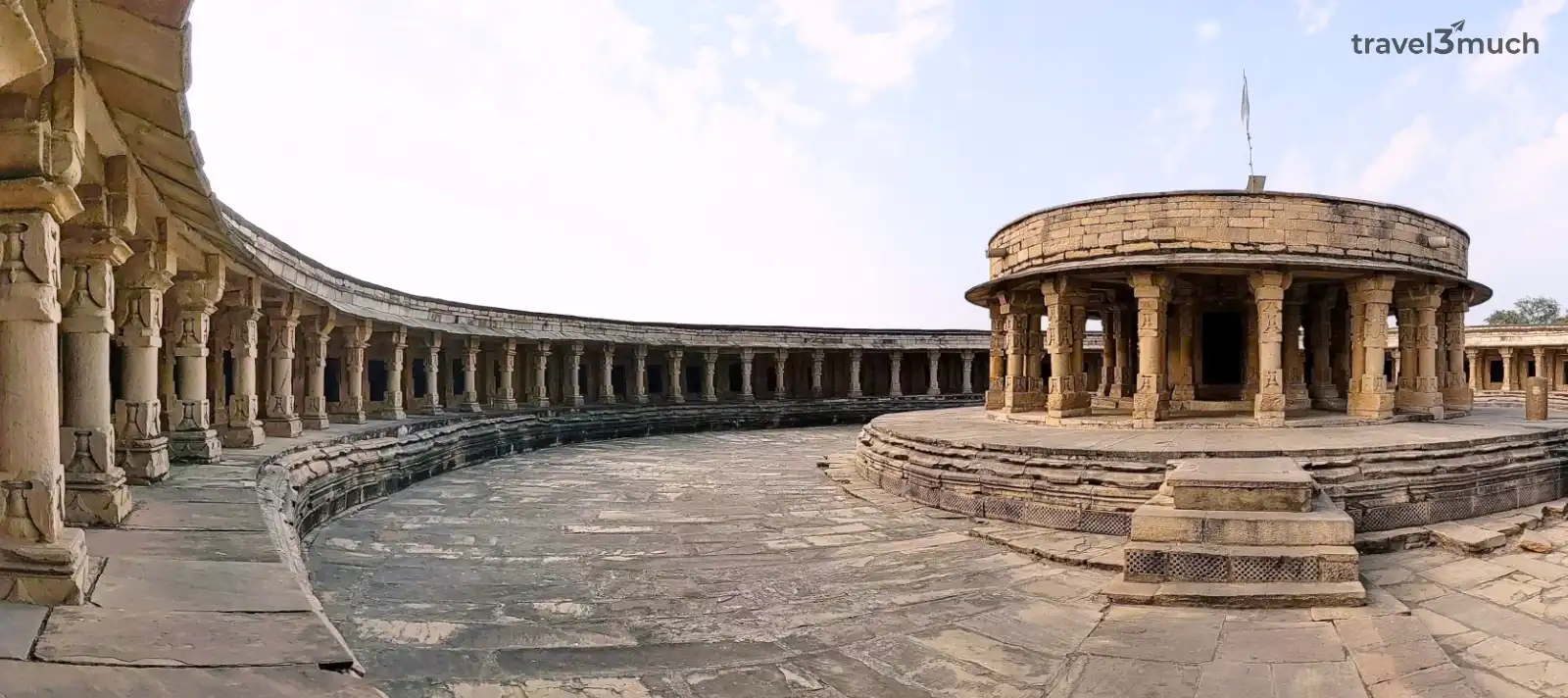
    The first structure that you come upon is the barracks which open up on the Charminar.

    However, we could find no steps that led to the three tiers above the ground level and so it seems to be a more ornamental structure than a functional watchtower.

    Near the Charminar, you will find the jail of the fort. Further down from the jail is the parking area.

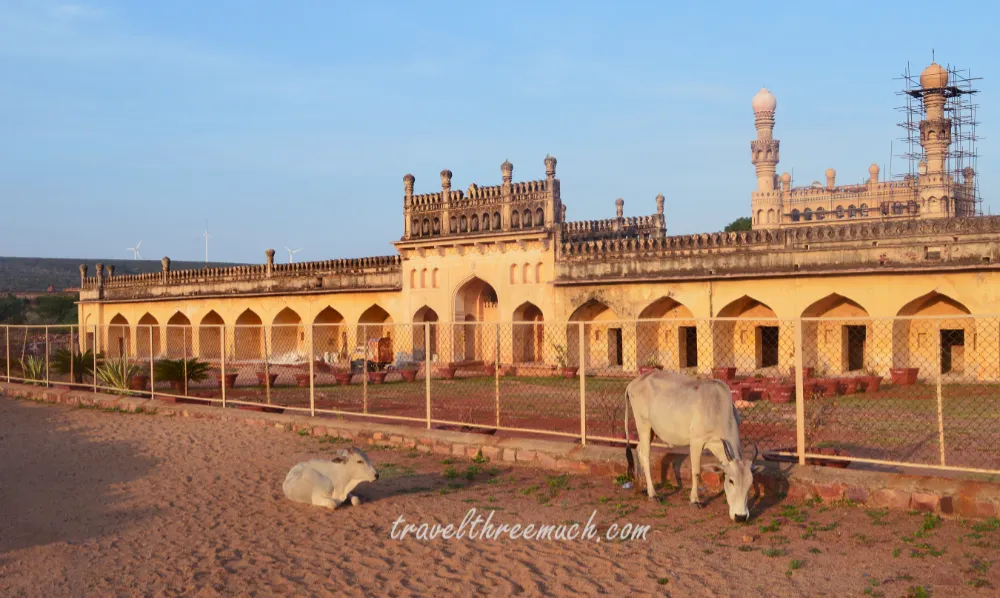
    We caught a glimpse of the small and big mosques (Jumma Masjid).

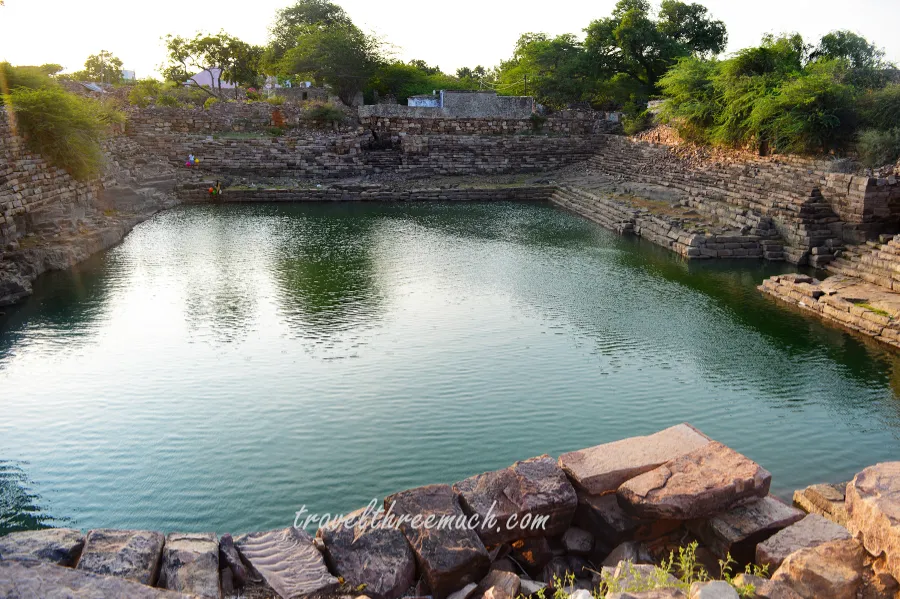
    Do not miss the large tank near the small mosque, called the Kathula Koneru.

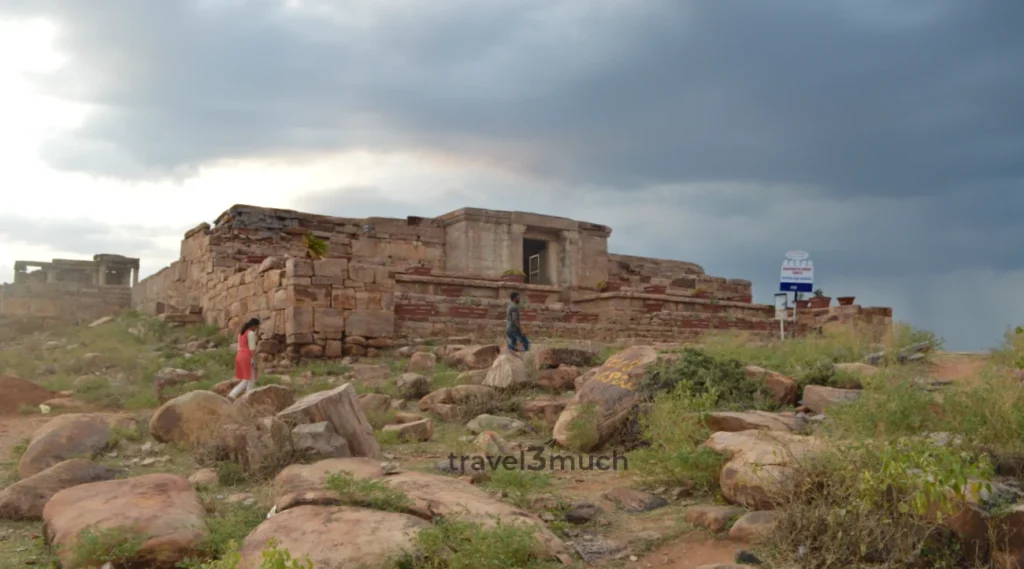
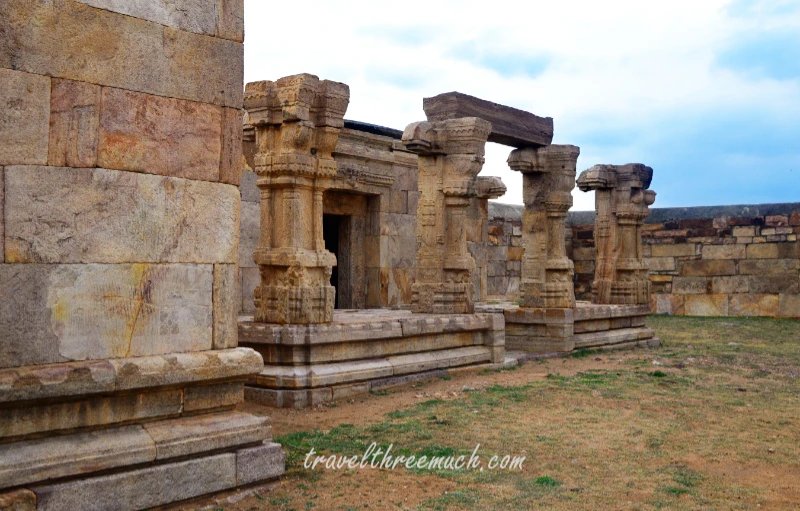
    A little bit further down the road, one can find what used to be the granary for the fortified settlement followed by the magnificent Raghunatha Swamy temple.

    The Raghunatha Swamy temple

    Some texts refer to this temple as Ranganatha swamy temple and some as Ranganaya temple. The reason being, this temple originally housed a statue of Lord Ranganaya which has now been housed at a different location. 

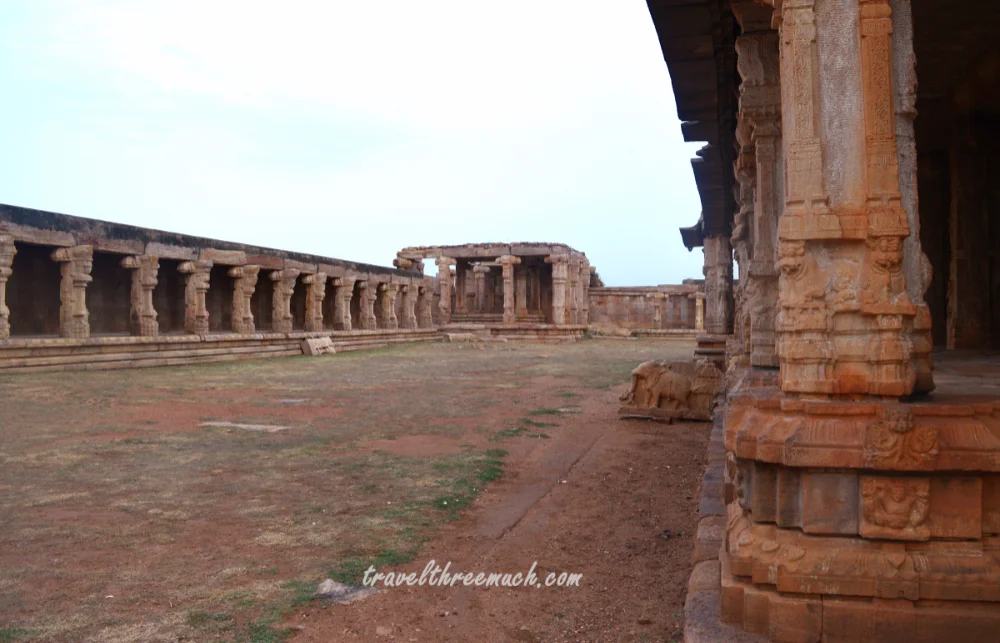
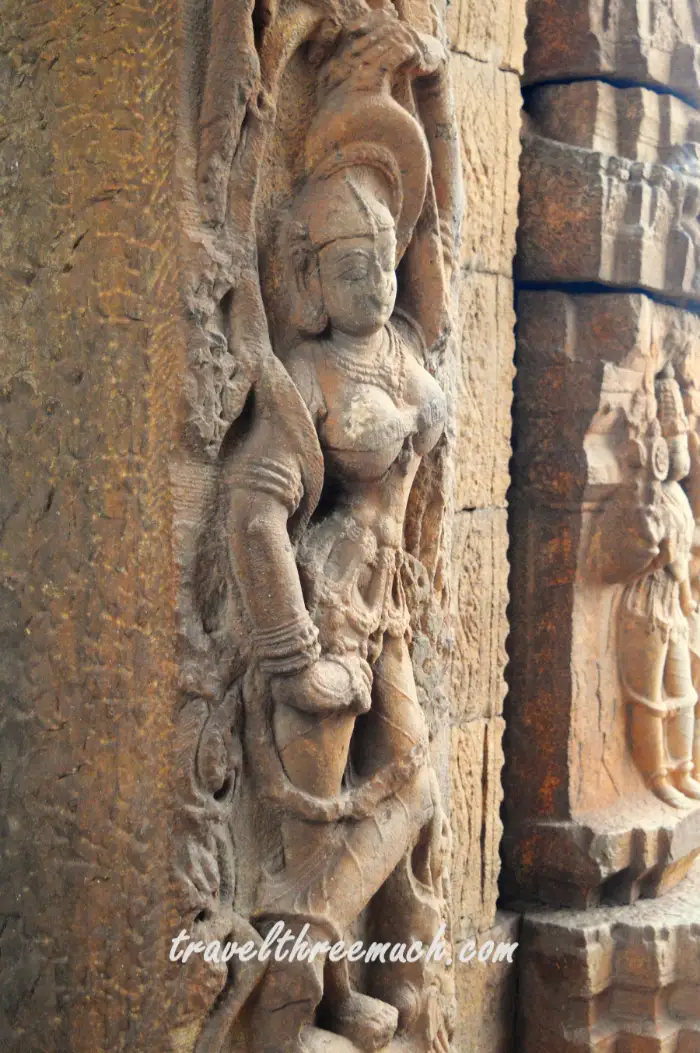
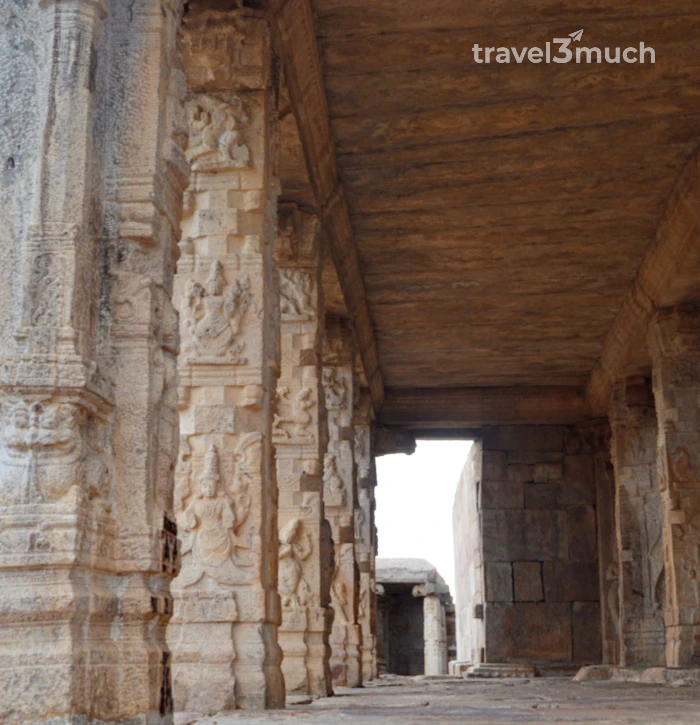
    Even though the presiding deity is missing from the sanctum, the majesty of the temple rising over the boulder-strewn landscape and the intricate carvings on the walls and the entrances are sufficient to hint at the grandeur of its glory days.

    Like many other destinations that we visit, this place too did not have too many people. In fact, we were the only ones there in the temple complex and we were able to spend a lot of time looking at each sculpture and each carving.

    raghunatha swamy temple gandikota

    After we spent some time strolling through the outer sanctum, we made our way to the gorge viewpoint and settled in to watch the sunset light up the sky over the gorge.

    The sun set not over the gorge but on the side that had the temple tower of the Madhavaraya Swamy temple, Ranganatha Swamy temple and Charminar. What followed was a show of purple, pink and oranges that lit up the sky in gorgeous hues.

    gandikota gorge sunset

    We returned to Haritha Resort for the night.

    The next day, after a cup of delicious tea outside the Gandikota complex, we had an early start and spent some time at the Madhavaraya Swamy temple, taking in the breathtaking carvings that adorned the temple tower and strolling around the outer sanctum.

    The Madhavaraya Temple

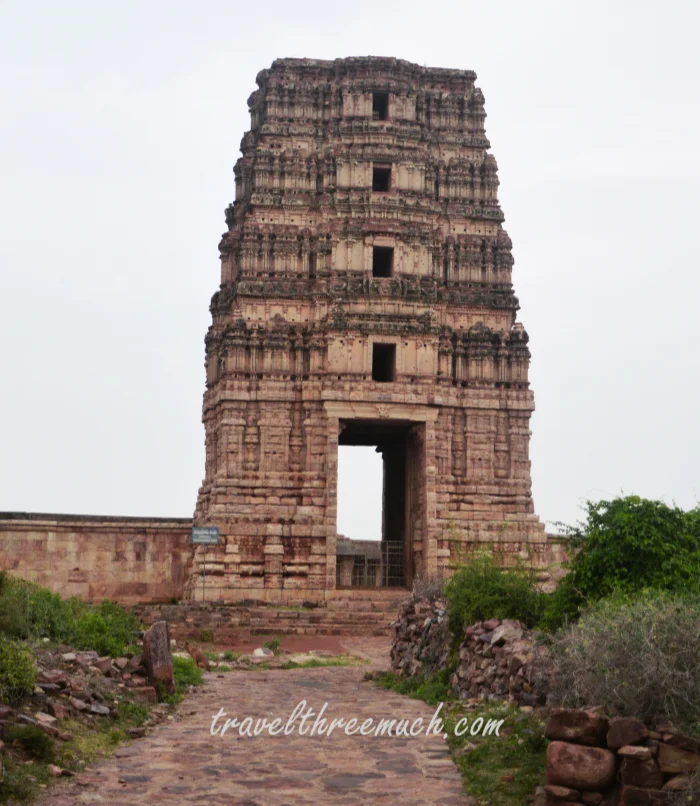
    The Madhavaraya temple is unmissable due to its striking four storeyed gopura at the entrance. The sikhara of the gopura is no longer there, but it still stands tall and welcoming. There are majestic sculptures and grand pillars in the main mandapa where you will be able to spend time capturing the intricacies of the carvings. 

    In comparison to Ragunatha Swamy temple, this is in a relatively better shape. 

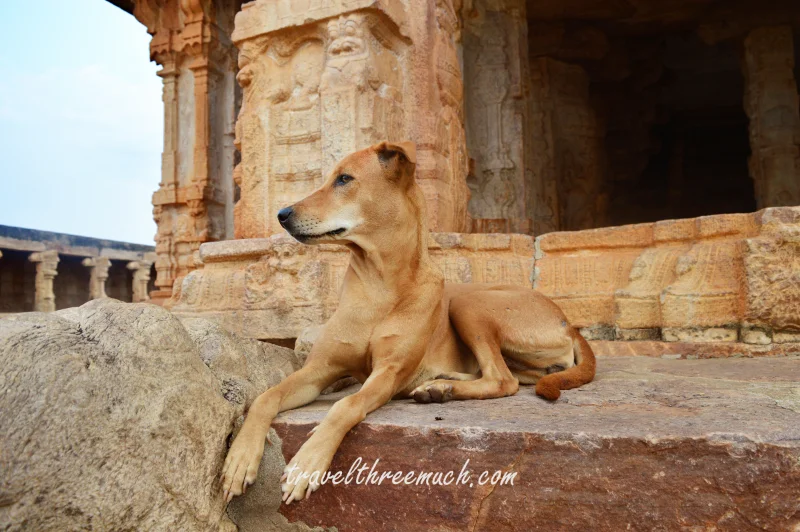
    We have to mention the friendly dog who accompanied us into the temple and kept us company during our time there.

    The maintenance could be much better as there were lot of thorns and walking without shoes wasn’t possible.

    Visiting Gandikota with Kids — What to Know Before You Go

    • The fort complex is fairly large and the monuments are spread out. Comfortable walking shoes are essential. There is no transportation inside the fort and as the surfaces and roads are uneven, exploration will be on foot.
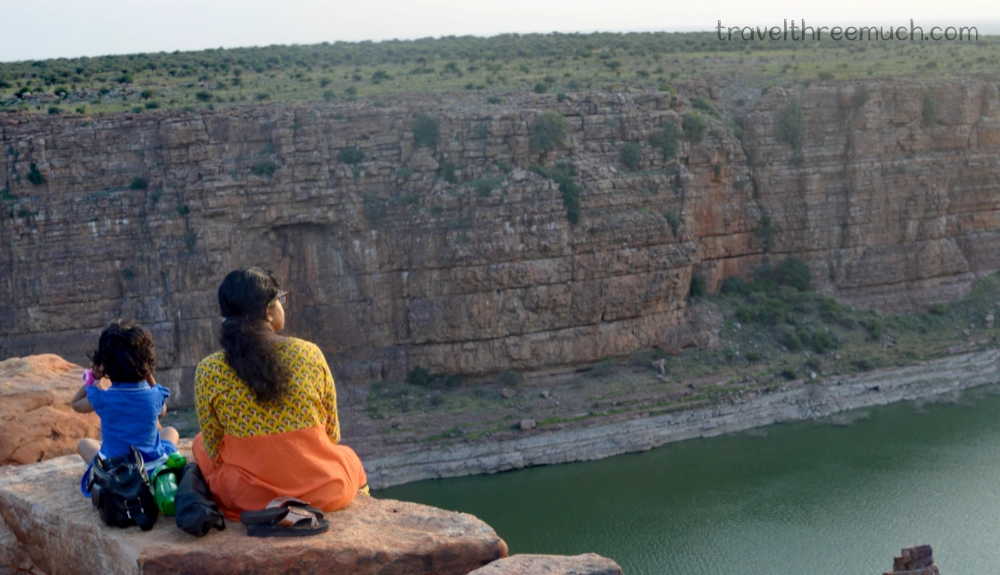
    • The mix of a fort, temples, a mosque, a jail, and a dramatic gorge gives curious children an enormous amount to engage with. Especially, sitting on the rocks at the gorge and staring at the Penna river below would be a memorable experience.
    • The heat is intense from March to September. Plan all fort walking for early morning or late afternoon. Since we stayed there for a couple of days and also stayed nearby, we went back to our rooms for lunch, relaxed for a while and then started exploring once the sun was a bit down. 
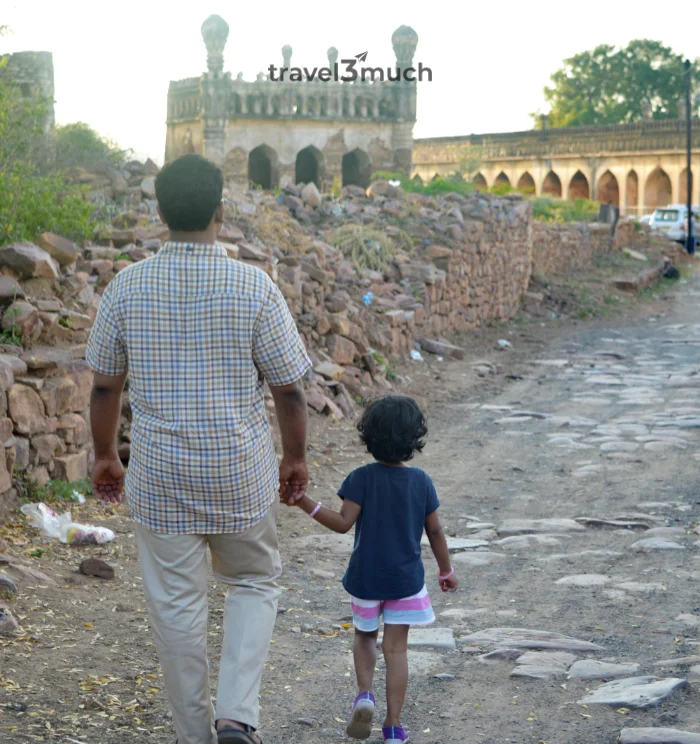
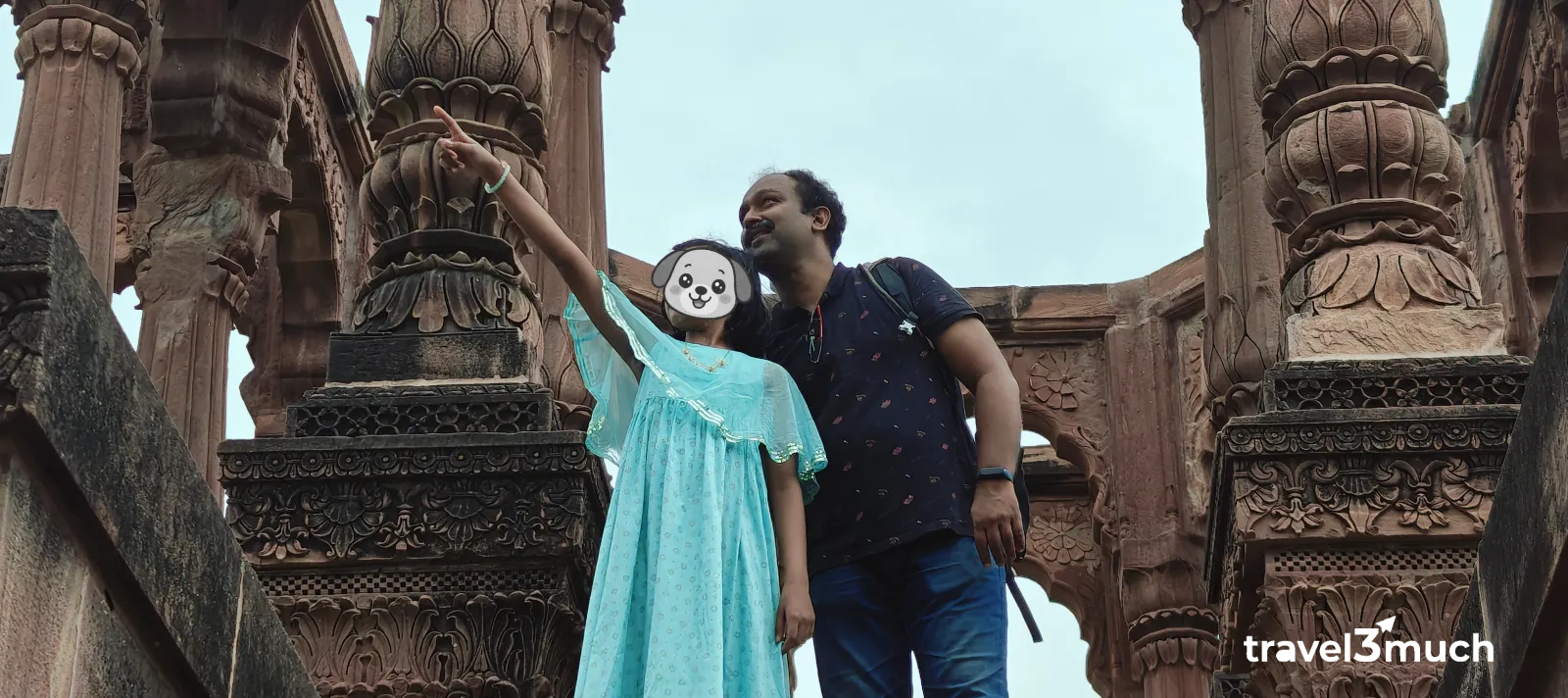
    • The gorge viewpoint requires a little bit of boulder scrambling. To get a good view of the gorge formation, you need to climb boulders to reach the best vantage points. This is manageable for children who are comfortable on uneven rocky terrain, but carry younger children and hold hands on the steeper sections. Our daughter was 3 tears old when we visited Gandikota 

    What Other Travelers Ask

    Yes. Entry to the Gandikota Fort complex and all gorge view points is free. There are no ticket counters. Everything is open! So I guess the poor maintenance is expected?! Wish ASI could do more for this place.

    One full day and one night is ideal. This way, you can see sunrise, sunset, explore the fort and temples and also walk along the fort ruins at a leisurely pace. If combining with Belum Caves, allow two full days.

    September to February is the best period as the weather is pleasant and the gorge is at its most photogenic in the cooler light.

    The Haritha Resort by APTDC is the primary accommodation option at Gandikota itself. It is basic but well-located as it is close to both the fort and the gorge viewpoints. Rooms should be booked in advance, especially for weekend visits. You can book the hotel via the APTDC official website. 

    Yes, you can and I would rather say, you should. The two places are very close to one another and make for the perfect drive.

    Ramya is the Itinerary Mastermind and travel planner for the family. She specializes in crafting efficient, culturally-rich trips, with a passion for India’s art, heritage sites, forests, and waterfalls. She brings the human emotion and logistical precision to their journeys.
    Leave a Reply

    Your email address will not be published. Required fields are marked *