

Fontainhas, Goa: A Complete Guide to the Latin Quarter
Updated on March 29, 2026
Contents
We visited Fontainhas, Goa’s oldest neighbourhood, on an April morning. Located in Panaji, the state capital, Fontainhas is also known as the Latin Quarter of Goa which is a compact heritage quarter that has retained its Portuguese character better than almost anywhere else in the state.
If you are interested in history, architecture or just want to see a part of Goa that looks nothing like its beaches and resorts, this is worth your time. Beyond all the history, its also the perfect place for some stunning photographs!

How to Get to Fontainhas, Panaji
Fontainhas, Panaji is located on the eastern slopes of Altinho Hill, a short distance from Panaji’s city centre.
By road: From most parts of North Goa, Panaji is 20 to 45 minutes by car or bike. Fontainhas is signposted once you enter the city. We stayed a bit aways from the cuty and hence it took us about an hour to get there.
By bus: Kadamba state buses connect Panaji to most towns in Goa. From the Kadamba bus terminal, Fontainhas is roughly a 10-minute walk or a short auto ride.
By auto or cab: Most auto drivers in Panaji know Fontainhas. Most parts of Goa also have Ola and Uber connectivity.
Parking: The lanes inside the quarter are too narrow for cars. Find the closest spot to park.
A Brief History of Fontainhas, Goa
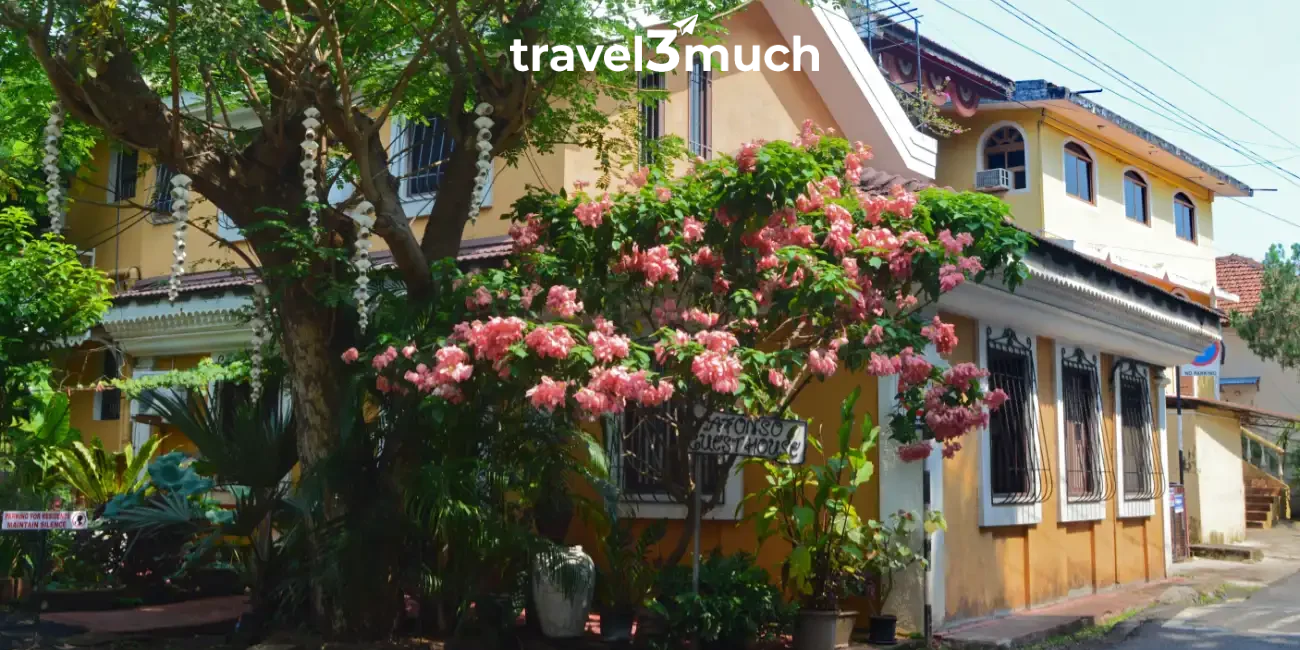
The name Fontainhas comes from the Portuguese and means “little fountain”. The neighbourhood was established in 1770 CE by Joao de Sequeira and it sits on the slopes of Altinho Hill in Panaji. The lanes are narrow, the buildings are old, and very little about the place feels like it has changed dramatically in the last few centuries. That is very much the point of visiting.
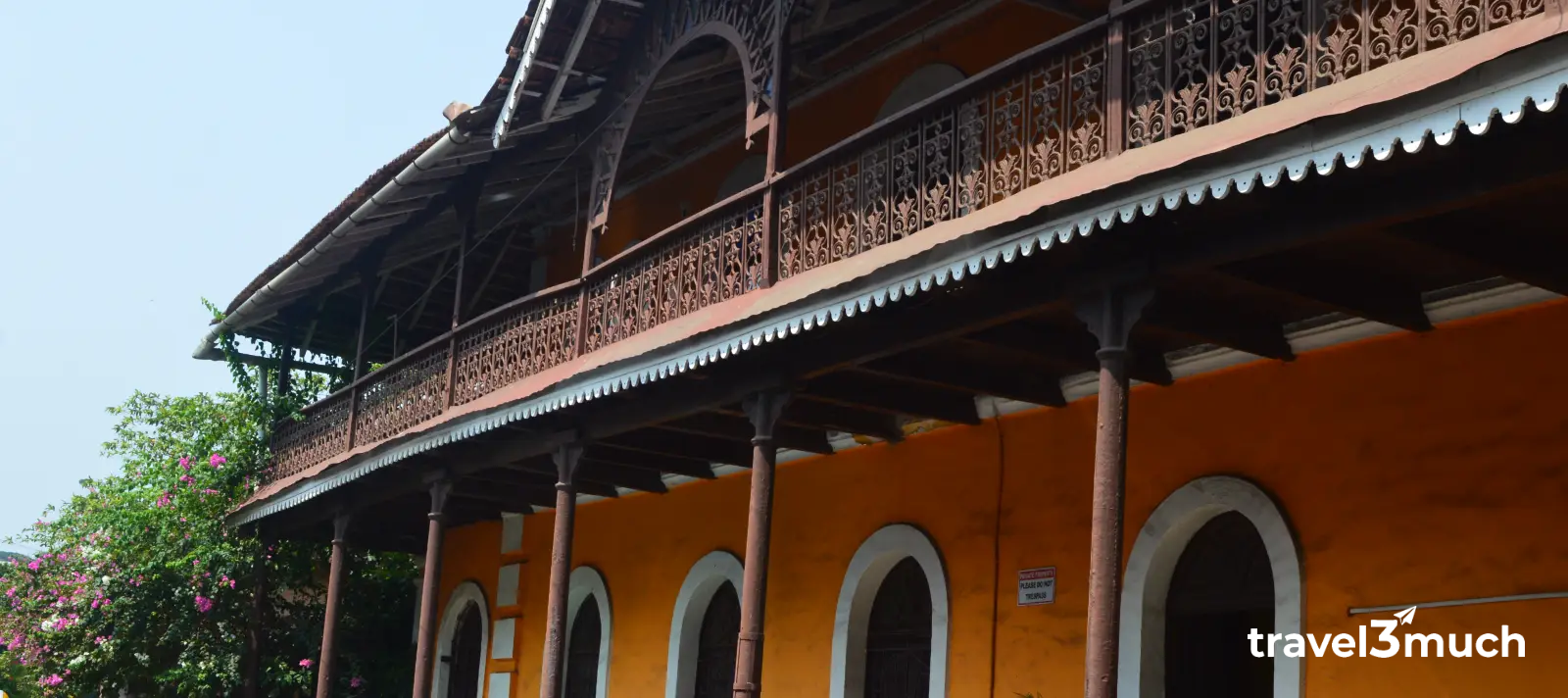
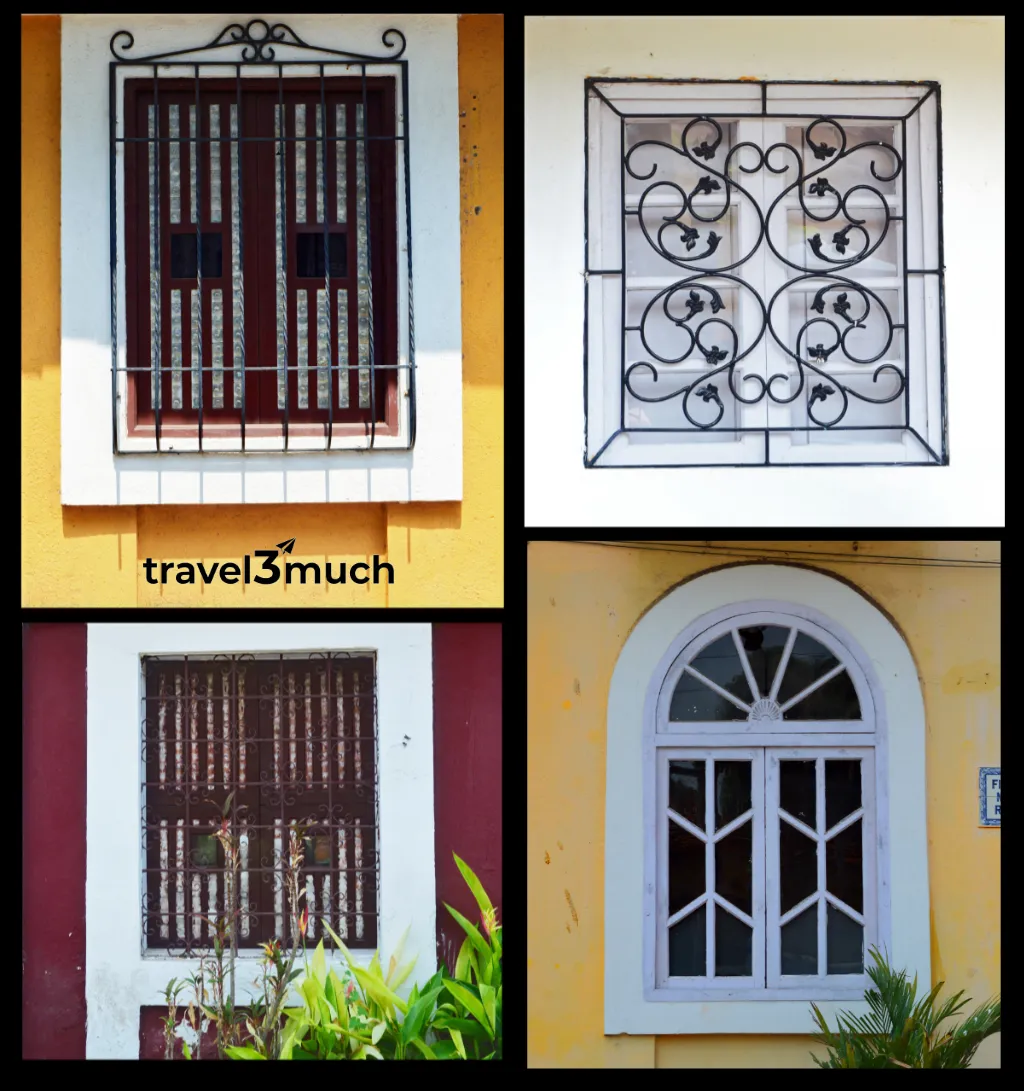
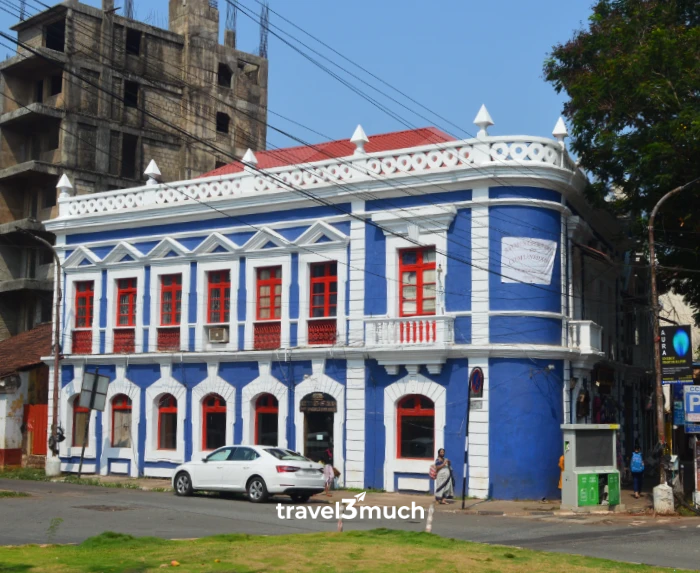
The most immediately striking feature is the colour. The heritage buildings here have brightly painted walls. Hues of yellow, green and blue, sometimes topped with red Mangalore-tiled roofs.
The people in this part of town also ensure the buildings are maintained well as this is also a UNESCO heritage site. Walking through Fontainhas, Panaji, the effect is vivid and photogenic. Almost every street is worth stopping to look at.
Reading the Walls: Azulejo Tiles
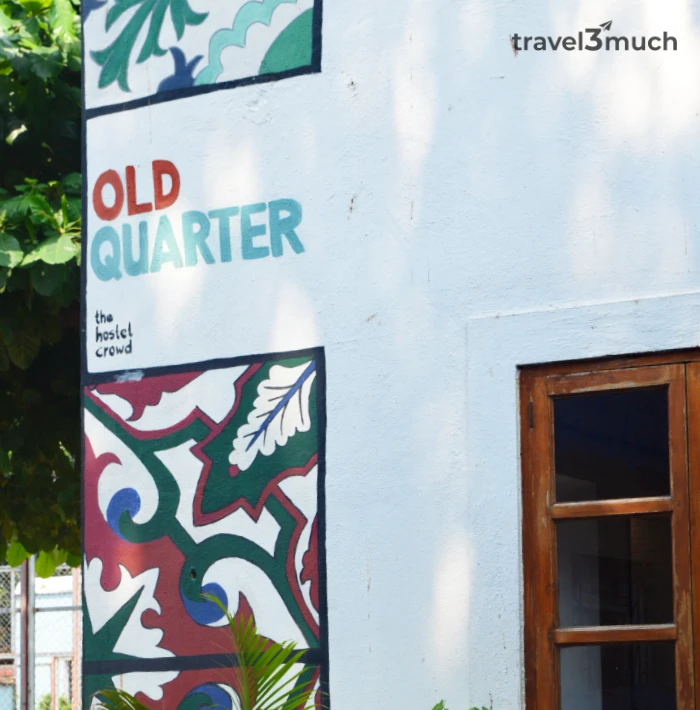
Many of the heritage homes and a few shops have their door numbers and family names painted on Azulejo tiles. These are traditional Portuguese glazed ceramic tiles, and in Fontainhas they most commonly appear as blue-on-white designs. Despite the age of these buildings and the punishment of annual monsoons, the glaze on many of these tiles is still in good condition.
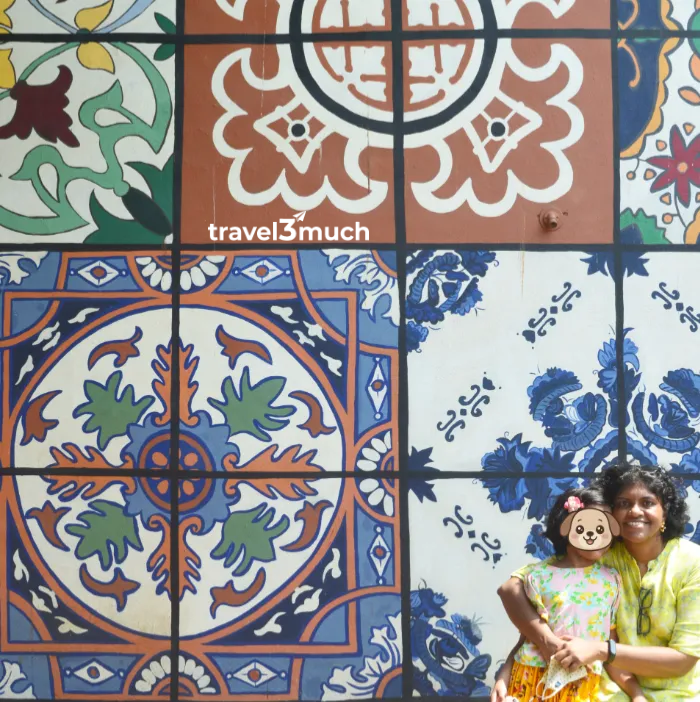
Beyond the nameplates, look out for the large Azulejo tile murals. These multicoloured tile compositions cover entire walls in places and are among the most visually impressive things about the Fontainhas heritage walk. They are not easy to miss and look stunning.
The Roosters, Lions and Soldiers
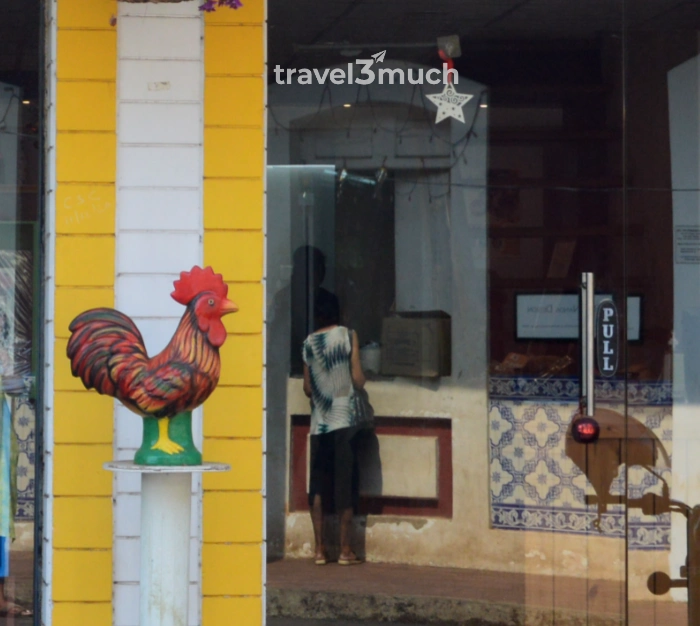
Keep an eye out for terracotta figurines placed on the gables of roofs or at the entrance pillars of homes. These are not just decorative but each one carries a specific meaning.
The Rooster is a reference to the Rooster of Barcelos, a figure from Portuguese folklore that was and is associated with faith, justice and good fortune. Homes displaying the rooster were indicating their allegiance to the Portuguese.
Similarly, the Lion is the symbol of the Kadamba dynasty, who ruled the Konkan region from the 10th to the 14th centuries CE. Hence, displaying the lion was a statement of native identity.
The Soldier is the least common of the three. A terracotta soldier at an entrance indicated that someone in the family had served in defence of the land. We did not see this figurine during our walk.
The Chapels and Churches at Fontainhas
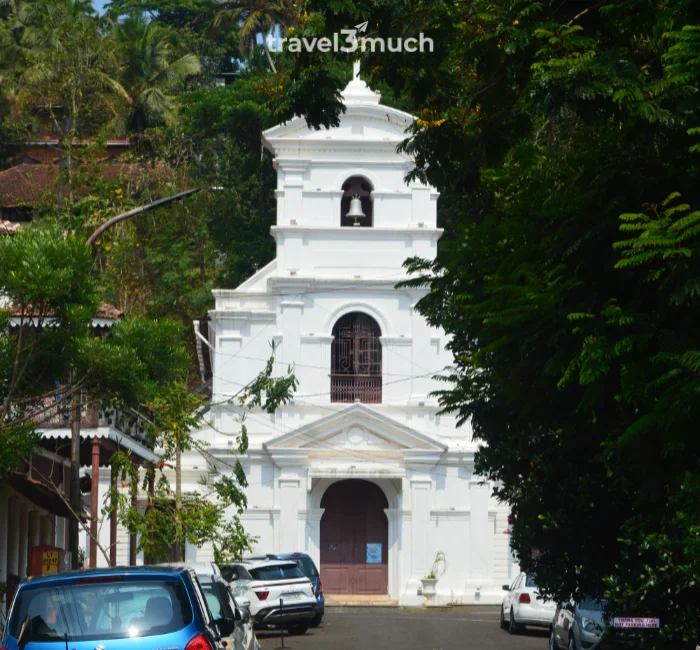
The St. Sebastian Chapel is one of the most visited landmarks within Fontainhas. It is a small, white-washed chapel that is well known for its crucifix depicting Christ with open eyes that is unusual in Christian iconography. This crucifix is said to have originally been placed in the Palace of the Goa Inquisition in Old Goa.
During our visit the chapel was undergoing renovation and was closed, but the exterior is worth seeing regardless.
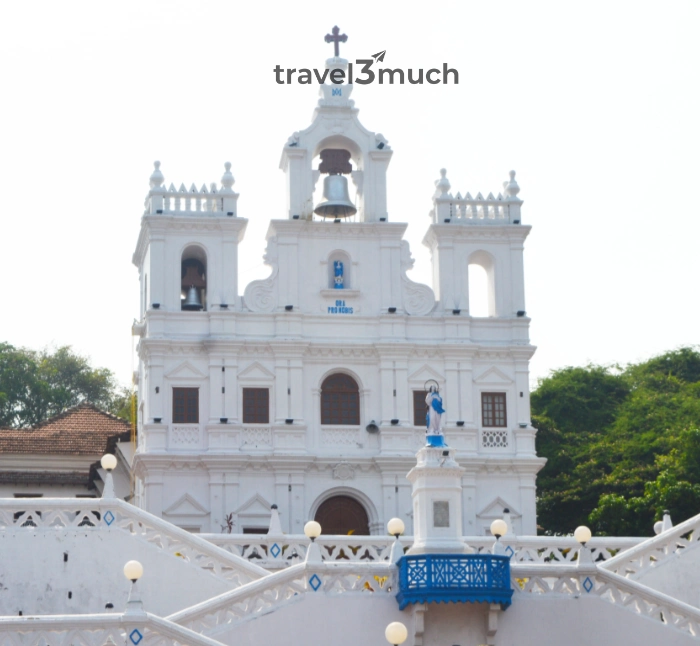
Just outside Fontainhas, in Panaji’s main square at Largo da Igreja, is the Our Lady of the Immaculate Conception Church. This is a well-known Baroque church set on a small hill with a dramatic set of zigzagging staircases leading up to it. Unfortunately, it was also closed for renovation when we visited, but the exterior, a white façade against a clear sky is striking enough to warrant a stop.
Exploring the Side Lanes
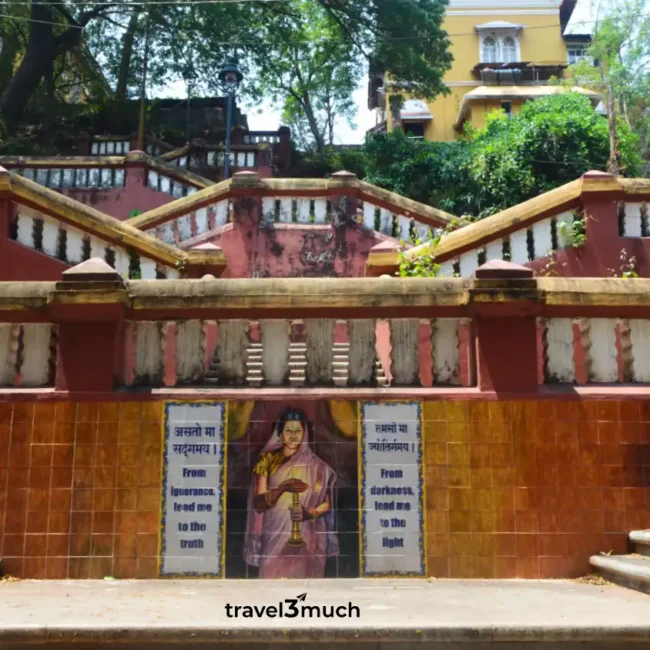
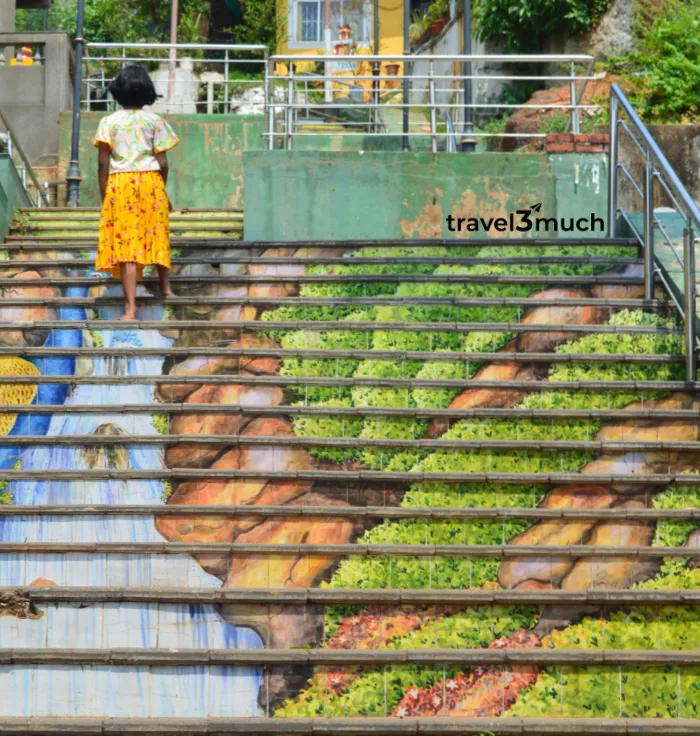
The main route through Fontainhas is well-trodden. The more interesting discoveries tend to happen when you step off it. The side lanes have murals on staircase walls, small courtyards, and heritage homes in varying states of upkeep. While some are immaculately maintained, others beautifully weathered. Both are worth photographing. To us, there is always beauty in ruined buildings.
We ended our walk at one of the small cafes in the quarter. There are a handful of options, most of them housed in heritage buildings. After a couple of hours on the cobbled lanes it is a welcome stop. We actually saw a couple of teens faint because of the sun. So do take stops as and when possible and stay hydrated.
Things to Do in Fontainhas Goa: Tips for Families
- Go early. The lanes are narrow and get crowded as the morning progresses. Shops don’t open too early though. So somne early morning picture clicking followed by browsing through the shops could be a good option.
- It is manageable with children. The walk is short and mostly flat. The walk was quite easy although children can’t be on their own since there are vehicles ALWAYS on the road.
- Carry sun protection. There is very little shade. Hats and sunscreen are important, particularly from February till July.
- Best light for photos is in the morning. The vibrant wall colours can wash out under harsh midday sun. Many of our photos did get a bit washed out.
- Check café timings locally. Some of the cafes in the quarter keep irregular hours and may not be open outside peak season.
- No entry fee. Fontainhas is an open neighbourhood. There is no ticketing or gate.
What Other Travelers Ask
What is Fontainhas Goa famous for?
Fontainhas Goa is the state’s oldest heritage quarter, known for its colourful Portuguese-era buildings, Azulejo tile murals, and terracotta figurines that reflect both Portuguese and native Goan identity.
How much time do you need for the Fontainhas heritage walk?
2-3 hours to just walk around and explore should be good.
Is Fontainhas the same as the Latin Quarter of Goa?
Yes. Fontainhas is commonly referred to as the Latin Quarter of Goa because of its Portuguese architectural and cultural heritage. It is recognized as a World Heritage Zone by UNESCO since 1984.
Can you visit Fontainhas Goa with young children?
Yes. The Fontainhas heritage walk is short and relatively flat. The colourful walls, murals and terracotta figurines give children a lot to engage with.

Ramya
Ramya is the Itinerary Mastermind and travel planner for the family. She specializes in crafting efficient, culturally-rich trips, with a passion for India’s art, heritage sites, forests, and waterfalls. She brings the human emotion and logistical precision to their journeys.


Leave a Reply